Diesel costs, USMCA renewal, Iowa shrimp farming and Brad Matthews on grain and livestock markets.
Diesel Prices and Rural Votes; USMCA Renewal; Iowa Shrimp Farming
Share


Rising diesel costs squeeze farmers ahead of the midterm elections. A think tank backs renewing USMCA, the trade agreement linking the United States, Mexico and Canada. An Iowa couple adds shrimp farming to its operation. Brad Matthews discusses potential grain market lows, Chinese soybean demand and pressure on cattle and hog prices.
Transcript
[PAUL YEAGER] Coming up on Market to Market -- fuel prices, inflation and trade are on the rural voters’ minds as Election Day approaches. A free market think tank makes the case for renewing USMCA. A land lock, aquaculture operation finds its profits in the pond. And commodity market analysis, with Brad Matthews, next.
[ANNOUNCER] I wouldn't be here without my customers.
Yeah, I'd like to thank the customers. They're very dear to our hearts.
It's about the people that you're working with and the relationships that you have.
Thank you. Thank you. Thank you.
Thank you from the bottom of my heart.
♪♪
[ANNOUNCER] Tomorrow. For over 100 years, we've worked to help our customers be ready for tomorrow. Trust in tomorrow. Information is available from a Grinnell Mutual agent today.
♪♪
[ANNOUNCER] Support for Market to Market has been provided by a bequest from Philip Lietz of Alta, Iowa, in recognition of public television's commitment to agricultural programing.
[ANNOUNCER] Market to Market is made possible in part by a grant from the Corporation for Public Broadcasting.
[ANNOUNCER] This is the Friday, October 30th edition of Market to Market, the Weekly Journal of Rural America.
[YEAGER] Hello, I'm Paul Yeager. We begin with two pieces of news from the Federal Reserve that will reflect how much it will cost to borrow some of the money you want to spend. First, the Fed's preferred inflation gauge, the personal consumption expenditures. Index added half a percent for the month and 3.6% from a year ago. Second, the fed held its key interest rate steady after a quarter point hike in September. Two members who dissented wanted another quarter point hike. Chair Warsh said the fed will deliver price stability but didn't commit to a December move. New home sales slipped 6/10 of a percent last month, according to the Census Bureau, as high borrowing costs continue to weigh on buyers. Durable goods orders rose 1.8%, the fourth consecutive monthly gain. LED by transportation equipment, inflation is on voters minds heading into Tuesday's midterms. For builders, buyers and farmers alike, trade has become essential for doing business. USMCA isn't on the ballot, but the future of the trade deal is very much in play. Free market think tank that once opposed the agreement now favors renewing it with changes to improve the deal between the U.S., Mexico and Canada. Laurel Bower reports.
[NARRATOR] This summer the U.S. declined to renew the USMCA at its first joint review. Now, the Competitive Enterprise Institute, a free market oriented think tank, is calling for changes that make the 2020 deal free simple and stable.
[RYAN YOUNG] Trade policy is in a very volatile place, and one thing that trade agreements offer is stability.
[NARRATOR] The institute opposed USMCA when it was first negotiated. Now, CEI supports renewal.
[RYAN YOUNG] We're seeing tariffs on anything and everything. We're seeing retaliatory tariffs that are killing farmers, export markets, raising prices for equipment, raising consumer prices.
[NARRATOR] The group says all three countries have come out ahead on the deal, but there's room for improvement.
[RYAN YOUNG] Mexico has a comparative advantage when it comes to labor intensive manufacturing. The US has a comparative advantage when it comes to design. Canada has its own comparative advantages in agriculture and energy.
[NARRATOR] Mexico and Canada are the United States top two trading partners, and CEI argues deals between them should stick to trade, avoiding subjects like intellectual property and labor conditions, which have complicated trade talks with China. Young says a simpler and smaller pact in North America would make it easier for all sides to agree, even without renewal, the Usmca stays in place until 2036, with a chance to revisit the policy every year. For Market to Market, I'm Laurel Bower.
[YEAGER] The average price for a gallon of gasoline was $4.20, according to AAA on Friday morning. And for diesel, the price hit $6.32, up from last week, but still down from the high on September 22nd. The timing of the price hikes hit at a time. Demand in rural America spikes when fall harvest was just about to roll. Peter Tubbs looks at the impact of higher prices in the voting booth for two farm states.
[NARRATOR] The ongoing war in Iran may be influencing the midterm elections in the Corn Belt. Over the last eight months, farmers have seen the price of inputs go up, including a doubling of diesel fuel prices.
[AARON LEHMAN] The prices for fertilizer and diesel spiked dramatically. And we've seen that continue all the way through to our inputs for harvest and what the fertilizer for next year.
[NARRATOR] Aaron Lehman is president of the Iowa Farmers Union. He's spending an additional $1,000 every day to harvest and transport his crop, double his costs from 2025. The topic of diesel prices and the pressure on farmers led off a debate between Iowa's U.S. Senate candidates.
[ASHLEY HINSON] You talk about farmers and how we can help them. It is about their bottom line and doing whatever we can to reduce energy costs, input costs across the board.
[JOSH TUREK] When I'm out there with farmers, and especially at harvest time, talking about an all-time high of diesel. This is because of this war in Iran.
[NARRATOR] But high fuel prices could be a reason rural Americans, many of whom have supported Trump's policies, will vote against the Republicans. On this year's ballot. The Iran war and the rising price of diesel is being felt by farmers across the heartland in Kansas. The U.S. Senate race is a toss-up, with incumbent Republican Roger Marshall facing a strong challenge from Pastor Adam Hamilton. Despite the impact on his farm, Ron says he supports the Trump administration's war in Iran and will vote for Marshall.
[RON SUPPES] I'm surprised that all of this happened before the election, but I think they ran into a situation where we need to do something now or never.
[NARRATOR] In a break from tradition, the Iowa Farmers Union has endorsed all the Democrats running for Congress.
[AARON LEHMAN] That's unusual for us. But our farmers are facing such a huge crisis. We really expect to have an Iowa response to that.
[NARRATOR] Low profits on Iowa's farms have a ripple effect through the economy as a whole. It's part of the reason economic growth in Iowa has lagged behind its six neighboring states and the country at large for a decade. For Market to Market, I'm Peter Tubbs.
[YEAGER] Tariffs and weather can move a market in a hurry, but once that crop is in the ground, there's really not much a farmer can do to change course. Still more producers are looking for ways to grow food closer to the people who eat it. That could mean trading an acre of corn for some vegetables, or a greenhouse full of tomatoes. The move has been part of a trend called controlled environment agriculture. A few Iowa farms have joined that movement, with something usually found in the ocean. Colleen Bradford Krantz reports in this week's cover story.
[NARRATOR] Harvest looks a bit different at this Midwest farm. Eric and Ann Franzenburg are pulling crustaceans out of 13,000 gallon tanks. For the east central Iowa couple this fall represents their first shrimp harvest.
[ANN FRANZENBURG] People are usually like, what? But then most people are really excited about it. The Franzenburgs have kept a diverse operation since moving back to Eric's family farm in 1992. They've raised hogs, corn, soybeans, fruits, vegetables and flowers with a focus on sunflowers. Even with this marketing mix, they wanted a higher value offering to draw even more visitors to their rural Belle Plaine farm store. For a while, they looked into aquaponics, a practice that combines growing vegetables and fish. But they struggled to find nearby operations with a long history of success.
[ERIC FRANZENBURG] We actually went to a farm in Indiana, which is still in production today, and looked at their operation. They weren't doing aquaponics, but they were raising shrimp. And then about two years ago, I heard Jackson Kimmell with Midland on the radio talking about shrimp and the production system for shrimp. When I heard that, i said I had to give him a call.
[NARRATOR] Midland is the central Iowa company founded in 2018 by Iowans Jackson Kimle and Matthew Ellis. They tested their in tank production ideas with trout before turning to shrimp.
[JACKSON KIMLE] We think it's the biggest opportunity for high quality product because there's not a lot of high quality shrimp in the marketplace today, especially in the Midwest. And then our systems just fit very nicely with shrimp because they're algae eaters.
[NARRATOR] The company's key innovation is how it keeps the water clean. Traditional systems grow bacteria on disks to convert ammonia into nitrates. Instead, Midland uses the disks to grow algae, which the shrimp eat.
[JACKSON KIMLE] So what you see is more efficient system and a symbiotic treatment inside of the system, because what you would usually see is a buildup of nitrate, where it's just never ending, goes up inside of a system. With algae, you don't have that issue and you're actually reusing nutrients in a more efficient way. And you can actually see algae growing.
[NARRATOR] Today, Midland fabricates turnkey shrimp systems at an Iowa State. University research farm, then installs them on farms and trains the farmers how to operate the systems. The company sells some or all of the shrimp raised by the farms. So far, six other farms besides the Franzenburgs have joined. All but two are in Iowa, with one in Minnesota and another in New Hampshire. Eric Franzenburg believes his background raising hogs prepared him for the work and scientific complexity of raising Pacific White shrimp.
[ERIC FRANZENBURG] It's been a very steep learning curve for us most of my career as a farmer was. We had a Farrow to finish hog operation, and so that actually a lot of aspects of that has helped me in raising the shrimp. But they shrimp aren't breathing the same air that we are, you know, with hogs and cattle. You can walk into a facility or where your livestock are and you know, what's going on fairly quickly with the air. But with shrimp, we have no idea unless We're monitoring the water.
[NARRATOR] Twice a day, they check the tanks, dissolved oxygen, PH levels and water temperature.
[ERIC FRANZENBURG] Then there's other things that we monitor like alkalinity, nitrates, nitrites, ammonia levels. Salinity. And then there's several others that we monitor maybe on a weekly basis.
[NARRATOR] The young shrimp in the post larval stage are about three weeks old. When they are flown in from Minnesota Shrimp LLC.
[ERIC FRANZENBURG] Post larval, they're very small. You can barely see them about the size of your eyelash. When we get them, they're probably less than a gram in size. And then so what we're trying to do is get them to about 25 grams when they're ready to harvest.
[NARRATOR] That takes about 100 days, by which point the shrimp measure 4 to 6 inches.
[ERIC FRANZENBURG] So, I think right now we're looking at probably around 7,000 pounds in a year. You know, about seven different harvests with maybe close to. 1,000 pounds each harvest. If we think that we can market more, then we'll probably look at considering doing more production. But right now, I think we're pretty good where we want to be.
[NARRATOR] The Franzenburgs market, their shrimp several ways.
[ANN FRANZENBURG] It's a two pronged approach. The first prong is to market them directly to the consumer. Here at the farm. That's really where we want to focus the sales. And then the other prong is to sell them under the Midland Co-label. We'll try to sell as much as we can fresh to the consumer, because we want them to have that experience of fresh seafood right here in Iowa. Then we also have that fallback to sell them into the Midland Co-label. They'll still be in Iowa grown product, but they'll be frozen.
[NARRATOR] Direct to consumer sales happen on planned harvest days, with all orders placed online in advance.
[ANN FRANZENBURG] We are in a rural location and we don't want people to drive a distance to get here, thinking they're going to buy shrimp and then, surprise, we're not harvesting today, so we're doing it all online as a preorder, choosing their pickup date and time.
[NARRATOR] Eric's advice for anyone considering farm raised shrimp, be curious. Be a hard worker and be observant, always paying attention to the details.
[ERIC FRANZENBURG] I've always operated my farm operation under the Kiss principle. Keep it simple, stupid and. This isn't that. But no regrets.
[NARRATOR] For Market to Market, I'm Colleen Bradford Krantz.
[ANNOUNCER] Next, the market to market report.
[YEAGER] It was a week filled with multi-month lows as harvest yields and fund selling pressured the trade. For the trading week ending October 30th, the nearby wheat contract lost $0.22 and the December corn contract fell $0.08. The funds appear to have left much of the long bets in the soy complex. The January soybean contract sold off $0.34 and December meal decreased by 2150 per ton. December cotton shrank $2.37 per hundredweight. November class three milk futures fell $0.17. The livestock complex was lower. December cattle weakened by 1018. January feeders cut 1357 and the December lean hog contract lost $6.70, or 10%. In the currency markets, the U.S. Dollar index added 17 ticks. December crude oil expanded $1.45 per barrel. Comex gold declined $118.80 per ounce, and the Goldman Sachs Commodity Index was off nearly a point to settle at 74959. Here now to lend us his insight on these and other trends is market analyst Brad Matthews. Hello, sir. Welcome back.
[BRAD MATTHEWS] Thanks for having me.
[YEAGER] Well let's see. Let's take a look at these buy signals. You got them on wheat, corn and beans. Let's start with wheat. Multi day lows continue. But China comes sniffing around. Is that the final. Is that the spark to finally end this down sell?
[MATTHEWS] It could definitely help if there's confirmation of sales that actually take place. And that's been part of the problem in wheat is the whole $2 break from its high. We weren't seeing export sales pick up. We're way behind pace. This was the first week. So, Thursday's export sales was the best we've had in basically a year. Best for this marketing year. Almost double what the trade expectation was. Question is do we continue to see that? At the same time, there was the rumblings of China in the market. If you actually get confirmation of them buying. Yes, I think so.
[YEAGER] And that is that enough to pull other markets with it potentially?
[MATTHEWS] I think one of the other things you got to keep an eye on on wheat that I am very interested in seeing is that the funds have built up a big short position. Again, on the other side, which people don't like to talk about much is the commercials. When the commercials get to around a neutral to a long position and the funds have a big short, that is usually a very good sign for bottoming. So when it comes to money flow in general, the two biggest players, they are positioning themselves for a long term bottom. It doesn't mean it's today, but it is definitely building the case.
[YEAGER] Are we in a pause before we sell any more or buy any more or make any action? I should say any sudden action right here in wheat?
[MATTHEWS] I believe in wheat you're trying to find a bottom, whether it's here or ten, 20, $0.30 lower. It takes two, three, four weeks. Long term, I am not a seller in here because I believe we are going to find a bottom. I think we're trying to fish for that bottom. Whether it comes today, next week, like I said, or in a month, we are getting very close. I would not be selling wheat down here.
[YEAGER] Speaking of that bottom, we're still down there pretty low on corn. Any hope for that one?
[MATTHEWS] I do have hope in corn. I think it's going to be the same thing. It's not going to be one of those things, especially in grains. They don't be bottom. So you're not going to see a bottom in corn. But is it trying to build a base? Yes. Could it go down and test the June lows, which is going to be what, like around four and a quarter December corn? Yeah, I can say that's possible. But one of the same things that you're seeing in corn, that's a good sign. Especially this week. There was 90,000 contracts of corn sold by the funds. We didn't move a lot in price. So what does that mean? It means that the end user, somebody else is taking the other side of that. You're seeing a transfer of ownership. Okay. That is what you want to see, defined bottoms.
[YEAGER] Well, there was a story about that this week. CoBank did a story about elevator ownership positions changing. Is that what you're alluding to?
[MATTHEWS] Correct. Yes. So, you're seeing the commercials position shrinking. They're buying contracts back, which is happening during harvest, and you're seeing the funds have basically liquidated almost 400,000 contracts from their high. Same thing as wheat. You're building a base. Does that mean the low is in? Maybe not. Maybe it goes a little bit lower. But do I think if we're talking two weeks from now versus four months from now? Yeah, if I'm an end user and I need to get stuff bought, if I'm a feedlot and I need to get stuff bought, I'm accumulating corn right now. And the lower we go, I keep accumulating. Because where I'm looking at four months from now, yes, I think there's better prices to come. Short-term, it's anybody's guess.
[YEAGER] Four months is a long time for some people. So can if you have to of course, dribble sales out to fill whatever cash you need, but otherwise lock that bin door shut.
[MATTHEWS] I think so. And the question is, is the yield too high? Did they raise it too much? I personally believe that they did. But the truth will be in the cash market once we get through harvest. The cash market will quickly tell us if the yield is really out there or not. We're already starting to see basis appreciate more than you would expect while you're in the heart of harvest. So I think it's already telling us that the yield is really not there. But yes, I think lock the door shut if you don't have to have cash right now.
[YEAGER] All right, Dan, in Oregon, I stole your question a little bit. And then just edit it a little bit. Thank you, Dan, for that question. Let's go beans for a minute. We tested that 100 day moving average and then went below it. What does that tell you?
[MATTHEWS] Soybeans was a little bit different. And the reason being is, one, they're pricing in a bigger yield. Everybody's talking about bigger bean yields not as good in corn. And I would agree from what I'm hearing from my farmers, bean yields are pretty good. Does the bean yield have to go higher than where it's at since it's basically already at a record? I don't know, maybe it does. Maybe it goes up another bushel per se, but we're already pricing that in. We are still priced in a lot of bearishness with the Brazilian real. The problem is when that came out and the real lost 12%, the funds had not liquidated nearly the amount of contracts that they owned in beans is what they had in corn and wheat. So now you're getting some of that follow through. My personal opinion is the biggest bull market out of all of them is beans. We are taking price down. We're allowing China to come in and buy. And I hear all the time from people, oh look, China, it's already priced in the market. The 25 million metric tons that's in the market. No it's not. We've talked about it. We went up higher because we were talking about it and we were getting confirmation if they buy all 25 million metric tons and we sell what we're supposed to, to other countries, we will have 250 million plus bushels additional demand on that balance sheet. That is why I say it's not priced in. So allow them to continue to buy down here. Allow us to take prices lower for the short term. It will be more bullish in the big picture for beans.
[YEAGER] But part of that deal and part of the whole wheat buying was that they China was required to buy non soybean. You're saying they're going to buy the non soybean and still come in for some beans.
[MATTHEWS] Yes China is on pace to get that 25 million metric tons. And that is not priced into the market. If they buy it all I believe we'll have 200 plus million bushels added to demand if they buy that all which will shrink the carryout.
[YEAGER] Do you have a timeline on that to watch?
[MATTHEWS] Well, with the way that they've been buying them, I mean, the lower we are and the longer we stay down these prices. I mean, what was it, 91 million bushels that we shipped out? That was the highest in two years. We're currently at the four year highest pace for export sales right now. So you just look at what we're doing. And we had more sales today to unknown destinations, which my guess would be probably China.
[YEAGER] That's usually who it translates to. Livestock down week for everything feeders, cattle, hogs. We'll get to hogs in a minute. Let's start with the cattle report because you had another border crossing. We're seeing 10,000 head come in. We're seeing this market, the fundamentals are changing. Is that the big reason for that tick lower?
[MATTHEWS] Cattle was led up by the cash market. The cash market came to a screeching halt. It was by the rumor sell the fact that cattle on feed report was bullish. You really haven't been any higher since then. Part of the problem is what people didn't pay attention to on the cattle on feed is there are more. Available cattle to go on feed than there ever has been before. They're not currently in feedlots. Okay. You got grow lots. You got pasture. There is a lot of cattle out there. So as soon as the cash market hit the pause button and we went through a little bit of support, now it is the pile on. The funds have not wanted anything to do with this. And the warning sign was that when we were on our way up there, open interest did not go up. That's not a good sign. So, I would say in cattle 220 right there on December fats, you got to keep a close eye on that. That's right around where we are much lower than that. And it can get ugly. We need to close back above 228 to flip the charts friendly. Feeders 329 to 330 close below could get ugly. We need to close above 339 to get that back friendly.
[YEAGER] Let's talk about feeders for a minute. You kind of alluded to it already in the opportunity to do some feed need filling.
[MATTHEWS] Yes.
[YEAGER] You stand by that still?
[MATTHEWS] Are you talking about the purchasing the corn? Yeah, I absolutely, because I don't think there's much more than 15 or $0.20 of downside risk from here in corn. And I think that also, even if futures go down more, the basis is going to appreciate. So the cash price to them isn't going to change a lot. So I absolutely think that they should be accumulating corn for the next six months out for sure.
[YEAGER] And what does that do for the outlook in your calculations? Feeder cattle is different than the live cattle market, but is there anything different fundamentally or technically moving right now in feeders?
[MATTHEWS] I have concern for both fats and feeders right now. We went through a key trend line and if we don't get back above that, that's what I'm saying. Close back above 339 and was it about 230 in the fats? This could be like 2015 all over again.
[YEAGER] Oh. Well, and it's not looking real good for the hog market either right now. Is there any hope? I mean, when the number printed at a five today, that kind of got my attention. What is what is that saying?
[MATTHEWS] Number one, there's too much supply. Number two, it's not a competitive meat anymore. Chicken really has become that competitive meat. And you're just not getting that demand to step up. So, the funds are very short. They're buried short. And if you go back in time, you've looked at wheat in past years when they decided to just keep selling, keep selling, keep selling, they take prices way lower than what makes sense. And that's kind of what they're doing in the hog market right now until they decide to take their foot off the gas pedal it's tough to say when hogs are done going down. December, hogs need to close above 66 to confirm a low.
[YEAGER] That's a tough number to look at and a tough chart to look at. Real quick. We're just in the last few seconds. Crude oil 104, is that the peak for right now?
[MATTHEWS] I don't know. I think it could go higher. To me crude oil definitely has the opportunity to still go higher. And I think you could see 115 to 120.
[YEAGER] All right. Thanks Brad. Especially for allow me to put you on the spot at the end.
[MATTHEWS] Thank you.
[YEAGER] That's Brad Matthews everybody. And you've been watching our market analysis. If you are watching online or on the PBS app, we are going to stay here, continue this discussion and Market Plus our online only segment. Find it wherever you get your podcasts, or you can go to markettomarket.org to watch, listen or read. We are making a schedule change with the Market Insider newsletter and the MtoM podcast. That will make it a twofer Tuesday. Now both will come out on Tuesday. That's the Market Insider and the MtoM every Tuesday. Our insiders get this news first, and you can be part of that crew by signing up for our newsletter. Next week, we look at how a changing climate is redrawing the map for global fisheries. Thank you so much for watching. Have a great week.
[ANNOUNCER] Market to Market is a production of Iowa PBS, which is solely responsible for its content.
♪♪
[ANNOUNCER] I wouldn't be here without my customers.
Yeah, I'd like to thank the customers. They're very dear to our hearts.
It's about the people that you're working with and the relationships that you have.
Thank you. Thank you. Thank you.
Thank you from the bottom of my heart.
♪♪
[ANNOUNCER] Tomorrow. For over 100 years, we've worked to help our customers be ready for tomorrow. Trust in tomorrow. Information is available from a Grinnell Mutual agent today.
[ANNOUNCER] Support for Market to Market has been provided by a bequest from Philip Lietz of Alta, Iowa, in recognition of public television's commitment to agricultural programing.
[ANNOUNCER] Market to Market is made possible in part by a grant from the Corporation for Public Broadcasting.
Trading in futures and options involves substantial risk. No warranty is given or implied by Iowa PBS or the analysts who appear on Market to Market. Past performance is not necessarily indicative of future results.
Watch More
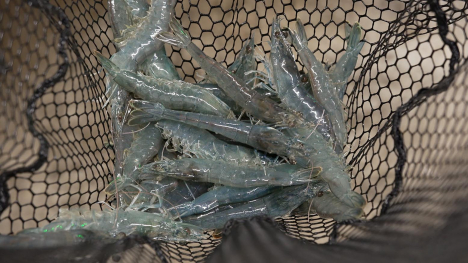
An Iowa farm adds shrimp farming with an algae-based system and direct-to-consumer sales.
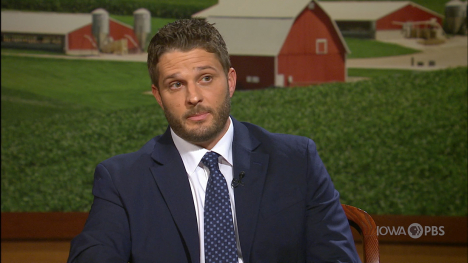
Brad Matthews examines grain market lows, Chinese soybean demand and cattle and hog prices.
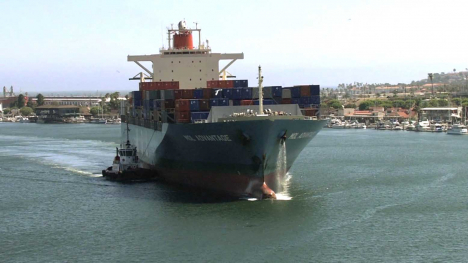
A think tank backs renewing USMCA, the trade agreement linking the United States, Mexico and Canada.
Brad Matthews discusses fund selling, USDA corn yields, Chinese soybean demand and weather risks.
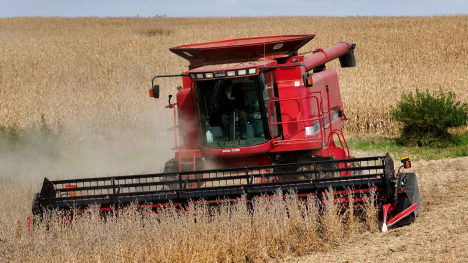
Rising diesel prices squeeze farm profits as Iowa and Kansas farmers weigh their midterm votes.

Wages aren't keeping up with prices. How negative real wage growth and higher fuel costs are changing what Americans buy, and where businesses feel it most.