Chris Robinson weighs corn recovery prospects, soybean price levels and the rebound in cattle.

Corn Under Harvest Pressure, Soybeans Hold Ground and Cattle Rebound
Share


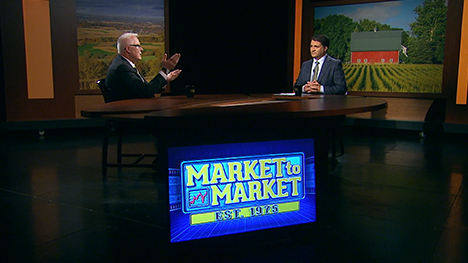
Chris Robinson joins Paul Yeager to discuss what could help corn recover after its selloff, why storing grain requires a hedging plan and where soybeans may encounter selling pressure. They also examine wheat’s sensitivity to headlines, the cattle rebound and continued pressure on hog prices.
Transcript
[YEAGER] As harvest hits the halfway point, the pressure is on keeping the Wheat and Corn market lower. For the trading week ending October 23rd. The nearby wheat contract fell $0.36. December corn. Well, it lost $0.18. The funds appear to have finished their sell off, at least the big time in the soy complex. The November soybean contract fell a nickel and December meal declined by $11 per ton. December cotton added $0.20 per hundredweight. November class three milk futures gained $0.52. The livestock complex was mixed. December cattle increased by two. 78. January feeders put on 707 and the December lean hog contract lost $1.35. In the currency markets, U.S. Dollar Index fell two ticks. December. Crude oil expanded $1.56 per barrel. Comex gold sold off $1.73 per ounce, and the Goldman Sachs Commodity Index was off by more than one point to settle at seven 5020. Here now to lend us his insight on these and other trends as regular market analyst Chris Robinson. Hello, sir.
[CHRIS ROBINSON] Hello, Paul.
[YEAGER] This wheat market has been a one topic dominated market for quite some time. Is it all about the potential for peace, or at least the US entering trilateral negotiations, which kind of sent this wheat market lower?
[ROBINSON] Well, it has been the driver all year. You have to remember, we had a tremendous rally. We started off the year at 565 50. Soft red wheat, and we made it all the way up to, you know, 750. Tremendous rally. So, we did. We went from six year lows to 2 or 3 year highs. So, it's been a two sided story. It gave us these great prices. But yeah, when the headlines turn, you know, we just dropped $1.60 off the high. And that's the problem with these markets. They're so volatile. And we could come back next week. And if the if the headlines change, we'll be right back at it again. And you go to bed. Take a look at a daily chart of wheat. We've had multiple 2530 cent ranges. I mean, that's very, very difficult to not only trade. I don't care if you're a bull or a bear, but for a producer it's very, very difficult because you're afraid every time you make a decision. And it's been a tough marketing year.
[YEAGER] Well, we'll get into that with corn here in a minute, because there's a lot of second guessing that people want to get your take on of what they've been up to. But for wheat, let's discuss acreage chatter, because is there the thought that we are going to plant more wheat in the US also contributing to this price action?
[ROBINSON] I think it's going to depends on what happens with South America as well. But right now, producers are going to make the decision. You know, lots of times I think it's the last minute decision, but I wouldn't be surprised to see a little bit more acres planted than we did in the past couple of years. Remember the last two years we had record low acres planted a week because people look at the price. Why would you want to plant, you know, 550 wheat? So, I think if we can hold this six, six, 50 level guys will do the math. You know, there's an expression they call wheat poverty grass. I mean, because it can be very, very difficult proposition. But the one thing I'll say is this somebody is going to plant wheat. They always do. And I think that if the situation in it's been four and a half years now, we've been dealing with what's going on in that part of the world. I don't see that ending anytime soon. If it did, I think we could get back to Trading Fundamentals, but I wouldn't be surprised to see if the prices are there. I mean, even today, we're still in a lot better shape than we were when we started the year. So, I think, you know, people will talk to their bankers and next year and say what prices work. If prices work, farmers will plant it.
[YEAGER] For a topic that has now three weeks of legs. It is our question that we bring in from the audience, and it is Jake in North Dakota wants to know if the USDA is right on their corn yield. Is there still enough demand to get us back to those early September highs?
[ROBINSON] We had amazing demand all year. That's first of all. And now we started to see demand slow down a little bit in the past six weeks. So that's a little bit disconcerting. There's no planning issue right now with South America yet. I know this is it's going to be El Nino, super El Nino normal El Nino I don't know. But those problems don't kick in until later in the growing season. From what I understand. So right now, there's no weather story. So, I would say this if something does change, it's probably not going to change until the January report, where we find out once and for all who's right and who's wrong on the yields when it's all in the bin. And then if the market's right, if the USDA was wrong, the market will correct. Absolutely. Positively will. So that's a huge thing. So, can we get there? Anything's possible. I would look at it this way. We rallied from 425 to 549. I don't know if we're going to get back to 549 again. I think we'd be very fortunate if we got half way back. But for now, at least, it feels like we're trying to put it on the floor here for corn. But I think you need a weather issue. And you also need I think you need to see demand step, step up demand was really, really strong this year. So, I think people are all kind of holding their breath to see what happens in South America right now. So, is it possible? Yeah, absolutely possible. But things are going to have to fall in line to have it happen.
[YEAGER] Well, we'll talk harvest pressure now if we could, because last week, or at least Monday's figure said 44%, which we know is a couple of days old and it was a lot of corn came out. So, is the harvest pressure done being applied to this corn market? What's the sign that if that's the case?
[ROBINSON] Well, I was just checking in some stuff before we came on to talk. And the feeling is that the American farmer right now, if you talked to all the analysts out there and this isn't this isn't in my purview, there's other people that do this. The farmers, about 40% sold. So that's going to be the question here. What's going to happen between now and the time? It's actually in the bin as far as the actual sales. So far, we haven't had any weather issue. Harvest has been going along pretty, pretty well. It's a little bit behind schedule, but nothing drastic. So long story short, I would say that I would say that the bulk of harvest pressure is now over. Now we're going to probably, you know, especially now between now and Thanksgiving, probably be a little bit more. I want to go.
[YEAGER] I'm going to go back to your now to January WASDE comment. What should a farmer be doing in that time period with corn specifically?
[ROBINSON] Well, there's no time machine. There's no Marty McFly. We can't jump in the Delorean and go back and say what it could have, should have. So first of all, stop beating yourself up. This is you've got a long marketing year. I've been doing this for the better part of three decades, and there will always be vicious market moves. Hopefully, now that we've oversold, we'll get a rally. So, if you if you do get a rally, if by the grace of the markets, we get a short covering rally, use it to make sales that you wish you had made earlier. Right? Also, I think, you know, if you're going to store it absolutely, positively, you have to keep a floor under it because what do we know? The only thing we know for sure is we've traded for 25 this year. And 550 right halfway back. It's about 470. So, anything around 470, you know, it's, it's, it's kind of like, you know, six on one half dozen of the other. That would be a big area to watch if I'm a farmer or producer. But if you're going to store it, you know, people always say, well, I want to capture the carry. If you're going to store it, you've got to set the hedge, just putting it in the bin and not hedging it. You're not capturing the carry. You've got to set a hedge.
[YEAGER] All right. In soybeans you mentioned El Nino. We haven't said China. We haven't said too much about South America. But let's talk about those traders and their commitments right now. Where are they at and does that matter? Is that maybe why we saw a little bit of that sell off pressure stop at the end of the week?
[ROBINSON] Yeah. I mean, they're the reason we rallied. Okay. The when we went to 425 there in and we went from 425 to 550, you know, we had the pro farmer tour. We had a lot of bullish ideas. Everybody was on board. Everybody was bottled up, a lot of good technical action. But we had two really disappointing USDA reports. And the second one is really one that I think caught everybody surprised. I wrote it in my letter. I called it controlled demolition. The reason we rallied, it's also the reason we had a collapse. And you know, the funds were long 300,000 corn. They sold 80,000 last week. They sold 80,000 the previous week. They're still long a couple hundred corn. So, you tell me, are they going to sit and wait? Probably. I think the biggest bulk has been done in the last two weeks. It feels like this. 451 area. 453 area is kind of breathing room. Not to say that we couldn't go back down there. So, if you were hedged, you know, some guys had good hedges, some guys didn't. You know, moving ahead, I'd say, okay, we know what the worst case scenario is. We go back down to 425. You know, put something cheap on and hope that you get a rally to sell. Hopefully we do get something where we get back up to, you know, I can tell you one thing, a lot of people are going to be aggressively selling. If we do get a $5 print, I can tell you that right there. That 495 area is going to be for corn area.
[YEAGER] Is there a number in beans that you like?
[ROBINSON] Beans actually are still pretty good shape. You know, if you take the low from right before the rally started, 1165 to 1335 1250, we're right in the middle and the funds really haven't done that much panic selling. And beans, they're still along a couple hundred thousand beans. So that is I if there's anything the silver lining to that, they've actually held their bean position pretty well. And why does it matter? Because we don't have a weather story right now. Demand story is kind of out the window. China's buying what they promised they were going to buy, nothing more. I think a lot that was a big disappointment. I think with the last meeting with China, we thought there was going to be something extra. And when nothing was mentioned about corn and there was no new business, you know, people vote with their feet. So, 1250 is a very key level. You're basically still in the middle of that huge rally we had with dollar 70 rally. That's a good level. And I think that if we can get back up to $13, I would say you're going to see a lot of people want to sell beans at $13. You're going to see a really aggressive selling around, you know, the 495 area, $5.
[YEAGER] Feeder market. They benefited a little bit from this low part in corn, right. How much benefit have they taken advantage of?
[ROBINSON] Well, they threw every negative thing they could at the beginning of the year. I'm not going to list them here. But there were four things, you know, in the last thing was when they lowered the tariffs. We've had a tremendous recovery pretty much 65, almost 70% of what we lost. So, this rally has been, you know, a combination of people realizing that fundamentally, there's still the problem. The herd is not big enough. And the breaking corn is certainly helpful. So that's, you know, there's always a silver lining they have. So, for if you're a cattle, if you have a feedlot, you know, you're really happy that corn just dropped, you know, 75 $0.80. So, there's some silver lining there. We are going to get a cattle on feed today. I didn't see it yet, but people with the feeling was that it was going to be bullish and friendly. The problem is it could be a by the rumor sell the fact we've already had this tremendous rally. It was a really good opportunity for producers to take advantage of it, especially if you were kicking holes in the wall back on the low, because that was a painful, painful situation to be at two months ago. So, it was a great recovery. Hopefully we can keep it going.
[YEAGER] I just have a few seconds left. Hog market just doesn't seem to get any better. Any good news?
[ROBINSON] Oversupplied here, oversupplied in China and we're within a stone's throw of six year lows in prices. And it's been kind of a slow grind. Lower. The market's oversold. The funds are record short. So, I would say this maintain your floor. Look for short covering rallies. But fundamentally there's still no reason for these funds to cover their short position in on lean hogs. Unfortunately. And the funds I know we talk so much about the funds right now. They are a force of nature. And it's just, you know, people get mad at them. They get irritated with them. It's a two sided story. I mean, that's why when they help you get these good rallies and file this experience away, we had this tremendous rally. You got to use it when they're on your side.
[YEAGER] And guess what? Speaking of sides, we're out of the time side. Okay, Chris, hold that thought. We'll bottle it up. We'll get you in a minute. Thanks. Chris. Robinson, everybody. You've been watching the market analysis there with Chris Robinson. If you're watching online or on the PBS app, we're going to stay here. Continue that discussion with Chris and Market Plus. That is our online only segment. Find it wherever you get your podcasts or at Markettomarket.org to watch, listen, or read. We roll out new material on our YouTube channel every week. We put up some regular features from this program, as well as some classic items from our vault. Subscribe now at youtube.com/MarkettoMarket. Next week. A landlocked aquaculture operation finds its profits in the pond. Thank you so much for watching. Have a great week.
Trading in futures and options involves substantial risk. No warranty is given or implied by Iowa PBS or the analysts who appear on Market to Market. Past performance is not necessarily indicative of future results.
Watch More
New farm relief, a food safety honor, Minnesota cider and commodity market analysis with Chris Robinson.
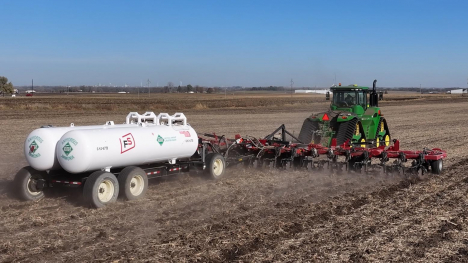
New federal plans target farmers' fuel and fertilizer costs through direct relief and investments in domestic fertilizer production.
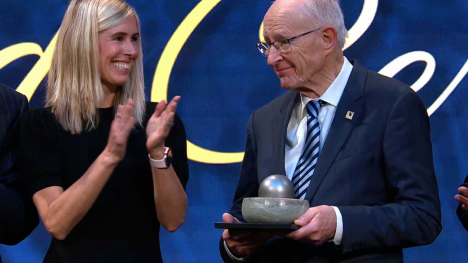
Huub Lelieveld receives the 2026 World Food Prize for six decades of work advancing food safety.
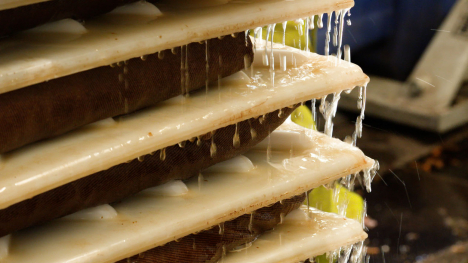
Minnesota’s Keepsake Cidery combines heirloom apples, traditional cider making and direct sales to help a small farm thrive.
Chris Robinson answers viewer questions on corn yields, crude oil and cattle, and explains his soybean outlook.

Those who survived farming in the 1980s Farm Crisis have stories to tell and agriculture today should focus on cash flow, not profit.