Canada’s two major railroads, Canadian National and Canadian Pacific Kansas City, locked out their workers Thursday morning, bringing rail traffic to a stop across Canada.


Canada’s two major railroads, Canadian National and Canadian Pacific Kansas City, locked out their workers Thursday morning, bringing rail traffic to a stop across Canada.
Transcript
The stoppage of the Canadian rail system was brief.
Canada’s two major railroads, Canadian National and Canadian Pacific Kansas City, locked out their workers Thursday morning, bringing rail traffic to a stop across Canada. CN and CPKC trains in the United States and Mexico continued running.
As the largest trading partner of the United States, an estimated 25,000 rail cars cross the border between the U.S. and Canada each day. As the United States’ largest trading partner, maintaining a cross border system is important for economic growth.
Mike Steenhoek, Soybean Transportation Coalition: “Canada is our fourth largest export market for soybean meal at $614 million in 2023. Canada is the number one destination for U.S. soybean oil at $106 million. So Canada itself is a very important export market for the U.S. soybean industry. On top of that, you have a lot of fertilizer that gets produced in Canada that we don't have the capacity to produce here in the United States, that originates in Canada and comes to the United States.”
Trains in Canada went back in motion as the railroads and unions entered arbitration. An estimated $1 billion dollars worth of freight is handled by the Canadian train system each day. The railroads will operate under the terms of the current labor agreement until a new contract is signed.
Business groups on both sides of the border had asked for the government to force arbitration to minimize the economic impact of a transportation stoppage.
The last two years, U.S. farmers in the Upper Midwest have been impacted by another transportation issue - low water levels - limiting the shipment of grain and fertilizers up and down the Mississippi River.
This summer’s heavy rains have supported levels to allow for regular traffic patterns.
Mike Steenhoek, Soybean Transportation Coalition: “We have a significant harvest that's going to come online, which is good news. But you've got to make sure that you've got a supply chain that that can accommodate that. You know, the old metaphor that I like to use is you never want to be in the business of attaching a garden hose to a fire hydrant. We've got this significant harvest that's going to come online. You want to make sure that your supply chain can keep pace with that.”
For Market to Market, I’m Peter Tubbs.
Watch More
Shawn Hackett weighs corn demand, USDA yields and potential November turning points for grains.
Sugarbeet losses, diesel costs, Montana’s feral horses and market analysis with Shawn Hackett.
Shawn Hackett weighs storing corn versus selling soybeans and Brazil’s potential weather risks.

Montana residents balance affection for free-roaming horses with safety and property concerns.
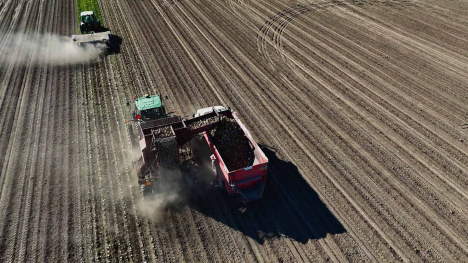
A growers association reports average losses of $500 per acre as sugarbeet harvest gets underway.

Global supply disruptions keep fertilizer markets volatile heading into 2027.