This week, Americans continued to adjust to the economic ripples of President Trump’s tariffs.


This week, Americans continued to adjust to the economic ripples of President Trump’s tariffs.
Transcript
This week, Americans continued to adjust to the economic ripples of President Trump’s tariffs.
The Port of Long Beach, the country’s largest port, is estimating imports through their facility will decline 20% by the end of 2025.
Mario Cordero, CEO, Port of Long Beach: "Our concerns about reduction, I think are gonna really start being elevated as we move towards May. We already have - our staff has now recorded 17 cancelled sailings from the international carriers, which means less containers coming into the complex."
The port recorded its busiest January ever, and volumes are currently up 27% over the same period of 2024. Experts are unsure how much of the increase is being driven by importers increasing orders ahead of tariffs.
But the tariffs are beginning to affect import traffic.
Robert Spakowski, commercial ship seafarer: "They're turning around container ships that were headed our way, just saying 'Just forget it. Come on back.' And no one knows for sure yet what's happening. What's going to happen. But it's likely that the hundreds of container ships that come in every week are going to be much less. Much less."
A drop in import volumes would end a run of nine consecutive months of volume growth at the port.
The tariffs on imports from Canada are adding uncertainty to the budgets of maple syrup producers in Vermont. As the producer of 73% of the world’s maple syrup, Canadian companies are the main supplier of syrup processing equipment.
Jim Judd, owner, Judd’s Wayeeses Farms: “I've spent countless amounts of hours and lots and lots and lots of money in Canada because they are the primary producers of high quality equipment. Any kind of disruption with our cross border enterprise, we feel it. It’s uncertain enough making maple syrup.”
Judd has been making Vermont’s signature agricultural product since 1978, and the fickle weather of the Northeast makes syrup a challenging business. Judd is also dependent on a now-tariffed global supply chain.
Jim Judd, owner, Judd’s Wayeeses Farms: “Our containers come from Italy. There's now a new tariff on Italy. So, we're sure our container price is going to go up. A lot of our stainless steel fixtures come out of Asia.”
The maple syrup industry in Vermont has seen dramatic growth over the past 20 years. The number of sugar makers in the state has increased, and the volume of syrup has expanded five fold.
But the on-again, off-again nature of the Trump tariffs makes planning difficult.
Jim Judd, owner, Judd’s Wayeeses Farms: “We are as I mentioned earlier, producing a luxury product that isn't necessary for your table. It's something you like for your table, so we can't just arbitrarily raise our price.”
For Market to Market, I’m Peter Tubbs.
Watch More

Wages aren't keeping up with prices. How negative real wage growth and higher fuel costs are changing what Americans buy, and where businesses feel it most.

New farm relief, a food safety honor, Minnesota cider and commodity market analysis with Chris Robinson.
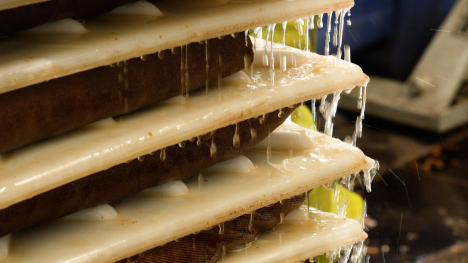
Minnesota’s Keepsake Cidery combines heirloom apples, traditional cider making and direct sales to help a small farm thrive.
Chris Robinson answers viewer questions on corn yields, crude oil and cattle, and explains his soybean outlook.

Huub Lelieveld receives the 2026 World Food Prize for six decades of work advancing food safety.
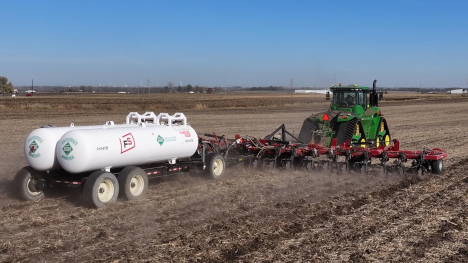
New federal plans target farmers' fuel and fertilizer costs through direct relief and investments in domestic fertilizer production.