This week, the threat of 30% tariffs were pushed to the side as the European Union and the United States agreed to a trade deal framework.
An EU Trade Framework, Nppc Pushback on Maha and a Bump in Crop Insurance for New Farmers
Share


This week, the threat of 30% tariffs were pushed to the side as the European Union and the United States agreed to a trade deal framework.
Transcript
This week, the threat of 30% tariffs were pushed to the side as the European Union and the United States agreed to a trade deal framework. According to a statement from the White House, the EU will work to eliminate tariffs on a long list of U.S. industrial goods and give preferential market access to a wide range of U.S. seafood and agricultural products. On the EU’s list of items receiving preferential treatment are dairy, soybean oil, and pork. In return the U.S. will apply a tariff rate of 15% on more than two-thirds of the products imported from the EU.
When all the details are hammered out, the deal will apply lower import taxes on both sides of the Atlantic and help keep $2 trillion in annual trade flowing between the two economies.
Duane Stateler, president of the National Pork Producers Council, thanked the administration for including pork in the deal.
The NPPC is, however, pushing back on the administration’s Make America Healthy Again policy that identifies sausage as an ultra-processed food. In a letter to the MAHA commission, the Council says preservation of what they call a versatile and affordable protein by curing, smoking or salting often gets pork products misclassified as ultra-processed foods. The NPPC says the methods are generally recognized as safe.
Duane Stateler, President, NPPC: “There’s no clarification on it. I mean, that’s a real problem if it is, because then that takes out, not only does that take just, you know, just plain sausage, but that take out, you know, then you’re talking, you know, the hot dogs, bratwurst, you know, go right on down the line and that will be a problem for us that that is all considered in ultra-processed.”
The Administration is putting some support behind beginning farmers and ranchers by making crop insurance more affordable over a 10 year period. As part of the One Big Beautiful Bill Act, beginning farmers and ranchers can get a boost to subsidy rates for crop insurance of an additional 15 percentage points. The upgrade lasts for two years and then the rate declines to 10 percentage points for years five through 10.
For Market to Market, I’m David Miller.
Contact: [email protected]
Watch More
Naomi Blohm and Ted Seifried question USDA’s corn yield surprise and weigh China’s soybean demand.
Higher USDA yields pressure grain. Plus, opportunities/costs of putting local food on school trays.
How grain prices rally this winter w/Naomi Blohm & Ted Seifried on USDA, China demand & S. America.

An Iowa school district connects local farms, food hubs and students through the lunch tray.
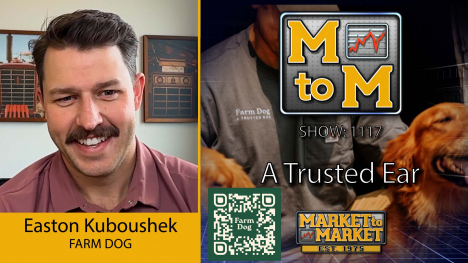
Farmers rarely seek mental health help. Farm Dog offers care from people who know farm life.
Sue Martin examines grain stocks, harvest risks, soybean demand, energy costs and livestock markets.