As America’s farmers harvest their soybean crop, concerns are growing over where the bushels will go.


As America’s farmers harvest their soybean crop, concerns are growing over where the bushels will go.
Transcript
As America’s farmers harvest their soybean crop, concerns are growing over where the bushels will go.
China continues to avoid U.S. soybeans, preferring to purchase the commodity from Brazil and Argentina.
The current 90-day tariff truce is set to expire in early November. The White House proposed 100% tariffs on Chinese imports beginning November 1st, and blocking the import of used cooking oil into the United States.
China placed export controls on many rare earth metals, which are key ingredients in the manufacture of high tech electronics around the world.
A summit in South Korea between the two countries is scheduled for the end of the month.
This week saw more tough talk between the two countries.
Lin Jian, Chinese Foreign Ministry spokesperson: “China consistently opposes the overstretching of national security concepts and discriminatory practices targeting companies from specific countries. The relevant country should genuinely uphold market principles and avoid politicizing economic and trade issues. China’s determination to safeguard its legitimate rights and interests remains unwavering.”
Scott Bessent, U.S. Treasury Secretary: "And make no mistake, this is China versus the world. They have put these unacceptable export controls on the entire world. China is a command and control economy, and we and our allies will neither be commanded nor controlled.
Secretary Bessent suggested that an announcement on a trade relief plan may appear this week.
During the previous trade war with China, the Trump White House shipped an estimated $60 billion dollars in tariff war relief to U.S. farmers. According to the Council for Foreign Relations those payments were funded by almost all of the tariff taxes collected at the border between 2017 and 2020.
But new checks for farmers will likely be unable to appreciably close the margin between input costs and sales.
April Hemmes, Hampton, Iowa Farmer- it's everything everywhere, all at once. It's not just tariffs, it's not just, it's mostly high inputs, but the value of our crops has not kept up with the inflation of the inputs. And then you throw the tariffs on there. And then, you know, when I was doing interviews this spring, I said, ‘I've already bought all my inputs.’ It's this fall when we're really gonna see, you know what happens?
For Market to Market, I’m Peter Tubbs
contact: [email protected]
Watch More
Shawn Hackett weighs storing corn versus selling soybeans and Brazil’s potential weather risks.

Montana residents balance affection for free-roaming horses with safety and property concerns.
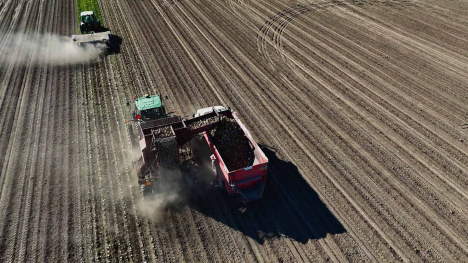
A growers association reports average losses of $500 per acre as sugarbeet harvest gets underway.
Shawn Hackett weighs corn demand, USDA yields and potential November turning points for grains.
Sugarbeet losses, diesel costs, Montana’s feral horses and market analysis with Shawn Hackett.

Global supply disruptions keep fertilizer markets volatile heading into 2027.