This week, the COP30 climate summit opened in Brazil, as attendees questioned the goal of the assembly.


This week, the COP30 climate summit opened in Brazil, as attendees questioned the goal of the assembly.
Transcript
This week, the COP30 climate summit opened in Brazil, as attendees questioned the goal of the assembly.
Negotiating an omnibus agreement may be abandoned in favor of smaller, achievable goals.
Participating nations have failed to meet their climate goals set during the Paris conference in 2015.
Johan Rockstrom, Director, Potsdam Institute for Climate Impact Research: ++PARTIALLY COVERED++
"We need to recognize that since 2015, when we signed the Paris Agreement, when we needed to bend the global curve of emissions no later than 2020, and now we're five years into this decisive decade and emissions continue rising."
Scientists at the conference are pointing to efforts that have immediate impacts on CO2 reduction and capture.
Thais Michele Rosan, University of Exeter: “We still have large emissions from deforestation, about 3.9 billion tons of CO2 per year. And afforestation and restoration around the globe is compensating about 2.2 billion tons per year.”
Renewable energy projects represent 80% of the global electricity demand growth. The combination of renewables and batteries are now cheaper than fossil fueled generation in most situations.
The challenge of slowing the growth of CO2 emissions remains.
Stephen Sitch, University of Exeter: “So they are the emissions into the atmosphere, and we also track the fate of those emissions. So we have about 50% of the emissions, they stay in the atmosphere, essentially driving climate change. The rest goes into our natural sinks.”
Without China’s president XI or any delegation members from the United States attending , participating nations are limited in the actions they feel can be taken to reduce greenhouse gasses. The world’s two largest economies and CO2 emitters have signaled they will focus on economic growth regardless of the ecological cost.
Data from the Global Carbon Project shows the U.S. emitted 2% more pollution in 2024 after a post-COVID decline. GCP, a consortium of scientists and researchers supported in part by the United Nations’ UNESCO agency, says China is the number one carbon polluter but more of the greenhouse gas is made by the U.S.
For Market to Market, I’m Peter Tubbs
Watch More

Shawn Hackett weighs storing corn versus selling soybeans and Brazil’s potential weather risks.

Montana residents balance affection for free-roaming horses with safety and property concerns.
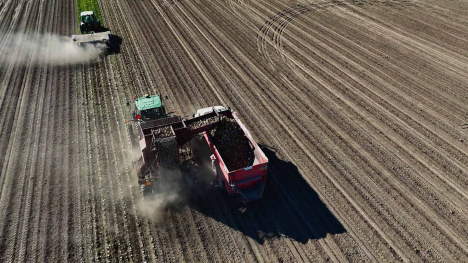
A growers association reports average losses of $500 per acre as sugarbeet harvest gets underway.
Shawn Hackett weighs corn demand, USDA yields and potential November turning points for grains.

Sugarbeet losses, diesel costs, Montana’s feral horses and market analysis with Shawn Hackett.

Global supply disruptions keep fertilizer markets volatile heading into 2027.