USDA Secretary Brooke Rollins provided updates on the New World screwworm situation in a series of meetings with lawmakers and in press calls this week.


NWS is a serious pest that affects livestock, pets, wildlife, and less commonly, people and birds. They most often enter an animal through an open wound and feed on its living flesh. According to USDA, the nation’s food supply is safe. Screwworms do not infest meat, fruits, vegetables, or other food sources. It is not contagious and does not spread directly from animals to people or from person to person. Secretary of Agriculture Brooke Rollins explained what the USDA is doing to contain NWS.
Transcript
Sec. Brooke Rollins, Department of Agriculture: “We have, number one, formed a unified incident command team with the Texas Animal Health Commission and deployed our APHIS response team personnel to the area. They are on the ground.”
In the wake of the announcement, USDA Secretary Brooke Rollins provided updates on the New World screwworm situation in a series of meetings with lawmakers and in press calls.
Sec. Brooke Rollins, Department of Agriculture: “If we all work together and follow animal treatment and the movement restriction guidance, there is no reason to believe that this incursion will result in any sort of establishment of the pest.”
NWS is a serious pest that affects livestock, pets, wildlife, and less commonly, people and birds. They most often enter an animal through an open wound and feed on its living flesh. According to USDA, the nation’s food supply is safe. Screwworms do not infest meat, fruits, vegetables, or other food sources. It is not contagious and does not spread directly from animals to people or from person to person.
The issue quickly became the focus of Thursday’s previously scheduled House Agriculture Committee hearing, where lawmakers pressed Rollins on the threat posed to the nation’s livestock sector.
Sec. Brooke Rollins, Department of Agriculture: “We have activated a NWS response playbook which includes detailed protocols and procedures. We’ve established a 20 kilometer zone around the detection area and are implementing quarantines, movement controls and surveillance in the region. In fact, I’ll be there next week.”
In addition, Rollins explained the USDA has accelerated the release of sterile flies –the primary tool used to eradicate screwworm populations. Lawmakers from cattle producing states expressed concerns for their ranchers who are already experiencing tight herd numbers and economic uncertainty.
Rep. Sharice Davids, D-Kansas: “Why should Kansas ranchers and consumers facing high beef prices have confidence that the USDA has this under control?”
Sec. Brooke Rollins, Department of Agriculture: “I was on the phone most of last night and through the night with the ranchers of south Texas. We do not believe this will be an infestation. We will be able to isolate each case.”
The last outbreak in U.S. border states was in the 1960s and it decimated the local wildlife population and caused millions of dollars in damage to ranchers. NWS was eradicated at that time when researchers began releasing massive numbers of sterilized male screwworm flies that mate with wild female flies to produce infertile eggs. Rollins says the nation’s first production facility for sterile flies is expected to open in Texas late 2027.
Sec. Brooke Rollin, Department of Agriculture: “When it does, it will produce about 300,000,000 flies per week in addition to the 100,000,000 from Panama and then we outfitted an additional Mexican facility for another 100 million dollars so we will get it back to the point where we are able to push it back and eradicate it.”
So far, there have been no further detections reported. For Market to Market, I’m Laurel Bower.
Watch More
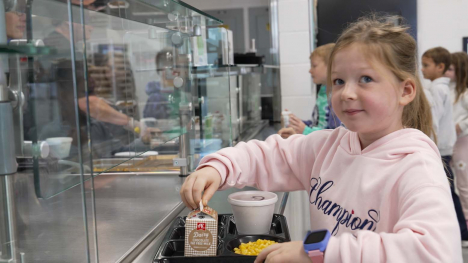
An Iowa school district connects local farms, food hubs and students through the lunch tray.
Naomi Blohm and Ted Seifried question USDA’s corn yield surprise and weigh China’s soybean demand.
Higher USDA yields pressure grain. Plus, opportunities/costs of putting local food on school trays.
How grain prices rally this winter w/Naomi Blohm & Ted Seifried on USDA, China demand & S. America.
Farmers rarely seek mental health help. Farm Dog offers care from people who know farm life.

Wet fields threaten harvest delays, diesel raises farm costs and rural population growth is uneven.