American farmers face higher production costs than their competitors while selling into the same worldwide commodity market.
The National Corn Growers Association's Report on U.S. Farm Input Costs
Share


The study, conducted by Kynetec for NCGA, details the price premiums U.S. farmers pay for their inputs compared to Brazilian farmers –their largest global competitor. It found U.S. corn growers consistently paid more than Brazilian farmers for major crop inputs between 2023 and 2025.
Transcript
This week, the National Corn Growers Association, or NCGA, released a report supporting what American farmers have long argued – they face higher production costs than their competitors while selling into the same worldwide commodity market.
The study, conducted by Kynetec for NCGA, details the price premiums U.S. farmers pay for their inputs compared to Brazilian farmers –their largest global competitor.
It found U.S. corn growers consistently paid more than Brazilian farmers for major crop inputs between 2023 and 2025.
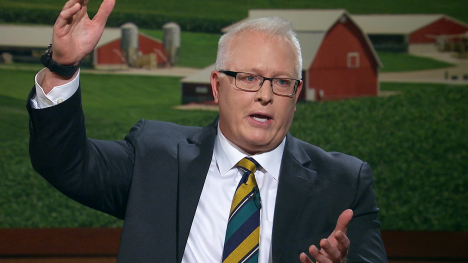
Matt Frostic, National Corn Growers Association: “The American farmer pays up to 60 to 70 percent more for that same seed that is planted in Brazil and crop inputs like fungicides, herbicides and insecticides can be priced as much as double for the same product in the U.S. versus Brazil.”
According to NCGA, Brazilian farmers generally have more access to generic products and single active ingredient options, while U.S. farmers are more often buying premium mixes sold by major manufacturers.
Matt Frostic, National Corn Growers Association: “It really kind of pops the red light of why does the American farmers shoulder so much cost on those products versus the Brazilian farmers.”
The organization says the price gap carries added weight because U.S. and Brazilian farmers are producing many of the same commodities for the world market.
Matt Frostic, National Corn Growers Association: “We can’t continue to sustain these high of inputs versus what the farm gate sales are and I think every farmer could tell you we understand many years we are going to lose money. We’re in the commodity market it’s cut throat and we understand that, but we’re walking through four years of extremely low or negative margins and you just can’t continue to survive that without major changes in how this industry will look in four to five years with such low investment.”
For Market to Market, I’m Laurel Bower.
Watch More
Minnesota’s Keepsake Cidery combines heirloom apples, traditional cider making and direct sales to help a small farm thrive.
New farm relief, a food safety honor, Minnesota cider and commodity market analysis with Chris Robinson.
Chris Robinson answers viewer questions on corn yields, crude oil and cattle, and explains his soybean outlook.

Huub Lelieveld receives the 2026 World Food Prize for six decades of work advancing food safety.
New federal plans target farmers' fuel and fertilizer costs through direct relief and investments in domestic fertilizer production.
Chris Robinson weighs corn recovery prospects, soybean price levels and the rebound in cattle.