Ongoing drought plagues the West, but Idaho farmers and policymakers have a plan in place so the federal government never has to step in to mitigate water use.
Farmers Face Water Crisis as Drought Strains Snake River Aquifer
Share


As drought and booming population growth strain Idaho's Eastern Snake River Plain, groundwater farmers like the Youngs have drawn just 40% of their water rights for years under a mitigation plan. State leaders have invested $350 million in water infrastructure to avoid a Colorado River-style crisis that is playing out across the West. Our Mountain West Bureau Chief Tammy Scardino has this week’s Cover Story.
Transcript
Adam Young, Young Family Farms: “It’s something I can’t imagine not being part of.”
Adam Young’s legacy family farm planted roots in Bingham County, Idaho back in 1952. The Young’s irrigate alfalfa, barley and several different types of wheat on about 2,600 acres. The fields lie within about four miles of each other.
Considering the lack of water throughout the region, the farm is in a pretty good spot. The crops at Young Family Farms require very little water compared to those grown by other Idaho farmers, some of whom opted out of the planting season altogether and accepted an insurance payment. (Nat Pop: Combine Lever) The Youngs cut about 200 acres out of their planting mix to remain within their watering limits for this year.
They are groundwater users who pump their water from deep wells, straight out of the aquifer.
Adam Young, Young Family Farms: “The aquifer and its hydrology is a little bit different from surface water, from rivers and canals. We don't see those massive upswings and then downswings like they see year to year. Impacts to the aquifer take longer to see, whether that's positive or negative.”
Idaho water rights use a first in time, first in right approach – in other words, seniority determines who gets water first when there isn’t enough to go around.
Young says it’s easier to adhere to the state limitations in good water years because the crops are supplemented by rain instead of just ground water sources. But for several years now, they’ve only been able to draw 40% of their full water rights as set forth in a mitigation plan that exists for groundwater users on the Eastern Snake River Plain. By enrolling in such plans, farmers avoid harsher curtailments.
Adam Young, Young Family Farms: “It represents a loss to those of us who make those adjustments. But we do work to ensure that we're facing reality. We're looking at what water is available and then we're placing that water in the areas of greatest impact… of greatest, I guess, economic impact for us.”
Recognizing the future could have more drought years, Young and his family are learning how to adapt. He says the addition of these solar panels has been a major boon to the farm, helping them pay for costs associated with irrigating water.
Water for some farmers in the Gem State has already been cut off, with many knowing that was going to be the case heading into the growing season.
Brian Patton, Deputy Director, Idaho Water Resources Board: “We feel for those that, you know, are already out of water and are having to modify their operations because of that.”
Brian Patton is the deputy director for the Idaho Water Resources Board. His job is to oversee the governance of water rights and make sure the right amount of water gets put into the corresponding locations across the state.
Brian Patton, Deputy Director, Idaho Water Resources Board: “Idaho's economy depends on our ability to capture, store and move vast amounts of water from one place to another. Many of the western states are similar. Without the ability to utilize that water to capture it in reservoirs, deliver it through canal systems, our economy and population base would be much, much smaller than it is today.”
An increasing Idaho population, the second warmest winter on record, and zero snowpack above 8,000 feet are testing the system at every level.
Brian Patton, Deputy Director Idaho Water Resources Board: “Most of those irrigation districts have storage water supplies in the reservoir system. So what they are doing is they are reducing deliveries. You know, instead of 100% of normal delivery, they're delivering a 70% of normal delivery and trying to get through to the end of the season as best they can.”
Since 2024, nearly all of those groundwater rights would have been curtailed without the Eastern Snake River Plain Mitigation Plan. Lieutenant Governor Scott Bedke and Jeff Raybould, the chairman of the Idaho Water Resources Board, brokered the settlement.
Without an agreement between water users in place, upwards of 800,000 acres of irrigated land would have gone fallow this year due to the lack of water.
Lieutenant Governor Scott Bedke, State of Idaho: “Now, there's a lot of national issues, and you've seen the federal courts step in and to manage the Colorado River system and, and that's the last thing we want to have happen here in Idaho. We want to solve these Idaho problems with Idaho stakeholders, to the benefit of Idaho.”
Jeff Raybould, Chairman of the Idaho Water Resources Board: “The original reason the water board was formed is California was talking about coming up and taking water out of the Snake River and piping it to California and Idaho didn't want that to happen. So they amended the Constitution and it created the Idaho Water Resource Board and gave the water board the instruction to create a state water plan to show how we were going to utilize our water supply. We still have that responsibility.”
The Idaho Water Resources Board has received more than $350 million dollars in state and federal funds over the last five years to invest in infrastructure improvements and grant programs to encourage water users to upgrade their equipment. The IWRB is channeling some of the money towards recharging aquifers, building up existing dams and partnering with the state of Utah on a cloud seeding project.
For Young, even with good faith negotiations and investments in water infrastructure, he’s keeping a wary eye on the future.
Adam Young, Young Family Farms: “We see that pressure, we feel that pressure and it does have an impact on what we’re able to do. But we're committed to figuring out how to… how to make things work long term for all water users in the state.”
For Market to Market, I'm Tammy Scardino.
Contact: [email protected]
Watch More

Higher USDA yields pressure grain. Plus, opportunities/costs of putting local food on school trays.

How grain prices rally this winter w/Naomi Blohm & Ted Seifried on USDA, China demand & S. America.

An Iowa school district connects local farms, food hubs and students through the lunch tray.
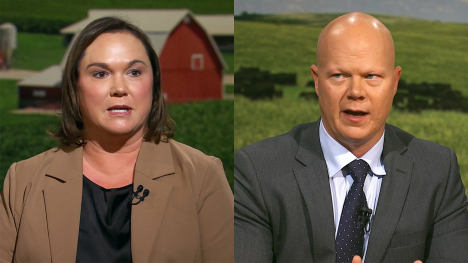
Naomi Blohm and Ted Seifried question USDA’s corn yield surprise and weigh China’s soybean demand.

Farmers rarely seek mental health help. Farm Dog offers care from people who know farm life.
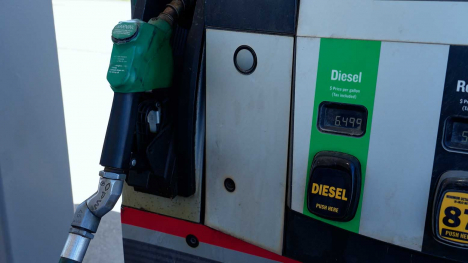
Rising diesel and freight costs squeeze farm margins and could reshape plans for the 2027 crop.