This week, the House Agriculture Committee held a hearing to study the effects that policies of the Environmental Protection Agency are having on American agriculture.
Farmers Testify in Front of House Agriculture Committee About the Effect of EPA Policy on Agriculture
Share


This week, the House Agriculture Committee held a hearing to study the effects that policies of the Environmental Protection Agency are having on American agriculture.
Transcript
This week, the House Agriculture Committee held a hearing to study the effects that policies of the Environmental Protection Agency are having on American agriculture.
Several witnesses testified that while the EPA can be quick to limit some chemical uses in agriculture, they can also be slow to approve or update the use of other chemicals.
Rep. Barry Moore, R - AL “Reading through your testimony, I felt the same issues in my district related to the recent dicamba decision that left many producers scrambling after the purchases for the year had been made. Can you provide insight on how this last-minute nature, this decision, affected your producers?”
Chris Chinn, Director, Missouri Department of Agriculture: “We were really stressed out in the state of Missouri, as were other producers and other states, because we weren't we didn't have the certainty we had the product sitting in the shed, but we weren't sure if we were going to be able to use it. We were very satisfied. The EPA made a quick decision with the existing stocks order, and they helped us for the 2024 growing season, but we still have uncertainty for 2025.”
Rep. Barry Moore, R - Alabama: “So you don't know what to expect going forward. And you change your mind again, right?”
Chris Chinn, Director, Missouri Department of Agriculture: “Right. And the biggest challenge is the seed supply right now this year the seed for 2025 is being grown. And so if that dicamba product is not going to be available we're going to have seed technology out there. But we're not going to be able to have the crop protection technology to help with that.”
Rep. Dusty Johnson, R - South Dakota: “And I just wanted to give you an opportunity to talk a little bit about, why you think that's the right approach and maybe, maybe starting by the weaknesses of having a more fractured, balkanized approach toward labeling. Doctor Larson.”
Rebecca Larson, Chief Scientist, Western Sugar COOP: “It's very difficult to understand the impacts on human health and the environment from various pesticides. You need formal training and education to understand how to evaluate that. So thinking that we can push it down to the local level and have county commissioners or state legislators trying to decide what the risk of a pesticide is, is very complicated. It should reside within the EPA with the PhD level scientists that are doing those critical and well thought out experiments.”
Rep. Doug LaMalfa, R- California: “We've been seeing farmers go out of business because they can't keep up with the cost of these regulations and the price of the materials themselves, since they have a narrower window of market.”
Chris Chinn, Director, Missouri Department of Agriculture: “We need to make sure that they have many choices when it comes to crop protection tools, and we need to make sure that the rules and regulations in place are things that are workable. That's why we encourage the state departments of ag being able to be a part of these decisions with EPA, so we can represent what that small farmer and and at the boots on the ground are seeing when they try to implement those regulations as written.”
For Market to Market, I’m Peter Tubbs.
Watch More

Those who survived farming in the 1980s Farm Crisis have stories to tell and agriculture today should focus on cash flow, not profit.
Sugarbeet losses, diesel costs, Montana’s feral horses and market analysis with Shawn Hackett.
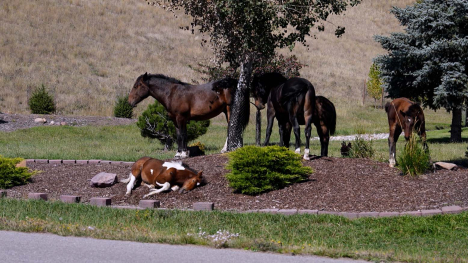
Montana residents balance affection for free-roaming horses with safety and property concerns.
Shawn Hackett weighs storing corn versus selling soybeans and Brazil’s potential weather risks.
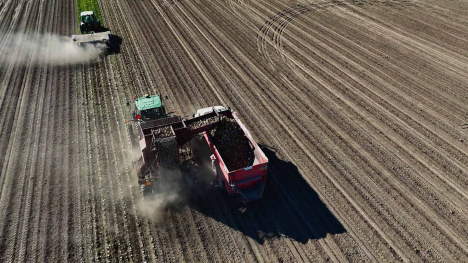
A growers association reports average losses of $500 per acre as sugarbeet harvest gets underway.
Shawn Hackett weighs corn demand, USDA yields and potential November turning points for grains.