Brad Matthews talks weather, cattle, and corn in our Market Plus.


In Market Plus, Brad Matthews talks with Paul Yeager about the weather, feeder cattle, corn and how long fertilizer prices stay where they are.
Transcript
[PAUL YEAGER] Welcome back to the table for the Friday, May 29th, 2026 installment of Market Plus. Joining us now, Brad Matthews. You may recognize that you don't recognize him. Brad, Roach Ag President. Tell us a little bit about your relationship there to commodities. Where are you from?
[BRAD MATTHEWS] I am originally from Naperville, Illinois, and how I got started in the industry, in the business is I was a finance major. I graduated from Indiana University. I had to have an internship within my major. I had an old high school football coach who was a trader at the Board of Trade, called him up and that's how I got started. I was an intern there, went back down, worked in the corn options pit after I graduated for a year. And now I've been working with farmers and hedging and cash sales recommendations for about 20 years.
[YEAGER] And you've been with Roach Ag for how long?
[MATTHEWS] 12.5.
[YEAGER] Yeah. So, and you were in Indiana before they were good in football. You remember the dark days?
[MATTHEWS] There hasn't been many times they've been good. So, the chances wouldn't be very good. But yes, I do remember.
[YEAGER] Dark days right now have been for certain areas dealing with weather. We kind of talked a little bit about it. Wheat is its own that that ship has sailed, but the corn and the bean. I do have a question. We'll get to here in a minute about the weather. But if you wanted to give an overall picture of how you think you talked about it a little bit in the program, you're still saying we're 1 to 2 weeks out before we might start, might, might start seeing some weather interest pick up in corn and beans. Is that right?
[MATTHEWS] The initial reaction, I think, by the trade has been it's favorable. The warmer, drier pattern that that we've seen certain areas were too wet. Like I said, the GDUs get things greening up, growing. That's always going to be the initial oh, look at corn's getting taller. Looks great. But if certain areas and I have heard this from especially multiple different parts of Iowa where we haven't had rain in a little while, 90 degrees, you know, we could definitely use a rain if we're talking about that. Yeah, middle of June, the market will start to care a lot more.
[YEAGER] Yeah. I think our right here where we are at, I think the average is somewhere in the upper 70, 77, 78 right now. We find we have been 92, 94, 95. We're going to be upper 80s by the end of next week. So yeah, who knows. We'll see. That's always weather is a thing and it's always a matter. But one thing is we do have a question about whether Eric in Minnesota leads us off with all of your submitted questions. This one came via Facebook. If the dry conditions remain or drought worsens in the Midwest, will we get any basis improvement for corn and beans in the northwest? Corn Belt?
[MATTHEWS] I believe you will get improvement in the Northwest Corn Belt on basis. But we're also talking about witchcraft. Are we talking old crop right now? Because that's going to be harder to get that much of an improvement because there was a big crop out there versus new crop basis? Yeah. I mean, if that's especially if that's an area where they're going to have yields that come down, they have production losses, you'll definitely see basis improvement for new crop.
[YEAGER] Where are you at in the relationship of understanding basis and the point of what story it's telling you a direction or what the demand is for certain areas.
[MATTHEWS] So right now, I would say the past couple of years, basis has really been telling us that the demand is extremely strong and there might not be as much crop out there as what we continue to see from USDA reports. Basis is very firm for having 2 billion plus carryout. Right. And what I'm seeing right now is once again, basis is very firm for 2.1 and change carryout in corn. And what that tells me is either there's not a lot of corn out there left to be sold or demand is that strong. And I honestly think it's a combination of both. I think we have some of the best demand we've ever had in the export market. I think ethanol margins are great, so ethanol is willing to pay up to get that corn to continue to grind. And I also think that farmers sold more than they have in past years.
[YEAGER] Well, that's what I was going to ask. So, I mean, the farmer has pried open the barn door.
[MATTHEWS] I believe so. I mean, there's still grain to be sold, don't get me wrong. But there are years where you feel like there's half the crop still left to be sold going into June, July and August. I think it's a lot less than that this year.
[YEAGER] Which those who keep what we call what gambling bushels at the end of June, July might hit it or might just sweep it low. That could happen.
[MATTHEWS] Yeah, absolutely. I mean, most years, if they hold it into August, it's being sold low. But I think they say around, you know, two out of ten years you get an opportunity.
[YEAGER] All right. Well, let's talk about opportunities. Let's see Joel in Oklahoma. This one's another weather story, but this one's related to the cattle. How close is this drought in traditional cattle country to causing another cow herd liquidation?
[MATTHEWS] That's a great question. And I don't know that I have an exact answer for that. I'm not sure that you're going to have a herd liquidation on that. As of right now, I don't see that. But I think what you have seen is that there have been more feeder cattle coming to the market early, which could be an opportunity for first quarter of 2027 for prices.
[YEAGER] Well, and this cattle market, I mean, I guess I kind of I went around it a little bit. We do have tariffs and imports possibly coming from Brazil. But the story this week that we didn't get mentioned when it comes to beef is Australia's beef farmers. They're expecting China to put tariffs on. So, it's not just the United States that gets the tariffs. But what does that mean in this global meat complex.
[MATTHEWS] That's a great question. You know, part of that then makes you wonder if the talk was a deal with China. The 17 billion. And they said more agricultural products. One of the things that they said they were going to potentially buy more from us is beef. Do we actually start to see that pick up then from China? That would absolutely help support prices, but it's really a big back and forth yo yo with some of that stuff too, because at one point we were told that we were going to get rid of the tariffs from Argentina. We had a huge jump in price. And then later that day, they told us we weren't going to do that anymore. So, I still think that that's a risk as well about potentially importing. And then you always have the question of when is the day where we open up the border again for these feeder cattle from Mexico?
[YEAGER] Yeah. Got an idea on that one?
[MATTHEWS] I do not I think we're still a little bit of ways away, but when that day does come, I mean, that's one of those things we talk about the Black Swan. It will have an effect big time on price.
[YEAGER] Is that anything that can be gradually done?
[MATTHEWS] I honestly don't know.
[YEAGER] Yeah. I mean, that's because I think everybody's just waiting for that moment when that happens that, oh goodness, I didn't I didn't have protection. I'm in trouble. Yes. Is one of those things that you talked about on the main program. All right. We got another question. This one is tied to the price of corn. And it is Joel in Minnesota. Could we hit $6 in corn if we stay a bit drier?
[MATTHEWS] So we talked about on the show a lot of these different things. If China is a buyer, I mean, we already lost basically 180 million bushels. When you take this old crop carryout to what they're expecting for the new crop carryout, 180 million bushels less, right? We're in the one nines. If you take yield down from a 183 to, say, a 180. And if the acres happen to be, say, 500 000 too high, you're already starting to talk about $6 corn, especially if you throw in China. Buying the carryout gets tight pretty quick. So yes, I would say if there is a weather problem and we have, you know, a 3 to 5 bushels off of the current 183 trend, that's going to make the corn market pretty excited.
[YEAGER] And much more reactionary to anything that could be happening.
[MATTHEWS] Absolutely.
[YEAGER] Yeah. When you have, when you're dealing with lower numbers. All right. Speaking of reactionary markets, and you just showed the corn chart, but this one is pretty tied to it. Kevin in Missouri is wanting to know what the third of the fertilizer being shut down because of the Iranian war. What's the long-term result?
[MATTHEWS] I wish I had a great answer for that, but what it looks like right now is that inputs for 2027 are extremely high. And we're prices are is not profitable. Talking to the customers I work with, they just don't know how they can afford to plant corn where those inputs are looking. And that's where guys don't have that year's crop pre-booked. Right? So, the question then becomes how long the fertilizer prices stay where they are with the Iran situation, the longer that goes on and the longer that those prices are inflated, it will absolutely have an impact on 2027 because you will lose significant acres if things don't change.
[YEAGER] And so, yes, 27 is an influence. Even if this now, that's too much of a speculation. 28 is possible. That could be influenced too, because it does take a long time to work through a major disruption to the system. Like we've dealt with the last 90 days. Is that right?
[MATTHEWS] That is correct.
[YEAGER] That that hasn't changed.
[MATTHEWS] Trying to say something that far out is a little difficult. But 27 definitely.
[YEAGER] See, that's not a hazing. I'm just letting you know we might ask that sometime. So very good. Brad. All right. Last question. Roger in Nebraska and this one again, we talked about on the show, but not quite in this context. Would China buying U.S. Corn overshadow a deal for them to buy soybeans?
[MATTHEWS] So what is come out? And what they have said is that they're not buying any more soybeans. What they have committed to the 12 million metric tons for the crop, which I think they got up to 11.8. Right. So, they bought what they said they were going to buy. And then it's 25 million metric tons per year for the next three years. This 17 billion, which we're assuming corn's a part of, is separate than what we already have in soybeans. And they have said that they're not really looking to purchase any more soybeans from us. It's other agricultural products. And if you think about it, that really does make sense. Why buy more than that in soybeans when Brazil is cheaper?
[YEAGER] Right. And that's always been the deal with the Chinese. They are they know where a deal is. If there's a sell off and they think this is the bottom, they'll buy whatever the high one in the in the market, they're not going to buy.
[MATTHEWS] They're smart marketers. If it financially makes sense, they're going to buy. If it doesn't, they're going to try to figure out to buy from whoever else is going to be South America or Brazil. Sometimes Argentina, unless, like you said, it makes sense for them to come to us. So, them purchasing from us is pretty much only a political situation right now.
[YEAGER] I help you, you help me. An exchange of sorts is what it is, more than a need fill, correct? Okay. I think we did. All right. Are you feeling all right? Yeah. What position do you play in football?
[MATTHEWS] Free safety.
[YEAGER] Free safety. And your coach then that coached in football. How long did he stay at the Board of Trade?
[MATTHEWS] Oh man. He was there for probably another like ten years. But you know not even that. Probably more like six. When I went my when I went back down after I graduated, it was the talk of the side by side, meaning that things were going to go electronic. That's when I went to a different company after being there a year to get behind a computer screen, to really understand that side of it, because you could see the writing on the wall. When I got to the company then that I was with, it was 90% in the pit, 10% on the screen. Within one year it was 9010 the other way. So, the pits disappeared. He then tried to go to the options pit, and that was a little bit too difficult for him because he was in the future. It was different for him. And so that that shortened the lifespan of his trading career.
[YEAGER] He thought dealing with the blitz was tough. You know, we're changing offense. But yeah, that that was a major change in the industry. And you've you had front row seat for that. So, all right Brad thank you. Great job. Thank you. All right that's Brad Matthews. Next week we're going to break down the forces reshaping the cattle market. And Matt Bennett will sit over there and break down the commodity markets. Thank you so very much for joining us. Have a great week.
Trading in futures and options involves substantial risk. No warranty is given or implied by Iowa PBS or the analysts who appear on Market to Market. Past performance is not necessarily indicative of future results.
Watch More
Weather is part of the discussion in the wheat, corn and soybean markets while our Market Analysis with Karen Braun also covers the cattle on feed report.
Wet and dry weather have different impacts on the commodities market. Our Market Plus is with Karen Braun.
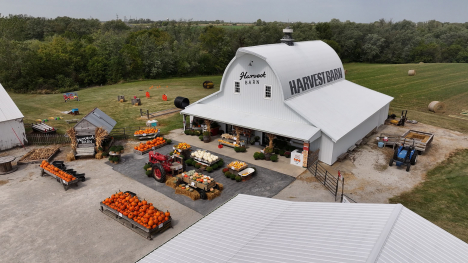
The Boyer family made Iowa their home in the 1990s, venturing away from family farming in Pennsylvania to pursue their own agricultural vision.
The G7 tone changes with a memo of understanding in the mix. Another weather system sweeps across the Corn Belt. One family’s love of farming has cultivated something bigger than the farm itself. And, commodity market analysis with Karen Braun.
An expanded response to the spread of the screwworm. Indoor farming looks to survive the hype and harvest profits. And, commodity market analysis with Mark Gold.