Market Plus with Matt Bennett covers managed money exiting commodities and what could drive the next rally.


The commodity markets seem to have developed some numbness to war news. Market Plus with Matt Bennett also covers wheat and corn news.
Transcript
Paul Yeager: Welcome back to the table for the Friday, June 5th, 2026 installment of Market Plus. Joining us now, Matt Bennett. Let's talk your farm for a minute. If we could. You've been in spots where 40 miles away can be different than you. And we talked heavily about that 40 miles away. Give me and I've asked this before, someone who's in a different position than you are not meaning you, the collective you. How frustrating is it right now to see markets not respond to what's going on with you, and how do I prepare myself or my marketing plan when that's happening?
Bennett: Yeah, I mean, the tough thing that you've got right now, Paul, is that, you know, a lot of folks maybe sold a little bit of corn on the way up. We got above, contrary to last year above the spring insurance price. And then we ratcheted higher and voila, you're at five bucks and above. Well, I sold a little bit of 480. I don't want to get too much sold because what if it goes to 550? Right. And I understand how that works. But now that we've just taken a beating, you know, over the last several days and you've got these corn back, you know, under 450, quite frankly, you got to go back to the drawing board and just say, okay, in my particular situation, given my yield potential, where does my break even come in? And if you're underwater, you've got a whole growing season ahead of you. First of all, second of all, the chances store especially hopefully on the farm storage. It's early in this game and so I wouldn't get myself to beat up here. Clearly you got some fail safes in there with crop insurance. Obviously the PLC programs. But bottom line, this isn't fun. And I would say the way that this has gone, I'd say farmer sentiment is probably going to be about as low as it's been in a long time. It's concerning.
Yeager: Yeah. Purdue survey was low again. And they've kind of been trending. And it's hard to stay positive when things look like the picture behind you. Blue skies green for some for many. All right. There's one thing that I wanted to talk about a lot during the program. We just kind of ran out of it. We need to talk about this managed money. I want to talk about Keith in Minnesota. His question to lead us off here, Mr. Bennett, in regards to the managed money crowd exiting longs and grains and oilseeds, where do you believe the money is going?
Bennett: Well, you looked at Friday earlier in the day, made an all time record high in the Dow. You know, obviously equities people have been pouring some money into the equities. You look at people are talking about some of these IPOs coming up. You know whether it's SpaceX, AI. And I do think some of that money is maybe parked kind of waiting on some of these IPOs. But bottom line is that once you got that corn long at the level that it was at, which was pushing a record, I do believe a lot of times when that happens on Friday, you come in Sunday night, you sell the thing off. That's kind of what it felt like, is that some people felt like, hey, this is enough for now, right? And I don't know that I want to be pushing it and taking it to a record long. And so we're going to start extracting some of this. And that's exactly what we've seen happen.
Yeager: And we're now seeing, okay, exiting the longs is one thing, but it looks like in wheat, they're piling in on the shorts. Adding insult to injury, there.
Bennett: Absolutely. I mean, and again, Paul, that's what's frustrating is that, you know, if you're in an area that didn't raise a crop, you know, obviously there's a lot of that. The Western two-thirds of Kansas, there's so much wheat out there that's going to be frustrating to have the kind of yields that they see. But again, the tough thing about it is that the funds are looking at global. People in the world can produce wheat. Now, there's been questions, hey, what if this urea thing, you know, stays elevated for a while? I still think you plan a lot of wheat, but what if people can't fertilize it the way they'd like to? I mean, clearly availability and price could be an issue, especially with some of these gas facilities wiped off the map. You know, for a couple of years, they're going to be offline. And so I do think there's a lot of question marks on feed grain production over the next couple of years. But bottom line, right now, you've got all the wheat that you would need to have in the world. They're talking Australia crop might be off somewhat, but Russia is going to have a lot of wheat.
Yeager: But again, like you said during the program, that's just one little sector here. It's one one little sector. Since it's such a global product.
Bennett: I mean, you're always 3 or 4 weeks away from wheat harvest in a major area. Always. Yeah. I mean, someone's, you know, you can plant wheat on a mountainside, you know, people plant wheat all over the world. And that's the thing is that you can plant wheat almost anywhere, beans, a few less places and corn only in certain places, you know. But yeah, wheat you complain about anywhere.
Yeager: All right, let's skip Luke. We're going to come back to Luke in Iowa in a minute. So hold on, Luke. I want to go to Kevin in Nebraska. And if we didn't ask you about the WASDE report coming up, but Kevin wants to know, can beans go to $10 after the acreage report?
Bennett: I mean, it's a possibility if a few different things happen. November Beans specifically would concern me somewhat if, for instance, let's say let's say that March report was not a perfect report, right? And maybe you come in and you post like a 92.5 for corn, you know, if that's the case and you dump 2.5 million or almost 3 million acres over in soybeans, that's not going to look good at all, especially whenever we're looking forward. You know, if you've got fertilizer issues, which we know that's not going to work itself out quickly. Brazil imports pretty much all the fertilizer. And so the first crop for Brazil. Are they going to plant as much corn they could plant an incredible amount of soybeans in that first crop. It's already their big crop. But bottom line is moving forward. You've got to ask yourself if there's U.S. growers that have maybe opted towards soybeans, because fertilizer prices are not the only ones in the world thinking that. And so I would be concerned that this bean market could get carried away to the downside. Once again, you've got a fail safe as far as the insurance program goes. But it wouldn't be much fun. I totally get it. I understand.
Yeager: Well, you talked about the other side of China for a minute. This is a thought I saw developing online this week of, well, maybe since we're so low right now, that will attract China to buy and or we've just become attractive because we have become too low. Are we at that point yet?
Bennett: If you're China and you make an announcement that we're not going to be buying anything for a while, what do you think that will happen to the market after you make that announcement? Same thing we saw this week. And so would anybody be shocked if they stepped in and bought corn or soybeans sometime during this absolute drastic dip? Lower? No. Wouldn't be surprised whatsoever. And so you're definitely on to some of the same conversations me and my colleagues have been having.
Yeager: And it's one that I think I've written this down several times over the years, that it's a playbook almost that we, we forget could happen. And it could.
Bennett: Absolutely don't necessarily want to listen to what they say. You want to watch what they do.
Yeager: Well, now we're talking familiar tropes. I've heard that one before as well. Okay. Boyce in North Dakota, this is a question that crossed my mind as well this week. Has the Iran war become like the Ukraine war, where the markets get used to it and just don't care anymore?
Bennett: It doesn't seem like it's having near the impact. You know, I think the frustrating thing over the last several weeks is over the weekend, whether it was the Iran war or whether it was US, China, we got a lot of news while the markets were closed. Very frustrating for a lot of people because there's a lot of market movement. Whenever the markets opened up on Sunday. And it makes you kind of wonder, did someone go home on Friday with a certain type of position? Right. And so very frustrating. But as far as the Iran situation, you know, this week there were some pretty stern talk back and forth and talks of bombs flying and what the market think about that didn't even bat an eye whatsoever. And that's what we saw, you know, very good question. Because at the start of the Ukraine war, wheat would go up 40, $0.50, you know, towards the end. I mean, you could launch anything but a nuke. And it seemed like the market didn't even bat an eye.
Yeager: So do you think that I guess maybe I should have asked it very specifically. Is the Iran war no longer having an impact on commodities? But it still seems to be having an impact on the equities market.
Bennett: Yeah. And it also has an impact, of course, on the oil market. I mean, the oil market, that's one thing we haven't talked about yet. One of the more concerning things here over the last week or so is that the disparity, the correlation is just not there. Several days here. We've had crude oil moving higher. And you said on the week we're up a little bit, right. Corn wasn't up on the week. That's not something good. I mean a lot of folks have said, well gee, the only time they're correlated strongly is when Crude's going down, corn goes down. That's not necessarily the case. But lately that has certainly been the case. And so that's been very concerning. But yeah, you're right. With equities, it's amazing to see the kind of run that we've seen. You know we're pushing 52,000 on the Dow today.
Yeager: Well and part of the jobs number was part of that equation. And the president had a quick statement about it. And it seems to be how locked in is that market to global events versus maybe what reports are telling is happening?
Bennett: Yeah, I mean, that's a tough call. I mean, but you would think with all of the uncertainty that we have with the U.S., Iran, Israel situation, with gas prices, where they're at, that you wouldn't have what you would call a confident enough investor to be pouring money into anything. Right? But yet you had an all time high in the Dow on Friday. It's confusing, to say the least.
Yeager: Not all parked, they haven't liquidated their money yet ahead of those IPOs that you're referring to.
Bennett: Not all of them have. But I do think there's some money parked and ready to go.
Yeager: Okay, so that's a little bit of a positive. Let's do one more here. Let's go back to Luke, if we could, in Iowa. And it's a little tied to kind of what Matt's been saying a little bit. Can beans or I'm sorry, what creates the next rally? Oil is strong. Corn is fading. So you can you've kind of talked about the oil side of that one, but what's going to give us this next rally?
Bennett: You know, as far as oil goes, if you would get oil up and going back over 100 and keep it over 100, which is a possibility. We've been burning a lot of oil since this war started. And the production has certainly declined. We all know that. But as far as corn is concerned, what would the recipe be? It's concerning to me when the funds pull out, you've got to be you've got to give them something big to get them interested again. So what would those things be? Well, if China buys corn, that would certainly be one of those. What's the likelihood of that? I think that will happen at some point. But right now Argentina's corn is cheaper. Well, Brazil's beans were cheaper than US beans this last winter, but I still think it's a possibility. But acreage acreage, June 30th. It could be a fairly decent deal for the market if you could drop this thing more. Now what am I predicting right now? I mean, our group hasn't come out with an official number. I'm thinking half or a million off of March. But again, I don't know, 95.3, I think the June numbers typically a lot better than the March number. So it's really hard to tell you what that would be. And then of course, weather. But right now it just doesn't seem like you can get too excited based on the weather. Most of your longer term forecasts are saying it's not going to be super hot this summer. Most of your long term forecasts are saying there's going to be a enough moisture from not for everyone, but if you don't get a ton of moisture and you're not super hot with these hybrids, I think you're still going to perform.
Yeager: It's proved that the last couple of years.
Bennett: Absolutely. That's the tough thing. It's hard to get a weather market going with these hybrids.
Yeager: Yeah. So don't count on it. There's got to be other factors to move things.
Bennett: Yeah absolutely. I think that you're going to have to have other factors. But it's certainly a possibility. Don't lose hope that we can't see something. I mean last thing I'll say you can't forget the fact we've got record U.S. demand and record world demand for corn. That's something that typically doesn't go away overnight.
Yeager: And it doesn't get created overnight. So yes, that's yes doesn't go away and doesn't get created. It's gotten to that point. All right. Absolutely. Matt, great to see you. Thank you so much. It's been a heck of a week for you there on many fronts. So glad to have you here.
Bennett: Absolutely.
Yeager:: Matt Bennett everybody. And next week we are going to talk about indoor farming and how it looks to survive the hype and harvest profits and Mark Gold will be here with us. We're going to tell you about Mark Gold in the Market Insider newsletter, which comes to your inbox on Monday. Thank you for joining us here. Have a great week.
Trading in futures and options involves substantial risk. No warranty is given or implied by Iowa PBS or the analysts who appear on Market to Market. Past performance is not necessarily indicative of future results.
Watch More
Wednesday's USDA report traditionally is quiet on yield, but risk is in the air according to Kristi Van Ahn-Kjeseth.
Wheat stalls, corn struggles and cattle turns cautious, according to Kristi Van Ahn-Kjeseth in our Market Analysis segment.
The Farm Bill fails to make it out of the Senate Agriculture committee.
Iran casts a shadow over the jobs report.
A grocery store keeps a community from turning into a food desert
And commodity market analysis with Kristi Van Ahn-Kjeseth.
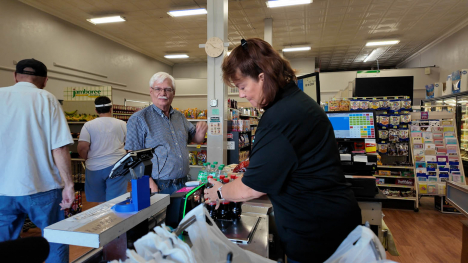
Facing closure, Gowrie's only grocery store was saved by 60 residents and $250,000.
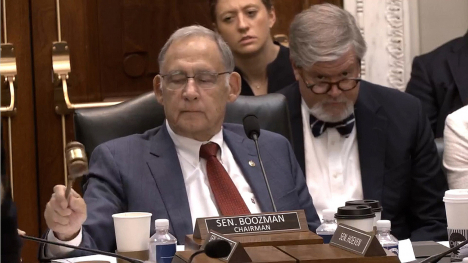
A battle over SNAP kept the Senate Farm Bill from advancing before August recess.
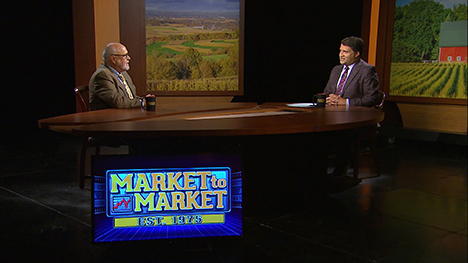
The weather’s influence on the market may be closing soon, according to Dan Hueber in Market Plus.