Karen Braun weighs the 2027 acreage battle, input costs and U.S.–China trade signals.
Acre Decisions Loom, China Talks Have Bullish and Bearish Potential In Market Plus with Karen Braun
Share


Karen Braun answers viewer questions about the 2027 acreage battle among corn, soybeans and wheat. She compares inflation-adjusted prices with stocks-to-use levels, examines Brazil’s soybean outlook and rising diesel and fertilizer costs, and identifies which U.S.–China summit headlines could move grain markets.
Transcript
[PAUL YEAGER] Welcome back to the table for the Friday, September 18th, 2026 installment of Market Plus. Karen Braun still with us here? Corn clip and all. You want to make your plea now for other clips or should I just do that in the newsletter? Would you take a wheat or a soybean clip?
[KAREN BRAUN] I would gladly wear a soybean or a wheat clip. I just need somebody to make one or send one to me. I would be wearing it.
[YEAGER] Well, and that's going to the reason I bring it up is it's tied to our first question because it's about acres. Let’s Talk Gary in Wisconsin, if we could, because this was a big topic last week with Matt, and now he's wanting to know what will cause the largest battle for 2027 U.S. crop acres, a sub 1.5 billion bushel corn carryout, or USDA printing a sub 180 million metric ton Brazil bean crop.
[BRAUN] Oh, so you're saying those --
[YEAGER] Those are the two.
[BRAUN] Those are the factors that will influence the acreage battle.
[YEAGER] So first, do you agree with those factors?
[BRAUN] Okay. Do I agree with those factors. So I think first of all on the Brazilian beans That's a good place to start because that number that cannot be put out this week, only up fractionally from last year's record. I mean, that is potentially very bullish because we're not used to a Brazil like that. We're used to Brazil just planting more and more every single year, more than we expect, and absorbing yield fluctuations with that higher acreage. So we don't typically see, you know, a steady year on year Brazil bean crop unless something happens. And then we have El Nino on top of it, which is just historically not good for Mato Grosso. And that's the biggest state there in Brazil. So you have a lot of factors there that are saying, hey, you know what? Brazil's year may not be the Brazilian soybean year's of the past. And so that adds an interesting layer. But you know, you do have corn and you have the global corn deficit relative, you know, production relative to consumption. I mean, that's real. It's a 30 plus year high and corn crops around the world have been impacted. So and then there's wheat. Don't forget about wheat. You've got to factor in wheat, because right now is when farmers are starting to decide, are they going to plant wheat? Because last year, you know, us farmers planted record low wheat area. So I think wheat is going to be potentially coming back into the mix this year in a big way. And that also allows in some places to do some double crop beans. So soybeans could benefit from wheat's kind of resurgence, potential resurgence.
[YEAGER] And you're talking here in the US here, US producers. But we're watching South America like we always do now.
[BRAUN] Yes. Because because do we need to keep carrying the bean acres here that we are. Right. I mean, we kind of know what China's demand is going to be, or we think we know at least we can change at any time. But, you know, that is something that we we're not wondering about right now, but we're wondering about is what are we going to need to plant in 2027? I mean, we are tight here in the US on corn. And that is that is.
[YEAGER] Our next question. That's our next question. Karen, you're going ahead. You're she's very good. Ted in Chicago wants to know when adjusted for inflation, how do corn and soybean prices compare to other years with similar balance sheets? Specifically the stocks to usage?
[BRAUN] Yeah. So when you adjust those prices for inflation and we're talking about September prices, where we are right now versus past years and how the supply situation looked. We're actually low. We're we're pretty low on both corn and soybeans. I mean, in 2012, corn or soybeans adjusted for inflation, almost double today's levels. Like I think 26 bucks roughly. Is that adjusted value. And so, so but on a nominal basis, soybeans are the ones that look potentially a little bit high. Only because there's this kind of inflection point there where, you know, you've heard beans don't like to trade at 11 or $12. It's kind of like, you know, 10 or 13, but the middle ground is, is off limits. So we're kind of at that point where, you know, the stocks to use is just below 7%. That's not super tight, but it's but it's not it's not super loose. Right? I mean, you could it could go either way. And I, and I think that, you know, the corn one, the corn is the one that to me when I look at that relationship and on a nominal basis, again, I think that that is the one that looks a little bit underpriced relative to the stocks to use that we're facing now.
[YEAGER] Is it is anything priced to what we talk about? I'll sometimes ask about price to buy acres.
[BRAUN] Yeah.
[YEAGER] Is there anything right now that I mean you mentioned prepared for inflation. And sometimes we don't always quite understand that. But is there one that looks like. Yeah, I'm trying to buy some acres here with this action wheat.
[BRAUN] Sorry. I got I got to got to give it to wheat because I mean, just look at how, look at how strong it is versus last year and knowing that again, you can bring in some of those double crop beans and you can get decent yields with double crop beans. I mean, that kind of allows a farmer to do both Now, I think that you're still going to need a pretty strong coronary in 2027, given just this supply crunch we've seen globally. I mean, France just had a 2012 write a US 2012 situation. And that's a big gap there that we have to fill.
[YEAGER] But then I get to the hole if scenarios that you were laying out before. But what happens if Russia and Ukraine go, you know what? We're good now. And all of a sudden it starts to rain in France and Australia gets the rain back. That global commodity that we talk about, does that give you pause for expansion? If you have the ability to do wheat.
[BRAUN] You know what. See I don't know because that would need to be happening right now because farmers are going to be planting wheat here starting in, you know, a couple of weeks. I mean, they've already started. They've already started, but the majority of it's kind of October. And so I don't know that there is enough time for any of those events to realistically unfold before a farmer would be planting wheat. And I've talked to a few farmers that, you know, they're, they're saying, hey, I might, I might be planting wheat this year. And I haven't. And you know, a while or I might consider a little more than I have now. I don't think it's going to be back to levels we used to see ten, 20 years ago. I mean, by no means, but I do think that, you know, that record low area that we saw this year, I think that's probably not the case in 27.
[YEAGER] Okay. I'm going to again, I apologize because I'm about to go in order instead of out of order like I was talking about. But this is about the input side of the discussion because again, making decisions right now in October that you're talking about, Karen, it's diesel fuel prices. Phil, in Ontario, diesel fuel are at record levels. How do farmers handle this volatility volatility risk now and into 2027.
[BRAUN] I mean look there's just not much you can do about the about the prices right now. I mean right now in the Middle East and Russia the biggest exporters there's problems in both. And so that is causing a global crunch I think here in the US. We're not we're not to the point of rationing yet though because major import dependent countries. I think you have seen that start. But I think right now what's going to be really important is, especially as we move towards the spring, is the fertilizer prices, I think actually more than the diesel because fuel prices, while they're sky high, I mean, it's a relatively small share of the cost when you compare it to fertilizer. And right now, luckily, our commodity prices are higher. So they are able to absorb more of those higher input costs. But the fertilizer situation is very, very unknown as well because the volatility you just.
[YEAGER] You just give gave Matt Bennett a nice whew. Because that's exactly kind of what he said last week. He's just like, I know nobody wants to hear me say this, but you know, in that scenario, all right, let's spend the last couple of minutes, if we could, about China in the United States. Yeah. What's a bullish headline or what's a headline that would make us go bullish next week. What's a headline that would make us be bearish.
[BRAUN] Yeah. I mean the bearish is very easy because obviously if nothing is really said about AG, I think if there's no idea of further purchases or any kind of concrete. You know, maybe crop ideas of what they might buy or that 10% tariff being reduced. I think that if all those things don't happen, I think it's fairly bearish. But I will say the funds are so bold up right now for many reasons. But I think the optimism returning on China is one of them. I do see a scenario where nothing that is said in that meeting could be perceived as bullish. I do see that scenario, and in only because of how far we've come this year and just how hard we've rallied, how bold the funds are, you know, because it is it a buy the rumor, sell the fact kind of thing. And maybe the fact it doesn't matter what the fact is, but we're we're selling it. I mean, and that that's a realistic situation when we get, you know, the funds like this. So but I do think that, you know, if the word corn is said, that I would have to think that that has to spark some excitement into the market. I'd have to think so.
[YEAGER] We should say this summit is not exclusively even really about agriculture. It's just between the two. And so that has happened before where she and Trump have talked. And we thought there would be some type of comment on on commodities. And it ends up it's only about chips. It's only about Taiwan. It's only about security in a certain part of the world. So we do have that potential to be there, that no words are spoken outward.
[BRAUN] Exactly. And I think this time, this time they have said that agriculture that's been mentioned leading up into this now, whether they've changed their mind or need to focus on other things. I mean, who really knows? But but there is that idea that, yes, they were going to discuss tariffs and agriculture. And so I don't know if it's going to go as far as to we're going to purchase 10 million tons of corn. But if they did that, wow, I think I think that would that would really change things here.
[YEAGER] Yeah. Speaking of announcements, there was something in soybeans just here yesterday about there's not been any announcement of purchases by China in recent.
[BRAUN] Yeah, yeah.
[YEAGER] Questioning is is that a leverage moment?
[BRAUN] So yeah.
[YEAGER] Reading that tea leaf. Yeah. It makes it sound like yeah, we're going to talk about AG.
[BRAUN] You'd have to think. So you'd have to think so. I mean, especially since we didn't last time, we need the we need the Intel. We need to know where this $17 billion of non soybean purchases are coming from. The years running out. They said that they were going to prorate that 17 billion for 2026. The year is running out. We need to know. The market just needs to know quickly.
[YEAGER] Crude oil still $100 some. I didn't see what it printed before we recorded. What's that doing for ethanol demand, ethanol usage and fuels. Is ethanol going to get caught up in this? You know what? I'm just going to park the car and not do as much driving.
[BRAUN] Ethanol stocks have piled up. I mean, production still running because margins are decent. But but you've seen that run up in stocks. And so I think that might be exactly what you're asking that that you know, those high prices are potentially scaling back some of that demand.
[YEAGER] So come on. You know you want to say it. What's the cure for high prices.
[BRAUN] High prices.
[YEAGER] And the low prices. I mean so are we in that part of this discussion right now when it comes.
[BRAUN] I mean, we might be too. And again, I think that you have to look at the seasonality of ethanol as well. I mean, you know, you need the corn harvest to come in before you really start to ramp up again. It's we're in that lull kind of when that harvest lull for just corn usage in general. So I think that, you know, once the harvest gets going, we get some results here. See how it goes.
[YEAGER] And no lull in information you gave us either. Karen.
[BRAUN] Oh my gosh.
[YEAGER] Appreciate it. That's a lot.
[BRAUN] Thank you. Crazy week, crazy week.
[YEAGER] Karen Braun everybody. Thank you. Next week we are going to talk about passing the dairy on to the next operator. It's a succession story that's a little different than you think. And we're going to have the commodity market analysis with Arlan Suderman. Thank you so much for joining us. Have a great week.
Trading in futures and options involves substantial risk. No warranty is given or implied by Iowa PBS or the analysts who appear on Market to Market. Past performance is not necessarily indicative of future results.
Watch More
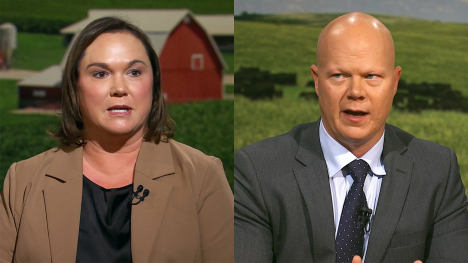
Naomi Blohm and Ted Seifried question USDA’s corn yield surprise and weigh China’s soybean demand.
Higher USDA yields pressure grain. Plus, opportunities/costs of putting local food on school trays.
How grain prices rally this winter w/Naomi Blohm & Ted Seifried on USDA, China demand & S. America.

An Iowa school district connects local farms, food hubs and students through the lunch tray.

Farmers rarely seek mental health help. Farm Dog offers care from people who know farm life.
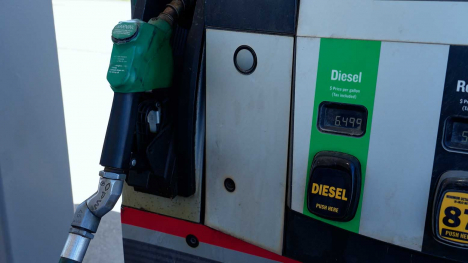
Rising diesel and freight costs squeeze farm margins and could reshape plans for the 2027 crop.