How grain prices rally this winter w/Naomi Blohm & Ted Seifried on USDA, China demand & S. America.
How Corn and Soybean Prices Can Rally This Winter — USDA, China and El Niño
Share


Naomi Blohm and Ted Seifried go deeper on USDA’s corn yield, soybean quality and China demand. They examine South American weather, El Niño, export risk and fund positioning — and whether corn and soybean prices could make new highs this winter.
Transcript
[PAUL YEAGER] Welcome back to the table for the Friday, October 9th, 2026 installment of Market Plus. Still at the table with us, Naomi Blohm, Ted Seifried. Oh, what a day.
[TED SEIFRIED] Yeah, it's been a week.
[YEAGER] What a week for both of you. Thank you very so much. I don't know if I ever say it enough. Thank you for all that you do to come here, because, Ted, this is a day we used to do those four person panels, three person panels, two on this day because it has significance. We were supposed to go smaller crop, right? It went larger today.
[SEIFRIED] Right.
[YEAGER] Was that the biggest shock to you at 11 a.m. Central Friday?
[SEIFRIED] Yeah. Corn obviously corn yield being higher was the biggest shock to anybody. For myself personally. Yeah. I was on the lower end of expectations for corneal. And the reason for that one. You know, I go on crop tours every year. So, you know, just from what I saw with my own eyes on the third week of August and the yield estimate that I put out, it's I'm not pro farmer. That's not my yield estimate. We put out our own that yield estimate that I put out in August was based on what the weather forecast was at the time. That weather forecast verified. So, I was a 1756. I am still a 1756 for corn. So, to see it come in. 181.2 wow. Now put that together with what we're hearing from our clients that are going through harvest right now. Yes, we've heard a fair amount of better than expected soybeans, especially in the last week or two. The very first soybean fields that were cut weren't the greatest. It's generally speaking, how it goes, right? The fields that are that dry down fast because of issues aren't going to be great yields. But as we really are getting into the soybean harvest, we're hearing some really good stuff. Yes, there are some quality concerns, but yields are really very good. But you're hearing the opposite for corn. I'm hearing the opposite for corn. You guys are really rather disappointed with what they're getting in that corn. So, you know I, I just I'm not sure how the USDA is coming up with that. Their implied or not implied. It is their actual ear weight now, their ear weight that they're using is the second highest we've ever seen. That's what's getting us over that. 181 I don't know how with the hot and dry August that we had, I thought that there was a really good reason for ear weight to come down. It didn't. So, I don't know.
[YEAGER] September Rain didn't matter in this?
[SEIFRIED] Look, when you when you cook a corn crop in August weight is a problem, generally speaking. Maybe you got some back in August, but probably maybe too much in a lot of areas. We're now we're having, you know, damage issues. So, I don't know. I'm curious to see if that if the yield comes down from here, I think it's very likely that that ear weight number.
[YEAGER] Quality. That's what we're going to talk about. Naomi, with you first. Ethan and Iowa. William C. also had the same question, but with being quality in the Midwest being fairly widespread, are there concerns of those not being accepted into the export market?
[NAOMI BLOHM] Yeah. So, there is, of course, the concern that's there. I do think the end users are going to do a great job of blending to make sure that we can get the product exported out, because it's to their best interest to make sure that the product gets exported also. But it is a little bit of a surprise. We're hearing it pretty consistently in parts of Nebraska, Iowa, even into Illinois, just the color discoloration on the soybeans. But I agree with Ted on the yield side, they're coming in average to better for yield, but the discoloration is something we're going to have to take as it comes here. I don't. And as harvest continues, how further widespread is it or not? And yeah, it's just different. We haven't seen that.
[YEAGER] Do you buy Ted's theory? This gives China an opportunity to say no.
[BLOHM] I think that it could come into play. Yes, it could be a factor down the road, but at the same time, we're just still in that window where exports right now could pick up with the values that we have here. And because of the uncertainty of the crop and the quality, maybe it's something that we see some export demand pick up in a sense. Also, I feel like China still will come in and buy what they said they're going to buy. I am the optimist where I think they're going to. It'll be slow going. And of course, there might be tied to the November elections and how things fare with that. But the USDA did increase the export demand on the data sheet today. So, I'm a little bit optimistic.
[SEIFRIED] So I, I want to say that I do think China is going to buy that 25 million metric tons. I think they will. I think they have political, political motivation to do so. They're well on their way to do it. The feeling is that they're going to do it. What I'm saying is that this now gives them the opportunity to refuse cargoes further on down the line. If they don't need them now, whether they take that opportunity or not, I think squarely lies on the shoulders of what happens with the South American crop. If South America does not have these big negative yield results or effects from the super El Nino, and that South American crop is there, they're going to be looking at this opportunity. I very much think so. So, it gives more cards into the hands of China.
[YEAGER] Well, that's actually what I did want to ask you both then is let's discuss South America and El Nino. So, you're not in you're in the camp. It sounds like that that's not going to be as big of a deal in South America.
[SEIFRIED] Oh I'm not.
[YEAGER] I'm sorry. Are you? You can go either way.
[SEIFRIED] I mean, all the historical studies. Are. El Nino is bad for Mato Grosso in particular. That's, you know, the biggest production state in Brazil. I was there in February. Yeah. The data sets say that's bad. Like we should be expecting issues for this growing season for South America. However, so far and they're probably at this point about 10% planted in that first season. Soybean crop in Mato Grosso. So far, the weather looks pretty good. They've got some pretty decent subsoil moisture going into this growing season. So, there's that. And then I'm going to say like, we have a hard time predicting a drought six months before that drought happens. Go back to two growing seasons ago when we produced record yields for corn and soybeans. We were all, well, we a lot of your weather forecasters were all calling for drought in 25, summer of growing season in 25 went the other way. I feel like the same sort of thing is kind of happening right now. And I'm not saying we're not going to have a problem with South America. I'm just saying it's too early to check that box, Paul.
[YEAGER] Is it too early?
[BLOHM] Let me build on what he's saying. I agree with everything he's saying. Here's where I'm going to take us down the path of India, India right now is getting a little squirrely about palm oil production in their region. Palm oil production is expected to come down because of the El Nino. Right now, they have a cushion of supply. But if it comes down like what they're saying, it's coming down. It creates a problem because of the demand that India needs for palm oil. India also is really frustrated right now because they're not getting sunflower oil from Russia like they have normally been able to do. And their imports of soybean oil have gone up. So, the El Nino story, it is beyond South America. And so, everything Ted said is true. Like if they if the El Nino hurts northern Brazil, it makes it hot and dry there. So, if that happens, then we have a soybean problem. We have a reason for soybean prices. We're going to have a box checked.
[SEIFRIED] Check the boxes.
[BLOHM] And then the next box would be keeping an eye on India. Because if they then if we have lower palm oil production, if they're not getting the sunflower oil from Russia, they start importing more product from maybe the United States or other places around the world because of palm oil production issue. Now you've got two boxes that could make this market work higher.
[SEIFRIED] But let's check. Let's I want to say check the boxes, but let's go down the path of Australia. The USDA preemptively lowered Australian wheat production pretty aggressively because of El Nino. The prospects of El Nino. Yeah. Turns out Australia had a pretty darn good wheat crop. They've had to put those metric tons back on that Australian production. What is super El Nino mean too? Because it goes so far that it maybe misses the normal spots that we would expect to be affected in El Nino like so. And I'm not a climatologist, so I don't know these things, but we're dealing with something. We're calling it super El Nino for a reason. We're dealing with something that's sort of out of bounds of what we were, what's normal for us to analyze. Maybe it ends up having a positive effect. I'm not saying it does. I'm not saying it should. I just I don't think we know. Hence not being able to check the box.
[YEAGER] I think for the record, I think she was the one that said check the boxes first, like 18 months ago.
[SEIFRIED] Nice.
[YEAGER] And then you came in. That was the that was the ifs --
[BLOHM] I think it was the stars align.
[YEAGER] Oh was it stars align. Okay. Either way. So, you could use that one instead. All right. Naomi, you had a little bit about the report and what's next. Let's do Patrick and Iowa if we could. How many more acres and bushels do you think USDA will find in the next report? You were talking about? Next reports take answer.
[BLOHM] So my best guess is that they will make the next report pretty calm and quiet, where they make just small adjustments as they really start to understand where the crop is or isn't out there, but they'll have a big adjustment in January. So, from a day traders perspective, I think there's going to be some opportunity to be trading ranges that could be something that the market holds on to. But to Ted's point, earlier in the show, if we start to see the funds liquidate, they're still long positions. That's a problem. And that could lead to some technical right? Yeah. They get a little impatient.
[SEIFRIED] They want they want results. They want, yeah.
[BLOHM] So it'll be interesting.
[SEIFRIED] Yeah. I wonder what happens for soybeans on the next production report. I'm starting to think that we could be pushing 54 bushels an acre. Soybeans. It's just from again the yield results that I'm hearing these soybeans might the soybean yield again, quality concern issues are out there. But the soybean yield itself might be going up again in November.
[YEAGER] Have you seen the pictures online of these co-ops with 20 to 50 semis waiting to get in in Iowa? I mean, I've seen several different cases and they're running. I'm going to sneak in one final question. If we could, Joel in Minnesota, Ted wants to know why are there so many beans coming to the market now or coming to town.
[SEIFRIED] Yeah. Well, you know, this happens a lot of years where we hold on to old crop beans until we are about ready to harvest or getting into harvest, and then things have to come to town, or we already have storage filled and we're bringing we're coming. We're going from the field to town. I think there was I think we were maybe a little undersold on beans with the idea that, you know, all this, China's business was going to come in and eventually, you know, the fund record, long position and all these really positive things, we're going to continue to keep pushing soybean prices higher still might. Right. But there's a lot of cash movement happening right now. That's when I mean, this is the time of year where we see that usually one way or another, it's going to put pressure on the market in the near term. And again, when you have the funds who have come off their record long position, but still really very long in soybeans, if they decide to, right now it feels like they're defending. But if they decide to go the other way with that, you, as I said in the regular program, I think what they'll be keying on is, do we see these Chinese sales start picking back up again? If we keep going a week or 2 or 3 weeks into the future, we're not seeing the big sales to China come back. Then I think they lose interest. And that's when I get worried about your producer selling and fund selling happening at the same time.
[YEAGER] Final thoughts. Something we should look forward to or look towards here in the next I'll just say two months. Well, now on election day as we're finishing harvest, what's a producer need to be thinking about?
[BLOHM] Just being ready for any scenario to unfold. We're at a crossroads, not just in the cattle complex like we talked about. It is, I think, a lot of the grain markets as well. Short term, we've had our zesty bullishness taken away from us. However, we know that it could come back pretty quickly in December and January based on South American weather. So, if you are making cash sales now, for whatever reason, be strategic about potentially some sort of a re ownership strategy in case these weather issues come to light. You know, I looked at the optimistic price quote that was given last week for soybeans. And I can see from a technical perspective where that came from. So, there's a very, very big swing objective on a weekly chart that would point to that higher price area that was discussed. But all of those boxes have to get checked.
[SEIFRIED] Lots of boxes.
[BLOHM] Yeah, to make that happen. So, you definitely want to be aware of any scenario that might unfold yet.
[SEIFRIED] Yeah, I want to say there's a really good chance that we're going to see new, higher highs in corn and soybeans above and beyond the late August, early September highs happening in the beginning part of 2027 or even starting December, January, February time frame. I want to think that this might be a year where we put our highs in in that January, February time frame, like we've done a couple of times in the last three years. Yeah, but I can't say that for sure. Right? So, I think we, we, we have to make some cash sales, you know, that's going to happen. I do like looking for those ownership strategies. I think if you get a pretty strong fund liquidation, that's going to be your key when the funds get to be around flat, that's when you start looking to own these bushels. It'd be great to sort of double up on a rally into January or February. I just want to be careful about banking on the idea that that is going to happen, because again, boxes could get left unchecked, right, to continue the theme.
[YEAGER] One box here that didn't get checked. Dan in Nebraska, Joel in Minnesota, Patrick in Iowa, Scott in Nebraska, Ethan in Iowa, Robbie in Kansas, William C, thank you for your questions. Try to get them all in with these two, but they're so fantastic. This is awesome to sit and listen to. Ted Seifried. Naomi Blohm. Thank you so much. Wonderful job as always. That's going to do it here for Market Plus. Next week we're going to talk about how one western community is handling wild horses that have come to town, and Shawn Hackett will be here to break down the commodity markets. Thanks for joining us. Have a great week.
Trading in futures and options involves substantial risk. No warranty is given or implied by Iowa PBS or the analysts who appear on Market to Market. Past performance is not necessarily indicative of future results.
Watch More
Higher USDA yields pressure grain. Plus, opportunities/costs of putting local food on school trays.
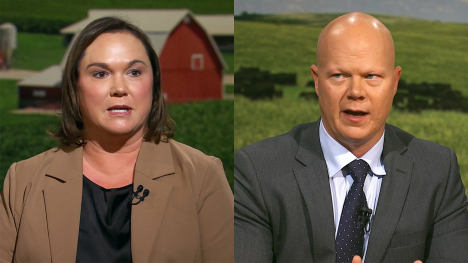
Naomi Blohm and Ted Seifried question USDA’s corn yield surprise and weigh China’s soybean demand.
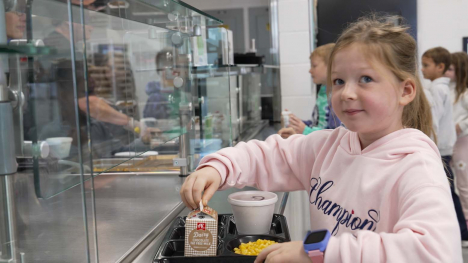
An Iowa school district connects local farms, food hubs and students through the lunch tray.

Farmers rarely seek mental health help. Farm Dog offers care from people who know farm life.
Wet fields threaten harvest delays, diesel raises farm costs and rural population growth is uneven.
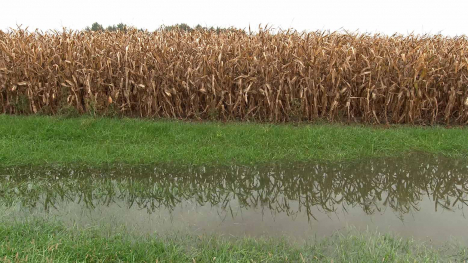
Heavy rain leaves western Corn Belt fields soaked, threatening harvest delays and crop quality.