There's still no new supply of land being built, but the demand side keeps strong as new entrants are looking for places to build data centers, hunting blinds and places to park other investment gains. Doug Adams, the CEO of National Land Realty looks at the big picture playing out now and a four-letter word is the big influence.
From Hobby Hunters to Tech Giants: The New Faces in the Land Market
Share


Iran has loomed over many sectors of the economic -- now add the impact on the land story. Doug Adams, the CEO of National Land Realty, grew up with buffalo on his family ranch and sees the demand for that type of use still strong. We discuss the farmland trends as well as new players looking for hunting ground or spots for data centers. We also dig into the demographics of who is actually purchasing land right now — spoiler: it's getting younger — and what a more tech-savvy generation of farm owners might mean for production efficiency. Adams also addresses the buzz around foreign land ownership and offers a data-grounded reassessment: the overwhelming majority of transactions are still American to American.
Transcript
YEAGER: Five different types of buyers are coming into the land market right now. We're going to identify the five, discuss who these are. The groups are different and have been changing, as have the demographics of who is buying the land. And then stay with me — there's a part about recreation land versus cropland. Which one is a hotter commodity right now? In the land market we're going to talk with Doug Adams. He's the CEO of National Land Realty. The company is national. He is in Colorado. So of course we got to talk about buffaloes and how he grew up working on land and with the buffalo. It's a fascinating story to hear about how things were in his early days. Then we'll dig into cropland and what are the biggest interest points right now. We'll talk about data centers. But again, and this was not expected — Iran is a big thing that is hanging around the land market. We'll let Doug explain why on this installment of the Market to Market podcast. I am Paul Yeager. Glad to have you here. New episodes come every Tuesday in both video and audio form. If you like the YouTube version, great. If you prefer the audio podcast, that's wonderful as well. Send me an email at [email protected] if you have any feedback or a guest idea. Thank you. Here's Doug and our conversation about land.
YEAGER: There's a new way to stay connected and know what's happening with Market to Market. When you subscribe to Market Insider, one email and a lot of information awaits you. Go to markettomarket.org and subscribe to Market Insider.
YEAGER: This is a special episode because it launches the 11th season of the Market to Market podcast. We have been doing this now for a long time — a lot longer than the national average of podcasts. We are thankful that you've made us a part of your day. Now let's get to Doug.
YEAGER: Doug, right before we started recording, we had a summer storm come through here. But where you grew up, winter storms and wind were something you probably dreaded because those animals still needed to be fed.
ADAMS: They did. I grew up on a little buffalo ranch in the south-central part of Colorado, right at the base of the Continental Divide. As a kid you're sitting there saying, why did I get the bad draw here, pushing hay bales with the wind blowing sideways and snow going the same direction. Now you look back 30, 40 years later and you say, actually, thank you for letting it be me, because it taught you a lot of life lessons and some great stories about those very unique animals chasing you around. And when they found their way outside of a fence, you got a call — and the row of traffic stacked up on the highway gawking at those amazing creatures was pretty impressive. But it was quite the lifestyle growing up.
YEAGER: Which weather condition did buffalo like least? They're such a resilient animal.
ADAMS: I think if you were to ask them, it would be the heat — because they're such a big, burly animal and panting in the summer sun is not their first choice. They're so resilient for all the weather conditions, the history, the legacy, the beauty of the animal. I think they could pretty much take on anything. But I'd say heat would be their least favorite.
YEAGER: That ties in where I think we'll start. Let's talk about pasture, ranges, and the heat. That has been a story for land in Texas, Oklahoma, Nebraska, and Kansas as they deal with drought and pasture land. What's the market like right now? Are people having to liquidate herds and land as times get tight with weather?
ADAMS: It's an interesting dynamic, particularly in the Southwest. We had a really poor snowpack in Colorado this year, which has a lot of people concerned about tributaries, aquifers, rivers, streams, and water restrictions in metro areas. Irrigating becomes very concerning, and your animal-per-unit production goes down significantly. People are having to rebalance their herds and their portfolios, look elsewhere, and diversify into more southeast regions if they can find it. Of course, you start getting into different land values then, which can be very challenging. If you're in the farming and ranching business, you're the eternal optimist — we got one more storm and we're going to be okay. But you also have to look at the hard-core facts and say, can we continue to make a living under these conditions? It is challenging right now. There are people rebalancing their portfolio or assets to find where they can be most productive in the current environment.
YEAGER: So there are some who can expand and some who are selling off. We just had the passing of Ted Turner. He was a big purchaser of grazing lands. Is there another Ted Turner out there buying a lot of rangeland?
ADAMS: There are. Fun fact — we actually sold part of our herd years ago to Ted, so we have a tiny thread to his legacy. Some of those great-grandbabies running around his herd may be ours. There are people investing in land with a real appreciation for it, particularly in the Western states where there's still a lot of big acreage to be assembled — Montana, New Mexico, Arizona, Nevada, Texas. There are different stewards of land ownership out there who have the resources to do it and are truly trying to preserve the West. Interestingly, there's some very quiet money diversifying out of the technology sector into land assets. Some of it is more commercial income-producing, but others are becoming passionate about preserving land and using it as a heritage tool to pass on to kids and grandkids. That's exciting. I don't know if we'd call the next one the Ted Turner because he had such an iconic brand, but there are people who appreciate the same things he did.
YEAGER: You said tech. The tech part of land purchases right now is also about data centers — companies acquiring areas that might have water but also space. What are you seeing about people trying to acquire land for data centers?
ADAMS: It's definitely a hot topic because there's more and more demand on storage and capacity across the globe. The biggest challenge with data centers is really about the power — it's not so much about putting up a concrete building, that can be done just about anywhere. But the power and the cooling of the power are the two big challenges. You have to consider nuclear, water, solar. Where can you establish those power grids and sources? Land becomes very compelling because the price per acre can be acquired very affordably — in West Texas, for example, you can get your price per acre down extremely attractively. But then you're miles and miles from a power source. So you have to look at wind and solar, and the kilowatt production of that just doesn't keep up yet. We're certainly involved in this. We just closed on a large data facility less than two weeks ago. The resources going into that type of investment are robust — in fact, the price climbed about 20% from initial market value because of the time value of money in establishing the financing. The challenge right now is harnessing the power source to make them functional.
YEAGER: Let's move east. For the grain states in the center part of the country, what's the trend there?
ADAMS: Another big topic right now is fertilizer. The fertilizer that comes through the Strait of Hormuz is incredibly constrained. As we go into fall, a lot of the fertilizer is in the ground for this year, so that's fine. But we're going to start seeing residual effects going into winter crops and spring production next year. Getting that fertilizer — one, it's just not there; and two, when you can get it, it's extremely expensive. Classic supply and demand is in play. We're going to see some real challenges, particularly in corn production. A lot of crops are rotating out of corn into soybeans because of the fertilizer constraints. Corn production rates across the country are going to be down significantly. We just hope we can get that release of fertilizer ingredients to do it the way we need to, not just in Iowa but throughout the Midwest and other corn production states.
YEAGER: Fertilizer — is that going to impact rents, cash rents for producers, or force them into sales?
ADAMS: It's going to affect both, but definitely cash rents are going to be impacted significantly. There's such an obvious supply chain connection all the way through from farm to table that everything is going to be impacted. Farmers and ranchers — us in real estate too — are always the eternal optimists. There's another transaction, another buyer, another deal around the corner. But we also have to be pragmatic about what's going on: weather situations with what we anticipate is a Super El Niño this year, incredibly hot conditions, and the constraints due to the Iran conflict. We're going to have to be prepared for an economic shift across all tables and all mediums. But farming and ranching is an incredibly resilient group of people. We find a way. We'll get better at our craft and get better at what we do. But it's definitely going to have some challenges in the near future.
YEAGER: I'm sure you've done your research on this. We always come back to the discussion of what the late '70s and early '80s were like. The farm crisis equation included high interest rates impacting loans and land ownership — there wasn't as much land owned by producers; a lot was owned by the bank. Where are we right now in comparison, from where you sit nationally as a real estate professional?
ADAMS: It's interesting because I was actually having a conversation with Nate, one of our top producing agents in Iowa, yesterday. A lot of the lending practices kind of go against the conformity of looking at production rates and land values — you say this doesn't make sense, but the banking industry is actually being very supportive of land transactions. Now, that doesn't mean it's applying to everybody. But they are being much more lenient in their lending practices, albeit the interest rate game is in play here. The anticipation was we'd get a one-to-two point reduction in rates this year. But with the Iran conflict and other things in the market, it looks like it's holding strong, maybe even hedging against inflation. That's creating a bit of a lockup in land asset transfers and lending practices. I don't think we're going to have the same headwinds of the high, high interest rates we saw coming out of the '70s into the '80s with oil embargoes and things then. We have better overall economic bumpers on our system now than we did then. We learned from mistakes, even through the early 2000s residential crisis, which reset real estate and lending practices across residential, commercial, and land. I don't think we'll go into a situation like 50 years ago. But it doesn't mean there won't be challenges. And I'll say — if China gets involved with the Taiwan situation, which seems to be heating up a little, that could create additional strain on interest rates.
YEAGER: You mentioned you had the conversation with your Iowa agent. What's the headline right now in Iowa real estate?
ADAMS: I think the headline, particularly in the farm sector, is that land is in very strong hands right now. There's just not a lot coming to market. It's really taking a transition of ownership through death as much as anything — it's just really not coming to market. And when it does, 67 to 70% of the transfer is going from one farmer to another local farmer. There was a buzz about international buyers buying up all the U.S. land, but that's really not true. There is some international investment, like any hedge fund or investment group diversifying their portfolios. But honestly, it's a minor fraction. There are really five different categories of buyers. It really takes a death in the family or on the farm for ownership to actually transfer. The first is existing farmers buying — 65 to 70% of the land. Local non-farm investors make up another roughly 20% — business people like a car dealer I heard about from Nate yesterday who buys about a thousand acres every year just to diversify his portfolio. Then we have institutional and REIT investors. Then people using a 1031 tax-deferred exchange — rolling out of one appreciated asset into farmland to delay capital gains. And then a very small minority of foreign buyers. That's basically the investment makeup in the farm sector, particularly in Iowa and the Midwest. But again, you've got to have something to buy, and when it's in strong hands and transfers neighbor to neighbor, there's really not a ton coming to market.
YEAGER: You said car dealer — I didn't hear you say doctor or dentist. Are they still interested in farmland?
ADAMS: You bet. They're always out there, especially if they have any roots to growing up in a farming or ranching family. They want to get back to it or start creating a legacy for their kids or grandkids. I think anybody with a love of the land — whether from their upbringing or a passion for hunting, fishing, or recreation — they're always looking to acquire more.
YEAGER: The recreation side is a real story. I know anecdotally of an NFL player who has bought land for the recreation side and is not alone with other athletes buying. I want to go back to the 60–70% local buyer. What's the age and makeup of that buyer right now — older or younger than two to five years ago?
ADAMS: It's a pretty good mix, but I'd say a bit younger. As you look at the aging farming population, the more progressive ones are still looking to acquire more land. But a lot of times there's been an internal transfer within the family — the next generation is taking over, they're more ambitious, their debt load is probably less, and now they're in a position to acquire more. If I were to throw a dart at that board, I'd say you're looking more in that 45–50-year-old age bracket. The 60 to 70-year-old is more looking at their sunset and transferring to the next generation, whether a family member or neighboring farmer. Once that next generation starts taking over, they're a bit more aggressive in the market.
YEAGER: That's actually contrary to some stories we heard a year ago — that it was the 70-plus buyer coming in, not planning to farm long term but needing a place to park cash. You're saying that tip has gone over to the younger side. What's the headline of that shift mean for the market?
ADAMS: I think what you'd see is that they'll embrace technology more and more. AI is the big buzzword in the world right now. To answer your question: you're going to see more technology-enabled farming practices. That makes some people nervous — the idea of no human being sitting on that combine or tractor. But there's still going to be human involvement. You'll see better production, better data to analyze farming practices, and an embrace of analytics where it was once purely instinctual. And those instincts were damn good over the years. But as technology continues to evolve, you can use analytics to be even sharper and squeeze even more production out of a farming operation, which will drive up margins if done right. Satellite imagery 30 years ago was okay — today it's really good. We have soil studies, water drainage data, overall analytics that are getting better every day. You're going to see even better production coming from a lot of operations.
YEAGER: So if I'm hearing you right, this buyer is more interested in the product than just as an investment.
ADAMS: Yeah, there's a balance. There's diversification out of other investment mediums, but then it's also: we're going to invest — how do we get it better, how do we improve production and efficiencies? You'll see both, and that's exciting. People investing into what can be, not what is — that makes it really exciting. There will be mistakes along the way, of course, but through mistakes there's learning and development and new opportunities. It's going to be exciting. There are a lot of challenges, but this is such a resilient group of people. I have so much respect for everyone in this industry, whether rent or own or invest. To be able to produce so much for the rest of the world is just incredible.
YEAGER: I want to go back to those five buyer categories. On foreign ownership — usually the data shows it's European, Canadian, Mexican and not China. Is that consistent with what you've seen? And are there states that have passed laws you have to pay attention to?
ADAMS: Those trends are very consistent — Europe, Canada, Mexico are by far the largest foreign investors in U.S. land. China is a delicate subject right now, given the tariff dance going on. But the consistency of the foreign buyer hasn't really changed that much. It can also be challenging because there are so many shell entities, and you have to really drill down to find the ownership — that LLC or S-corp, which can be discoverable. But for the most part, it's friendly investment coming into the country, and it actually opens up better trade practices in a lot of ways. I don't think we'll see a tremendous change in that investment makeup. Brazil is really top of mind for me right now — not as an investment piece, but with the cattle market. Brazil is one of the largest beef producers in the world, and they're having their own challenges. I'm very curious to see what happens there over the next 12 to 24 months.
YEAGER: Are you saying Brazilians are buying in the U.S., or the U.S. is buying in Brazil?
ADAMS: I think there's going to be more investment from the U.S. into Brazil than Brazil into the U.S. They have such a strong beef market for the world. But predictions are that they'll have real weather constraints this year with high heat. There's already been significant investment from U.S. companies into Brazil. They have laws there where you have to have a certain Brazilian ownership makeup — you can't just form an LLC and buy land; you have to partner with a Brazilian entity, significantly. It's been 50% in the past; some of those laws have relaxed a little. But it's been very attractive for U.S. investment to go into Brazil. However, with a Super El Niño predicted, that could create some backlash on those investments. If Brazil ends up with real challenges due to climate, that could actually become a win for the cattle market in the U.S., because now you'd have more production here and more opportunities for the cattle market to thrive.
YEAGER: Last thing on foreign ownership — were there any state laws passed this spring and winter that changed things? Like the Brazilian model of required home ownership?
ADAMS: Not that I'm aware of, nothing of significance. I think there are things being discussed in legislation right now. But covering almost all 50 states, there might be some I'm not yet exposed to. If there's a viewer or listener today who knows of something, I apologize — I haven't seen anything from a broad, sweeping perspective.
YEAGER: Here's Doug's home phone number — call him right now.
ADAMS: That's right. Call me. Be the first person.
YEAGER: Doug, let's close with this. We drilled heavily on Iowa, but in the last couple of minutes — what regions are hot right now for farmland sales? Which ones are cooling off?
ADAMS: There's some politics involved. Illinois, for example, has a bit of a migratory pattern out of it into other Midwest states with good production, because of taxes and legislation on the local level. The timber market is another one — it's obviously an asset class within the land business and has been very attractive to investors. The timber market is soft right now, so contrarian thinking says go in where the market's down and be the benefactor as it comes back. Mississippi, Alabama, Georgia — those strong timber markets have been good, and they also create the ability to diversify with recreational buyers. You can acquire a tract and have a subset be recreation-based and another piece be timber-based. That mix-and-match approach really maximizes the investment. Those areas have done very well for us over the last few years and continue to perform. The Carolinas are also doing well right now. I have to be careful to say it's not specifically ag production driving it, but other reasons — rotating crops out of ag production and looking at other asset classes. Some of it is driven by retirement opportunity: moving to a warmer climate, that Sunbelt-driven buyer who wants to live there or part-time live there, and then says, we love it here, let's acquire some land. The south-southeast is doing very well.
YEAGER: And when you said northeast — is that where they're exiting? And with timber, we get into Canada trade issues and lumber. We're on that same cycle.
ADAMS: Very much so. There is a lot of good timber production in the northeast, but a more climate-driven buyer is pushing toward the south-southeast. It's slowed a bit but it's not falling off. There's a southwestern play right now, but that's a different type of buyer — more retirement, snowbird type, versus people looking for production off the land. At the end of the day, if you don't have water, it's probably the most critical resource in this country. Those in the West really appreciate that because it's such a high-demand commodity that's becoming increasingly scarce. In the south-southeast, they've got more water than they know what to do with. That gives lots of options. I think that trend will continue — south-southeast due to climate, production, and water abundance.
YEAGER: All right Doug, let's close with the rest of 2026. What does the crystal ball say — what are the two or three things that will really dictate which way we're moving with sales?
ADAMS: I hate to pin everything on the Iran conflict, but it really does have a big impact on the global economy. As we drill down into the land business, there's always going to be a demand for land. What type of land is always going to move around a little. We're optimistic — farmers, ranchers, real estate professionals are all the eternal optimists. Land is a limited resource, so as long as there's a limited resource on this earth, it's always going to have some demand. I think we're going to continue to see strong sales. It's just the diversification of where the money is going to play. We talked about data centers — that's an increased pressure point, needing significant amounts of land. I'd love to see the Iran conflict start to wind down and a free-up of trade again. There's always going to be a challenge in our world. Our grandparents and parents faced World War Two, Vietnam, high interest rates, oil embargoes. There's always been something. We have to navigate those challenges with good leadership, good stewardship, and wise decision-making. For us in the land business, we're honored that we continue to grow at National Land Realty, with more good brokers and agents asking about our brand. We feel we're in a great position to provide a world-class platform for people looking to buy or sell land. A lot of people are looking to expand their land assets right now. Our biggest challenge is creating inventory. I mean, if we had 50 to 80-acre tracts in Iowa today with a good whitetail on them and a little production — it would sell immediately. You could pretty much ask your price. There are a lot of buyers scouring the internet every day looking for their next purchase.
YEAGER: Is the 80 acres with the whitetail more desirable than the 80 acres with the great crop score right now?
ADAMS: One hundred percent. If you've got good game management, good food plots, and easy access — whether through easements or right off a main road — it's in high demand. We can sell those all day, every day. So if you're listening today and you have that 80-acre tract and you want to take it to market, give us a call. We have the lineup of buyers ready to go.
YEAGER: So you have two reasons to call Doug — if there's a state law question or if you've got recreational land for sale.
ADAMS: That's right. But I'd prefer the latter. We welcome all calls and all conversations. The more we can learn together, the better we all are.
YEAGER: Well Doug, thank you for squeezing me in and giving us the update from where you sit about the land situation. Always fascinating to me.
ADAMS: My pleasure. Great to visit with you today.
YEAGER: We are produced at Iowa PBS. Our production supervisor is Sean Ingrassia. His crew is Reid Denker, Kevin Rivers, Julie Knutson, Neil Kyer, and David Feingold. The executive producer of Market to Market is David Miller. I'm Paul Yeager. We'll see you next time.
Watch More
Shawn Hackett weighs corn demand, USDA yields and potential November turning points for grains.
Sugarbeet losses, diesel costs, Montana’s feral horses and market analysis with Shawn Hackett.
Shawn Hackett weighs storing corn versus selling soybeans and Brazil’s potential weather risks.
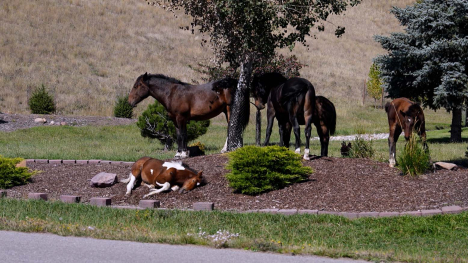
Montana residents balance affection for free-roaming horses with safety and property concerns.
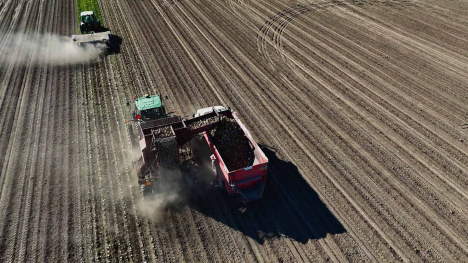
A growers association reports average losses of $500 per acre as sugarbeet harvest gets underway.
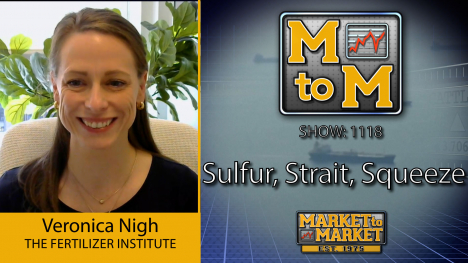
Global supply disruptions keep fertilizer markets volatile heading into 2027.