NPPC president Rob Brenneman talks trade, farm policy, and pork demand from the Iowa State Fair. A pork producer's take on the farm bill, PRRS, and why bacon still opens doors in D.C.


The farm bill, Proposition 12, USMCA renegotiation, and China's shifting pork demand are the issues of the day for Rob Brenneman, president of the National Pork Producers Council. Recorded at the Iowa State Fair, the conversation covers what a compromise on the farm bill could look like, why trade stability with Canada and Mexico matters, and how Brenneman brings a real farmer's voice with him on trips to Washington, D.C.
Transcript
[Paul Yeager] Welcome to this MtoM podcast at the Iowa State Fair. I'm Paul Yeager, and today we're in a golf cart in a rainstorm — well, it's not really that much rain, but it's getting that way. Rob Brenneman is from Washington, Iowa. He's also president-elect of the NPPC. Oh, you're president now — was that decided at World Pork Expo?
It was in March. So you're president of the NPPC, but you produce here in the state of Iowa. Let's talk about the Iowa State Fair — what's your background, or your good experiences here at the fair? There's been a lot of them.
[Rob Brenneman] Man, I showed probably three or four times — I showed cattle, never showed pigs, but I showed cattle, and it was always the carcass class. That was kind of a new thing. The last year I showed, I think I was a senior in high school, I had a Charolais Angus that won the class, the rate-of-gain class, the carcass — the whole nine yards. And when I graduated high school, I had sows, but I really wanted some cattle.
[Paul Yeager] And so.
[Rob Brenneman] So I had a neighbor I was renting farm ground from, and he had about 30 acres of pasture and a hand barn. He said, let's buy some cows together, and I said, let's do it. So Darrell and I bought 19 cows that had calves on them and put them on that pasture. He had a decent hand-to-barn setup, and we fed out all 19 calves. He had corn in the crib — this is a pretty good story. Then we had a water issue, so he wanted me to bring over ten or twelve pigs to clean up the corn behind the cattle, so it wouldn't cost us anything. We had a hog waterer that would do the cattle on top and the pigs at the bottom. Well, one day the pigs got the float off and the water ran over, and the landlord got really upset with me because he thought I hadn't watered the cattle. I said, yes I did, and he said, no you didn't — so we had a bit of a debacle over that.
Anyway, life went on. We sold the calves as fat cattle and sold the cows with calves on them. I never paid rent on the pasture, never got paid for my labor, and I lost $6,700 on the deal. I figured that was my education in the cattle business. But deep down, I always loved showing cattle — we'd come up here as kids and walk around. Then when we started having kids of our own, I'd bring my children and their cousins up, and we'd go to the tractor pull every year — always went to the pull. When they moved away, we lost a couple of years of it, but then the grandkids came along, and a couple of years ago I brought all the grandkids and the nephews, and we had half the section over there. The pull was a big deal for us.
[Paul Yeager] So to not have those pulls for a couple of years was probably pretty tough for you.
[Rob Brenneman] Oh man, it was hard, because you were so geared up for that second Wednesday of August — you laid all your plans aside. Then all of a sudden it's like, "Dad, now what do we do?" The nephews were asking Rob, what are we going to do? I said, I don't know, guys. So one year we decided to go to Decatur for the tractor pull at the Farm Progress Show. I took all the boys down, and it started to rain — I thought, this is going to ruin the day. But no — we got into a trailer owned by the pulling company, Beer Money Pulling Company, and we sat and talked with them for like two hours. After that I got into the sled — rode the sled through basically a whole section of pulling. It was the last class, I got in around 10:30 and didn't get out until three in the morning, because once you're in, they don't let you out — it has to be fair for everybody, same weight class for everyone.
[Paul Yeager] Oh, I hadn't even thought of that.
[Rob Brenneman] So the tractor pull has always meant a lot to me — I've always been a horsepower guy, get stuff done, you know, just that urge has always been awesome. After the pull, we always come up here and eat, because we didn't work those days at the fair — I don't remember which days we had off in Washington County, but we'd come back to this pork tent. I was on a couple of committees, never officially on the pork board, but I did a lot of pork-related volunteer work, and a lot of it involved being on this committee. It's a scrappy committee — you kind of have to get along and put up with each other. But it's like this — this thing runs the fair, I think.
[Paul Yeager] Let's talk about that — we're eventually going to head out in the golf cart, but I want to set up a little bit here, because I think this is year three for the new venue. This tent structure was always here, but it now has an upgrade that lets you use it as a permanent structure when you host World Pork Expo, and you can use it other times of the year without bringing in a tent. Let's discuss the smell and the visual — being able to see your food being prepared right in front of you. Why is that important for people who might not know much about a pig farm?
[Rob Brenneman] It shows that we're real producers of the product, and real cooks of the food, and that we know how to cook it. When people see you doing that, they see two things — they know you're a chef, and they know you actually raise the product. Like when Secretary Rollins was here and we were flipping pork chops together — that puts it in perspective, like, yeah, they do know what they're doing. I think that's the impression you leave, and that's the important part of this tent — producers come up here and work.
[Paul Yeager] And over the years, plenty of politicians who are running for president, down through Congress and the Senate, have come through here. We're going to get into the politics side, because that's a good transition — I'm just going to warn you now.
[Rob Brenneman] I'll jump out if you ask the wrong question.
[Paul Yeager] That's easy — duck and roll, that's all you have to do. I'm going to try not to turn into anybody like I've done in the past.
[Rob Brenneman] I don't have that.
[Paul Yeager] Yeah, it's still famous — go back and watch the Mike Naig review from a call I did.
[Rob Brenneman] Because I wanted to see what I was getting into.
[Paul Yeager] He does not let me forget it, sir.
[Rob Brenneman] He's a class act.
[Paul Yeager] The fair is — you talk about your tractor pull, you talk about your pork tent experience. What other experiences, other than losing a bunch of money trying to get into cattle, have shaped your Iowa State Fair experience?
[Rob Brenneman] You know, you can't walk down here without running into somebody you know, or haven't seen for a year. It's just open — you go where you please, no direction needed. I go to the pig barn, and yes, I do go to the pig barn, because I believe that's our future. Those kids are fantastic. FFA and 4-H are both why I'm here in a leadership role today. Without those two programs bringing kids to the state fair, watching them grow up, I wouldn't be here today.
[Paul Yeager] Rob, you know it just as well as I do — the face of who's in those barns and who's showing has changed. It's not the same as it used to be — there are a lot of women showing, raising the animals, and they're not necessarily from a farm background. That face has been changing.
[Rob Brenneman] I think it's exciting, because those kids want to raise pigs, and what you want to do is take that knowledge and ability, the way they use technology, and harness it. It starts here, at any county fair, and the education they're getting through FFA and 4-H on how to be leaders. I've told kids a hundred times when I give speeches — if you want to be something in life, be a leader. There's room for all kinds of leaders — we need managers, but we need leaders, and this industry has great leaders.
[Paul Yeager] You're someone who's learned varied skills through this — how to answer questions, how to prepare for an interview, a greater understanding of where your food is grown and who grows it. And now you've had to get into the policy side of things. When did you start learning about farm policy?
[Rob Brenneman] Honestly, in FFA and 4-H, because you were kind of a politician — you were representing the industry the whole time you were showing at the state fair or the county fair. There's all kinds of politics at local county fairs, with fair boards, and the cattle guys, the pig guys, the chicken guys — politics every day of the week. You learn how to handle those situations at an early age. Dad would say, work it out, Robbie — figure it out, it's your problem. So you learn how to take care of those problems, and politics is problems — somebody wants this, somebody wants that, and how do you come together on something you're both happy with? You never get everything you want. It's about compromise, and working it out for the good of the whole industry, for the entire United States.
[Paul Yeager] We could spend an hour on three C-words — compromise, China, and California. We'll get to those, there's a little bit of a tease. You're a producer in Washington, Iowa, Washington County. Tell me about your farm.
[Rob Brenneman] We're just south and southeast of here, less than two hours away. We're farrow-to-finish — we've got 56,000 sows, half of them in Iowa, in Washington County, and the other half in Missouri. We raise our own gilts, all in Missouri, and bring them home for our own production. We finish all of our pigs — they all go to Tyson in Columbus Junction. We're very proud of that relationship. Of all the pigs we feed out — we've got 800-some thousand on feed — probably 80% of those are in Washington County. The rest are in Keokuk County, Louisa County, Iowa County, Johnson County, and Muscatine County, but the majority is in Washington County. We have our own feed mill — we'll make roughly 13,000 to 14,000 tons a week through it, right there where we live in Washington County. There are about 100 trucks a day in and out of our driveway with ingredients, and we buy our corn from within that same circle. About 95% of our pigs are within a 25-mile radius of our home.
[Paul Yeager] That's no small feat. Is your whole operation family-run?
[Rob Brenneman] Family-wise, the kids are all involved — we've got four kids and 12 grandkids. All four kids live within a mile of where we live, right next to the operation, so they're all right there — we can hop on the Ranger, or they can. They were up yesterday to eat — grandpa fixes burgers, pork burgers, you know. That's where most of our stuff goes. We use a lot of employees who live in the county — most of the people who take care of pigs, our contract growers, are local. We focus a lot on the community, whether it's Washington County or wherever we're at. We believe in the fairs, we believe in the next generation — we support schools, we support 4-H, we support ball teams in Iowa City, Cedar Rapids, wherever, with burgers, because we want to get pork burgers everywhere.
[Paul Yeager] You need all that help, because in your role as NPPC president, you're on the phone, in meetings, doing interviews, or on a plane. In Washington, D.C. — just before we started recording, the Senate committee didn't advance the farm bill last week. What does that mean, from an independent producer's standpoint?
[Rob Brenneman] Let me give a shout-out — we've got a great team at home that works with the kids to take care of things while I'm gone. They actually like it when I'm gone, because it means they get to make all the decisions, and they've gotten very good at it. On the farm bill — the key point is we got it through the House, that's a big deal, and it's sitting there waiting to get taken care of. When the Senate left, they didn't have the votes to pass it, so everybody's gone home to think about it, which is better than a no vote that kills it. They've got to figure out how to compromise — it's not really about Proposition 12, though that compromise might have to happen to get it across the line. But once they figure out they're going to pass the farm bill, they've got to get along, pass it, and go back to their districts. I know compromise is a struggle, but talking to the people I've talked to, I think if they hit the right button on the right day, they'll come up with it. And when that compromise happens, we're going to be at the table, because that means we're ready to get the farm bill across the line, including Prop 12.
[Paul Yeager] So is Prop 12 the number one issue, or number two, or number three, from your vantage point? And where does trade fit in — are they tied together, or separate?
[Rob Brenneman] Trade is a huge deal for us — with 25 to 28% of our product being exported, trade deals matter a lot, and we work on those constantly. The others have priority too, but USMCA is a huge priority. I just left a meeting with the Canadians — that's a huge priority for both of us, and the Mexicans too, all the way down the line. We're focused on trade every day of the week, and we're focused on getting Prop 12 fixed so producers know where to go from here.
[Paul Yeager] You mentioned Canada and Mexico — on USMCA, President Trump put one together, and then all of a sudden he said maybe this isn't exactly the deal he wants, and there's going to be a renegotiation. Does that give you indigestion, or is it an opportunity? Why?
[Rob Brenneman] Just knowing how President Trump has operated over the years, as an individual and in his own business — I'm a little similar in that way — I believe he's trying to get a better deal than what USMCA currently is, and that's why he's put it up for negotiation. Let's say he comes in and, in his mind, he's probably saying, we're going to pass this somehow, but I'm going to get what I want. If we look at it that way, anything we can do to increase the stability of trade with Canada and Mexico is huge, because Mexico is our largest export market and Canada is third or fourth. Anything we can do to keep those borders open — God forbid something else happens, some kind of attack or disruption at our borders — because our borders are drivable, not shipped, we can cross the lines, but we've got to get along.
[Paul Yeager] They're major partners — think about beef, and corn, Mexico and Canada are right there too, so that relationship matters. Where does China fit into this discussion right now? On the commodity side, we're always talking about whether China's buying — what is China buying right now when it comes to pork?
[Rob Brenneman] China still buys pork — the parts nobody here really eats or wants. It's a good thing whenever we can export to any country, China included — it's a big deal. China's a huge pork importer, even though they raise a lot of pork themselves, because there are so many people there. It's a big deal to get along on the trading side.
[Paul Yeager] Is trade with China going to become a smaller deal because of the growth in their own production?
[Rob Brenneman] My sense is that their cost of production is quite a bit higher than ours, so it'll probably come down to this: we can import it cheaper than we can make it, and with the way that country operates, they'll probably just shut some production down and buy it cheaper than they can make it. That's what I believe can happen.
[Paul Yeager] That's been the case for a long time on a lot of things. But once they figure it out, it might change the dynamic — you and I might not be around to see it, but it might happen.
[Rob Brenneman] We might. Who knows? It comes down to this — every day, we've got to be really good at what we do. My veterinarian, Tim, has a saying: he who does it well does more of it — that's what earns you the privilege to keep doing it. If we do well, and do better than the Chinese do, hopefully we keep a seat at the table, instead of them saying, I can buy that cheaper than I can make it. That's what we in this country have focused on for years. Sometimes it's not about what we get at the marketplace, it's what we save at home that actually drives our profits — even though we want everything we can get at the marketplace, we have to work on the things we control.
[Paul Yeager] We're passing the Varied Industries Building, which has been a center part of World Pork Expo, bringing people in from around the world. One topic that was probably a bigger discussion earlier in your career, Rob, was disease — we had a bit of a flare-up last year. Where are we at with disease protocols? How do you feel about the science of everything right now when it comes to raising these animals?
[Rob Brenneman] It's very complicated right now. PRRS is kind of an unsolved science — it's hard to fix. A lot of the other issues we can get control over, but PRRS affects everything, and with all the movement of pigs, it's as rampant as that virus can be. It's made life complicated. It doesn't affect trade the way some other diseases do, but from an industry standpoint, we've absolutely got to get control of it. There's a committee — the Pork Board has a committee — and there's a huge push on it. Let's fix PRRS.
[Paul Yeager] I know you have market analysts and economists keeping you up to date on trade. Unfortunately, I feel like I say some of the same things each week on the TV show about the hog market — when is demand finally going to catch up, especially with what's going on in the beef market? And just this week, the demand story started to change. What's going to change that story for you? What needs to change?
[Rob Brenneman] Demand comes down to somebody liking the product and wanting to eat it. We're honestly producing the best product we've produced in my lifetime — we've got fat back in the line, we've got flavor, and ground pork is on fire right now. Tyson and all these companies have ground pork moving really well — some restaurants are featuring what they call the "Boston butt burger," ground out of the butt. At home, we've been doing the same thing — my son-in-law grinds all our ground pork out of butts, and there's a real difference. I think flavor, taste — that's what pork can do. The new slogan the Pork Board's put out, I believe that's helping influence demand too. The question is how you measure demand — the way I see it, it's about how much inventory moves. If freezers are emptying out, that means demand is there. On price, I had a conversation with my Tyson contact the other day, and he truly believes high gas and diesel prices, and the cost of transport, have put a damper on people going out to eat. You can see it when you go places — restaurants that aren't full, because people are trying to save a little on where they go out to eat. So I think demand is picking up — you can see it. More people are eating a pork burger a day now than they were two years ago.
[Paul Yeager] From the pork chop on a stick to the pork burger, it all makes it wonderful. All right — this might be part of the ride where you drop me off. But in a conversation with one of your predecessors from Ohio a year ago, we talked about MAHA, and about the health side, fresh ingredients, good ingredients. There's an argument and a discussion around whether pork sausage or a pork burger is processed or not processed. Where do you land on that?
[Rob Brenneman] I've been a big MAHA supporter — I'm a carnivore myself, so I've gotten to know several of those people, I've had conversations with RFK, Calley Means, Gary Brecka, all those guys. Because of what I've been doing in my life with the carnivore diet — sausage depends on what's in it. Ground pork depends on what's in the ground pork. If it's pure ground pork with no sugar or anything added, that's where the distinction lies for what counts as an ultra-processed food. If it's processed with additives like that, it should be called a processed food — not seasonings necessarily, but things tied to the dietary guidelines, insulin resistance, that kind of thing. Basically, it comes down to how much sugar is in your product — in a nutshell, that's where I believe the line is going to be drawn.
[Paul Yeager] Colors too — sugar and food colors, and I know that's what they're going after. The corn industry is part of that conversation too, because they're figuring out what's happening with one of their main products. Do you feel like, from when you started as a farmer to now, as you're getting closer to — I'm not saying tomorrow you're handing things off — but do you feel your industry has matured enough to survive all the changes we've discussed today, with resolutions hopefully on some of these issues, to allow it to continue for another 40 or 50 years?
[Rob Brenneman] That's in our hands. Guys my age have really hit this hard and made it a lifestyle, and it's our job to pass it down, train, lead, and coach the next generation to want to do this. That's the toughest part — wanting to do this. It's not the easiest job in the world, but there are so many things thrown at you every day, and when you start talking about PRRS and demand and all that, some of the next generation throws up their hands and says they don't want to be part of it. But we need them.
[Paul Yeager] The next generation — maybe not as many independents as there used to be. Do you think we've hit the tipping point, or maybe not the tipping point, but the peak of non-independent producers who aren't contracted out to somebody else?
[Rob Brenneman] Explain "non-independent" — you mean there won't be as many independents moving ahead?
[Paul Yeager] Yeah — is that even a fair assessment anymore?
[Rob Brenneman] Kind of, because we've had calls in the last two weeks from guys who want to raise pigs for us — they'd rather have their own sows, but they're tired of battling the disease problems, the market problems, the labor problems. They're saying, I'm done — will you put pigs in my barn? That's a big deal, and I think that's going to continue. There's going to be more consolidation, and in order to consolidate more, even to do more ourselves, we've still got to have people coming up trained. We've sent people from all of our classes, our future-leader classes, to help train the next leaders — that's my job. I've gotten better at it — my wife's way better than I am — but that's not what I grew up doing, wanting to train somebody to do my job. But that's what I have to do now. So for guys my age, the main point is: learn how to pass it on, but coach them first. Don't just hand it over and say, here it is, it's yours — you've got to coach it, because it's not easy.
[Paul Yeager] I appreciate that, and I think it's so important — you don't want to be retired someday and look back and wonder what you did. You're just as involved in training people, and it's only as good as who picks it up from you, right?
[Rob Brenneman] We didn't build this to hand it off to some integrator. My wife and I, and of course our kids, are involved — we built this. Our main goal is that we want the next generation involved. In our county, Washington County is amazing — we've got probably 45 or 50 guys involved who raise pigs for us. They've built barns, several of them, they've bought ground, and they're still in Washington County. That's been my goal from day one. Once we got to the point where we needed more barns, after going through Pork College, you learn you don't want to own the finishing barns yourself — you want to take sows and make pigs. That's what we've done since '96, '97. That's how the young people in our operation have come in, and that's what we continue to try to develop in the county and the area.
[Paul Yeager] You continue to hand it off and pass it off, and hopefully you'll just have new challenges, but you'll be trained enough to handle anything that comes your way.
[Rob Brenneman] Thank you — and it starts right over here, some of it. Those FFA barns, those pig people — they're going to be good. They're going to be fantastic.
[Paul Yeager] It is fun — if you've never gone to a swine show, or even a cattle show, you should. The swine shows over there are fun, and it's the kids and the excitement. I always like to follow the kids out of the ring after they win. Isn't that an awesome sight?
[Rob Brenneman] When that pig walks out — we've got both show pigs and non-show pigs, and both kinds of kids are great, but when you watch those show pigs come out, their eyes are locked in, they're intense. And that's the way they're going to be at the next job they go to — if they don't already have that pace, they'll develop that intensity.
[Paul Yeager] All right, your next job, Rob, is — I think I've got to drop you off the tent here — and it's about influencers, the social media side. I mean, those have been helpful, educational, informative — you hope it's those first three, and not inflaming opinions. But we've had some of those too.
[Rob Brenneman] That can happen.
[Paul Yeager] But I still think if you can meet a farmer, talk to a farmer, ask a farmer, go visit a farmer — I think it's always a good opportunity.
[Rob Brenneman] When we go to D.C., that's a big deal — you're a real farmer. I say I'm a real pig farmer, and when you go to D.C. and talk to people, and you are a real pig farmer, you get some attention, because they want to make you happy.
[Paul Yeager] Yes — and there's probably some staff who want to ask you some questions.
[Rob Brenneman] Oh yeah, it's interesting.
[Paul Yeager] They're like, you don't smell — while I had to go through TSA, and they wouldn't let me bring that across.
[Rob Brenneman] The staffers are the ones who give you the key to the door.
[Paul Yeager] And knowing a little about how D.C. works now that you've been there — some of those staffers are pretty young and have no farm experience. That's the perfect opportunity, since they're the ones passing information on to whoever they're working for. So you're always doing the education piece.
[Rob Brenneman] Always. I've made the statement that D.C. is run by thirty-year-old kids, because they're the ones out running the halls, meeting with you, and then you've got to get their sign-off to meet the actual senator or congressman. If they don't think you're good, or you haven't made a good impression, they'll say, sorry, they're busy, they don't want to see you. But if you can make an approach and connect with them, and say, hey, I want to get you in to see them too — it works.
[Paul Yeager] And all you have to do is usually just say "bacon," and it works. Bacon works great — that's a good thing.
[Rob Brenneman] When I tell them I lost 105 pounds on the bacon diet, eating a pound of bacon a day, people latch onto that — and I say, hey, if you want to go on a real diet to lose weight and be healthy, try the bacon diet.
[Paul Yeager] Sounds good to me, I like it. All right — Rob Brenneman is president of the NPPC, from Washington, Iowa, and this has been the MtoM podcast. Thank you so much for watching, we'll see you next time here from the Iowa State Fair. Now I'm going to have the crew introduce themselves, and we'll find out who puts this podcast together. There you go — we are produced at Iowa PBS. Our production supervisor is Sean Ingrassia. His crew is Reid Denker, Kevin Rivers, Julie Knutson, Neal Kyer, and David Feingold. The executive producer of Market to Market is David Miller. I'm Paul Yeager. We'll see you next time.
Watch More
How grain prices rally this winter w/Naomi Blohm & Ted Seifried on USDA, China demand & S. America.
An Iowa school district connects local farms, food hubs and students through the lunch tray.
Naomi Blohm and Ted Seifried question USDA’s corn yield surprise and weigh China’s soybean demand.
Higher USDA yields pressure grain. Plus, opportunities/costs of putting local food on school trays.
Farmers rarely seek mental health help. Farm Dog offers care from people who know farm life.
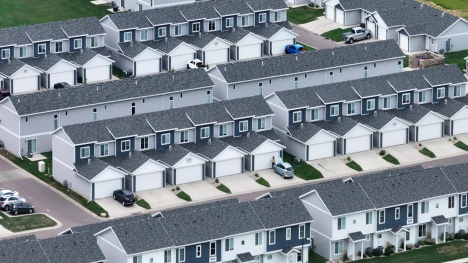
Midwest population growth brings opportunities near cities, while remote farm towns lose residents.