Those who survived farming in the 1980s Farm Crisis have stories to tell and agriculture today should focus on cash flow, not profit.
Cows, Sows and Stewardship: Lessons From a Farm That Came Through the 1980s
Share


John Gilbert came through the farm crisis of the 1980s and ’90s with a lesson he still farms by: cash flow matters more than profit. We talk with the Hardin County, Iowa, farmer about how those years pushed his family to put more animals back on the land — Brown Swiss cattle, beef calves and pasture-farrowed pigs sold through Niman Ranch since 1998. Gilbert explains why he believes agriculture and industry are two different things, and what happens when a biological process gets forced into what he calls the straitjacket of an industrial system. The conversation also covers Prop 12, the Save Our Bacon Act and water quality heading into Iowa’s election.
Transcript
[Announcer] Today's Market to Market podcast is brought to you in part by the Iowa Economic Development Authority, creating opportunity for business in Iowa by connecting companies, entrepreneurs and communities with the resources to thrive. Learn more at businessiowa.com.
[Paul Yeager] In the past on this podcast, we have talked about agriculture and farmers specifically being on a treadmill. Well, today we're going to talk about maybe some are in a straitjacket. We'll look at the literal definition and how that applies to some farmers, specifically in Iowa. John Gilbert is in Hardin County, Iowa. We're going to talk to him about some of the things he's seen in his five-plus decades of production agriculture, and that dates back to the farm crisis. We'll discuss a little bit of how things look similar and different to then, and what his operation reflects coming out of the farm crisis. So we're going to talk about agriculture, specifically animals. We'll talk about the hog industry. And as he says, his farm does a lot of cows and sows. We're going to spend a lot of time there. On the sows, we'll talk about Prop 12 and the Save Our Bacon Act, which is a counter to that, and was trying to get included in the latest version of the farm bill as we record this. At this point, it's not, because the bill that made it out of the Ag Committee doesn't have that language. So what does that mean? What does production agriculture look like for John? What does it look like for the future of farming? It is all part of our topics as we understand Big Ag, and also a couple of other topics when it comes to the upcoming election, specifically water quality and the two races of governor and secretary of agriculture. Those are some of the topics we're going to cover today, and what that means for the rest of the country when it comes to agriculture. I'm Paul Yeager. This is the MtoM podcast. New episodes come out each and every Tuesday. You can subscribe so you never miss an episode. This is a production of the Market to Market TV show and Iowa PBS. Now let's get to John. John, a couple of days ago, I drove through Hardin County and I didn't see anybody in the field. Is anybody in the field around you?
[John Gilbert] Nope. No, no. Everything's idling out on the sides of the field waiting for the flag to drop.
[Paul Yeager] It has been quite the wet fall after an inconsistent growing season. How's that crop shaping up behind you there?
[John Gilbert] We're optimistic. You know, we've had some decent rains that kind of got — I wouldn't say were completely timely, but I think we had enough dry spells early on that we got the roots down. So we've never really been seriously short on moisture. And we've never had the kind of big ones that leave holes in the field either.
[Paul Yeager] So I got those here. I've got plenty of those around me, so I won't take that one for the team. One thing I did notice, John, and I think it was a more running count, I just saw a lot of cover crop in. If you put a crop in this year before — maybe flew it in — it's really green, and that's going to end up with some people if they flew it in. Is that what you know that's around you?
[John Gilbert] Well, we don't have many around here, so — okay. But I did put some triticale down where we took sweet corn off, and it's, well, it's not a foot tall, but it's working on it.
[Paul Yeager] Oh, that's really good. Well, tell me a little bit about your Brown Swiss farm. What else do you have?
[John Gilbert] Paul, our farm's been on a long-term journey toward the kind of resilience you get through diversity, and through stewardship that comes from listening and knowing the land, and through the kind of support for local community that comes from being the best neighbor possible. Since my late father returned from 40-some months in the Navy, most of it in the Pacific on a DE during the big one, the Brown Swiss cattle and family have anchored our farm, and we've been through a number of permutations and changes over the years. But basically the mainstays have been animals, livestock, and the crops to feed them. And we've relied heavily on the age-old combination of the cow and the sow.
[Paul Yeager] And the Brown Swiss is such a beautiful animal. The dairy industry — I've had conversations lately — right now, butterfat's improving on some of these animals, and there's a demand for cheese and milk and anything that's protein related. Have you seen any of that increase in interest in what you're growing there or milking?
[John Gilbert] Well, we're in one of those permutations where right now we're not selling commercial milk, but it's being used. What my son and daughter-in-law are producing is being used to feed calves that they're raising out for direct marketing to customers. And so we have sold commercial milk a number of times and are still fairly concerned about how the world of dairy is doing, primarily because we're buying back basically dairy-beef calves. And, you know, that's a big profit center for dairies right now. And so we're hopeful that dairy people can stay healthy, so we can continue to have a supply of calves. But in the future, I wouldn't be surprised if things change again. I'm getting to the age where that decision is not mine to make right now. So, but we've been through enough changes over the years that we never say never.
[Paul Yeager] I thought for a moment you were going to talk about the cycles, but you've also seen a couple of cycles, and sometimes it's a good cycle for you. And sometimes, yeah, it's good to be at the end because then you don't have to make that decision.
[John Gilbert] Well, you know, I have to admit to being a veteran of the farm crisis of the '80s and '90s, and that has really continued to shape what we do on our farm. Probably one of the biggest changes was it led us to put as many animals back on the land as possible. We're in the South Fork Valley here, and we have a lot of variation in our terrain. And that's part of what we consider stewardship, is trying to find the best use for each part of the landscape. And in some cases, that's best to be in rotational grazing rather than in crop cycles.
[Paul Yeager] You mentioned the cows and sows. Let's talk the cows for a moment there. Beef cows — the market, and then what? The market is higher, but man, it's sure expensive to get those calves. But you mentioned the dairy calves can head over to the other side if need be. Are you selling anything commercially on the beef side?
[John Gilbert] What they don't need to go to custom slaughter for their meat business, we have been selling. It's kind of a situation where I'll have a handful that are ready at a time. And so we're in and out of the market depending on when we bought the calves and at what point they reach a finished state that we don't need them for our custom work. Then they do go to a commercial market. And it's hard not to have a ridiculous, high-priced finished animal.
[Paul Yeager] Right. And there's a lot of expense wrapped up into it, and you just hope that that profit comes. I think it was just said here recently, and it's been said for years, it's hard to lose money taking a profit.
[John Gilbert] We've always — and that's one of the other lessons we learned, was that in the grand scheme of things, cash flow is always the most important thing. Everybody focuses on profit, but by God, if you can't pay the bills, profit doesn't do you a damn bit of good. So we learned the hard way that it's more important that we're generating income and keeping our costs down so that we can keep the bills paid.
[Paul Yeager] Let's talk about those sows. Tell me about your hog operation.
[John Gilbert] Well, I've always said that if it hadn't been for dumb luck, I probably wouldn't have had any luck at all in life. But we were fortuitous. I'm not sure whether it was just a series of coincidences or for some reason we ended up in the right place at the right time. We'd been basically farrowing some sows in huts and selling feeder pigs a couple of times a year, and that was getting difficult to do in the early '90s. And by, oh, I think '96 or '97, we decided to put up a hoop. And I had heard Paul Willis talking about starting to sell pork to the white-tablecloth restaurants in the Bay Area, and I knew he'd been taking some pigs from some other farmers. And so I think it was in the winter of '98 at the Practical Farmers of Iowa conference, I just mentioned to him that if he needed more pigs sometime, we'd be interested in visiting with him. And that exchange led us to start selling our pigs through him and Niman Ranch. And that's been a real privilege and a real honor.
[Paul Yeager] Well, let's give the outside-of-Iowa audience a little bit of a lesson around you in Hardin County. There was another operator that was maybe not as individually raised animals, but on a much larger space. The big push came from these large confinements, kind of started not too terribly far from you. How are you different? Obviously there's sheer numbers, but how are you different between the large operator and what you are?
[John Gilbert] We raise pigs. They raise hogs. I don't know how else to describe it. What we do, I don't think has any relationship to what they do, or vice versa. The only real crossover that I can see is we get all their diseases; we have to deal with their diseases. And one of the first finisher confinements is about a half an hour across the road from us. And that may have been a hog truck using his Jake brake down on the road that you might have just picked up there now. But we're in what is colloquially known as Hogshead Alley through here. And you're talking about Jeff Hansen and Bruce Rastetter, that started there, brought that kind of confinement industrial business into Iowa. And I think it's really important, and I've talked about this a number of times, but people need to understand the difference between agriculture and industry, because a lot of the problems come when people think they're the same thing. Agriculture is essentially humans' use of biological processes to produce the food and fiber we need to survive. Industry is a man-made concept of using resources to produce a product and waste. In proper agriculture, there is neither consumption of the productive capacity nor waste produced. In industry, you have no production without consumption of resources. And when you try and put a biological process, which is by its very nature extremely variable, into the straitjacket of an industrial process, there's going to be a lot of friction. You're putting a square peg in a round hole, and it doesn't work unless you create a lot of externalities. And those externalities are coming home to visit Iowa in spades right now.
[Paul Yeager] Are you familiar with the book by Dr. Seuss, “The Lorax”?
[John Gilbert] Oh, when you raised three kids, you know most of the Dr. Seuss.
[Paul Yeager] So “The Lorax” is all about getting bigger and bigger and bigger. And they take the land and they take the Truffula tree, and it's gone. Are you trying to say that we've taken a lot of these Truffula trees, and we are at a very dangerous spot right now with what we've done with production agriculture?
[John Gilbert] Well, it was almost 30 years ago that there was a large contingent of Iowans who tried to tell the state and leaders that industrial hog confinement would lead to water quality problems. And I think one of the smartest things, or most instructive things, I've heard said about the cancer epidemic is that we don't need to look at what's going on now. We need to look at what changed 20, 25 years ago. And if you look back, two things happened in that time period. The first was the hostile takeover of hog production by the confinements. And the other was a wholesale shift to the use of glyphosate on modified crops. And I suspect I will be considerably older than I am now before anybody really finds a smoking gun on what's causing the cancer in Iowa. But I would be surprised if it doesn't include one or both of those.
[Paul Yeager] And that's the center point of a couple of races in Iowa. One specifically, the governor; also the secretary of agriculture race has those two issues, in a way. It's kind of being talked about in the Senate, not as much the governor's race. Are you encouraged that both of the candidates are talking about water quality in different ways than what we've heard before?
[John Gilbert] Well, they are, and I think it's probably all due to Chris Jones's writings that have basically drug people kicking and screaming into realizing we have a problem, and the publicity about the cancer problems. And I will be real surprised, when we start voting here in a few days, if a lot of people aren't voting for water quality. And the issue that we have with politicians right now is that, yes, they're talking about the subject finally, but they're kind of talking around it. I'm not sure that anybody really understands it well enough to realize just how hard that's going to be to change, and it's going to take quite a bit of time before we can really move the needle a lot on that. And that's why it's so critically important that we, as quickly as possible, recognize what the problem is and that we have to change, and that continuing down the same road isn't going to lead to any changes, and that we have to all be in this together. I think the biggest flaw in Iowa's Nutrient Reduction Strategy is the voluntary part of it. Because I'm not necessarily advocating regulations, but I think the Farm Bureau understood, when they demanded it be voluntary, that most farmers understood voluntary to mean somebody else will do it. And I'm in the Des Moines Lobe; I'm on the east edge of the Des Moines Lobe. And I think still today you can drive for two hours in any direction across the lobe and count on one hand the number of fields that haven't been disturbed in the fall, and probably still have enough fingers left to count the cover crops. So the lobe is so critical in Iowa because it's where all the major streams start. It's completely dependent on intensive tiling, tile drainage. It has the most hog confinements, and it has the most tillage, the highest percentage of rented ground, and the least conservation. And so when you add all those things together, the first lesson that you learn about watersheds and water quality is that the further up in the watershed you can go to make a difference, the bigger bang you get for your buck. And Iowa, unfortunately, has been for too long focused on, “Hey, well, we'll not worry about the damage. We'll take care of it someplace else. We'll take care of it later.” And I think we all learned early on that an ounce of prevention is worth more than a pound of cure. And so if we can't make a difference up here in the lobe, Iowa's going to have a real struggle. And we have so many structural issues in agriculture today that it's not going to take rearranging deck chairs to make a difference. And so there is a big, big, big job ahead to try and start even having an impact on the nutrient situation.
[Paul Yeager] Do you subscribe to the theory — you mentioned profits and cash flow earlier — that part of this issue has been the drive for more profits, not necessarily the drive to maintain cash flow? More — and I'll go back to my Lorax comment — more is better, bigger, we make more money. Is that part of this issue?
[John Gilbert] Well, I think if you step back just a little bit and look at Iowa's economy, at what's going on in Iowa in the last — I'll go back 40, 50 years — we have seen almost a colonization of Iowa. We have a handful, and I mean a very small handful, of giant multinational and in some cases international companies that are pulling all the profits out of Iowa. And if we just look at hog production, we need to remember that it wasn't that many years ago that pigs were raised in every county and every corner and every community, and virtually most farms had the ability to feed pigs. And the reason for that was that pigs are, by their very nature, very adaptable, very forgiving. And it didn't take a lot of skill or particular knowledge for somebody to learn how to raise pigs in the system that we used to, and everybody would raise a few. And that kept the money at the grassroots level. And so when you think back about the population and the businesses that were on main streets all across Iowa, that money was being infused into the economy at the basic level. And that's how Iowa was built. You have to realize that every infrastructure, every courthouse that developed since the white man came to this land and decided that when he put a spade in the ground it looked pretty good — that has come out of the soil. We have burned the resources out of the soil and converted it into wealth. And sometimes that's a concept we lose track of. And we are in one of the most beautiful spots in the world, in the fact that we have soils that are extremely forgiving, that are extremely productive. We have a climate where we can raise anything that we can fit within the frost window. And if it's structured properly, those profits support not only the people that are raising them, but all the communities around them and the overall economy. But when you let large integrators, large multinational corporations come in and siphon off the new wealth that's created every time a pig is born, all of a sudden you've cut that grassroots support for the economy off and essentially created, like, a hydroponic economy.
[Paul Yeager] From the time we had this interview to when we're recording it, and to when this comes out, there's a couple of windows in here. The Senate has voted to move forward with the Senate Agriculture Committee to move the farm bill forward. Not inside of that bill was the Save Our Bacon Act. It still has a potential to get reinserted to the larger bill or something else in Congress before who knows when. Is that a good idea, to try to move forward on Save Our Bacon?
[John Gilbert] Well, only if you believe that what we were just talking about with a hydroponic economy is good for Iowa. Because it's essentially — I mean, if you go back and look at Prop 12 — actually, you can go back to 2008 in California, when they passed Prop 2. They said at that point that we don't want pork produced from gestation crates. And that was essentially what Prop 12 said about pigs: we want our pork sold in our state to come from pigs that weren't used in a system that uses gestation crates. Essentially, it was written as square footage. They said every sow should have access to 24 square feet of floor space. Well, for anybody who doesn't know what that is, that's a small-size closet, medium-sized closet in most homes. It's a modest increase. But you got to remember, in an industrial situation where everything is based on infrastructure more than it is on skill, they're figuring the cost of floor space in dollars per square inch. And so anybody who wanted to sell pork to California has had plenty of time to prepare for it. Now, when you go back and look at what has happened, the Supreme Court twice has said California is entitled to do that. That's perfectly fine, because they are not requiring anything of anybody who isn't interested in basically providing pork to our state, and we require any pork that's raised in this state to do the same thing. And so that's why the Supreme Court has said this needs to go forward. And for three years now, California's been getting the pork they need. So why now, all of a sudden — the horse has long bolted from the barn — are we thinking we need to lock the barn door? And I think the fact that this is coming up now probably tells us more about the character of some of our political representatives than it does about what's needed. Because, quite frankly, if you don't have gestation crates, this law doesn't apply to you. Prop 12 didn't apply to you. If you have a system that isn't industrial, this is not an issue for you. And so really, when you realize that Successful Farming — I guess I haven't seen it the last couple of years, but used to put out a list of who owns all the sows. Well, most of them are all owned by big corporations, owned by the Smithfields and the Iowa Selects. And some of those folks that have the big sow farms, they're the ones that are being affected. But the reality is California is getting the meat they need. Hormel lists right on their website, we're all Prop 12 compliant. And I think they're killing in the neighborhood of 20,000 a day. So, the 27% of producers have qualified — that's not a problem. That's looking for a solution. And so, like I said, this tells us a lot more about our politicians than it does about what the problem is here in Iowa. And whether you want to dig into the details of the money that's coming from Smithfield, which is Chinese owned, going to the politicians, that's probably one of those issues that you have to really ask yourself, how much do you really want to believe that money doesn't buy influence? And I think we really aren't going to go down that road today. But there's ample evidence that particularly Smithfield has been throwing money around, and I assume the other packers are, too. When Ashley Hinson's picture shows up on a Chinese press release about how excited they are about the prospect for Prop 12, so Smithfield can continue to be the biggest pork producer in the world, it's more than speculation. But I think there was a time when Iowans expected integrity from the people they put in office, and they would tolerate a variety of views so long as people were honest and didn't lie.
[Paul Yeager] And we'll find out what the voters think in November, and what they believe from campaign ads, mailers, speeches, campaign checks. We're going to find out how that all shakes out. So in the last couple of moments here, John, you're also involved with the Farm Action Fund. Tell me what that is, and if that's also involved here in this election.
[John Gilbert] Well, Farm Action is an organization that was involved primarily to help deal with the lack of competition across agriculture. We have large national and international companies that control seed, fertilizer, machinery, livestock slaughter. There's a lot of difficulty in getting what farmers need, which is a competitive market. And a lot of times people just don't realize that when you have only three or four people in a field, that's not enough to create a competitive market, especially when it's a big market. And so the Farm Action Fund is essentially the division of Farm Action that is set up with the right 501 characterization to be able to do political work.
[Paul Yeager] Before I let you go, the hardest question I'm going to ask, John: What's the best cut of meat that your farm produces?
[John Gilbert] Well, that depends on what you're hungry for, because if it's tomatoes, right, there's nothing better than a good BLT. But that tomato also goes good on either a ground beef or ground pork hamburger. And yet my wife makes one hell of a — heck of a — nice roast beef, too. And I still love pulled pork. So it kind of depends on what your appetite is for right now. And you can't beat a good bratwurst.
[Paul Yeager] Can I go D, all of the above?
[John Gilbert] Yes, yes, yes. And it's all available, if folks are interested, at Gibralter Farms. And that's with an “er” on the end. So, hey, look at that. Just a plug-in for the kids who work there.
[Paul Yeager] So a guy who witnessed the farm crisis, lived through it, he's now promoting websites for locally owned. I mean, just look at where we've come.
[John Gilbert] Well, I know just about enough about technology and IT to be dangerous. And that's why I keep younger people around, keep me safe.
[Paul Yeager] That's what they're there for. I appreciate it. John, thank you so very much.
[John Gilbert] No problem. Thanks. Have a good one.
[Announcer] Today's Market to Market podcast is brought to you in part by the Iowa Economic Development Authority, creating opportunity for business in Iowa by connecting companies, entrepreneurs and communities with the resources to thrive. Learn more at businessiowa.com.
[Paul Yeager] We are produced at Iowa PBS. Our production supervisor is Sean Ingrassia. His crew is Reid Denker, Kevin Rivers, Julie Knutson, Neal Kyer and David Feingold. The executive producer of Market to Market is David Miller. I'm Paul Yeager. We'll see you next time.
Watch More
Shawn Hackett weighs corn demand, USDA yields and potential November turning points for grains.
Sugarbeet losses, diesel costs, Montana’s feral horses and market analysis with Shawn Hackett.
Shawn Hackett weighs storing corn versus selling soybeans and Brazil’s potential weather risks.
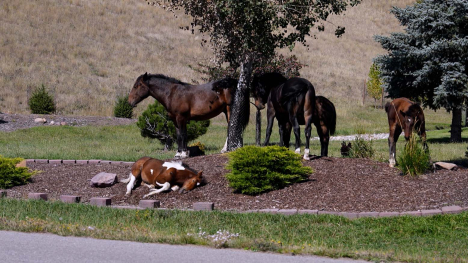
Montana residents balance affection for free-roaming horses with safety and property concerns.
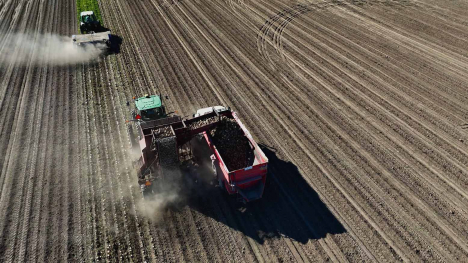
A growers association reports average losses of $500 per acre as sugarbeet harvest gets underway.
Global supply disruptions keep fertilizer markets volatile heading into 2027.