Wages aren't keeping up with prices. How negative real wage growth and higher fuel costs are changing what Americans buy, and where businesses feel it most.
One Economy, Two Kinds of Shoppers: What the K-Shape Means for Main Street
Share


The K-shaped economy is a story of the haves and the have-nots. The gap is widening according to Ben Johnston, the Kapitus COO. What the split means for small businesses heading into the holiday shopping season. Businesses serving wealthier customers may see a solid year. Those serving households living paycheck to paycheck should plan conservatively, offer value at every price point and lean on smaller-ticket items. Johnston also explains why small-town economies built on farming, manufacturing and construction are surviving, but maybe not thriving.
Transcript
[Announcer] Today's Market to Market podcast is brought to you in part by the Iowa Economic Development Authority, creating opportunity for business in Iowa by connecting companies, entrepreneurs and communities with the resources to thrive. Learn more at businessiowa.com.
[Paul Yeager] It's getting to be the time for Small Business Saturday and the retail season, where we talk about it all the time, including here on the MtoM podcast. I'm Paul Yeager. Today, our guest is a familiar face in 2026, Ben Johnston. He's the COO of Kapitus. And Ben, I was looking — the last time we talked about basketball. So you want to pick up football or hockey since it's starting? Which one do you want to go with?
[Ben Johnston] First, we could do college hockey. My Michigan Wolverines are doing great there.
[Paul Yeager] Oh, so we've already flipped to hockey at Michigan because football didn't end so well? Is that it? It didn't go so well against the Hawks.
[Ben Johnston] I mean, the early part was a struggle, but I think we're going to right the ship here.
[Paul Yeager] Thank you. You're going to be fine. Whether it's from your area to mine. Let's just start right off the bat. Every week on the show, we do these economic reports, and there's one consistent message, and it's all about inflation, whether it's consumer sales, retail sales, producer price index, consumer price index, you name it. Is inflation still the accurate word to describe what is impacting all of those reports?
[Ben Johnston] Absolutely. I think inflation is impacting the U.S. consumer. It's impacting small businesses. It has a direct impact on the ability of consumers to spend, to purchase homes, to go into retail establishments and buy the goods and services that they need. And real wage growth for the American consumer has actually now fallen into the negative territory, which means that wages are not rising fast enough to compensate for inflation, and that just shrinks the purchasing power of every American.
[Paul Yeager] When I turn on my TV, my Spotify, my Pandora, my YouTube, my whatever, the campaign ads all say for one party, it's about the cost of fuel on inflation. The war in Iran is the biggest driver of inflation. How accurate are those claims?
[Ben Johnston] I definitely believe that the most recent Fed rate hike was largely in response to inflation that was largely fueled by higher oil and gas prices, which are trickling through the entire economy right now. So I do think the root of much of this inflation today is coming from fuel and ultimately the war in Iran, although tariffs historically have also played a role in recent price gains.
[Paul Yeager] Inflation, does it impact a small business or a larger business more?
[Ben Johnston] It all depends on the business. The more transportation-heavy the business is or the more industrial the business is, the greater percentage of their P&L is made up by fuel costs, and therefore the more margin reduction those types of businesses are seeing. So obviously, if you're a trucking company, well, a huge percentage of your cost base is going to be in diesel fuel, same as if you're a farmer.
You are running machinery all day long in your fields. You have to get your product to market, and your fertilizer costs have probably gone up as well, because so much fertilizer comes out of the Middle East. And so those types of very fuel-intensive businesses are probably going to experience more margin reduction than, let's say, a doctor or an online consultant or someone like that.
[Paul Yeager] How long can a smaller business, one that's exposed to the fuel and the trucking side, how long can they sustain higher fuel prices? Because we know it's always like it is in commodities, it's the rocket up and the elevator. It's not the elevator shaft down like it is with when a corn price goes up or a soybean price goes up, it usually is low.
[Ben Johnston] You know, I think the honest answer there is to look at who their customer base is and try to assess how long the customer is willing to continue consuming that good, and whether they would consume that good at the same rate at much higher prices. Because most small businesses and even large businesses are really just passing that fuel increase on to their customer base. They really don't have much of a choice.
They operate on tight margins to begin with, and if they want to be in the market, they're going to need to pass that on. I think what that means across the board is that people will consume less as those prices rise, unless their wages are able to keep up with it. And, you know, what we're seeing is that retail spending has been climbing in many areas, no more so than retail spending at gas stations, as you might expect, because fuel prices are 30% plus higher.
But interestingly, in recent U.S. Census Bureau data, spending at the gas stations is really only up about 17% year over year. Well, gas prices are probably up over 30%. So what that tells me is consumers are pulling back on how much they're driving as a result of higher gas prices. And consumers are also pulling back on what they're willing to buy, especially for those larger, more expensive big-ticket items that may be carrying more of that pass-through of energy costs.
[Paul Yeager] I know you have food at your gas stations in your part of the world, but in our part of the world, we've got a couple of chains that pride themselves on the food that goes with the gas. One of them calls themselves a pizza shop that sells gas. What you're kind of saying, if I'm hearing you right here, Ben, is that we're buying the gas at the station, but we might not be going in for those two slices.
We might only get one, or one less drink, or one less candy bar, or one less of those items that is inside those gas stations. Is that what I'm hearing you say?
[Ben Johnston] I think so. And also, maybe you were driving a long distance to work, and you're now getting the ability to work from home a couple of days a week. Or maybe you were taking a weekly trip to visit a friend 50, 100 miles away, and maybe you only do that once a month instead of every week now.
And so I think that the number of trips to that gas station is probably dropping, which means fewer pizza slices that are being bought along the way. And I think that's a knock-on effect if you really look at consumer spending. Interestingly, it's held up pretty well when it comes to small-ticket items like electronics. Restaurants, bars have done quite well.
Clothing and accessories stores have actually done quite well, even in the face of higher tariffs for a lot of those goods that are being sold. But things that are falling behind are really the big-ticket items. New home starts are basically — they're actually down year over year. Purchasing furniture and home furnishings, as a result, are down year over year.
New car sales are down year over year, but people are spending a bit more on repairing their old cars and keeping those cars on the road. So you see the big, momentous life-event spending is really being hurt here. And yet a lot of the small-ticket spending is still happening and in some cases is even outpacing inflation, which indicates that customers are drawing on their credit facilities, and that the upper end of the market, you know, the top part of the K-shaped economy — there are a lot of wealthy people in this country who are doing really well and who continue to spend liberally across sectors.
[Paul Yeager] I think you and I have talked, and I know I've talked about it with other people, about that K-shaped economy. Here as we sit in late October of 2026, tell me what K-shaped economy means and if that definition has changed recently.
[Ben Johnston] Sure. Well, I mean, the K-shaped economy basically is a story of the haves and the have-nots. And so there is a certain percentage of the population who is seeing strong wage growth, may have been investing and been in the workforce for a long period of time. Therefore, they may have bought their house 10, 20, 30 years ago and be sitting on a very low-rate mortgage and a whole lot of price appreciation in that home.
They may have been in their job for a long period of time and be at a level where they're earning well beyond what they need to sustain themselves every year, and they'd probably be investing in their 401(k) and sacking money away during a very long bull market and are comfortable as they head into retirement. And then there's the majority of the country, which unfortunately doesn't fall into any of those categories.
And many are working paycheck to paycheck. Many struggle to save even a few thousand dollars to sack away for a rainy day. Both are spending in this economy, but one obviously is able to spend much, much more. And that's sort of the definition and the paradox that we find ourselves in, in this economy.
[Paul Yeager] And so in this time of year and this time and place, is that chasm the biggest it's been in quite some time? Is there a way to even measure that?
[Ben Johnston] I'm sure there is. I don't have the data at my fingertips. But if you listen to every talking point as we lead into this midterm election cycle, everyone on both sides of the aisle is addressing this issue in some way, shape or form. It definitely feels like that gap is wider than it has been in my lifetime.
[Paul Yeager] For another time, we'll do 12 hours on tax policy and what will work and how some of those policies could be coming, but we won't get into that today. Ben, one of the things you mentioned, retail sales — one of the factors in that report is fuel sales. You mentioned small-ticket items are still moving. So as we look to once we get through that day in November and the next-day reaction to the election, we're going to start talking about the holiday shopping season.
What is the projection right now for a small business versus a large business when it comes to holiday shopping, and where consumers are going to spend their money?
[Ben Johnston] Sure. Well, I think it is very important as a small business owner to really know who your customer is and which portion of the K you're targeting, because it's going to impact how you position your merchandise, what prices you are able to charge and what you expect your sales to be. So if you are targeting more of that luxury goods market, you know, looking back on the past several years and understanding your sales trends there will probably inform you as to what type of inventory you're going to want to buy and how you're going to prepare yourself, because that customer base seems to be doing quite well.
If your customer base is more on the bottom end of that K-shaped economy, this may be a tougher year for you just because of the margin compression on household balance sheets that we've been talking about. And so being a little bit more conservative, trying to provide value at every price point for your customer and maybe focusing a little bit more on those smaller-ticket items than those really large-ticket items may be the best way to position yourself there.
[Paul Yeager] Is there anything to be said about the size of community where a business is located and how they're doing health-wise? Knowing their customers — I guess a small town certainly knows their customer. That's not what I'm asking, but in fact, that's probably the hallmark of that business. If it's in a small town, they can probably name all 12 of the people that come in on a Saturday.
But is there something that's impacting a small-town business differently?
[Ben Johnston] Well, certainly, looking at the local economy of a small town, if you're in a small farming community in the Midwest, you're going to have a very different economy than, let's say, if you're in a small vacation area around a high-end lake and resort or something like that.
I do think the average small town in America tends to be really focused on local production, whether it be farming or manufacturing, construction. These are the core elements to those economies. And, you know, those are probably economies that are surviving, but maybe not thriving in this type of environment.
And so certainly being conservative as we go into this holiday season and thinking about how to maximize value for the end customer is probably the best strategy, if I were living in one of those communities today.
[Paul Yeager] I'm going to push, which I know is kind of the extent of some of your knowledge of what we deal with here in the middle part of the country when it comes to farmers. The president again this week talked about aid coming to some farmers in certain situations. How do you track money that comes to a producer that could end up in a local economy? What's your knowledge there?
[Ben Johnston] Well, look, I think the government has always taken a policy of wanting to make sure that they support small business and especially our agricultural community. And so I think that the government is looking at the impact of these high fuel prices and, quite frankly, the impact of some of the tariff policy that we've put in place and seeing the really damaging effects that these policies have had on the local farming communities and are trying to find a way to provide some support there.
It's also, of course, important to note that there are several really, really important swing states that happen to go through the agricultural belt of the country. And so at least demonstrating that the government understands the pain that these communities are going through, you know, that's important. And so I do think, you know, material cash flowing into these economies will certainly be helpful, but it doesn't feel like a long-term sustainable solution necessarily to me.
[Paul Yeager] And that would be part of our six-hour discussion about the future of tax policy, right? In that episode. Let's talk about the tariff again for just a moment, in the sense of when you talk about knowing your customer as a business. And you mentioned the two different sides of the K. The tariff impacting — has that changed in how it impacts either side of the K?
[Ben Johnston] Certainly. I think tariff policy has really impacted a lot of retailers and many small manufacturers who may be putting together the finished product in the United States but are often buying many component parts from overseas. The larger the manufacturer, the more likely they are to have vertical integration within the United States, where they might be able to avoid some of these tariffs.
However, still many, many raw materials are imported from overseas, including some really important steel and aluminum imports that come out of the Middle East. Plus, you know, these metals have large tariffs that have been placed on them as well. So it's pretty hard to avoid the tariffs if you are either a retailer or a manufacturer in this country.
But I do think that the larger you are, the more resources you have to try to pick your suppliers and be very strategic about where you are locating your suppliers, both domestically and in countries that have lower tariffs abroad.
[Paul Yeager] A product might be made locally, but if it's sourced internationally, that is a problem that you're referring to.
[Ben Johnston] Absolutely. I mean, many, many products are purely global. And we have set up manufacturing facilities that assemble a lot of the component parts that go into that product. But many of those component parts are made in disparate countries around Asia and Central and South America and then are imported here and put together into a final product.
[Paul Yeager] I've hit most of the items on my list except one, and I think I just want to spend a couple of minutes here as we get close to the end, Ben, about certainty. Businesses like to be able to plan. Farmers like to plan. Those who create jobs like to know what is happening. So what's happening? What's the biggest thing?
I mean, are we going to have — when we wake up Tuesday or Wednesday after the election, will it be clear, or are we going to have to wait for something else to decide clarity moving forward?
[Ben Johnston] Well, from a political perspective, I think it's a pretty likely bet that Democrats will gain power. Most likely they'll take the House. I think it's still very much an open question whether the Democrats take the Senate or not. But regardless, there will be a standoff then between parties in terms of who controls Washington. And so my expectation is that we're not going to see a tremendous amount of legislation passed in the next two years that will really move the needle.
That being said, there is a tremendous amount of change underfoot in the U.S. economy. AI is in some ways quietly changing how corporate America works right now, and we're not really seeing it in the numbers just yet. Although I would say that we have had very anemic job growth over the last year or a little bit more, and I do believe some of that anemic job growth can be traced directly to advances in AI.
I would expect there will be more job losses to come before the economy can fully transition to the new economy that will then start generating additional jobs. So I think we're going to have fairly anemic job growth, political uncertainty, but we'll also see real productivity gains start to materialize in the numbers. This will probably happen over the next couple of years.
But, you know, my expectation is that it's going to be choppy. It's going to be a choppy ride for the American worker. But we will start to see real productivity gains coming out in corporate America's numbers.
[Paul Yeager] And productivity was also a big discussion in COVID, because you talk about the remote workers. All of a sudden, people were working more, or they seemed to be more efficient as they had their remote situation. I know that's not all sectors of the economy, and that's not all the productivity that you're referring to, but it's a part of it anyway, right?
[Ben Johnston] Absolutely. I mean, many, many, many companies have gone to a hybrid work structure, including ours, where — I'm calling in from my home office today, but I'm often in one of our offices. We have three different offices around the country, and I try to spend time in each of them at various points during the year and bring teams together, because face-to-face is still a really important part of bonding and making sure that everyone has the same vision and is executing toward that.
But it absolutely has allowed us to do more and move more quickly without having to physically be everywhere at once. And I think the economy is embracing that and bringing that into how we operate. And it may be one of the reasons why, despite the oil disruptions that we've seen from the war, the price of oil has never really gotten much over $100 a barrel.
And I think some of that has to do with the fact that consumers have more flexibility in how they're able to transport themselves, and when, than they had in the past. And so —
[Paul Yeager] Yeah, that was a discussion I had with a friend just the other day. He's like, "I walk as much as I can. I filled my car three times in the last three months." You know, that's pretty good. And that was something that we didn't talk about 10 years ago or 20 years ago, for sure. So, Ben, the only thing that I think I'm hearing you say is the only certainty is we still have a lot of uncertainty ahead.
[Ben Johnston] The only constant is change, and the only certainty is uncertainty.
[Paul Yeager] Well, and also good to see you face-to-face and catch us up on what's happening. Thanks, Ben.
[Ben Johnston] Thank you very much.
[Announcer] Today's Market to Market podcast is brought to you in part by the Iowa Economic Development Authority, creating opportunity for business in Iowa by connecting companies, entrepreneurs and communities with the resources to thrive. Learn more at businessiowa.com.
[Paul Yeager] We are produced at Iowa PBS. Our production supervisor is Sean Ingrassia. His crew is Reid Denker, Kevin Rivers, Julie Knutson, Neal Kyer and David Feingold. The executive producer of Market to Market is David Miller. I'm Paul Yeager. We'll see you next time.
Watch More
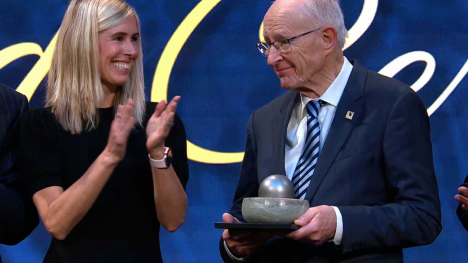
Huub Lelieveld receives the 2026 World Food Prize for six decades of work advancing food safety.
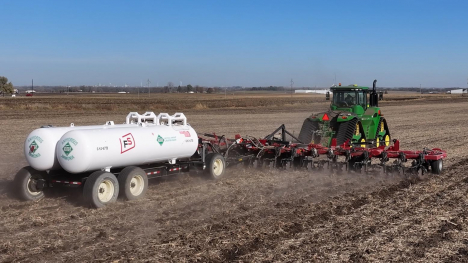
New federal plans target farmers' fuel and fertilizer costs through direct relief and investments in domestic fertilizer production.
Minnesota’s Keepsake Cidery combines heirloom apples, traditional cider making and direct sales to help a small farm thrive.
Chris Robinson weighs corn recovery prospects, soybean price levels and the rebound in cattle.
New farm relief, a food safety honor, Minnesota cider and commodity market analysis with Chris Robinson.
Chris Robinson answers viewer questions on corn yields, crude oil and cattle, and explains his soybean outlook.