Twice as many Americans say their finances are getting worse as say they're getting better. Glynn Tonsor of the Meat Demand Monitor explains how that K-shaped split shows up in restaurant visits and what's for dinner.
Fewer Cattle, Heavier Carcasses Shows America Keeps Getting More Beef From Fewer Cows
Share


For three years, people have predicted shoppers would walk away from the meat counter at today's beef prices. Kansas State University agricultural economist Glynn Tonsor says that's a good way to be wrong. The most likely path to lower beef prices in the next 18 months is a weaker U.S. economy, not a public that has lost its taste for beef, and Tonsor asks why anyone would cheer for that. He also explains how a price drop today could leave consumers with less beef and less incentive for quality 30 months down the road. Plus, what the Meat Demand Monitor shows about who is still buying, and why a three-second soundbite never tells the whole story.
Transcript
[Announcer] Today's Market to Market Podcast is brought to you in part by the Iowa Economic Development Authority, creating opportunity for business in Iowa by connecting companies, entrepreneurs, and communities with the resources to thrive. Learn more at businessiowa.com. Today's Market to Market Podcast is brought to you in part by Grinnell Mutual, which has been helping protect what people grow, own, build, and value with insurance products since 1909. Trust in Tomorrow with Grinnell Mutual. Learn more at grinnellmutual.com.
[Paul Yeager] Time to go to class today. If you're someone who buys meat, eats meat, grows it, you're very aware of prices. You're also aware of the demand. But by how much? The Meat Demand Monitor was started in early 2020, just right before COVID hit, and it has been put to the test in six years. We're going to find out from one who helped start it, who's still involved in the reporting of it and what's all inside of it. We'll get to that Meat Demand Monitor. But we're also going to talk about the cattle complex as a whole. What makes it complex? Policy that might come in the form of an executive order or a law change from Congress, how it might not change things right away or overnight. This is a big operation to turn the big livestock complex around. It could take as much as 30 months to see any noticeable difference from any type of policy change. And that has been that way forever and ever. And Glynn Tonsor is at Kansas State University, which is where the Meat Demand Monitor originated. It is both with pork and beef checkoff dollars to help. It's academic but also very informative. We're going to talk about you, the consumer, you the farmer and you the cattle feeder. All three of those are going to be a main part of today's discussion. I'm Paul Yeager. This is the MtoM podcast, a production of the Market to Market TV show based at Iowa PBS. And we'll also talk about demand. This is coming out on Election Day. So we're not going to give you any election results, but we're going to talk about what some of the votes might mean for the industry. We'll also talk about that K-shaped economy, which you heard us refer to in previous episodes, and how that is really at play. So ag econ when it comes to the cattle market is today's discussion on the MtoM podcast. Glynn, if I say MSU to you, which one do you think of first, your undergrad or your post-grad?
[Glynn Tonsor] Well, first I can tell you you did some homework on me because not everyone knows both of those. Honestly, I think of Michigan State because it's more recent. And in my professional world, I run into colleagues at Michigan State more often, right? In my undergrad at Missouri State University, I'm old enough that when I was there, it was Southwest Missouri State. So I think of Michigan State, to answer your question.
[Paul Yeager] Well, that's what I was kind of thinking you would say because, yeah, most ag — or yes, Southwest Missouri State, you know, I still think of when Steve Alford was the basketball coach down there and it was just like, where is that? And they used to play at Northern Iowa. So yes, we would see that all the time. You're from northeast Missouri, I see. Tell me about your home operation there growing up.
[Glynn Tonsor] Yeah. So Monroe City, Missouri, is my hometown. It's about 17 miles west of the Mississippi. It's more like Mark Twain territory, for those that have heard of Mark Twain — Samuel Clemens, of course. I grew up on a hog farm. So farrow-to-finish hog farm. Lots of time with my brother, my father, my grandfather doing that. The 1990s is when I was in high school, and that was a, you know, memorable moment in the hog industry. So our farm was no different. And a lot of those lessons shaped me, of course. And I haven't steered away from the meat and livestock industry, just now rather than pressure washing hog barns and pushing on barrows and gilts, I'm pushing on this keyboard and mouse with you here today, Paul.
[Paul Yeager] Did you at one time think that you would stay, return and start running the pressure washer and find a spot in that operation?
[Glynn Tonsor] No, to be honest, you know, by the time I was driving age, I thought something, you know, off the farm was for me. Now, that's not anti-ag per se, right? Because obviously I'm still hopefully contributing to ag, but I was not a high schooler that, you know, had a lifelong dream and expectation to stay on the farm. You know, I did want the farm to do well, and the family. Those two can both exist. But, you know, for me personally, I'm a first-generation college student, so that was part of what was in my mind. I'm pretty sure my mother would tell you I was pretty focused on that at an early stage in life.
[Paul Yeager] I think you and I, similar age, similar situation. I always reference this in the podcast. This is the home place. And in the early 1990s, there was not a lot of room for somebody who was on the fence if farming was what they were going to do on the land. And so, yeah, I found something else. And I'm guessing when you mentioned the time for the hog industry, late 80s or late 90s was quite the roller coaster. What did that time period teach you now that you kind of think about still almost, maybe probably on a daily basis?
[Glynn Tonsor] Yeah. The part that was not unique to the 90s that I always interject here was, you know, my appreciation for diving in, getting your hands, like, literally dirty, right? Hard work, work ethic, you know, the role of food and fiber in our country. You know, that definitely was impressionable on me. I would have said that if I grew up two decades earlier or I grew up today, I think. Now, specific to the 90s in the hog industry, you know, we saw notable changes, notable market challenges. You know, the farm I grew up on was originally farrow-to-finish. And before I left high school, we no longer had the breeding herd. We were just finishing weaned pigs. We were certainly not the only farm that made that adjustment at the time. You know, that was part of an equity adjustment that had to occur at the time. That sticks with you, right? You know, recognizing how hard my father and grandfather and the broader community was working to, you know, keep it going and then ultimately make, you know, even tougher business decisions later. You don't lose sight of that the next day. You know, that's a few decades behind me, and it still impresses me to this day.
[Paul Yeager] Why ag econ?
[Glynn Tonsor] Well, why not, Paul?
[Paul Yeager] I love it. I've grown to love it. I mean, that's no joke.
[Glynn Tonsor] No, I'm having fun with you here. So my father in particular, you know, don't give him blame for this, per se. But, you know, I grew up with my father, you know, sort of teaching me the basics of hedging or not hedging, you know, how commodity markets work from his lens and so forth. And you know, that fascinated me. I was the geek. And this won't surprise your listeners that heard me talk before. You know, when I was an undergrad in Springfield, Missouri, I would read futures and options books even though they weren't required for class. Well, I just told you, I'm kind of that geek, right? So I've always had an interest in that space. There was a time I wanted to be a trader, you know, the old days of a floor trader in Chicago and so forth. Just because, like, you know, the general interest in ag commodities has been there with me for some time. And then the more I read, the more interested I was in trying to be a deeper student and now hopefully a useful teacher on how the markets actually work. So not just futures and options on their own, but much broader, right? What's the core role of supply and demand? How does that give us price and quantity outcomes? What might be the impact of some politically driven announcement in that environment? You know, that kind of stuff is a long bit of interest. And now that's where I spend most of my time.
[Paul Yeager] I guess I get into — I'm going to admit this — more of a fundamental lens when it comes to livestock than I do think of calls and puts. And I know that our analysts have come on the show, talk about it. I just always associate calls and puts more with the wheat, corn and soybeans, but they absolutely exist when it comes to livestock, too.
[Glynn Tonsor] Well, they 100% exist. Your listeners don't want a full lesson from me on this, but the nonstorable aspects are real, right? No. 2 yellow corn can store a little differently and longer than, you know, a steer in a Kansas feed yard. Right. So the temporal mismatch — not mismatch, just difference — between grain and livestock is important. And honestly, the liquidity of those contracts and the duration is very different. You know, you can look out, and if you want to hedge two or three corn crops ahead with some measure of accuracy, you know, you can do that. Well, that's basically nonexistent in the livestock space because CME products don't trade that far out there. Fairly thin one year out. So there's a lot of differences between grain and livestock. But I always impress on us, if you're a livestock producer, you need both, right? Feed is your biggest input, right? So, you know, there's a lot of livestock producers that might watch this later that benefit from, in my opinion, well-functioning grain futures, puts, calls, everything there. If they don't directly use it, the information they get from that marketplace helps them make better decisions.
[Paul Yeager] We used to have Walt Hackney come on the show, and we would tell him, well, you can ask a question of the grains person sitting across from you. And he always wanted to know. He really was tuned in to what mattered for producers. He was always kind of thinking in that way. So I guess I want to ask from a today lens, we're sitting here at the end of October. We know that news can change. For the last two to four years, really three years, the livestock producer has had to weather a huge up, but they've been also trying to use those tools that you're referring to. Has the producer been outgunned by those funds or those pros who aren't necessarily in a Kansas or Oklahoma feed yard?
[Glynn Tonsor] I'd almost simply say no, in my opinion, as a very blanket response. But I'm also going to say we have to back up and not, like, treat all livestock producers as one general bucket, for lots of reasons. The most simple one is the beef cattle space is different than the pork space is different than the chicken space. You know, there's not a futures contract in the chicken space. So that's a simple one up front. But then go a little further. You know, the most common cattle producer is what you and I might call a smaller cow-calf operation. So less than 50 cows would be the most common cattle producer in the country. That's not to say it's the largest volume producer, but it'd be the most common, right? You know, conversely, you have some very large feedlot presence, which would be interested, of course, in both feeder and fed cattle — main input and output. You have large pork producers who might run finishing barns, right? And of course, they'd primarily be interested in the value of the barrows and gilts leaving. I've given us that reminder of all these differences because I don't think there's been, like, an outgunned by speculators or outgunned by algorithmic trading. You know, I'm not in that camp. The gentle reminder: if you're, like, a purist, if you're selling livestock and you're interested in offsetting that price risk, you need somebody in the world to take the other side, right? And the odds of them having the exact same business model that you are, about zero, because they have an interest in taking the other side of a bet, right? So I think a healthy pause and recognition that one party that wanted to offset risk needs the other side to pick it up. That's a very academic statement, but it's a real statement in the market, right? You know, the futures market in particular is zero-sum, one buy, one sell, right? It's very different than the stock market, right? You and me both could buy Apple shares when we're done talking about this if we want. It's not like only one of us can buy, right? So the zero-sum aspect of commodity futures needs to be remembered in most of these discussions. There's always room for improvement. Last week we were at AgCon, so K-State and the CFTC hosted a very high-level event. You know, I think those are healthy, discussing the rules, what's coming. We're going to be talking about prediction markets, right, and things like that more in the future. Not boring corn and hogs where you and I've spent most of our time so far. So it's going to evolve. But I think a healthy recognition that we need both sides of the market, and not just a jump to a boogeyman accusation approach, would make the broader system work better.
[Paul Yeager] I'm not saying you fell for my trap, but you absolutely made my point that it is complex. And one policy change, one executive order, one change by an organization is not necessarily going to make everything whole. Is that what makes it interesting for you? Understanding and trying to explain the cattle complex, as it were, or just the complex nature of livestock?
[Glynn Tonsor] Yeah. Well, how about it makes it interesting, it makes it frustrating, and it's probably job security. How about all that at once, right? Yes. So it is interesting because I am the geek that chooses to spend time here. Hopefully my, you know, boots-on-the-ground background, going to school forever, lots of time talking with folks like you in the general media — hopefully I can help with that. The frustrating part would be — and I'm going to pick on the media here for a moment, and honestly, politicians also — there's a human nature to simplify things to get it in a three-second — I used to say 30-second, now three-second — soundbite. You'll never get anybody to give a reasonable discussion of, for example, the U.S. ground beef market in a three-second soundbite, right? I mean, you are going to lose mission-critical discussion points if you try to do that. And yet we do that every day. So that's the frustrating part of that. And the job security part of this, to put a glass-half-full spin on it a little bit, is the domestic consumer's never wanted meat more, right? The average American's consuming more meat than we did two years ago, than we did 20 years ago. And I can geek out on the details on that. We probably will before we're done here. But the job security and, like, the societal interest in everything that goes into meat production is occurring because the public wants meat. I don't think anybody should be apologizing for that. There's a lot of economic viability for the Midwest you and I are from because of that, right? That's where the job security part of this comes. But there's a lot of nuance and details behind that, that hopefully me and all my colleagues around the country that live in this space — hopefully we're gently nudging it to a more productive discussion, and partially apologizing that we need more than 32 seconds to do it.
[Paul Yeager] Well, let's add a couple of zeros to that. I was hoping for 32 minutes. And every time I have one of these conversations with a person like you, whether it's Dr. Peel at Oklahoma State or you here, we discuss trends and headlines. We just had a Cattle on Feed report. He usually helps me unpack that. We usually will talk in the winter when we have the big report in February. What is trending, I should say, in these Cattle on Feed reports of the last six months?
[Glynn Tonsor] Yeah. So I'm going to speak specifically to the Cattle on Feed report first, because you asked about it, but I'm going to tie it into a broader trend that honestly is bigger than just that report. And I'm all for this report, don't misread that. But anyhow, the most recent report — and it's consistent with several months in a row — is fewer animals, longer feeding duration, heavier weights, and particularly the most recent one was a historic low on placement numbers. That's not necessarily surprising, but the magnitude of that decline was even larger than expected. What that tells me is, you know, for at least the next six months — and I think it's way longer than that, but specific to that report — placement numbers are going to be historically tight from a hoof count, animal head coming into the feed yard perspective. That's not new, but that's just the latest in that report. What the industry has done for at least three years here is continue to micromanage and get the most amount of beef it can on each of those animals. Now, this is where I'm making it a little broader than just the feed report. That effort by the industry doesn't just happen in the feed yard. The biggest evidence of that is in the feed yard, in the form of longer days on feed and heavier carcass weights, right? So that's real. But I always try to give credit. Even before that, you couldn't accomplish that if we didn't have some different decisions on genetics, pre-feedlot management, right? So the reality is seedstock, stocker, backgrounder and the feed yard — all parts of the live animal stage. And then in the plant, so at the harvest stage as well, right? Sharpen the knife even tighter to minimize waste. The entire industry has never been more productive, efficient, right now. Cheaper grain for that three-year run has enabled a lot of that, right? If we add another dollar to corn — which I'm not forecasting, but that's talked about now more than, say, six months ago — we'll push back on some of that. But the general trend — everything I've told you is supply side here so far — is fewer animals, more pounds per animal. So domestic beef production is declining, but not at the same magnitude as the hoof count is declining. That's not a new story. You know, there's a 60-year trend of fewer cows in this country. Not six months — 60, right? Multiple cattle cycles to where the peak in each cycle is lower than the one before, on average. We have fewer beef cows in this industry. That's not more recently because of a consumer demand problem. We'll talk about that strength here in a minute. There was a period of that a couple of decades ago, which is important to learn from. But the sheer fact we get more beef per cow — like, you know, federally inspected beef relative to number of cows two and three years earlier — has the effect of we don't need as many cows to give us a certain amount of beef output. That's a very politically unwanted message at the moment. I understand that, but I'm doing my best to just, like, let the data speak. Be a historian of those patterns, using lots of USDA data and so forth to back up what I'm sharing with you here, Paul, is the market has evolved, frankly, because the market has sent signals to get the most consumable, edible beef per calf, right? And I don't think that trend is going to stop. And I took the liberty to go beyond the Cattle on Feed report in my answer. But the Cattle on Feed report just reaffirms it. Fewer animals, and very likely going to continue to keep them on feed longer, right? To give us the most amount of edible beef per animal that we can.
[Paul Yeager] And your answer highlights the complexity of the media trying to explain this story to a general consumer. And I think of the CNBCs, Fox Business, the Bloombergs, who really delve heavily into financial reports, and they do that on a daily basis. But them trying to explain consumer prices versus farmer prices, producer prices — they're not one and the same. But I often — I'm going to call myself out — I often probably get just borderline not the best question when it comes to the last part of our program, discussing where this is going to end. Obviously nobody knows when prices are going to change, otherwise they wouldn't be. There is usually the good fun answer that we always get, but two, that consumer demand at some point, given the economy, given whatever their reasons are, surely they're not going to be at the meat counter much longer because of these prices. And that's what I see. Is that what you see, and how do you answer that question when you keep hearing it asked by people like me?
[Glynn Tonsor] Yeah. So it's a common statement and question, like you just said, and specifically the, you know, the consumer is going to walk away from the meat counter at these prices comment. If I could be specific to beef for a moment here — I want to be careful and separate beef from pork or chicken in my response here. For three years now, folks have been saying that on beef. That's not a new thing, right? For 30 years folks have been saying, surely we won't keep making these animals bigger, right? So a really good way to be wrong is to say, well, soon this has to stop. Right now, that said, I think the most likely reason you might have lower beef prices in the U.S. — next week, a month from now, in the next 18 months, not 10 years, but in the next 18 months and shorter — is weakening domestic beef demand, specifically because of macroeconomic conditions. Not because the public doesn't want beef, not because the quality of beef has eroded, but because of macroeconomic concerns, financial sentiment, W-2 wages not keeping up with cost of living, right? That's a macroeconomic headwind for beef demand, and demand for lots of consumer goods, by the way. But specific to beef, I think the most likely way to reduce beef prices in this country is to further erode the macroeconomic condition in the U.S. Why in the world would any of us cheer for that, right? I mean, that doesn't make sense for that to be something to pursue. But I think it is the, quote, best lever if you're trying to reduce meat prices. I'm picking on this a little bit. I mean, I would defend what I just said with you, Paul, but I think we as a society — and politicians or trade associations or any groups that are making, like, statements hoping for a price in any market to go one direction, up or down, depending on what hat you're wearing that day — need to be very careful. And choosing winners and losers has real consequences, right? I mean, that's not unique to the discussion you and I are having. All economists are going to point that out, but it's not exactly clear to me that a lower beef price is a societal win.
[Paul Yeager] Right. And there is a loser when the price goes down. That's an obvious loser. One or two, easy.
[Glynn Tonsor] The obvious one that you recognize, and probably the one in your mind, is the cattle seller that's selling it, right there. Revenues go down, which is 100% right. But I'm going to take the liberty to interject, because we have more than 30 seconds here, Paul, is, you know, 30 months later — it'll be quicker in 30 months, but just to tie it back to the cattle, you know, production chain — 30 months later, the U.S. consumer loses. Why 30 months? If you depress beef prices, we're going to depress the amount of beef we produce at some point. And that's going to catch up on the volume that's being available. So you have less available, which in turn will raise the price back up compared to what it was before. And maybe even worse than that reduction in volume, which would not be good for consumers in month 30 — the way I'm telling the story is, depending on how you go about that mechanism, you might erode the incentive for the quality of beef, not just the quantity. So it's not just price and quantity. There's, importantly, a quality aspect of this, right? So yes, it's my job to try to communicate and not overcomplicate, but to give a shout-out where important. You know, cattle are graded — the majority of cattle are graded today. You know, it's not by accident that beef demand is very strong at a time when we've never had more Prime as a percentage. And Prime isn't the only way to make this point. It's just a simple one people relate to. You know, it's a pretty clear signal of improved quality of animals that relates with improved beef quality. Depending on how one intrudes and pushes back on beef prices, you can quickly see how you erode the incentive to produce Prime beef as well. So my word of warning here is not just the erosion on quantity 30 months later, but market mechanisms tied to quality of beef need to be understood and appreciated as well.
[Paul Yeager] We'll get to the Meat Demand Monitor in a moment, but I want to tie up what I think you're setting me up for to ask you next, which is about the K-shaped economy. Is that also part of this discussion?
[Glynn Tonsor] Everything's fully and freely available on AgManager.info. We ask folks every month — about 3,000 U.S. residents are surveyed every month in this. One of the simple questions that's also in the University of Michigan's consumer sentiment survey that gets talked about all the time is, how are your household finances compared to a year ago? Are they better, the same or worse? And persistently for the last 18 months, about two times as many people tell us their household finances are getting worse as the number that say they're getting better. So 15% to 20% are telling us they're getting better than a year ago, and 30% to 40% — depends on the month I'm quoting here — tell me they're getting worse. Why is that important in the meat context? Well, first, there's a clear market channel distinction with that. If you tell me your finances are getting worse, which is regularly at least a third of the public now, you're a lot less likely to go to a restaurant. So your away-from-home food expenditures are way lower than the group that says things are getting better. So restaurants, food service channel and so forth — that's definitely a headwind that's grown in the last 18 months. Then get, like, in the weeds by meat — beef, pork and chicken inclusion in yesterday's meals. So we ask folks what you had for breakfast, lunch and dinner. And I know if you had, you know, bacon for breakfast or ribeye for dinner. I know all that geeky stuff in the survey. Total all that up in aggregate: if you tell me your finances are doing better than last year, you're more likely to have had beef, you're more likely to have had pork, you're more likely to have had chicken yesterday, right? So there's a very clear meat implication of this, very clear market share implication to this. And when it comes to food, the K-shaped economy is real. And we shouldn't just talk about U.S. residents as, like, a homogeneous group in the U.S. It's not at all, right?
[Paul Yeager] And it is fascinating to read those reports and hear about them. In fact, last week's podcast, we spent a bunch of time again discussing that K-shaped economy. Ernie Goss, he's always the first one to tell me about it and has been talking about it for quite some time. Ernie, I'll save you my Ernie impression for another day. But let's talk about that demand monitor, because it was started in 2020, right before COVID hit. So that thing was pushed to the max right away. We can save that story for another day. But why did the monitor start? You mentioned the two checkoffs that are helping put it together, and the bigger kernel that fits into the cob of the economic discussion?
[Glynn Tonsor] Yeah. So for a couple of years leading up to 2020, I was having discussions with both the beef and the pork checkoff and broader industry about the need — or the value opportunity, I should say — of increasing, like, depth and pulse of regular assessment on the domestic meat industry. The food service, away-from-home channel in particular was a knowledge gap compared to retail. And then just as a numbers geek, I've done a lot of surveys in my 20 years. You know, I won't bore your listeners with how all that stuff works. But it was very clear to me there was an opportunity to know more, at a time when data and information was growing around us, and it wasn't keeping up, in my opinion, on understanding what the consumer was buying or not buying and why they were making those decisions. So that was a pitch I was making, right, well before the pandemic. And the way these things work, when you have multiple partners in the scale and scope of this project, it took a couple of years to get it launched. And just by chance, the first month we collected data was February of 2020, and literally a month later, I'm being asked to put the accelerator to it and tell me about the pandemic, right? And we did the best we could to that. I literally was in my basement for a couple of weeks. I remember, like, early in that project, talking to CBS and everything. It was a very crazy time, right? But we were tracking, you know, the discussion about hoarding meat, out of stock, that kind of stuff, right? You know, I was doing my best to try to describe what was going on, you know, the challenges the packing sector was having. How's that connect with the public's interest in getting meat off the grocery shelf and so forth. That, like, raised the awareness of this project very early, even though it was not meant to be a pandemic project at all. And I'll balance it as not. Fast-forward to today, what does it do? You know, I hope what it does is give some granularity that we don't have in USDA or scanner data, dissecting the U.S. public, like I just did with you earlier on the economy. So USDA data, I regularly defend as being the envy of the world. Room for improvement, and I spend time with USDA trying to make it better. But we need to give credence to it, like, it's the envy of the world and has a lot of value in it. But things like per capita consumption of pork, while I believe it's very accurate, it's still very broad, right? So there's no reason to believe you and I eat the same percentage ham, sausage and bacon. But if you just use per capita consumption of pork, you're going to kind of walk away with that conclusion, right? So I'm not mad at the pork industry. Just giving an example here, right? So I hope the MDM helps us give some of that distinction and that flavor to that. And then honestly, in the media world — and I struggle to keep up with this at times, Paul — is the media loves things that are more, like, right off the shelf, right? What's the latest numbers, right? And that gives the media interest in coming to me and the broader project for the latest. And sometimes the MDM is just an excuse for me to tell the deeper story, at least the way I see it, which I'm kind of doing with you here today, Paul. A lot of what I shared is not unique to September and October of 2026, but the MDM kind of gives us the platform to say what is the newest and then hopefully describe that broader — I used to say a thousand-piece puzzle. It's more like a 10,000-piece puzzle, right, that's going on.
[Paul Yeager] Which is fascinating in its own right. And we could talk USDA data, the discussion — you know, we just had news just right before we rolled that there was a challenge to some of the most recent crop. So finding data. And USDA has been trying to update NASS. And I've heard about these meetings. I've seen people go into them. I've heard people who've been there. And yes, data changes, just like polls at the election. So this comes out on Election Day. Will the election change anything, or, I'm sorry, give you an indication that people have changed their thoughts on any of the issues that you cover? I have no idea how that factors into what it is that you do.
[Glynn Tonsor] Yeah. So first and foremost, thanks for not interviewing me day one on the job for something we're going to record and come out on Election Day, right? I'm now happy to do that with you. But, you know, turn the clock back almost 20 years ago, I'd have been scared to death of doing that. And I'll be kind of serious on that, right? Is, you know, the political reality of working in a university is of note, right? What's my very broken crystal ball response to what you asked me? I think the countrywide frustration with cost of living relative to wages is real. It's very consistent with the K-shaped economy thing I was talking about in the Meat Demand Monitor. Right now, that particular frustration is not unique to meat, right? You know, it's the gas pump. It's diesel price. It's health care, right? It's lots of things that feed into that. My best guess is that frustration will lead to a decent turnout and, quote-unquote, a call for change. Right now, how much change will we get? How well thought out is it? How reactive to yesterday versus the structural reality of our U.S. system, right? Those are all pretty hard for me to predict. A lot of people show up and vote and expect the change 10 minutes later. That's not the way most systems work, of course, but I'm trying to answer your question as gently as I can. I think the countrywide frustration with inflation relative to earnings is going to continue to be talked about. It'd be a driving force in the election.
[Paul Yeager] Well, and I would imagine it's more of — if you were doing a sentiment survey, it would be different than data. I mean, sentiment is data, don't get me wrong, but your survey is much more nuts and bolts of what people are buying, not as much how they're feeling about things. Is that right?
[Glynn Tonsor] Yes. And the other part I'll interject here, Paul, is there's lots of evidence — and not just from the Meat Demand Monitor, but others as well — where the sentiment in the U.S. has eroded or been, like, at historic lows for quite a while. And yet a part of the public has kept spending. So that disconnect, right? If you simply used a sentiment metric, you would think nobody's going to shop tomorrow, because those sentiment numbers are so bearish in lots of ways, right? Well, we're many months into a pattern where, at least on average for the country, spending has been higher than sentiment metrics would indicate. That, I think, is because people doing the sentiment surveys are, like, mad at the world, and then they're a little bit calmer, if you like, when they're making their buying decisions, on average. I think that's the main reason for that. But I wouldn't be doing my job, Paul, if I didn't call that out and clarify it, because we shouldn't take it for granted, right? At some point, if your sentiment is bad long enough, your credit cards get to — or you can't use them, or nobody will let you use them and so forth. Like, something's got to give, right? And that is spending reductions, right? And our economy nationally is driven by consumer spending, right? I mean, we are the spender in the world. So if and when the public decides to fully pull back, there's very clear economic consequences from that. So we shouldn't take that disconnect I just talked about for granted, because there's real implications. But to date, we've overreacted to the sentiment numbers.
[Paul Yeager] Fair. Absolutely. And I don't know how the two translate necessarily at the ballot box. And people are not necessarily one-issue voters. And we could discuss the ag econ politics — man, that'd be a podcast, wouldn't it? Let's just do that, Glynn. Golly, we can get ourselves both in trouble.
[Glynn Tonsor] So, well, I easily get myself in trouble here, Paul. But in the spirit of, like, doing my job, I'll also say there aren't bad people, right? We're all human, we're all broken in various ways, I believe. But even within ag, right — I mean, there are associations that have, for example, both livestock and grain producers as members. Well, then if you want to talk about a policy like ethanol, well, I kind of know they have members for it and they have some against it, right? And then there's things within the meat space that have members from California as well as from Iowa. And you're going to have members that are for it and against it, right? So even just within our wheelhouse of ag, the constituents are split, right? Yeah. And when you add on top of that, there's more non-ag people that didn't grow up on a farm than there are from the ag community in the U.S. We should not be surprised that we're split on lots of things. It's always been that way. It's not new. But those of us in the ag space — and the reason I'm kind of preaching about it right now — I think it would be healthy for us to recognize it and be a little bit less demonizing of the non-ag group that doesn't always agree with us, because even within our own ag tent, there's disagreements. And that's the nature of human situations that vary.
[Paul Yeager] Again, not going to get us in trouble, but that's probably part of the reason we're having trouble getting a farm bill done across the line. We've got the interests. But that's also how the farm bill came together. But I'm not going to lecture you on that, because I know you know. In just the last couple of minutes here, one of the questions I always like to talk about with Dr. Peel is about regional areas that have improved or declined in their cattle production, feeding operations, moving cattle around. I know we don't need to get into New World screwworm and how that has challenged the system. But are you seeing parts of the country that are feeding more cattle or finishing more cattle than they used to, more or less? Have you seen any movement?
[Glynn Tonsor] Yeah, but I can't totally separate it from your screwworm comment, right? So we need to remember that. Turn the clock back three years, just to be safe. Most years, 5% of our domestic harvest you could tie back to Mexican feeder cattle imports, just for a rule of thumb. Well, kind of by definition, they came up through the Southern Plains, not from the north. So, you know, I'm sitting with you here in Manhattan, Kansas. I think I-70 and south disproportionately was the home of that part of the production chain, right? So disruptions there are going to impact the feeding sector more south of I-70 than north of it, is the point. Overlay on top of that, you know, a couple decades of evolvement in water availability. Overlay on top of that the fact that the Corn Belt has grown since I left the farm, right? There's more states that call themselves corn-producing states today than there was when I was on the farm. And those states are, you know, southeast and north, not necessarily, like, west of Denver, right, to paint the picture for everybody. So I think there's a lot of reasons, both really recently and then kind of longer term — the geographic center of the feedlot and packing space, I always say, is slowly moving from Garden City, Kansas, towards Omaha. And there's nothing specific about those two cities, don't take it that way. But in your mind's eye — look those two up if you're not familiar — it's moving slowly northeast. The way I describe this, because the presence of the feed grains, the water, the cattle is slowly moving in that direction. Part of it's also, like, urban pressure in the Southeast. You know, if you bring somebody on that used to have a ranch within an hour of Atlanta, they have a different reality than they did 30 years ago. So the cow-calf space is also evolving, which changes feedlot availabilities and so forth, right? So that is a long answer for you, Paul, but slightly northeast. But these things change slow, because feedlots and packing facilities are multi-decade, single-use, concrete-heavy assets. So we don't change them overnight. Like, you know, I could sell at Halftime Shark before the end of the day if I needed to, because that's a fairly liquid market, right? Asset to flip. That's a lot harder to do with a feedlot or packing plant. Sure, absolutely.
[Paul Yeager] We've talked here recently about the I-29 corridor becoming a hotbed for dairies, and that's the new dairy belt for some of those exact same reasons, which is the reason I had those discussions. And this will be my last point: the GLP-1. What has that demand done, in your eyes? And we haven't talked about chicken or pork, but how has that impacted all three of the sectors that we've talked about?
[Glynn Tonsor] So since the summer of '24, we've been tracking GLP-1 use within the Meat Demand Monitor. So, you know, we're two years into watching this, is the first answer. And the most important point I'll make is about 15% of the public — adults, we believe — are using a GLP-1, and they're less price sensitive than somebody that's not. So the role of price in their decision-making isn't the same. They still don't like higher prices, but the role of price falls down the list a little bit compared to the non-GLP-1 users. And that shouldn't surprise us, because they're a little bit less impulsive in what they buy, more restrictive in their meal planning and so forth. So a $1 change in a pork chop price or a ribeye steak, whatever, has lots of effect on that group. That's the main, like, pure economic observation we see. The second part is — and I haven't done this to your group yet — it's a good reminder that consumption and demand are not the same. So consumption is just a volume, per person or total for the country. Says nothing about the value. Demand is consumer valuation — price and quantity, total expenditures, value of the product. There are several examples where a GLP-1 user has the same or even a little bit lower meat consumption volume but is spending more on that meat because they're, candidly, pickier. They're chasing convenience, they're chasing a certain claim with it. As a market assessor, there's nothing wrong with that, right? You know, I think the supply side will evolve to that and give that public what they want. So consumption and demand are not the same. GLP-1s are, like, having a real effect. But my final comment to you, Paul, is we overstate the GLP-1 effect relative to the pro-protein effect. So about 1 in 6 adults are on a GLP-1. At least 1 in 3 are intentional in their protein consumption for fitness and health. So the bigger trend — and this is where, like, yogurt and other things come into play, it's not just meat — the pro-protein environment is bigger. There's quite a few people that are pro-protein that are not on a GLP-1, right? And I interject that here because let's not lose sight of that. That's actually the bigger, more prevalent thing. And I think it's less likely to, candidly, be a fad, or to be sensitive to a health insurance coverage change, or the generics go, and, you know, the GLP-1 product going into a pill. All those kind of things are unknowns, not knowing where that future is going. I'm a little bit more optimistic, or willing to put my neck out there: the pro-protein aspect of this probably has longer legs, and I know with certainty is impacting a bigger share of the public today. So it's related to the GLP-1 discussion, but it's not the same.
[Paul Yeager] Right. And that's why I appreciate having the insight on that last thing. If you see Arlan Suderman at a K-State basketball game, say hello for me, because now he says in retirement, that's what he's going to do, is come to Manhattan more. So you've been warned, Glynn.
[Glynn Tonsor] So I hope to see him, but I hope it's harder to see him because the stadium's full again, because we're doing better.
[Paul Yeager] Right? Yeah. I said, what are you going to do in retirement? "Many more basketball games." I go, well, you've got to get a winning product. He goes, trust me, they've been hitting me up for donations to make that happen. So we'll see how it all shakes out. Glynn, I appreciate the time and the insight. Thank you so much.
[Glynn Tonsor] Thanks for having me on, Paul.
[Announcer] Today's Market to Market Podcast is brought to you in part by the Iowa Economic Development Authority, creating opportunity for business in Iowa by connecting companies, entrepreneurs, and communities with the resources to thrive. Learn more at businessiowa.com. Today's Market to Market Podcast is brought to you in part by Grinnell Mutual, which has been helping protect what people grow, own, build, and value with insurance products since 1909. Trust in Tomorrow® with Grinnell Mutual. Learn more at grinnellmutual.com.
[Paul Yeager] We are produced at Iowa PBS. Our production supervisor is Sean Ingrassia. His crew is Reid Denker, Kevin Rivers, Julie Knutson, Neal Kyer and David Feingold. The executive producer of Market to Market is David Miller. I'm Paul Yeager. We'll see you next time.
Watch More
A think tank backs renewing USMCA, the trade agreement linking the United States, Mexico and Canada.
Brad Matthews discusses fund selling, USDA corn yields, Chinese soybean demand and weather risks.
Diesel costs, USMCA renewal, Iowa shrimp farming and Brad Matthews on grain and livestock markets.
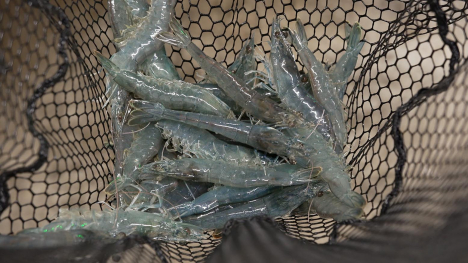
An Iowa farm adds shrimp farming with an algae-based system and direct-to-consumer sales.
Brad Matthews examines grain market lows, Chinese soybean demand and cattle and hog prices.
Rising diesel prices squeeze farm profits as Iowa and Kansas farmers weigh their midterm votes.