USDA projects best acreage and production guesses for 2026. Wildfires and an avalanche top weather headlines. Turning waste into an investment in your operation. And, commodity market analysis with Shawn Hackett.


On this edition of Market to Market ...
USDA projects best acreage and production guesses for 2026. Wildfires and an avalanche top weather headlines. Turning waste into an investment in your operation. And, commodity market analysis with Shawn Hackett.
Transcript
[Paul Yeager] Coming up on Market to Market, the High Court strikes down the president's reason for the use of tariffs. USDA projects, best acreage and production guesses for 2026, wildfires and avalanches. Top weather headlines turning waste into an investment in your operation and commodity market analysis with Shawn Hackett next.
[Announcer] I wouldn't be here without my customers.
Yeah, I'd like to thank the customers. They're very dear to our heart.
It's about the people that you're working with and the relationships that you have.
Thank you. Thank you. Thank you. Thank you from the bottom of my heart.
[MUSIC]
[Announcer] Tomorrow, for over 100 years, we've worked to help our customers be ready for tomorrow. Trust in tomorrow. Information is available from a Grinnell Mutual agent today.
[Announcer] This is the Friday, February 20th edition of Market to Market, the Weekly Journal of Rural America.
[Yeager] Hello, I'm Paul Yeager. If the Federal Reserve's preferred inflation monitor is any indication, interest rates are likely holding steady for the foreseeable future. The PCE advanced in December by 4/10 of a percent and 2.9% on the year. New home sales were down 1.7% last month as builders worked through a backlog of inventory, opening the door for more new housing projects. Survey respondents in ten states dependent on agriculture and energy dipped below growth neutral last month. The Rural Mainstreet Index from Creighton University came in at 47.9. This is the 12th reading in 14 months, below the growth neutral mark. The orders for items that last longer than three years fell in December by 1.4%. The Durable Goods report has been lowered two of the last three months. Congress holds the power of the purse. The elected body has the ability to raise and lower taxes, as said by the Supreme Court Friday. Tariffs. The ruling Friday was against the president using a 1970s law to impose tariffs to deal with a national emergency, threatening America. Friday was also the last day of the USDA annual Economic Forum. David Miller wraps the news on the Capitol beat.
[Narrator] In a 6-3 decision Friday, the U.S. Supreme Court struck down President Trump's use of the Emergency Economic Powers Act of 1977. The High Court said the power of tariffs, the central plank of the president's economic plan, are given to Congress and is very clearly spelled out in the Constitution. The act is meant to be used only during national emergencies. China. In April, as part of Liberation Day. The president cited the drug flow from several countries, including major U.S. trading partners Canada, Mexico and China. Among the reasons for implementing the duties. The baseline duty of 10% was imposed last spring on nearly all imports to the U.S., with even higher rates on specific goods and countries. The dissenting opinion said the tariffs may or may not be wise policy, but as a matter of text, history and precedent, they are clearly lawful. The president could still use other laws to impose tariffs if he chooses.
[President Trump] The Supreme Court's ruling on tariffs is deeply disappointing, and I'm ashamed of certain members of the court. Absolutely ashamed for not having the courage to do what's right for our country.
[Narrator] Before the ruling, USDA was conducting business as usual, holding its 102nd annual agricultural Outlook Forum. While there were Q&A sessions focusing on the future of U.S. agriculture.
[Julie Callahan] That really is an untapped set of countries with growing populations.
[Narrator] The most anticipated portion of the forum were the outlook numbers for stocks, acreage, and projected harvest. USDA number crunchers are predicting wheat acres to drop by 300,000 to 45 million as U.S. growers shift over to corn and soybeans. Corn acres were cut from last year's 98.8 million to 94 million. Projections for planted soybean acres moved higher from last season's 81.2 million to this year's 85 million. Overall, USDA expects 224 million acres to be planted in these three crops, down nearly a million from last year. For Market to Market, I'm David Miller.
[Yeager] Winter returned to Western and Middle America last week with snow and ice. A weather system also produced a round of tornadoes in Indiana Thursday night. Now, conversely, 41 current wildfires have scorched parts of Oklahoma, Texas and New Mexico. Colleen Bradford Krantz has our weather report.
[Narrator] A series of wildfires rolled across the Southern Plains this week, burning thousands of acres. The Oklahoma Panhandle was the center of a massive wildfire. The area between Beaver and Hooker was the epicenter of the heavy smoke and flames. Wind gusts approached 65mph, pushing the uncontrolled fires into southern Kansas. Smoke filled skies shut down several highways temporarily due to reduced visibility. Dry conditions have settled into the Colorado Rockies, triggering red flag fire warnings. The U.S. is the driest since last October, with 73.73% of the country in some form of drought, according to the latest Drought Monitor. Lower than normal snowfall is getting the blame for setting the stage for a deadly avalanche in California. At least eight people died in the worst avalanche in nearly 50 years. Several feet of snow fell in the Sierra Nevada mountain region, landing on top of an earlier hardened layer which made for the unstable conditions.
[Craig Clements] Let's say you have multiple storms and you have new snow on top of new snow, on top of new snow. Those layers can bond a little bit easier versus old snow and new snow because old snow, the crystals change and they become there's less ability for them to bond well with new snow. And that's what happened here.
[Narrator] For Market to Market. I'm Colleen Bradford Krantz, USDA.
[Yeager] Announced this week assistance for specialty crop farmers not covered by the Farmer Bridge Assistance Program. The payments would help offset higher input costs and inflation. Part of the inspiration for a different crop is opportunity in the marketplace, often called finding a niche, and producers have long sought ways to increase efficiency. At the same time. Josh Buettner shows us one process that's taking waste and helping the bottom line at the same time. This is our cover story.
[Narrator] For the state of California taking a bite out of climate change is a high priority. In recent years, more legislation has sought to bolster longtime efforts across the board and, for some, solidified the notion that one person's trash could be another's treasure.
[James Moore] I think the landfill industry has a vested interest in seeing better opportunities for the use of the methane we generate. It's definitely a fact that California does typically set the standard, and then other states follow in the successive years.
[Narrator] Merced County Regional Waste Management Authority Director James Moore says his Central Valley utility, now annually diverts 25,000 tons of green waste material they would have previously buried. Subterranean decay does act as a carbon sink, but anaerobic conditions underground also produce volatile methane, a greenhouse gas 28 times more potent at trapping heat in the atmosphere than CO2, according to the U.S. Environmental Protection Agency. Under Senate Bill 1383, approved by former governor Jerry Brown in 2016 and in effect as of 2022, residents and businesses are required to compost food and other organic waste in utility provided carts. The goal is a 75% reduction in entombed organic waste by 2025. The action has opened the door for contractors and jurisdictions like Merced County to not only produce compost commodities for landscaping and soil development, but capitalize on existing mitigation systems.
[James Moore] For the last 2025 years or so, landfills have put in, based on regulations, methane collection systems. In the last 20 years, it's become quite economical to capture that gas and use it either for energy generation or under the new regulations. Today, renewable fuel standards, rather than just environmental control, burning it off or burying it. So, there's an economic advantage to being able to put in these power plants or conversion plants and transform that methane into a renewable natural gas that can either be injected into the pipeline and use just like natural gas, or be used to create fuel.
[Narrator] The renewable fuel standard has benefited U.S. corn growers by requiring a percentage of biofuels, like ethanol, be blended into the nation's fuel supply. But the federal mandate also covers biogas, a cellulosic or next generation source, which also qualifies to generate renewable identification numbers, or Rins. These credits are sold to major polluters like the oil and gas industry, to keep their emissions in check. California's low carbon fuel standard, a similar state program, may be stacked with Rins to provide a dual windfall, an enticing incentive for a state at the forefront of the shift from gasoline to electric vehicles. Some say biofuels can help bridge the gap.
[Dr. Sarah Kurtz] I think there's a real opportunity for biofuels, largely because they can be stored. If we shut down all the fossil fuel right now, the world would come to a screeching halt. We would starve, we would freeze. That's not the way we're going to be able to build a better world.
[Narrator] University of California, Merced. Distinguished professor Dr. Sarah Kurtz spent more than 30 years working at the National Renewable Energy Laboratory in Colorado. Her tenure in Merced has focused on integrating various energy sources to collectively drive down costs, with a focus on choice as opposed to government mandates.
[Dr. Sarah Kurtz] California is definitely a leader. They're doing some things very, very well. I do want to raise a concern that one of the ways they've done it is to say we want to do it at whatever cost, and we end up then we have some of the most expensive electricity in the nation. If electricity prices go sky high, then who wants to electrify?
[Narrator] UC Merced staff are tackling today's challenges from various angles.
[Dr. Gerardo Diaz] This area where we are in the Central Valley, there's a lot of generation of biomass, not only in the Sierras for the forest type of waste that is available, but also agricultural waste.
[Narrator] Dr. Gerardo Diaz says bio circular economies keep money on the farm and techniques like using livestock compost, bedding made from sterilized manure solids can help cut methane and other objectionable byproducts.
[Dr. Gerardo Diaz] We were able to show that there's a reduction in odor from the dairy production, so that really helps to improve the quality of life of some of the surrounding communities. For instance, sometimes people don't consider those things, but we have a large community of people that are either rural or disadvantaged communities or low income that are affected by some of these aspects.
[Narrator] Entrepreneurs have worked with UC Merced are harnessing the rising tide of energy incentives to help float dairy operations of all sizes and scale.
[Omar Ramirez] It's not super sophisticated technology. It's a natural process. You know, it doesn't get more simple than this. It's a covered lagoon capturing the methane that is being released from the microbial activity within the manure takes about 30 days for the biogas to be generated underneath the cover.
[Narrator] A line digesters general manager Omar Ramirez says after purchasing the proper equipment, similar systems can generate power at $0.09 per kilowatt hour, as opposed to up to $0.22 from a local utility. He adds. This dairy in Chowchilla, which milks 6500 head, feeds his set up roughly 350,000 gallons of liquid waste daily, which can generate around two megawatts of power. Net metering can further offset inputs, while even more potential remains.
[Omar Ramirez] On the plus side, if you're doing renewable natural gas, you could also power your fleet on site to haul your milk, to haul your feed. It's really easy to really create a circular loop.
[Narrator] Critics charge this bevy of benefits encourages booming herds and exponential greenhouse gas. But Ramirez sees it as a hedge.
[Omar Ramirez] The dairy market is very volatile in our mind. It's dairy first. And how are we going to help the dairymen generate that additional revenue stream while helping the environment and also putting a little bit more money in their pocket for the hard times.
[Narrator] For Market to Market. I'm Josh Buettner.
[Announcer] Next, the Market to Market report.
[Yeager] We'd enjoyed another week of rallies on weather issues in the Black Sea and Plains region for the week ending February 20th. The nearby wheat contract gained $0.32, and the May corn contract lost $0.02. Bean oil provided some stability to the soy complex. The May soybean contract improved a nickel, while May meal gained $0.30 per ton. May cotton expanded by $1.37 per hundredweight. Over in the dairy parlor. April class three milk futures added $0.93. The livestock market was higher. April cattle expanded $1.37. April feeders put on one. 60. In April, lean hogs gained to 40. In the currency markets, U.S. dollar index strengthened by 92 ticks. April crude oil found 3.53 per barrel. Comex gold gained 32. 70 per ounce, and the Goldman Sachs Commodity Index was up by more than 15 points to settle at 5.98 91. Here now, to lend us his insight on these and other trends is regular market analyst Shawn Hackett. Hello, sir.
[Shawn Hackett] Hey, Paul, how are you? This fleet was really appreciated.
[Yeager] Hey, anything we can do to make you really remember what this Midwest weather is all about. But the weather is actually a big story when it comes to wheat. And for two reasons. You have the drier conditions in the Black Sea. Then you have the wildfires in the plains. But there has to be more to this rally than that, right?
[Hackett] I think it's mostly geopolitical. Paul. Throughout history, wheat has always been most sensitive to geopolitical instability. And this whole situation with Iran, are they going to close the Strait of Hormuz? And we're continuing to get conflicting signals with Russia, Ukraine pieces. You know, they're just not moving in the right direction for peace. And I think we are starting to put geopolitical premium back in the market.
[Yeager] Which is about this time of year, a couple of years ago. So, when you get to a geopolitical position as a producer in this country, how do I protect myself to the up and down side?
[Hackett] Well, certainly we know that it's hard to predict every wiggle and waggle of geopolitics when you get spiked trades higher like we've seen. You've got to make cash sales to keep yourself selling on the higher side of the ledger. At the same time, because it's unpredictable, you always want to make sure that you're keeping some bushels left over in case this thing can run much further, which we've seen it do in the past.
[Yeager] Do you get the sense and this was actually a question. We had some great questions this week, by the way, and I'm not going to say it out loud, but Mike and I wanted to know why is corn not following wheat if wheat is being this leader right now?
[Hackett] The way I'm looking at it, we have really, really good weather in Brazil for the second crop corn. Not exciting the market. We have aggressive cash market selling domestically for farmers needing to raise capital, as they typically do in mid late February. And even though geopolitics are exciting for wheat, it's not really the same story for corn. And so, it's just the odd man left out. It doesn't have a good story yet to drive it like soybeans do and like wheat does.
[Yeager] So, let's stick in the corn vein then, because now we're starting to see a little more of that South American impact on corn. Is that holding true in your eyes?
[Hackett] Yeah. I mean, this is the time of the year where we're trying to calibrate what kind of total production is Argentina and second crop corn going to deliver. Right now, the weather's been pretty darn good. Not a lot of heat, decent moisture. Looks like the crops aren't going to be in the higher side. And that's just not going to give the corn market a reason to outperform either. Either wheat or soybeans at this point.
[Yeager] At this point -- are we at the weather point yet?
[Hackett] We're at the weather point for spring, and that means the weather point for winter wheat. You correctly mentioned that we're worried about dry weather in the southern Plains, which I think could get much worse. And we've been dealing with a lot of cold weather, which we think is going to continue to be a theme of some flash frost risks for us. Winter wheat here during the spring. If I'm looking for a weather catalyst, I think wheat winter wheat is the one that could continue to provide that type of story.
[Yeager] Because there's many people who wanted to know, you know your thoughts last year about whether and how it played out, and then they're going to want to know them this year, playing out the January or the July and August weather pattern, especially on that new crop corn. What are you seeing?
[Hackett] The ROI comes out every month and they tell you what they believe. Their probabilities are for El Nino, La Nina. Right now, La Nina has just ended and we're moving towards an El Nino. Later in the year. The projections, based on statistical and dynamical models, there's a 60% chance we're going to have El Nino by July. That usually means cooler weather and timely rains like we saw in 2020. That would mean good crops.
[Yeager] Which would mean what? Make a sale when you have an opportunity.
[Hackett] We think price momentum going into the spring needs to be taken full advantage of. Given El Nino expected weather pattern, I think you're going to have to take that shot before the growing season because of that act.
[Yeager] Early. Act early. Okay, I told you we were going to talk about tariffs at the top, but I wanted to put it right here with soybeans because tariffs and trade with soybeans have been that's how we have talked about it on this show. But the ruling in the Supreme Court on Friday was on all tariffs, all countries impacted. Not every single one of the president's tariffs. But what is the impact on all the commodities with this Supreme Court decision.
[Hackett] I think it's twofold. There's uncertainty that the trade deals we have signed and some of the demand we have been getting, like soybeans, maybe there's worry that that could be pulled back. At the same time, if he's no longer able to arbitrarily just add reciprocal tariffs at will, it may be it creates a less volatile trading platform going forward would actually be a good thing. Longer term, I don't believe after all the chaos we've seen with trade, that countries are going to backtrack on the current trade deals. I think they're just going to go through with it, finish them off and move along. I don't think anyone was terribly surprised with today's, you know, today's decision. I think it was expected. And really the market didn't act too terribly today.
[Yeager] Neither the equities or commodities. Correct. Yeah. All right. Let's go Philip. In Ontario if we could for our next question to start us in the soybean conversation, Phil says I'm still wondering why soybean prices have shown strength lately. Is it the funds buying and is part of it commercial support in both the soybean oil and meal market? It's like the U.S. crushed demand for us beans is growing more real.
[Hackett] Well, look, we ran the market up to this level late last year when we first said China is going to buy a lot of soybeans. And then we weren't sure and they backed it off. And then Trump said they're really going to do it. And they put the dollar back on. And then we're getting this concept that the EPA is going to come out with some more optimistic rules of better demand for domestic crush. So, there's a very good reason why we have put these this price back up on better demand from China expected and better demand for renewable diesel. It's a good story going into the spring, at least.
[Yeager] When you look at the AG Economic Forum acre story that came out, wheat, corn, beans, did you expect beans to be the winner in the sense of increasing?
[Hackett] I'm surprised. My work tells me we're going to see more corn acres and less soybean acres. When it comes down to it, I'm feeling 96 million ish plus or minus an acre. I do not think that the farmers have an appetite to plant that many more soybeans, at least not at this price level.
[Yeager] Well, that's that. Thank you for saying that, because I want to go back then to what you said about corn and apply it to beans. Is the market window to do more sales early or late, given what you just said about beans?
[Hackett] I still feel with good weather and above trendline yields, which is normally what you get in an El Nino year. Even if we back acres off a little bit, it's still going to be a big crop and we still have to absorb the big crop coming from Brazil, which starts, those prices start coming in March. I just don't see a reason not to be aggressive. On getting sales on the books by the springtime and take advantage of the momentum we currently have, because once you start seeing yields going up and the rains coming and no heat and big record, it's going to be hard for the funds not to want to short that market into August and September like they've done the last couple of years.
[Yeager] Speaking of momentum, cotton has put two weeks in a row of gains. Why.
[Hackett] A second year of really, really, really low acres? We expect to come. We also believe that there's a high probability on this meeting between President Trump and President XI that they're going to expand the trade truce or expand the trade deal to other ag markets, of which we think cotton is probably the most highly probable market to benefit and get increased demand from China, with supplies already kind of on the low side. So, we like that story. And we think the market's starting to pick up on it.
[Yeager] What do you like about cattle on feed? Report came out just before we rolled cattle on. Calves on feed was 2% below 5% below 25 and marketings 13% below 25. Your take.
[Hackett] Overall numbers weren't too far off from expectations, but I think the story is the same. We continue to not have adequate supplies of cattle coming to the market at the same time. Because of that, we need to ration demand. The Packer margins are not good. They're backing away, as the marketing showed, and we're seeing consumer demand pulling back. Beef cutout prices are no higher today than they were last May. So, we have this balance going on of rationing demand and trying to find some way to bring more supply in. And obviously we're not doing a very good job with it right now.
[Yeager] If you're reading our Facebook page this week, there was some strong passion debate about the meat packing industry, specifically about beef. So, let's look let's lean into that a little bit. We are very concerned about the number of animals, and we're also concerned about the price and the ownership. What's the biggest story in 26 for the feeders or the live cattle market?
[Hackett] I really feel in my view, the whole market comes down to whether we can open the border with Mexico. I really feel until we're able to do that, Paul, it's going to be very, very difficult to balance this market out. And as we go into the grilling season, I mean, you can write you can write the story. It's going to be very, very difficult. And I think that is the key. If we open the border, we can get lower prices for cattle and we get lower beef prices. If we don't. Hard to see anything really changing much.
[Yeager] I've got about 30 seconds on hogs here because they put $2 on this week. They've all of a sudden they're back again.
[Hackett] Yeah. When we look at the pork cutout price seasonally for this time of the year, we're at the highest prices we've seen in about eight years, showing that there's rotation from all these GLP-1 users of pills that are looking for greater protein consumption. I like the pork demand story a lot and keep an eye on China purchases too.
[Yeager] We'll talk about it more in Plus. Thank you. Shawn Hackett everybody want to let you know that you've been watching the analysis portion of our program. In a moment. We'll continue our discussion in the online only segment. Find it by searching Market Plus with Shawn Hackett. Wherever you get your podcasts. You can also go to our website at Markettomarket.org to have a listen. We have three different podcasts for you each and every week. There's the aforementioned plus an analysis that come out on Friday. Then each Tuesday we release the MtoM. That's a deeper dive on topics we often discuss here on the TV program. Subscribe wherever you get your podcasts. Next week, the increasing dominance of two row crops in the U.S. Thank you so much for watching. Have a great week.
[MUSIC]
[Announcer] Market to Market is a production of Iowa PBS, which is solely responsible for its content.
[MUSIC]
[Announcer] I wouldn't be here without my customers.
Yeah, I'd like to thank the customers. They're very dear to our heart.
It's about the people that you're working with and the relationships that you have.
Thank you. Thank you. Thank you. Thank you from the bottom of my heart.
[MUSIC]
[Announcer] Tomorrow, for over 100 years, we've worked to help our customers be ready for tomorrow. Trust in tomorrow. Information is available from a Grinnell Mutual agent today.
Trading in futures and options involves substantial risk. No warranty is given or implied by Iowa PBS or the analysts who appear on Market to Market. Past performance is not necessarily indicative of future results.
Watch More

Huub Lelieveld receives the 2026 World Food Prize for six decades of work advancing food safety.
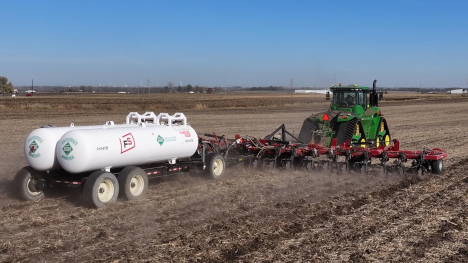
New federal plans target farmers' fuel and fertilizer costs through direct relief and investments in domestic fertilizer production.
Chris Robinson weighs corn recovery prospects, soybean price levels and the rebound in cattle.
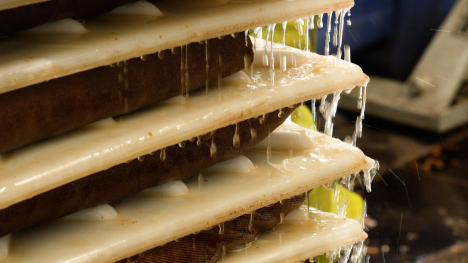
Minnesota’s Keepsake Cidery combines heirloom apples, traditional cider making and direct sales to help a small farm thrive.

New farm relief, a food safety honor, Minnesota cider and commodity market analysis with Chris Robinson.
Chris Robinson answers viewer questions on corn yields, crude oil and cattle, and explains his soybean outlook.