Shawn Hackett discusses the economic and commodity markets of wheat, corn, soybeans, live cattle, feeder cattle and lean hogs.


Shawn Hackett discusses the economic and commodity markets of wheat, corn, soybeans, live cattle, feeder cattle and lean hogs.
Transcript
[Yeager] We'd enjoyed another week of rallies on weather issues in the Black Sea and Plains region for the week ending February 20th. The nearby wheat contract gained $0.32, and the May corn contract lost $0.02. Bean oil provided some stability to the soy complex. The May soybean contract improved a nickel, while May meal gained $0.30 per ton. May cotton expanded by $1.37 per hundredweight. Over in the dairy parlor. April class three milk futures added $0.93. The livestock market was higher. April cattle expanded $1.37. April feeders put on one. 60. In April, lean hogs gained to 40. In the currency markets, U.S. dollar index strengthened by 92 ticks. April crude oil found 3.53 per barrel. Comex gold gained 32. 70 per ounce, and the Goldman Sachs Commodity Index was up by more than 15 points to settle at 5.98 91. Here now, to lend us his insight on these and other trends is regular market analyst Shawn Hackett. Hello, sir.
[Shawn Hackett] Hey, Paul, how are you? This fleet was really appreciated.
[Yeager] Hey, anything we can do to make you really remember what this Midwest weather is all about. But the weather is actually a big story when it comes to wheat. And for two reasons. You have the drier conditions in the Black Sea. Then you have the wildfires in the plains. But there has to be more to this rally than that, right?
[Hackett] I think it's mostly geopolitical. Paul. Throughout history, wheat has always been most sensitive to geopolitical instability. And this whole situation with Iran, are they going to close the Strait of Hormuz? And we're continuing to get conflicting signals with Russia, Ukraine pieces. You know, they're just not moving in the right direction for peace. And I think we are starting to put geopolitical premium back in the market.
[Yeager] Which is about this time of year, a couple of years ago. So, when you get to a geopolitical position as a producer in this country, how do I protect myself to the up and down side?
[Hackett] Well, certainly we know that it's hard to predict every wiggle and waggle of geopolitics when you get spiked trades higher like we've seen. You've got to make cash sales to keep yourself selling on the higher side of the ledger. At the same time, because it's unpredictable, you always want to make sure that you're keeping some bushels left over in case this thing can run much further, which we've seen it do in the past.
[Yeager] Do you get the sense and this was actually a question. We had some great questions this week, by the way, and I'm not going to say it out loud, but Mike and I wanted to know why is corn not following wheat if wheat is being this leader right now?
[Hackett] The way I'm looking at it, we have really, really good weather in Brazil for the second crop corn. Not exciting the market. We have aggressive cash market selling domestically for farmers needing to raise capital, as they typically do in mid late February. And even though geopolitics are exciting for wheat, it's not really the same story for corn. And so, it's just the odd man left out. It doesn't have a good story yet to drive it like soybeans do and like wheat does.
[Yeager] So, let's stick in the corn vein then, because now we're starting to see a little more of that South American impact on corn. Is that holding true in your eyes?
[Hackett] Yeah. I mean, this is the time of the year where we're trying to calibrate what kind of total production is Argentina and second crop corn going to deliver. Right now, the weather's been pretty darn good. Not a lot of heat, decent moisture. Looks like the crops aren't going to be in the higher side. And that's just not going to give the corn market a reason to outperform either. Either wheat or soybeans at this point.
[Yeager] At this point -- are we at the weather point yet?
[Hackett] We're at the weather point for spring, and that means the weather point for winter wheat. You correctly mentioned that we're worried about dry weather in the southern Plains, which I think could get much worse. And we've been dealing with a lot of cold weather, which we think is going to continue to be a theme of some flash frost risks for us. Winter wheat here during the spring. If I'm looking for a weather catalyst, I think wheat winter wheat is the one that could continue to provide that type of story.
[Yeager] Because there's many people who wanted to know, you know your thoughts last year about whether and how it played out, and then they're going to want to know them this year, playing out the January or the July and August weather pattern, especially on that new crop corn. What are you seeing?
[Hackett] The ROI comes out every month and they tell you what they believe. Their probabilities are for El Nino, La Nina. Right now, La Nina has just ended and we're moving towards an El Nino. Later in the year. The projections, based on statistical and dynamical models, there's a 60% chance we're going to have El Nino by July. That usually means cooler weather and timely rains like we saw in 2020. That would mean good crops.
[Yeager] Which would mean what? Make a sale when you have an opportunity.
[Hackett] We think price momentum going into the spring needs to be taken full advantage of. Given El Nino expected weather pattern, I think you're going to have to take that shot before the growing season because of that act.
[Yeager] Early. Act early. Okay, I told you we were going to talk about tariffs at the top, but I wanted to put it right here with soybeans because tariffs and trade with soybeans have been that's how we have talked about it on this show. But the ruling in the Supreme Court on Friday was on all tariffs, all countries impacted. Not every single one of the president's tariffs. But what is the impact on all the commodities with this Supreme Court decision.
[Hackett] I think it's twofold. There's uncertainty that the trade deals we have signed and some of the demand we have been getting, like soybeans, maybe there's worry that that could be pulled back. At the same time, if he's no longer able to arbitrarily just add reciprocal tariffs at will, it may be it creates a less volatile trading platform going forward would actually be a good thing. Longer term, I don't believe after all the chaos we've seen with trade, that countries are going to backtrack on the current trade deals. I think they're just going to go through with it, finish them off and move along. I don't think anyone was terribly surprised with today's, you know, today's decision. I think it was expected. And really the market didn't act too terribly today.
[Yeager] Neither the equities or commodities. Correct. Yeah. All right. Let's go Philip. In Ontario if we could for our next question to start us in the soybean conversation, Phil says I'm still wondering why soybean prices have shown strength lately. Is it the funds buying and is part of it commercial support in both the soybean oil and meal market? It's like the U.S. crushed demand for us beans is growing more real.
[Hackett] Well, look, we ran the market up to this level late last year when we first said China is going to buy a lot of soybeans. And then we weren't sure and they backed it off. And then Trump said they're really going to do it. And they put the dollar back on. And then we're getting this concept that the EPA is going to come out with some more optimistic rules of better demand for domestic crush. So, there's a very good reason why we have put these this price back up on better demand from China expected and better demand for renewable diesel. It's a good story going into the spring, at least.
[Yeager] When you look at the AG Economic Forum acre story that came out, wheat, corn, beans, did you expect beans to be the winner in the sense of increasing?
[Hackett] I'm surprised. My work tells me we're going to see more corn acres and less soybean acres. When it comes down to it, I'm feeling 96 million ish plus or minus an acre. I do not think that the farmers have an appetite to plant that many more soybeans, at least not at this price level.
[Yeager] Well, that's that. Thank you for saying that, because I want to go back then to what you said about corn and apply it to beans. Is the market window to do more sales early or late, given what you just said about beans?
[Hackett] I still feel with good weather and above trendline yields, which is normally what you get in an El Nino year. Even if we back acres off a little bit, it's still going to be a big crop and we still have to absorb the big crop coming from Brazil, which starts, those prices start coming in March. I just don't see a reason not to be aggressive. On getting sales on the books by the springtime and take advantage of the momentum we currently have, because once you start seeing yields going up and the rains coming and no heat and big record, it's going to be hard for the funds not to want to short that market into August and September like they've done the last couple of years.
[Yeager] Speaking of momentum, cotton has put two weeks in a row of gains. Why.
[Hackett] A second year of really, really, really low acres? We expect to come. We also believe that there's a high probability on this meeting between President Trump and President XI that they're going to expand the trade truce or expand the trade deal to other ag markets, of which we think cotton is probably the most highly probable market to benefit and get increased demand from China, with supplies already kind of on the low side. So, we like that story. And we think the market's starting to pick up on it.
[Yeager] What do you like about cattle on feed? Report came out just before we rolled cattle on. Calves on feed was 2% below 5% below 25 and marketings 13% below 25. Your take.
[Hackett] Overall numbers weren't too far off from expectations, but I think the story is the same. We continue to not have adequate supplies of cattle coming to the market at the same time. Because of that, we need to ration demand. The Packer margins are not good. They're backing away, as the marketing showed, and we're seeing consumer demand pulling back. Beef cutout prices are no higher today than they were last May. So, we have this balance going on of rationing demand and trying to find some way to bring more supply in. And obviously we're not doing a very good job with it right now.
[Yeager] If you're reading our Facebook page this week, there was some strong passion debate about the meat packing industry, specifically about beef. So, let's look let's lean into that a little bit. We are very concerned about the number of animals, and we're also concerned about the price and the ownership. What's the biggest story in 26 for the feeders or the live cattle market?
[Hackett] I really feel in my view, the whole market comes down to whether we can open the border with Mexico. I really feel until we're able to do that, Paul, it's going to be very, very difficult to balance this market out. And as we go into the grilling season, I mean, you can write you can write the story. It's going to be very, very difficult. And I think that is the key. If we open the border, we can get lower prices for cattle and we get lower beef prices. If we don't. Hard to see anything really changing much.
[Yeager] I've got about 30 seconds on hogs here because they put $2 on this week. They've all of a sudden they're back again.
[Hackett] Yeah. When we look at the pork cutout price seasonally for this time of the year, we're at the highest prices we've seen in about eight years, showing that there's rotation from all these GLP-1 users of pills that are looking for greater protein consumption. I like the pork demand story a lot and keep an eye on China purchases too.
[Yeager] We'll talk about it more in Plus. Thank you. Shawn Hackett everybody want to let you know that you've been watching the analysis portion of our program. In a moment. We'll continue our discussion in the online only segment. Find it by searching Market Plus with Shawn Hackett. Wherever you get your podcasts. You can also go to our website at Markettomarket.org to have a listen. We have three different podcasts for you each and every week. There's the aforementioned plus an analysis that come out on Friday. Then each Tuesday we release the MtoM. That's a deeper dive on topics we often discuss here on the TV program. Subscribe wherever you get your podcasts. Next week, the increasing dominance of two row crops in the U.S. Thank you so much for watching. Have a great week.
Trading in futures and options involves substantial risk. No warranty is given or implied by Iowa PBS or the analysts who appear on Market to Market. Past performance is not necessarily indicative of future results.
Watch More
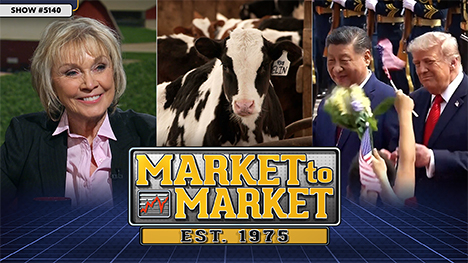
The White House adds detail to the new trade deal, while China dodges the details. The drought continues to hammer the south and west. We’ll look at the ticking clock facing the dairy industry. And, commodity market analysis with Sue Martin.
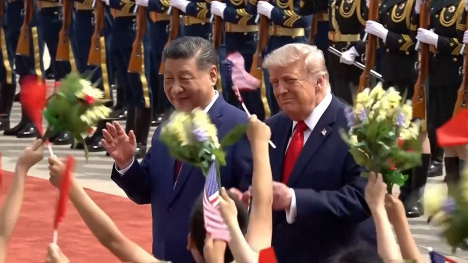
The White House announced this week that President Trump has secured “historic trade deals with China” after his visit last week with President Xi.

This week, the East Coast received an early blast of summer, with highs in Philadelphia reaching into the 90’s with the heatwave expected to continue through the weekend.
Sue Martin talks interest rates, oil, corn, soybeans, hogs, cattle and packing plants in our Market Plus.
Sue Martin discusses the latest trade deal with China along with corn, soybeans, cattle and hogs in our Market Analysis.
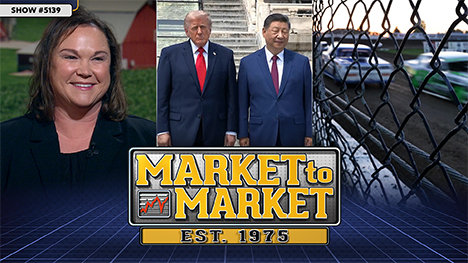
Agriculture gets sorted to the side during high-stakes negotiations with China. The yeas have it - E15 is approved in the House but not without some pushback. Revving up fans, drivers, and rural communities on the dirt track. And, commodity market analysis with Naomi Blohm.