USMCA goes under the microscope. A data point on who is paying the tariff bill. The overall effect of one community’s packing plant closure. And, commodity market analysis with Karen Braun.


On this edition of Market to Market ...
USMCA goes under the microscope. A data point on who is paying the tariff bill. The overall effect of one community’s packing plant closure. And, commodity market analysis with Karen Braun.
Transcript
[Paul Yeager] Coming up on Market to Market. USMCA goes under the microscope. A data point on who is paying the tariff bill. The overall effect of one community's packing plant closure and commodity market analysis with Karen Braun next.
[MUSIC]
[Announcer] I wouldn't be here without my customers. Yeah, I'd like to thank the customers. They're very dear to our hearts. It's about the people that you're working with and the relationships that you have. Thank you. Thank you. Thank you. Thank you from the bottom of my heart.
[MUSIC]
[Announcer] Tomorrow. For over 100 years, we've worked to help our customers be ready for tomorrow. Trust in tomorrow. Information is available from a Grinnell Mutual agent today.
[Announcer] This is the Friday, February 13th edition of Market to Market, the Weekly Journal of Rural America.
[Yeager] Hello, I'm Paul Yeager. Tariffs like inflation have been common influencers on the U.S. economy and made headlines this week. The monthly consumer price index added 2/10 of a percent in January. The core CPI annual reading was the smallest since March of 2021, at 2.4%. The holiday shopping season provided few gifts for retailers as December sales were even. 2025 turned out to be flat for job growth. Adjusted numbers from the Bureau of Labor Statistics revealed 181,000 new positions for all of last year. January is off to a positive start, with an increase of 130,000 new jobs. The unemployment rate moved lower by a tick to 4.3%. The existing homes market dropped 8.4% in January, with falling inventory and higher prices for those limited units that are on the market. The nonpartisan Congressional Budget Office says the deficit in fiscal year 2026 will hit $1.9 trillion. The CBO cited the 2025 Reconciliation Act. Higher tariffs and immigration policy as the reasons for the increase. The Federal Reserve of New York reported Americans are paying 90% of the tariffs on imported goods. Contrary to claims by the president. Now, this week, tariffs and trade were under the congressional microscope. Specifically, the USMCA negotiated by President Trump. Peter Tubbs reports.
[Alexis Taylor] The export markets between Canada, Mexico and the United States are highly integrated, which makes for really efficient flow of goods, which ultimately saves money to the end consumer.
[Narrator] This week, the Agricultural coalition for USMCA began a campaign to encourage the renewal of the USMCA trade agreement. In its current form.
[Krista Swanson] If we remove that framework that offers those things, then, you know, we'd be talking about an environment with greater instability. And we're already in a challenging farm economy.
[Narrator] The 2018 agreement between the United States, Mexico and Canada, known as the USMCA, is up for a mandatory review and renewal by January of 2026. Renewal would extend the trade pact for another 16 years. The coalition was launched on February 5th, and this week began its marketing campaign on the benefits of the USMCA for American agriculture. The over 40 farm, commodity and industry trade groups that form the coalition argue that while the agreement has areas that need to be revisited, the successes of the USMCA justify its extension.
[Krista Swanson] While the agreement is due for a few targeted improvements, overall, it is critical to the farm economy and it is certainly helpful to rural America, particularly during tough economic times like we are in right now.
[Narrator] Bloomberg has reported that President Trump has discussed withdrawing from the USMCA, a failure to renew the trade deal by the three member countries would trigger annual negotiation cycles for the next 20 years. If the trade treaty passes muster, it will be renewed for 16 more years. For Market to Market, I'm Peter Tubbs.
[Narrator] Last week, 99% of JBS workers in Greeley, Colorado, voted to launch the nation's first meatpacking strike in decades. The Brazilian based company and the UFCW union have been in negotiations for months. Workers are asking for improvements and working conditions, claiming the company has violated federal laws and acted in bad faith. The plant represents 5% of the total U.S. beef packing capacity and is located just north of Denver, and about 300 miles to the east. Tyson announced in November it was closing their Lexington, Nebraska, packing plant. Now, those living in the central Nebraska town are trying to figure out what's next. As Colleen Bradford Krantz reports in our cover story.
[Narrator] When Tyson Foods announced in late November that it would be closing its Lexington, Nebraska, beef packing plant, the town's residents initially hoped it was just a bad rumor.
[Rocio Casanova] You know, to me and my husband, we couldn't believe that it was like about Tyson is closing.
[Narrator] But as of this week, only 142 of 3212 employees were to remain. With those final layoffs expected by late July, the town of 10,000, once known for a tight housing market, now has more than 50 homes for sale. Rocio Casanova, a longtime community leader and children's librarian, said hundreds of residents have been searching for new jobs since the closure was announced. Businesses are nervous as activity slows.
[Rocio Casanova] I took it like when you are grieving, somebody like you have someone you love so much and you see every day and that person die. So, these people are like in shock first, and then they go into that grieving process and they just need to let it out. And somebody just needs to listen to them and then tell them everything is going to be okay.
[Narrator] The town's library became a gathering point for displaced workers seeking advice. Other regional packing plants had representatives available, while a few lawyers and financial advisors, some traveling from Omaha, offered assistance, especially to recent immigrants for whom English is a second language. Volunteers raised more than $250,000 for a relief fund, helping out more than 3000 people. The plant building itself has a long industrial history. It once housed a Sperry New Holland combine factory that closed in 1985. IBP remodeled it for meatpacking in 1990, and Tyson acquired it in 2001. Casanova said some families are holding out hope that another company will move in, but time is running out.
[Rocio Casanova] My biggest worry is like, what are we going to do to retain these people in the community? Because we have become a really big family. If nothing comes, what's going to happen to the businesses in town? What's going to happen to people who have a home here?
[Narrator] Experts say that while losing the town's largest employer will be painful, the closure does make beef packing capacity more efficient. Nationwide, Elliot Dennis, an associate professor of livestock and meat economics at the University of Nebraska, Lincoln, said pandemic era disruptions and federal incentives led to a number of new processing facilities in Nebraska. Sustainable beef, a Walmart connected plant, opened in North Platte in 2025, just an hour's drive from Lexington. That expansion came as the national cattle herd dropped to a 74 year low of 86 million head. At the same time, live cattle imports from Mexico fell an estimated 75% in 2025. After the border closed over concerns about New World Screwworm.
[Elliott Dennis] We are somewhere in that 75 to 78% utilization, and so really we were we didn't have we had so much capacity out there that there were some incentives to say, you know, maybe we need to close some of these plants. And so, and after that plant closure, we essentially bumped up to 80, 85, 86% plant utilization.
[Narrator] The Lexington plant could process up to 5000 cattle a day, roughly 4.5% of the national capacity. Its closure may help other facilities remain open in the short term. Tyson also operates another Nebraska plant about 260 miles away in Dakota City. Tyson did not respond to a request for comment.
[Elliott Dennis] Think about the major four Packers. They were the really the only one who had two plants in in a given state. And so, when they're thinking about where can we kind of strategically, if we needed to close a plant, where could it have been, you know, and gives us the opportunity to process animals? I think that's why they ended up closing the Lexington plant.
[Narrator] Dennis said the regional economic impact will be significant. A study he coauthored estimates a combined direct and indirect loss of $3.3 billion when including other businesses. The total job loss could approach 7000.
[Elliott Dennis] And so, it's a very large impact, and it has implications not only for the state as far as tax revenues and total spend, but also as implications for kind of the local economy.
[Narrator] John Schroeder, general manager of feedlot, located just a 15-minute drive from the Lexington Tyson plant, said area cattle producers are fortunate to have other packing options. Da feedlot, which feeds 48,000 cattle, previously sent 70% of them the seven miles to Lexington.
[John Schroeder] That's a big hit for our community, but we still have a lot of market access going south into Kansas markets to multiple plants. We've got a new plant in North Platte, Nebraska, just 45 miles down the road. We've got plants in the west out in Colorado that are available, and we can go into our eastern Nebraska plants as well. So again, a great area to feed cattle got a lot of market access.
[Narrator] Schroeder said producers typically negotiate with packers over who might cover that additional shipping cost. Da feedlot has managed to shift its cattle to other packing plants, but longer hauls have increased the workload for its employees.
[John Schroeder] Logistics is a big part of that, that there's going to be a four-hour haul, an hour to unload and four hours’ drive back. That's a nine-hour day, and there's not much time to get much else done.
[Narrator] Schroeder added that strong consumer demand for beef has helped cushion the blow for the cattle industry. But the outlook for the town remains uncertain.
[John Schroeder] We could lose between 5 and 7000 people in a worst-case scenario. I don't see that today. At this point in time, we see a lot of families that want to stay in this community and drive farther to be at some jobs within this 60-mile radius, but it's just going to take time to attract those businesses. I think we have to be realistic about that.
[Narrator] For Market to Market. I'm Colleen Bradford Krantz.
[Announcer] Next, the Market to Market report.
[Yeager] A relatively neutral WASDE report early in the week failed to give the trade a jolt before some profit taking ahead of the extended weekend. For the week ending February 13th, the nearby wheat contract gained $0.19 and the March corn contract added $0.02. Optimism of buying by China provided a late week boost to the soy complex. The March soybean contract improved $0.18, while March meal gained five. 60 per ton. March cotton expanded by $1.11 per hundredweight. Over in the dairy parlor. March class three milk futures fell $1. 18 the livestock market was mixed. April cattle expanded by 338. March feeders put on $0.65, and the April lean hog contract sold off $6.67. In the currency markets, U.S. dollar index dropped by 73 ticks. March crude oil lost $0.57 per barrel. Comex gold strengthened 81. 90 per ounce, and the Goldman Sachs Commodity Index was off by almost three points to settle at five 8271. Here now to lend us her insight on these and other trends is market analyst Karen Braun. Welcome, Karen.
[Karen Braun] Thank you very much.
[Yeager] Good to have you here. We had you on a podcast. We had you on a panel. It's just you got to handle all the questions.
[Braun] I think I can do it.
[Yeager] I think you're going to be just fine. Let's talk wheat for a minute, because all the signs point to a market that should be lower, right? Why are we higher as we go into the weekend?
[Braun] It's an interesting question because obviously, you know, we had a lot of great wheat crops in the world over the last 12 months. You know, just on Friday, Russia's wheat crop estimate has gone up. Crops are looking good still. But, you know, funds have been really short. And so, I think there's just been, you know, with this kind of excitement about maybe things going better with China just kind of I think that maybe they are looking to take some of that risk off. I mean, that's really the only explanation I can really find because like you said. Yeah, I mean, everything points to.
[Yeager] Whether there's supposed to be rain in the plains. The weather is favorable in Russia and Ukraine. Wheat is grown all over the world. It's always facing these headwinds. So. Right. Breaking out of a range, is it possible for wheat in 26?
[Braun] Oh, man. You know, I think that it might depend on kind of what the other markets do too. I mean, I think, you know, all eyes are on corn, especially soybeans. And I think, you know, wheat could potentially come along. You know, if we do see kind of a move higher in those other markets, but it's just going to be tough because you do have these strong crops. And if you keep seeing that, you know, again in the next several months, then yeah, it's just going to be a wait.
[Yeager] Are you hearing people are liquidating or not liquid but selling right now into this rally?
[Braun] You know what? I'm not completely sure. But obviously this week we saw some action to the upside. So, they're seeing something. You know, I mean they've been short since funds have been short since middle of 2022. This is almost four years now. So, you know they do sometimes take some of the risk off. But you know do they get bullish. It's been a long time.
[Yeager] So, I even had to comment when we were putting the numbers together I said really? Wheat went up. I was surprised. Let's start for a minute with Zach's question. When we get to the corn market, if we could. Karen, Zach wants to know. We already have record corn demand without China. Will China come in and buy corn? And if so, how does that change corn carryout picture in your opinion?
[Braun] So, China bought a bunch of grain back, you know, right around the pandemic just after. And then they kind of retreated as a global grain importer. But over the last few months, they've bought a bunch more U.S. sorghum. They bought a bunch of Australian barley. So, they have been importing and buying more grains here. And word on the street is that they, you know, they had a really big corn crop, but there could be some quality issues due to a lot of rain at harvest. And so right now we're actually seeing in China, corn prices go up. You know, they're at multi-month highs right now. So that was kind of the trigger that we saw in 2020 before China came to buy us corn. And you know so maybe and I don't think at the time we saw that coming in hindsight. Oh, you could look and see that the prices were going up. So that's kind of the first thing you look for is are our corn prices in China going to keep climbing higher. And then, you know, I think that trade is another aspect here. You know, if we're really going to go in a trade truce with China. You know, remove even, you know, tariffs even further, you know, that could definitely be an incentive. And if China wants to, you know, play nice with the U.S. and, you know, do some goodwill purchasing it. It kind of checks a lot of boxes there. But I do think that our corn demand is very healthy as it is. And so, the one thing I worry about, you know, when you talk about how that might impact the carryout, is that I think if China comes into the corn market, into the U.S. corn market. I think that will generate excitement. You know, that is definitely a catalyst for prices to move upwards. And when you do that, you may be boxing out some other demand. You know, in place of those Chinese purchases. Now, it depends on how big the purchases are. But, you know, if it's just a little bit, you might be offsetting that, you know, with that higher price.
[Yeager] So other countries that may have been sniffing around for us, corn may have to go somewhere else if China enters the market. Is that what I think you're saying?
[Braun] Because if you. Yeah, because I think something like that would definitely get people excited, you know, raise the price a little bit and then, you know, hey, there's Argentina, there's Brazil, you know, maybe even Ukraine. So, I so I do think that that is a risk that we do need to consider. Once you bring China into a market, generate excitement.
[Yeager] Well, let's talk old crop for just a minute because the story always is. The barn doors are welded shut. Is this Ben? Enough? Is optimism enough in corn? Break through those, open them up and let ships come here in the next 2 to 6 weeks.
[Braun] I think that we're we seem to be moving in the right direction. I mean, you know, and I keep going back to China because that's been kind of driving things over the last 12 months is kind of how have the relations unfolded with China and when things are bad, you know, everything's down and there's a lot of negativity. But I do think that especially now with this prospect of China buying corn and kind of the relations continuing to be friendly between the U.S. and China, I do think that that and then also you add in kind of soybeans having their own moment and maybe trying to buy some acres here potentially. So, all of these things, you know, you could set up for, you know, maybe some opportunities here in the next few months.
[Yeager] Few months, possibly.
[Braun] Possibly, possibly.
[Yeager] Okay, let's go into that new crop side of the discussion for a minute on corn. When you mention acres, it kind of triggers a thought process. We're about to have the USDA outlook forum. We're going to get a better idea, a little more concrete data. At what point does corn have to be or beans have to be to make a change in someone's decision if they can, on what to plant?
[Braun] Yeah, I mean, you know, we know that a lot of farmers make their decisions in the fall. But of course, there is some wiggle room come the spring, especially in the fringe acres. I mean, I know in North Dakota a lot of times, you know, they're still, you know, in March, April, just kind of deciding what to do with everything. But yeah, you know, I think that what was USDA last at in their baseline projection, I think it was 95 million acres for corn and 85 million for beans. So that would be minus four from last year on corn and plus 4 million acres beans. So that's a pretty big shift. I mean, and that still leaves you with a really big corn area. But, you know, on the bean side of things, I just think that it's hard to make decisions based on hope. And so, and especially when things are so volatile because, you know, you see all the numbers, everything tells you, hey, this is a potentially bearish situation. You look at what Brazil is doing and you know, and not knowing whether China is going to come, you know, or we're going to stay friendly with them. It's a lot of risks. Right. And so, you know, I think in cash is tight right. So, I think people are going to have to just make the decision that works for them and try to ignore the hype and not get caught up because there is a lot of uncertainty going on right now.
[Yeager] You said the B word of Brazil, you just came back from a firsthand view of what you saw. Some of those key growing areas. Matto Grasso was one area you were in. Tell me, what's your eyeballs telling you about what the Brazilian crop looks like, man?
[Braun] I mean, the Brazilian crop did look good. And, you know, every day it kind of rained there in the afternoon. So, they got a lot of moisture. I think that they are looking for a really good soybean crop this year. I was told in Mato Grosso, maybe not as good as last year. They had a record crop, a record yield last year, and crop. But it looks really good and they're just starting to plant their corn. But you know, I think that being there was really important for me because I needed to get a handle on what does it look like visually, you know, what does it look like and feel like in Brazil. How does that compare with the U.S.? And it kind of doesn't really compare to the U.S. I mean, you look around these giant fields because they don't have a lot of roads, but you just see fields for miles and miles. And it kind of reminded me a little bit of Canada, like the plains of Canada without the palm trees, obviously, but just the expansive fields and just how much room they have to work with. It's really just eye opening, just how huge these operations are. I mean, it's definitely the real deal. Like they, they they've got a lot going on there.
[Yeager] So, the U.S. producer, as they hear and see when people come on and talk about what's going on right now again China comes into the discussion for optimism in this U.S. soybean price this week. Yes. Room for this rally in the old crop.
[Braun] I think that we're waiting to find out whether this extra purchases that Trump suggested last week by China would come through because, you know, this is a potential 8 million metric tons more that they could be purchasing if what was said was true. But, you know, I think that we have to at least consider that, you know, did China even say that they were considering I mean, you know, Trump says they're considering but what does that mean? You know, did China even say anything? China never confirms anything publicly. So, it's hard to know really what to do with that. But, you know, with how volatile things are. And, you know, we saw last, you know, October, November, a lot of people were very negative on this potential for China to buy this 12 million metric tons. Oh, it doesn't make sense. Oh, price doesn't make sense. You know, they came through and they did it. So, when you see this possibility now again for them to increase purchases, even though on paper it doesn't make sense because Brazil has, you know, tons of beans to offer, you have to at least consider the possibility. So, I think that's what the trade is doing now is that you have to price in that possibility.
[Yeager] We'll get more of your Brazilian takes on soybeans in our Market Plus. But I do care and want to move to live cattle for a minute, because this has been a sideways market. We're hearing some production unrest situation is sideways the new normal when it comes to cattle?
[Braun] Well, I think when you're in a sideways market like this, maybe that tells you that you have found a fair price for now. And I think, you know, we are seeing the possibility for the JBS strike. We're seeing more plant closures. And I think that that's kind of already been factored in, like those are things that we've been expecting. And, you know, USDA confirming that our herd is at a 75-year low. I mean, all of these things, we've kind of factored this in. And so, you know, when you're in a sideways trade, you know, are we just happy with the status quo until the next piece of information comes along.
[Yeager] And the next piece in feeders, it's again the sideways story. But in the hog story, it seems to be that maybe the party is over. It looks like we're a little overbought. Any idea what charts tell you? Could be a long term, a little more long-term outlook for that.
[Braun] You know. Oh man. It's really hard to say because you had that really big run up kind of, you know, especially with the funds, you know, funds got really, really long. And I think that they just retreated, you know, the last several days because, you know, you have that run up and when you're just like really, really long relative to your, to your normal. Yeah. I mean you get a little bit spooked. You take some profits. So, the livestock is a really interesting kind of complex right now because you have a lot of dynamics, especially like, you know, mentioning the cattle and everything going on and just how tight it is and how long it's going to take to get to the next step. But actually, I would like to mention briefly.
[Yeager] You're going to have to hold that one. Okay, I'm out of time. Thanks, Karen. I know we're getting used to all these things. Thanks, Karen Braun. Yeah. All right. We will take a break here for a moment. You've been watching the analysis portion of our program, and in a moment, we will continue our discussion in the online only segment that we call Market Plus. So, search Market Plus with Karen Braun wherever you get your podcasts to hear that conversation, or go to our website at Markettomarket.org. Want to remind you podcasts are portable, consumable, and free. From this program. We post three each week. The plus the analysis and also the MtoM which comes out on Tuesday. Subscribe wherever you get your podcasts next week. Turning waste into an investment in your operation. Thank you so much for watching. Have a great week!
[MUSIC]
[Announcer] Market to Market is a production of Iowa PBS, which is solely responsible for its content.
[MUSIC]
[Announcer] I wouldn't be here without my customers. Yeah, I'd like to thank the customers. They're very dear to our hearts. It's about the people that you're working with and the relationships that you have. Thank you. Thank you. Thank you. Thank you from the bottom of my heart.
[MUSIC]
[Announcer] Tomorrow. For over 100 years, we've worked to help our customers be ready for tomorrow. Trust in tomorrow. Information is available from a Grinnell Mutual agent today.
Trading in futures and options involves substantial risk. No warranty is given or implied by Iowa PBS or the analysts who appear on Market to Market. Past performance is not necessarily indicative of future results.
Watch More
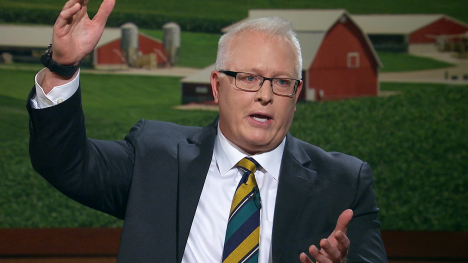
Chris Robinson weighs corn recovery prospects, soybean price levels and the rebound in cattle.
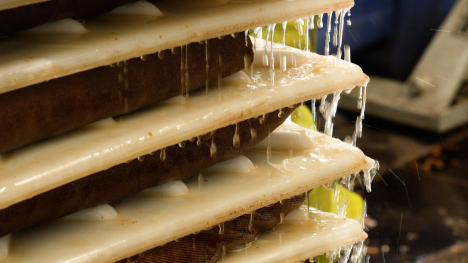
Minnesota’s Keepsake Cidery combines heirloom apples, traditional cider making and direct sales to help a small farm thrive.

New farm relief, a food safety honor, Minnesota cider and commodity market analysis with Chris Robinson.
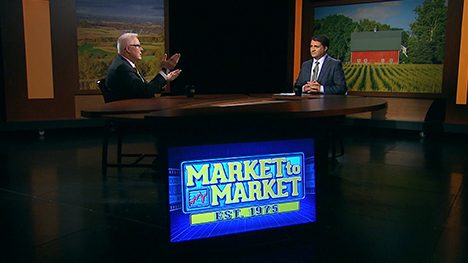
Chris Robinson answers viewer questions on corn yields, crude oil and cattle, and explains his soybean outlook.

Huub Lelieveld receives the 2026 World Food Prize for six decades of work advancing food safety.
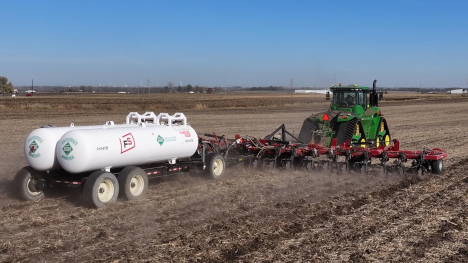
New federal plans target farmers' fuel and fertilizer costs through direct relief and investments in domestic fertilizer production.