The war in Iran threatens to make inputs more expensive. Building an agriculture program that’s feeding a changing local community. Commodity market analysis with Matt Bennett.


On this edition of Market to Market ...
The war in Iran threatens to make inputs more expensive. Building an agriculture program that’s feeding a changing local community. Commodity market analysis with Matt Bennett.
Transcript
[Brooke Kohlsdorf] Coming up on Market to Market, the war in Iran sends ripples back to rural America. Building an agriculture program that's feeding a changing local community and commodity market analysis with Matt Bennett, next.
[Announcer] I wouldn't be here without my customers.
Yeah. I'd like to thank the customers. They're very dear to our hearts.
It's about the people that you're working with and the relationships that you have.
Thank you. Thank you. Thank you.
Thank you from the bottom of my heart.
[MUSIC]
[Announcer] Tomorrow. For over 100 years, we've worked to help our customers be ready for tomorrow.
[MUSIC]
[Announcer] Trust in tomorrow. Information is available from a Grinnell Mutual agent today.
[Announcer] This is the Friday, March 6th edition of Market to Market, the Weekly Journal of Rural America.
[Kohlsdorf] Hello, I'm Brooke Kohlsdorf. Paul Yeager is on assignment. A lot has happened in the last six days. A war, a farm bill, a disease outbreak, and a court ruling. The farm Food and National Security Act of 2026, also known as farm Bill 2.0, passed out of the House Agriculture Committee this week. Hope for the bill's passage in front of the full House is in doubt. It would be the third attempt in as many years to pass a farm bill. The 2018 edition expired three years ago, and Congress has been kicking the can down the road since. Aphis reported high path avian influenza in ten flocks across the country in the past 30 days. More than 11.5 million birds have been affected. A federal judge ordered the U.S. government to repay importers the more than 130 billion that has been collected for tariffs. Before all of this took place, the U.S. and Israel attacked Iran. Over the past six days. Six American soldiers lost their lives and hundreds more have been injured. Shipping in the region has been disrupted. The U.S. has offered to escort oil tankers through the Straits of Hormuz. Several fertilizer plants in surrounding countries have closed. The war has already sent ripples back to the United States. Peter Tubbs has more on how the war is already affecting those who produce America's food.
[Narrator] With margins expected to be tight, some in farm country are concerned about spikes in the price of farm inputs. The United States bombing campaign in Iran has caused crude oil prices to rise 10% this week. Retail gasoline prices in the U.S. have risen between 10 and $0.25 per gallon. Energy and agricultural analysts believe that a short conflict in the Middle East will not have long term impacts on energy and fertilizer costs, but a prolonged war could drive farmers to reduce their corn acres due to high fertilizer costs. While the USDA's grains outlook for 2026 estimates 94 million acres of corn in the coming growing season, a drop of 4 million acres from 2025, a spike in fertilizer costs could push more acres away from corn. Fertilizer represents about 25% of the input costs for soybeans, and 30% of the input costs for corn. Any spike in the price of fertilizer would turn corn and soybean revenues negative for the year. For Market to Market, I'm Peter Tubbs.
[Kohlsdorf] The progress of a business just like history, rarely goes in a straight line. A project can begin in one place and end up in another. This is true for one Midwest University food Project. Over the past decade, a student guided experience has gone from raising vegetables and fish to becoming a value-added food program that benefits an entire community. Josh Buettner reports in our cover story.
[Jakob Jerabek] I was able to help build this greenhouse through some of my classes here at Morningside and able to help get it running, and I'm now in charge.
[Narrator] Greenhouse Manager Jacob Jerabek is working to improve food security in Iowa, Nebraska, and South Dakota. The Morningside University graduate grew up on a farm and was recruited to play football and wrestle. Now, he oversees his Sioux City alma mater's hydroponic aeroponic and aquaponics systems. When coupled with their outdoor garden and 76-acre farm plot, they've blazed a trail students can use as a template for future endeavors.
[Jakob Jerabek] We're kind of doing our own trials with everything and comparing results, and we have students that are actually able to use that data and break it down and use it in classes. So, they're not just using some random textbook data, they're actually using greenhouse produced data as well as the actual produce that we're harvesting.
[Narrator] The school grows everything from landscape, flowers and decorative plants for special events like poinsettias for Christmas at Morningside to multiple lettuce breeds, root vegetables, cucurbits, nightshades, and various ethnic and commodity crops.
[Dr. Thomas Paulsen] We try very hard to help find the context for students to learn. When students are working on something that's authentic, that's real, it means something different than if it's just a theoretical exercise.
[Narrator] Dr. Thomas Paulson is professor and dean of Morningside School of Agriculture and Aviation. He's grown the agriculture program over the past decade, expanding facilities and acquiring land to help drive higher enrollment, which has turned heads.
[Dr. Thomas Paulsen] This growth has happened primarily because we have tremendous support from administration, from donors, and from alumni who believe in what we're trying to do. And that's really to try to bring an experiential learning opportunity to our students that's authentic and helping to solve the problems that we see in the real world.
[Jakob Jerabek] With our outdoor facilities. We recently partnered with Siouxland Food Bank. Around 2,000 pounds of produce has been delivered.
[Narrator] In addition to filling local charity coffers, Jerabek has helped monetize fresh greens by supplying local restaurant and grocery outlets. But his year-round commercial ventures are rooted in school grounds.
[Nick Gunn] We went from getting a few baskets of things a year to hundreds of pounds, thousands of pounds of produce.
[Narrator] Morningside Dining Service general manager Nick Gunn says he feeds 1000 students per day across all meals and retail locations, averaging around 3,000 pounds of produce consumed every week. Since hiring on as executive chef in 2018, he's built up the greenhouse relationship to supply 20% of his needs while cutting costs and improving quality.
[Nick Gunn] When you go to wherever your local grocery store is, you buy a head of romaine lettuce. It's kind of a pale green with some white in it. When we get it from them, it's dark green. It's got a much different texture, much more of a burst of flavor when you bite into one of their tomatoes. A lot more juicier. The watermelons are the sweetest thing we had all year.
[Narrator] Gunn says. Students flock to campus grown food, easily identified through their branding. Once word reached the greater community, new markets emerged.
[Dr. Annie Kinwa-Muzinga] Morningside provide more than 5000 of Africans that are in Sioux City. These ethnic produce.
[Narrator] Originally from the Democratic Republic of the Congo. Agribusiness professor Dr. Annie Quinoa Masinga immigrated to the U.S. decades ago, working in Illinois and Wisconsin academia before joining Morningside in 2018. She says many Africans have arrived in the area due to the low cost of living, family atmosphere and jobs at local packing plants. But something was lacking in their diets.
[Dr. Annie Kinwa-Muzinga] Every time I tell my colleagues, my friends, my family, Africans, here I am in agriculture. The first thing they ask me, can you find a way to produce the ethnic produce that we are used to.
[Narrator] Enter amaranth, not the bane of corn and soybean growers who know it as invasive pigweed, but another variety long bred for discerning palates outside the U.S.
[Dr. Thomas Paulsen] The first thing you think of with amaranth is, well, gee, I would have never thought of that as being a food source or a staple for a community, but it certainly has been. It's been an eye opener for us.
[Dr. Annie Kinwa-Muzinga] I grew up with amaranth, and I wanted to show my students that they are people also who are facing food insecurity because they are not used to American food. So, they have to learn, but at the same time it will be good for them also to have something that they are used to.
[Narrator] While Morningside's greenhouse grows and harvests some 30 pounds or more of amaranth monthly, their outdoor garden bursts at the seams with it and several other African crops, including sour, sour and cassava. Thanks to key volunteers with agronomic experience in their home countries, some 700 pounds are produced per month. Outdoors in season.
[Dr. Annie Kinwa-Muzinga] He said that when he comes here, he's good to see family, many people and also it is a bargaining, you know, you can get more than when you go to the store.
[Narrator] Many customers come directly to Morningside. Remaining harvests are sold across town. At Grocer Amy International.
[Dr. Annie Kinwa-Muzinga] The demand is huge. Believe me. Whatever we have here is not even meeting the demand.
[Narrator] Dr. Paulsen says Morningside graduates should come away from the program with a broad, adaptable skill set and ingenuity with respect to value added endeavors.
[Dr. Thomas Paulsen] When we talk to our students we say, you know, is there room for you to go back to a family operation? Sometimes there is, sometimes there isn't. Unless they create another stream of income.
[Jakob Jerabek] 2.335.
[Dr. Thomas Paulsen] I would hope that some of our students would become entrepreneurs. I think there's a lot of opportunities for folks in the Midwest, you know, especially in the state of Iowa and Siouxland area, to be able to meet those kinds of needs. It's a different approach, but it could be done.
[Narrator] For Market to Market. I'm Josh Buettner.
[Announcer] Next, the Market to Market report.
[Kohlsdorf] We are recording on Thursday this week due to changes in our production schedule. The war with Iran, weather in South America and flash sales to China move the market for transactions printed on March 5th, the nearby wheat contract lost $0.08 in the May corn contract. Gained a nickel reduced soy oil demand and rain, causing a slowdown at Brazilian ports, pushed the nearby soy contract slightly higher. The May soybean contract improved by $0.09, while May meal dropped $11.20 per ton. May cotton fell by $1.57 per hundredweight. Over in the dairy parlor. April class three milk futures added $0.04. The livestock market was mixed. April cattle put on $6.30. April feeders bumped up $7.80, and the April lean hog contract shed a nickel. In the currency markets, the U.S. Dollar Index, strengthened by $1 six or by 166 ticks. April crude oil found $13.99 per barrel. That's a gain of nearly 21%. Comex gold fell $1 176 per ounce, and the Goldman Sachs Commodity Index was up by more than 64 points to settle at 6.74 55. Wow. Here to lend us some insight on these and other trends is regular market analyst Matt Bennett. Hi, Matt. Thanks for joining us. So, we've had a week now, almost a week with the war happening in Iran. And we've watched the grain commodities really react and be volatile at times. Is that what's driving the market right now?
[Matt Bennett] Well I think that's a lot of it. I mean, clearly there's so many different things to think about here. I mean, you look at, for instance, energy. So much energy flows through the Strait of Hormuz. You see fertilizer flows through there. Obviously we're growing energy. So first and foremost, you know, you would think that we're going to see a little bit of a spike in commodity prices. At the same time, I think there's a lot of concern right now about availability of fertilizer. Now, if we're going to be fair about it, there was a huge anhydrous run last fall. Weather permitted growers to do most of what they wanted to do. And so, I don't think that there's this large amount that still needs to be applied specifically with anhydrous ammonia. I do know that a lot of growers are trying to get Ahold of urea. A lot of urea flows through that part of the world as well. And so, there's some concerns there. And people have floated ideas that for every week that this war goes on, we could lose a decent amount of corn acres. I saw the figure today from someone 1 million acres, you know, that's probably a little excessive. But regardless, it could prove to be a headwind to get all the corn acres in the ground that everyone's wanting to.
[Kohlsdorf] So do you think most farmers going back to the fertilizer issue, a lot of farmers have already purchased their producers, have purchased their fertilizer. And so that's not really kind of an urgent need.
[Bennett] Yeah. I mean, I feel like a fair amount has been purchased and even applied. You know, anybody who wanted to do fall anhydrous last fall was pretty much able to do so. You know, last year most of the guys told us fall anhydrous one was a really strong run. Dry fertilizer was a different story. You know, in that a lot of growers looked at the expense of dry fertilizer. And clearly it didn't work very well. And so, in a lot of cases, people cut back there you just you can't cut anhydrous if you want to grow a good corn crop. But as far as fertilizer goes, dry fertilizer. So, DAP potash, you can cut back just a little bit if you want to on a one-year basis, you know, especially if your fertility is in good shape. And so, it's going to be very interesting to see how this plays out. But there's a lot of folks that still don't put it on in the fall based on soil types. It needs to go on in the spring. Some of the guys we've talked to in the last few days have said they can't get a bid, you know, for some fertilizer. So that's problematic. You know, we're just going to have to see how this plays out. How long does this go? You know, there was comments this morning that this could go on longer than what we originally thought. You know, which I know there's a lot of posturing there. You know, I'm not a policy expert there, but by all means nobody knows.
[Kohlsdorf] Okay. So, with wheat is the dry weather here in the United States the thing that's impacting markets right now or what's happening there?
[Bennett] You know, it's part of it. When we really first started rallying, yes, there was dryness in the southern Plains. And a lot of your wheat areas, a lot of dry in my part of the world, we were dry. Now we're not a huge wheat area, but south of us there's a lot of soft red winter wheat. Clearly weather was an issue, but one thing that we saw here in the last couple weeks was at times, whenever the equities were backing off, we saw wheat actually rallied just a little bit. I've got to think that people were looking over at some of our ag commodities and saying inflation adjusted, you know, these are fairly cheap commodities. I mean, when you look at the world balance sheet, you look at the U.S. balance sheet, you can't really get too bullish wheat, unfortunately. But at the same time, we're sitting here with an earshot of $6 July wheat. That's a place a lot of guys hoped that they would get to here in the last several weeks. So, I we are seeing a fair a fair amount of people step in and manage some risk there.
[Kohlsdorf] Okay. So, what about corn? Is weather in South America? Is that one of the things driving that market right now?
[Bennett] Yeah, to an extent. I mean Argentina has been dry okay. But for a while safrinha planting pace in Brazil was run a little bit behind. As of this week, it looks like they're in pretty good shape there as far as their planning pace goes. And so, I think with corn, there's a variety of things that are going on. In all honesty, if you look at demand, world, demand us, demand all-time records, the demand that's forecasted from the USDA for the U.S., 16.47 billion bushels, we've only had one time in our history. We've ever raised more corn than that. So, we're going to have to see big demand is all fine. And well, if you have big production, if you don't get big production, then you're going to draw down stocks. As far as the world goes. World stocks are forecasted to go down around 5 million tons this year, and that is considering the U.S. raising the all-time record crop by a margin this last fall. And then the forecast for Brazil's crop is to be bordering a record as well. So, you've got this massive production, yet you're still drawing down stocks. So, demand is incredible. And I do think some people are probably thinking, hey, I don't want to be on the wrong side of this. If we get into a weather issue. So last week we had seen the funds step in and they bought more corn and they're almost flat corn. I would assume as of today's close they're flat corn. And so, they no longer have this bearish opinion of the market.
[Kohlsdorf] Okay. You sort of answered the question earlier that I was going to ask you about. Are people going to replace corn this spring and plant something else. But you said a maybe not.
[Bennett] It's very complicated. You know, there's so many different ways to look at this acreage situation. Any time you have an anomaly year, which really big corn acre year, you know, and I look back, there's three different years in the last 10 to 15 years. And typically, you drop corn acres the next year, anywhere between 3.7 and 5.1 million acres. Okay. So, you would think you'd drop back last year, virtually every state in the corn Belt planted less soybeans. So, you would think a lot of folks are going to plant more soybeans this year. When you look at the availability of funding, I mean, obviously farm country has had a lot of liquidity drained out of it over the last three years. There's probably some growers that are going to have to opt to plant soybeans. But then the other side of it, crop insurance, you can cover more revenue this year for less money invested. And so, you also look at some of the, you know, like for instance, some of the government programs that came through the big beautiful bill. And there's no question that a lot of growers are looking at this saying, hey, maybe I should go ahead and plant corn. Last thing, bridge money. Bridge money's been showing up over the last few days, and it's a wonderful time for someone that's wanting to maybe throw a little bit more money at a crop, because we know it costs a lot more money to put corn in the ground than beans.
[Kohlsdorf] Yeah. So, I want to go to social media for our next question, which is about corn and related to oil. Jamie is asking, with the war going on in Iran right now and with fuel prices going up, will the corn market get a little upswing?
[Bennett] Yeah. I mean, again, typically, you see the fact that, you know, we are growing products that are turned into fuel, you'll see a little bit of a bump there. Clearly if crude oil goes up, you add ethanol to the mix. You can cheapen up gasoline if you will. And so, you would think you would have some demand there. Actually, this week's ethanol numbers were off a little bit from a week ago. And stocks rose. And so that's not really a friendly deal. But for the most part, we've actually had strong ethanol demand this marketing year. I mean, the stall the star of the show has been exports, but ethanol demand hasn't been too bad. Could we see a pop because of oil going up? It's happened in the past, and I would assume that it would happen here. But we don't know how long this is going to last. I mean, yes, it's been a fantastic week for oil so far. You know, are we going to give that all back quickly. And I would assume if bombs quit flying, you'll see a little bit different take on the oil market.
[Kohlsdorf] Okay. Well, what about soybeans? We know some things are happening with China. So, President Trump is planning to meet with China's president. And then China just unveiled their 15th five-year plan. Is this going to be moving soybean prices?
[Bennett] Yeah I mean in the last five or so trading days, the direction of beans has kind of hinged on is the is the is the meeting with Trump and XI on or is it off. You know, and on the days that it was off, beans kind of backed off a little bit. On the days it was on. But the thing is, you know, Trump said here a few weeks ago, China might buy 8 million metric tons more beans. And the bean market, I believe, took that as pretty positive news because we've seen nothing but pretty strong prices since then. I don't think that was the only thing affecting prices, but it certainly didn't hurt. Moving forward, people are going to be watching very closely to see, for instance, what does Trump have in his in his trick bag, if you will, as far as tariffs are concerned, after the Supreme Court situation, I mean, is he able to say, oh, 100% right now? Probably not. I think some of that's been kind of cut out from under him. So, it'll be super interesting to see how this all plays out. My personal opinion is that they won't buy a whole lot more beans this year. Some people are expecting they're going to buy a few before the meeting, just as a goodwill gesture. I don't know. I'm not holding my breath.
[Kohlsdorf] Okay. All right. The cattle market feeders, they continue to do well. Is there anything in the near future that could impact or slow that market down?
[Bennett] Yeah. I mean, you look at fats and feeders, no doubt from a fundamental standpoint, it's an old record, basically broken record. I mean, this is a massively good situation for a fundamental standpoint. 75 year low in herd numbers. Okay. Now last week if we'd have been talking about this, it was a lower cash price on the week. First time we'd seen that since late November. Okay. This week it looks like we're going to go back on the trajectory we're on with a little bit better cash price. There's no doubt demand is fantastic. I mean, you're seeing consumption. You know, and you're coming into the season when people are going to be grilling more. I kind of wonder is the demand going to change as much with so many people on this high protein type diet? You know, I think that that's really boosted beef demand, if you will. Maybe you don't see such an influx, you know, in the season that you would expect that seasonality to kind of pop in and give you more demand. But as far as cattle go, what could happen in the short-term future? I was at Commodity Classic last week, Secretary Rollins said. We're not opening the border anytime soon. I think that was music to people's ears. You know, clearly there's still several cases in that part of the world. But in all honesty, I feel like we are ten, $12. Whenever you're talking fats or feeders off of the highs. After dropping fats 45 and dropping feeders, 86 off highs, we got to understand how close we are to those old highs and what is going to be the appetite for big money players. The funds, if you will, to step in and drive this thing to a new all-time highs. Considering the administration has been pretty open, that food inflation is very important to them.
[Kohlsdorf] Yeah, I think we've got about 30s left. What about hogs? It's been a pretty volatile week for them. Is there overproduction in China? Is that what's happening?
[Bennett] I mean, part of it. But if you look at the hog market I mean your front month, you're still in the 90s. You look at really strong carry. Actually, I believe between nearby and August Europe, it's $15 carry out to August. And with that being the case, you got to assume most expect demand to stay fairly strong. I still think there's a lot of substitution demand there. People that don't want to pay $25 for a steak, they might buy a pork chop. And so, I think demand is going to be fairly strong there still. But yeah, it hasn't been the best week. But overall hog market is in good shape.
[Kohlsdorf] Okay Matt, thank you so much. We've or you've been watching the analysis portion of our program. And in a moment we'll continue our discussion in our online only segment. You can find it by searching Market Plus with Matt Bennett. Wherever you get your podcasts. You can also go to our website at markettomarket.org to listen. And as a reminder, this is the annual pledge period for many of our stations. If you value this program, please call or make contact with your public TV station to offer your support. You are the key in our continued coverage of rural America. Next week. A look at past failures in America's land. Promise. Thanks so much for watching and have a great week.
[MUSIC]
[Announcer] Market to Market is a production of Iowa PBS, which is solely responsible for its content.
[MUSIC]
[Announcer] I wouldn't be here without my customers.
Yeah. I'd like to thank the customers. They're very dear to our hearts.
It's about the people that you're working with and the relationships that you have.
Thank you. Thank you. Thank you.
Thank you from the bottom of my heart.
[MUSIC]
[Announcer] Tomorrow. For over 100 years, we've worked to help our customers be ready for tomorrow.
[MUSIC]
[Announcer] Trust in tomorrow. Information is available from a Grinnell Mutual agent today.
Watch More

Huub Lelieveld receives the 2026 World Food Prize for six decades of work advancing food safety.
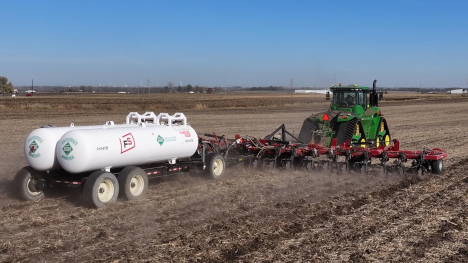
New federal plans target farmers' fuel and fertilizer costs through direct relief and investments in domestic fertilizer production.
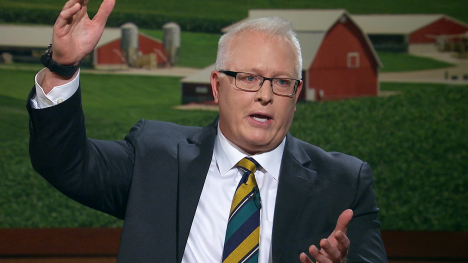
Chris Robinson weighs corn recovery prospects, soybean price levels and the rebound in cattle.
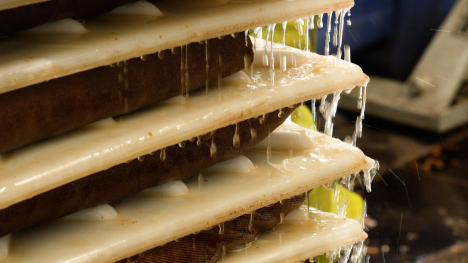
Minnesota’s Keepsake Cidery combines heirloom apples, traditional cider making and direct sales to help a small farm thrive.

New farm relief, a food safety honor, Minnesota cider and commodity market analysis with Chris Robinson.
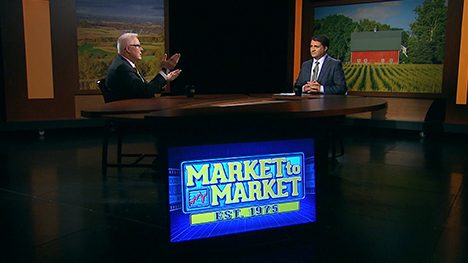
Chris Robinson answers viewer questions on corn yields, crude oil and cattle, and explains his soybean outlook.