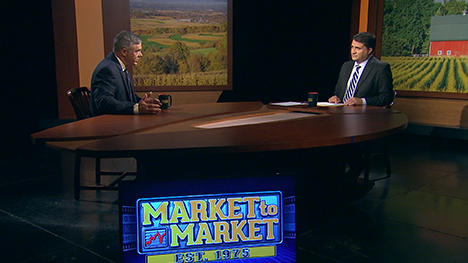
One wet blanket hangs over the corn market in our Market Analysis with Naomi Blohm. We also cover cheese and soybean demand as part of the commodity story.
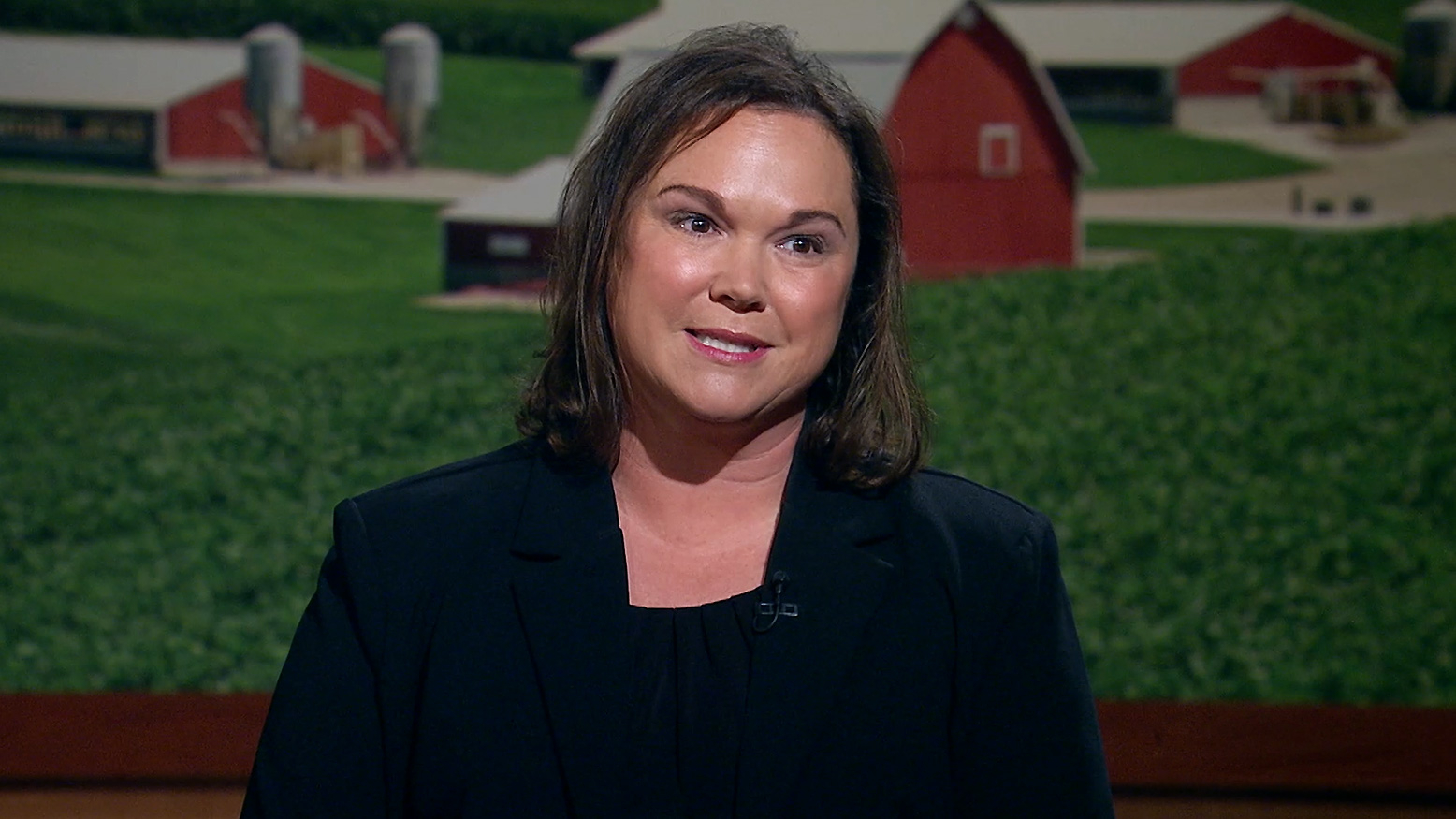


Post-meeting commodity breakdown in Market Analysis with Naomi Blohm along with the persistent drought in the wheat market.
Transcript
[Yeager] USDA slashed the size of the U.S. Wheat crop to the lowest in 54 years, as the drought in the plains remains for the week ending May 15th, the nearby wheat contract added $0.17 and the July corn contract fell by $0.16. The waning optimism of trade deals from China sent the bulls to the exits. The July soybean contract sold off $0.31, while July meal improved 1460 on the week. July cotton weakened by $4.37 per hundredweight. June Class three milk futures declined $0.30. The livestock market was mixed. June cattle gained $5. August feeders cut 278 and the June Lean hog contract held on for a 12-cent gain. In the currency markets, the U.S. Dollar index increased by 142 ticks. June crude oil jumped 11%, or $10.06 per barrel. Comex gold fell $172.60 per ounce, and the Goldman Sachs Commodity Index put on more than 27 points to settle at 75761. Here now to lend us her insight on these and other trends is regular market analyst Naomi Blohm. Hello.
[Naomi Blohm] Hello.
[Yeager] The wheat story really wasn't that much of a surprise for the weather side of things, right? We knew it was going to be low, just not how low? But did the market maybe not expect that much of a reduction?
[Blohm] Well, it was a really bullish USDA report. So, the big point, the big takeaway two part, of course the winter wheat market still stealing the show. And that production overall was down about 300,000,350 million bushels from the year prior. So that's what spurred that wheat market so much higher for Kansas City wheat and that market. Still in a really nice uptrend line. But the other factor of this is that now for all wheat in the United States, our ending stocks are near 760 million bushels. And that's really, really quite friendly. So, the wheat market had every reason to have the rally that it's had and just has seen profit taking Thursday and Friday, I think probably in conjunction with the Chinese lack of Chinese news. So, we saw the end of week profit taking.
[Yeager] I'm going to stick you though with a however, because I think, however, you were interested in something this morning, you said there was a huge bearish key reversal forming in the July Chicago wheat. What this. What's the significance of that?
[Blohm] Yeah. So that was on Thursday's market this week for the July Chicago wheat futures. It was a big topping signal a bearish key reversal market had made a new high for the week and then finished dramatically lower than the previous day's low. And so, when we see that on charts, that's a very, very classic textbook topping signal to say that the market is run out of gas. And it also coincides with the seasonal for July, Chicago wheat futures and Kansas wheat futures that mid-May. That market has a tendency to see a pullback. Then to the end of May and then some kind of a recovery bounce after that. So, I think we're in that window. The question will be though for that Kansas market how much of a pullback does it have. Because that story is going to be friendly for a whole year.
[Yeager] Well and then I was going to ask how much longer is that friendliness story. I mean because how long can the drought story live?
[Blohm] Yeah. So, I would I would say from a standpoint of, you know, the Kansas City wheat futures probably see a pullback lower in conjunction with the Chicago wheat. And the pullback, though it may be another buying opportunity because we're in this country. We're going to not have enough of that hard red winter wheat quality that we need. So that is going to be a problem. But then when you also step back and look at the big picture, there's enough wheat yet in the world. So, we're not we're not in a situation where the wheat price needs to go sky high from here, but it'll keep good demand under the Kansas City wheat market and good demand under the prices there as well.
[Yeager] So, is that the last of the positive news? We're going to talk about the rest of the day. Because the corn market old crop granted, there's not as many people still with old crop, but there still is. And there's still a market for that. Let's any positives in old crop this week for you?
[Blohm] Yeah. So, for old crop corn, we're still dealing with that 2.1-billion-bushel carryout. And that's just that, that wet rag that's hanging over the marketplace. And it's going to keep any fire from trying to happen with corn markets right now. So, 2.1-billion-bushel carryout for old crop and for new crop. The USDA told us 1.9-billion-bushel carryout. So still very, very comfortable levels. So, we don't have a bullish story for corn right now. The USDA report was of course negative. And so, we had a weekly bearish reversal this week on weekly charts for the December contract. And December Corn tried a few times to get through that $5 handle. But it just couldn't do it. So, I'm really hopeful that producers out there had an opportunity to make some sales at that $5 mark, because that might be as good as it gets for the short term. Barring weather this summer.
[Yeager] Well, that's where I was going to go. We booked you weeks in advance, but your appearance, you have talked to us before in the past about the peak of that December contract has been earlier and earlier than we traditionally think.
[Blohm] Yes, yes.
[Yeager] We're sitting tonight, May 15th. It's 26 over.
[Blohm] I'm going to say I feel that it may be, unless there's a dramatic weather event this summer or the Middle East flares up again. So again, that December contract, when you look at it from a weekly chart perspective, $5 is such a hard number to get through. It'll take a combination of friendly commodity news between corn, beans and wheat for it to continue higher. But in the past five years, the December contract found its high in early to mid-May. So, we're here. We're in that seasonal window. Wouldn't surprise me if corn prices just linger a little bit lower into next week. But then what time? What can often happen is at the end of May, going into June, we get a nice recovery bounce, but then just make sure you take advantage of that recovery bounce. Because then by Father's Day in June, it's usually all over again unless there's a weather event and as dry as it is out west, we might have a weather event.
[Yeager] There's one side of the story in equation. In the equation for beans is there's going to be news coming out of China or the Or. We didn't get any news. Nothing's happening. Nothing's going to support this bean market. What's the market think is the story?
[Blohm] Yeah. And that was the hope that we would see some specific quantity of Chinese demand. And because we did not get that the November beans did not have a reason to get through that $12 major resistance levels on charts. We are the soybean market on weekly charts also posted a bearish reversal this week. So, we have major technical signals saying that for the short term here, we might have as good as it's been going to be for prices. And we might see some lower prices here. In the short term. We have comfortable levels of soybeans in this country. We have record carryout still globally. And you know I do think China is going to show up and buy. But if I'm China, I'm going to wait until August because that's seasonally when the beans then have a tendency to be the cheapest. And then that's when South America is out of theirs. And now they have to come to the United States. And I think that China not only will meet their 25 million metric tons, I feel like they're going to actually be a little bit more aggressive. Beyond that. And I think that come August, they'll come in and buy some corn, they'll buy some sorghum. And I just feel like it's going to be a good export market to China, but not until mid to late August.
[Yeager] Okay. So that's one side of geopolitical. I got another one that I think Stephen Wisconsin wants to ask you, is the Iran war supporting the commodities and the crude oil market at these levels, or are there other fundamentals?
[Blohm] So, it's a combination of both. So, with crude oil prices still being firm, that is lending support to commodities in general, as the fund, the fund traders like to buy bushel baskets of commodities. And when we have high priced crude oil, that usually lends itself to support for the grain markets. But outside market influences. Also, the investors are looking for ways and places to put their money. Commodities in general are still quite cheap in the ag space. On the grain side of things. So, there's a couple of multi-point facets happening there. But again, short term, I feel like we're going to see the grain market have this a little bit of a correction, but a correction, you know, into the end of August, it may just be setting us up for an extreme longer term bull cycle. Again, a lot of it depends on the weather this summer, but the demand is there and it's insatiable.
[Yeager] What's the market cycle we're in right now for the dairy market?
[Blohm] Well, it is an interesting market there where the demand on the dairy side is solid. We actually had cheese exports that were up 30% from a year ago for the month of March, and it was a record month of March. So, the demand for dairy products on our exports between butter and cheese powder is just phenomenal. And we have really strong domestic demand as well. But the reason that the milk market just struggles to have any significant rally is that milk production is just historically strong. The last milk production report had milk production, up 2.3% from the month prior. Next week, Friday, we will have the next milk production report, so we'll see if that theme continues. But that milk market just right now, again, well supported by the demand but just struggles to get much over the $18 mark in the front month contracts.
[Yeager] Also next week, cattle on feed live cattle market. Is this a I won't say a tap dance, but part of that choppiness going side to side right now.
[Blohm] Yeah. 240 to 250 is what the August live cattle contract has just been going back and forth between. Anytime we get down to that lower level, it's really good support. The buyers show up. The demand is there cash market still really, really strong. I think you're going to see cash markets strong until we get through the buying needs for the summer grilling. So, once we get past the Fourth of July, then we'll see where we're at after that. But it was interesting. You know, China opening up the licenses again for the meat packers and potentially importing down the road. I think that sends a good signal. And the story, of course, still broken record of low supplies here in this country. But just that demand. So red hot protein in general in this country, you just can't get enough of it.
[Yeager] Or not. The hog market.
[Blohm] So yeah, hog prices have been trending lower for two months. But last week they put in a really nice bullish key reversal. And they have been testing support levels the last couple of weeks. But that bullish reversal from last week tells me that we have firm footing in place. And we usually start to work into a seasonal run higher over the next couple of weeks. So, the market a little disappointed that we didn't see anything specific from China in terms of purchases or demand, but in general, pork demand is there. And hey, it's graduation season. How many how much pork are you going to have over the next few weeks? Right. A bunch, yeah, absolutely.
[Yeager] Naomi, great to see you. Thank you very much for the time.
[Blohm] Thank you.
[Yeager] All right. Naomi Blohm everyone, and you have been watching the analysis portion of our program. And in a moment, we will continue our discussion in an online only segment. Find it by searching Market Plus with Naomi Blohm wherever that you get your podcasts. You can also go on to our website at markettomarket.org to listen. The season of outdoor work and experiences is the perfect place to stay connected to rural America. We have three options to narrate your walk around or a parts run. Check out the Market Analysis, Market Plus and the MtoM wherever that you get. Your podcasts next week. The ticking clock facing the dairy industry. Thank you so much for watching. Have a great week.
Trading in futures and options involves substantial risk. No warranty is given or implied by Iowa PBS or the analysts who appear on Market to Market. Past performance is not necessarily indicative of future results.
Watch More
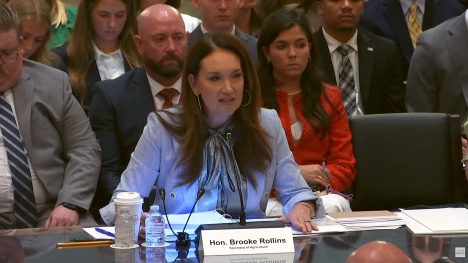
USDA Secretary Brooke Rollins provided updates on the New World screwworm situation in a series of meetings with lawmakers and in press calls this week.
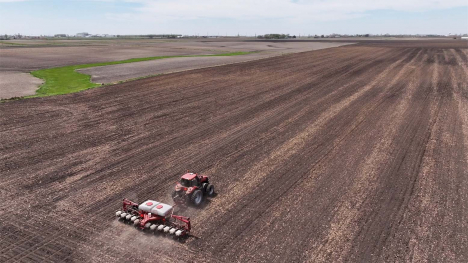
A North Dakota farmer was one of 100 producers from 18 states to meet with the head of the FTC to voice concerns on several issues involving the fertilizer industry.
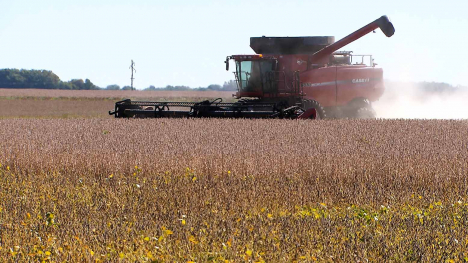
This week, the Iowa State Fairgrounds hosted one world agriculture event while another took place looking for better relations between three major trading partners. The reauthorization of the United States-Mexico-Canada trade agreement, commonly known as USMCA, was the topic in Des Moines, Iowa.
Market Plus with Matt Bennett covers managed money exiting commodities and what could drive the next rally.
China's absence in the markets is noticeable as covered in our Market Analysis with Matt Bennett.
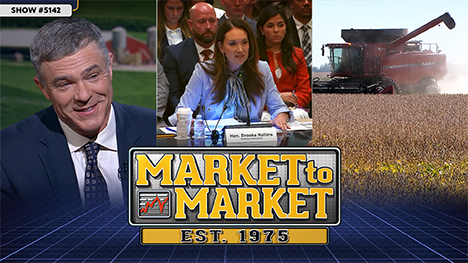
Questions grow after the screwworm is found in Texas. Commodity groups push to strengthen North America’s trading relationships. Farmers are called to talk about competition and options in the fertilizer industry. And, commodity market analysis with Matt Bennett.