The Jones Act is pulled out to help stabilize prices. Nebraska spends another week battling wildfires. A drug’s expansion in the marketplace helps spur demand for animal protein. Commodity market analysis with Mark Gold.


On this edition of Market to Market ...
The Jones Act is pulled out to help stabilize prices. Nebraska spends another week battling wildfires. A drug’s expansion in the marketplace helps spur demand for animal protein. Commodity market analysis with Mark Gold.
Transcript
[Paul Yeager] Coming up on Market to Market. The Jones Act is pulled out to help stabilize prices. Nebraska spends another week battling wildfires, a drugs expansion in the marketplace helps spur demand for animal protein and commodity market analysis. With Mark gold next.
[MUSIC]
[Announcer] I wouldn't be here without my customers.
Yeah, I'd like to thank the customers.
They're very dear to our hearts.
It's about the people that you're working with and the relationships that you have.
Thank you. Thank you. Thank you.
Thank you from the bottom of my heart.
[MUSIC]
[Announcer] Tomorrow. For over 100 years, we've worked to help our customers be ready for tomorrow.
[MUSIC]
[Announcer] Trust in tomorrow. Information is available from a Grinnell Mutual agent today.
[Announcer] This is the Friday, March 20th edition of Market to Market, the Weekly Journal of Rural America.
[Yeager] Hello, I'm Paul Yeager. Stubborn and sticky have returned to our lexicon to describe inflation. The numbers released this week were from the time before the U.S.. attack on Iran and Iran's retaliation on other Middle Eastern countries. The producer price index added 7/10 of a percent last month, with the CPI putting on 3.4% in the year over year reading. The Federal Reserve left the key lending rate unchanged for the second consecutive meeting. New home sales dropped by 17.6%, the biggest monthly percentage drop since 2013 and the lowest level of units moved since 2022. The marker for the economic conditions in ten rural Midwestern states dropped below growth neutral last month. Creighton University's rural Main Street Index reported a reading of 40.9. That's down seven points over the last month. The president is trying to offer consumers assurances the pain at the Pump Store and co-op are only temporary, but many other factors are impacting the inner workings of rural America. From a strike at a Colorado beef processing plant, a delay in trade talks with China, and the use of a measure created in the wake of World War One. David Miller has our policy wrap for the week.
[Narrator] A 60-day suspension of the Jones Act, the measure that requires cargo hauled between U.S. ports to be moved on U.S.. flagged vessels, is an attempt by the Trump administration to help provide relief for high prices on goods and fuel. However, many economists believe the short-term waiver will do little to lower prices. As the attacks on Iran finish a third week. The pain at the pump is increasing. The average price of a gallon of regular gas is at $3.88 per gallon, up nearly a dollar from a month ago. And diesel is selling for just over $5 per gallon. The prices only serve to fuel concerns over fertilizer prices.
[Tom Waters] You just have to really work hard to trim our costs and be as frugal as we can be. But still, you know, provide the soil and the crop what it needs to grow and produce.
[Narrator] Farmers like Tom Waters of Missouri could be receiving some relief sooner rather than later, according to Secretary of Agriculture Brooke Rollins, who offered some hope of getting relief from higher input prices.
[Brooke Rollins] The president is very aware of these challenges and these issues. We are very close to having an announcement on some solutions on what that looks like.
[Narrator] China's refusal to help the United States in the Strait of Hormuz could be a major reason for the six-week delay of a planned summit between President Trump and XI. The rescheduling of the meeting prompted a limit down sell off in the soybean pits on Monday. As farmers struggle at the pump and the elevator. The price of beef might go up for consumers. Union workers went on strike Monday morning at a facility that usually processes 5000 head a day for world beef processing leader JBS. Union leaders say 90% of the 3800 employees at the Greeley, Colorado, facility went to the picket line and are expected to stay there for two weeks. Fallout from the work stoppage may push record prices higher for cattle being harvested from a nationwide herd, whose size is hovering at 75-year lows. For Market to Market, I'm David Miller.
[Yeager] Dozens of record high temperatures will likely be set over the weekend as an unusually warm stretch will push the mercury 15 to 30 degrees above normal. Some of the drought monitor's driest readings Thursday included parts of Nebraska where wildfires raged this past week. Fire officials are again sounding the alarm that parts of the Cornhusker State are going to be in some kind of fire danger all weekend. Here's Peter Tubbs on the fight so far.
[Narrator] This week, Nebraska experienced its largest series of wildfires in the state's history. The Morel Fire, the largest of the three fires, began in Morrill County and spread eastward, driven by strong winds. So far, over 640,000 acres across five counties have been scorched as the fire swept across nearby Arthur County. It took one life. The Cottonwood Fire burned 128,000 acres in Lincoln and Dawson counties. Dozens of local fire departments assisted Nebraska and federal fire crews in battling the blazes. Ongoing drought in the western half of the U.S.. has made grasses and trees extremely flammable. Nebraska just experienced its second warmest and fourth driest winter on record.
[Rob Powell] Right now, we're sitting at 98% contained. So, we got we got a black edge all the way around the fire, except for this little bit of heat that's down here in the Nashville area. It's a dense cottonwood stand.
[Narrator] Fire officials are concerned that warm and windy weather predicted for the weekend could accelerate any new fires that are sparked in the state. For Market to Market, I'm Peter Tubbs.
[Yeager] Doctors tell us losing weight is often seen as a way to improve our overall health. A drug generally referred to as GLP-1 is helping speed the process of shedding pounds. The drug is changing diets and driving a surge in demand for protein in all forms. I recently had a conversation for the MtoM podcast with Brian Ernest. He's the lead economist for Animal Protein in Shoko Bank's Knowledge Exchange. We spent time discussing the dietary changes on the federal level and the impact on producers and consumers. This is our cover story.
[Brian Earnest] So, I look at the KSU Meet Demand monitor. They do this survey work. They've been kind of working on it since 2020 and asking the consumer like, what are you going after when you're purchasing your, your protein items, taste, freshness, price? You know, these things really kind of in nutrition, these things fit at the top of the list almost every month when they're, they're looking at the, the survey results from their consumers. I think that continues to be the case in 2026, but I think we'll see probably more of this behavioral shift towards GLP-1 usage start to show up in what we're seeing at the counter. I wonder if that's the case. We're certainly, you know, seeing the consumers asking for more protein. I looked at some survey work that I think it was the power of meat or one of those that that said, you know, they surveyed folks in 2024 and asked them if they were putting more protein in their diet. And more than 60% of respondents said, yes, I'm actively trying to put more protein in my diet. In 2019, that was about 40%. So, we're continuing to grow. You know, how much protein the consumer is looking for. But at the same time, the caloric needs of this GLP-1 users are decreasing and they're looking for smaller portion size. One of the questions I have that I really do think this might start to show up in the data in 2026 for consumption in that, you know, chicken fits that profile very well. You think about chicken nuggets. They're kind of portion size. Most of the chicken meat that that is developers is produced. It can be sized up to four-ounce portion, right? If, if I want to do the same thing on beef, it's like, well, I'm going after a nice big thick cut ribeye to get the experience I want out of beef, but I can't do a four-ounce ribeye, you know, to, to fit my needs. So that's where I kind of just have a question of like, when is this going to start to show up in some of the data and the adoption rate has increased rather rapidly. You know, we, we were talking about figures last year, mid-year, how many GLP-1 users are there in the U.S. And they were saying, you know, somewhere around 8 to 8 to 10% of the adult population by the end of the year, they were saying more than 20% of U.S.. households, which is a different metric, but they're saying more than 20% of U.S. households have at least one user, and they're making the decisions around what the household is eating. So, I think there's potential for that to influence what we see in the markets this year for, for the animal protein space.
[Yeager] I was looking away while you were talking, not out of disrespect. I was looking for my deck of cards, Brian, because that's what we always talk about is the is that's all the more protein we're supposed to have. And your four-ounce ribeye is unfortunately about the size of a deck of cards. When you again, just tell me GLP, that is the weight loss drug or that's a shot or a pill, right? And that's being used to for people, a massive try to do weight loss versus the old bariatric. That was that was the trend a few years ago.
[Brian Earnest] Sure. And originally I think the, you know, the drugs were designed to, you know, help out folks with diabetes. They also noticed that it really helps with weight loss as well. Now, the difficult component is that they're noticing users while they're losing weight. They're also losing muscle mass. So, to retain that muscle mass, we need more protein in our diet in order. Users need more protein in their diet to offset that.
[Yeager] And also it comes up -- another thing I wanted to bring up after your last statement was there is the new plate recommendations from the federal government is flipping and putting the protein at the front and putting way more protein on that plate than what we used to in the past. How does that play into your research now?
[Brian Earnest] You know, I think this is interesting. And I looked at the new food pyramid and yeah, it's flipped and they have a massive chicken on that food pyramid. I think it I don't know, it's just a visual thing, but also have a big rib eye. And so certainly those items are, you know, thinking about more whole foods or, you know, minimally processed. This is a trend that really started, I think, you know, 12, 13, 14, 15 years ago when I was more working on the food development side, I worked in the frozen foods area for a while as a sourcing manager. And the trend then was like, how small can we get the ingredient Dec on some of these items? In the frozen foods case? Same with center store, like how, you know, we want minimally processed, we want labels that we can read fairly easily. These ingredients on it. I look at the meat case and you know, you look at beef and it's really one component that's in there, right? There's just beef. You look at eggs. It's just an egg in there, right? So clean labeling is, is something that I think the consumer has been after for more than a decade now. We're finally starting to see that recognition in the dietary guidelines that the U.S. government has released. I think it fits more naturally with what most folks that are focused on their nutritional, you know, their nutritional needs are already doing, where I see maybe a change is in government food programs.
[Yeager] The full MtoM podcast is available now.
[Announcer] Next, the Market to Market report.
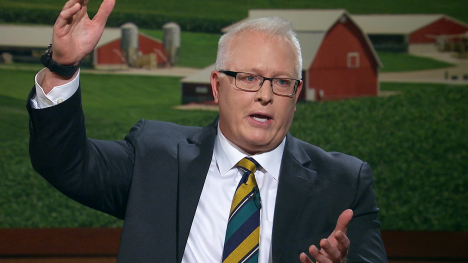
[Yeager] Hot and dry conditions in the Wheat Belt, along with potential for early planting influence the trade late week for transactions printed on March 20th. The nearby wheat contract lost $0.19 in the May corn contract declined $0.02. The delayed meeting between China and the U.S. prompted a limit down movement Monday, but the rest of the week was stable and reflected 22-month highs. However, the May soybean contract fell $0.64, while May meal rose by 5.30 per ton. May cotton expanded $1.46 per hundredweight. Over in the dairy parlor. April class three milk futures gained $0.61. The livestock market was mixed. June cattle improved for 48th May. Feeders put on 720 and the June lean hog. Contract dropped to 90. In the currency markets, the U.S.. dollar index lost 75 ticks. May crude oil found $1.03 per barrel. Comex gold sold off 10%, or $510.90 per ounce, and the Goldman Sachs Commodity Index was up by almost 22 points to settle at seven 4455. Here now, to lend us his insight on these and other trends is regular market analyst Mark Gold. Hello, sir. How are you?
[Mark Gold] Paul, always nice to be here.
[Yeager] Great to see you.
[Gold] Good to see you.
[Yeager] Let's start with wheat because we saw just a couple minutes ago about these fires in Nebraska. But if you look at the drought monitor in Kansas, they've had rain. But they also had a freeze this week. Then it's dry in Oklahoma and other parts that raise wheat. Is that the only story impacting the wheat trade this week?
[Gold] Well, you know how wheat's down $0.18 this week with the fires in Nebraska, 20-degree temps and down to ten in some places in Kansas. And then it's going to be 91 over the weekend. You know how you look at the crop ratings in Kansas took a 4% drop. I don't really see how it how they nailed it so bad out there. You know, maybe they're looking at what's happening in the Gulf, lack of demand. Demand hasn't been great. Export figures been 350 to 400 on average. So, you know I guess it's, you know, the old saying, wheat is a weed and you can't kill it, but, you know, I'm not the world's greatest agronomist. But I'll tell you what, when you put 20 degrees on wheat, 90 degrees in the space of a week and very little rain, the dryness, the fires and everything else, I can't believe wheat was lower for the week.
[Yeager] But did wheat just get caught up then in the issues with soybeans and corn? Mostly. And that's what we're having to make sense.
[Gold] I think that's, you know, with beans down 60 some odd cents, you know, it's going to be hard for any commodity to stage any kind of rally in that environment. I can't remember the last time we were limit $0.70 in the beans one way or the other. It's been quite a while. So, you know, we actually knew about it Friday that the thing was going to be delayed. You know, I don't know why they hit it so bad. And crude oil, which is really what's been moving this market. We closed, I believe the April contract closed on its contract high close. Now we're still away from that spike high. But you know the crude oil is not backing off here.
[Yeager] I've been out of this chair for a couple of weeks. But the easy story to see every newsletter that I was trying to read to keep up mentioned oil, Iran, Middle East and all the challenges. We've talked about it already in this program on the corn market, specifically, are you surprised the corn market hasn't rallied more on these headlines?
[Gold] You know, you look at where the beans have come from and the corn Rally has been, you know, a fraction of that really, you know, 30 cent rally in corn. I think it could have been more. The problem is China doesn't need the corn. They got a lot of corn. They're trying to get rid of the wheat that's moving out of condition. They're feeding that. So, they really don't need corn. So that's a problem out here. And we've been hoping that we'd see China buy some. But in general, the corn market hasn't acted as good as you would think because we're still looking at a huge carryout. And yet we're going to lose acres on the acreage report. But, you know, it's 4 million enough to change the big picture out here. I don't think it is. So, we still have a lot of corn to chew through.
[Yeager] Well, that's actually tied to Boise and Nebraska or Boise. In North Dakota's question for you, Mark, he says there's a lot of talk about losing Corn Acres due to fertilizer issues. But on the other hand, I wonder, do we really even need to lose any more corn? Since USDA is already penciling that 4 million fewer acres?
[Gold] Well, I think the four million is a reasonable number. Everybody's been talking about we'll lose these acres because of the fertilizer cost. You know, this is now almost the end of March. Guys have already made their decisions. A lot of guys have already bought what they've needed out there. So, I don't know that it's as big as impact as it would have been two months ago, three months ago, but certainly going to have some impact. But then you come against, you know, farmers like to plant corn, grow corn, harvest corn. They like the rotations. So, is it going to change all that much? I don't see it. You know, being much more than that. If it's going to be that at all.
[Yeager] Let's put corn under the same microscope we just did with wheat. And talking about the weather, it's easy on in the end of February when it gets to be warm. But how does it get to be the end of March in the most. The majority of the Corn Belt, someone's going to be tempted to plant. What will that do to any of this market?
[Gold] Well, you've got to get the wheat out and you're a long way from that happening. I really don't you know, we've been planting more beans early. Is that going to happen now if we get the dry weather? No, they'll probably get more corn in first this year. But I don't see the wheat having a big play in terms of what's what it's going to do to the corn. I really don't. Okay.
[Yeager] And same with the corn. Yeah. Okay. Let's talk about beans because that's the one we probably could have spent the whole time on today. This movement. You were surprised the overnight trade, the volatility. It's all back. Yeah. So how do I make sense of all this.
[Gold] Tune in to Truth Social every night at two in the morning and you'll know what's going to happen. I don't do that. I probably should, but am I going to trade something at 3:00 in the morning on the on the electronic system? Probably not. So, you know, you just have to live with what it is. You got to know that the president's going to make these statements. He kind of falls into a little bit of a pattern when the stock market really starts to hit the bricks, he usually comes out and says something bullish for the stock market. That helps the cattle market to some extent. But as far as the beans go, you know, anybody who thought once we took the moves into Iran that there was going to be a meeting between XI and President Trump, I think was kidding themselves, they take 90% of their oil. China takes 90% of the oil from Iran. So, are they going to be open door and happy about all this? I don't see that. So, it didn't come as a surprise to me. I'd been saying it for the last three weeks. Don't count on this meeting happening. It's supposed to be 5 to 6 weeks out. We'll see if that happens too. So, you know, you have to accept the volatility for what it is. We've been begging clients when we've had these rallies in the last four weeks, starts selling into this thing, layer it in. We've been selling 10% here, 10% there. And I think we did a pretty good job of getting some really good sales on. So now we'll just keep the puts on and let the market do its thing.
[Yeager] Well, a month ago, prior to anything with Iran, if you had this price, you absolutely probably would have had lots of people answering your phone. Are their producers apprehensive to sell into the instability that there is right now?
[Gold] Everybody's, you know, the fear of missing out. So, you know, do you want to sell 1240 beans? Even though it's a phenomenal price considering where we've been? Well, you know, but something comes on over the weekend and we limit up and we don't want to miss that. So that's the issue that the American farmers has to face is their own emotions.
[Yeager] Well, there was a question and I was going to save it, but I guess I'm going to throw it in here real fast. Joel in Minnesota, he's kind of he's reminding of a meeting that you once had with him and he says, do something he says is the best advice. Do something. Now I've added to his question or do nothing.
[Gold] To me it's always do something. You know, our friend who passed away, Orion Samuelson, he was so big on getting farmers to market. He was absolutely right. And you've got to do something. You've got to be proactive. You can't wait until the stuff hits the fan. You've got to be there before willing to take a price. And it's not about selling the highs or lows. It's about profitability. And when you can get profitable in these markets, sell some grain.
[Yeager] Are we profitable right now in the live cattle market?
[Gold] I think so.
[Yeager] You would think so right. But there's still challenges.
[Gold] You know there's still challenges. You've got the strike going on. Box beef has been through the roof. You know 400 out. We're back to over 400 again. The cattle on feed report I thought was pretty bearish 104% placements. I can't remember the last time we saw placement number that was higher than a year ago. It's been a while. So is this starting to shift out here. Maybe. So, we had a nice rally on Friday, but we've been a little bit soft before that. You know I think you've got good prices in these cattle and you still need to protect them.
[Yeager] Cattle on feed 100 on feed 104. Place 93 marketed. So, the place is the number. That's your headline.
[Gold] That's the one I think that could do some damage to the cattle market on Monday.
[Yeager] Okay. And we've had I won't say call them crazy, but very eye brow raising reports. And the market doesn't quite react to money. Why would this be any different?
[Gold] Well, I think this one's a little bit different because we've got the situation with the Dow Jones well off the highs. That seems to affect the cattle as much as anything on a daily basis. The Dow rallies 500 points. The cattle comes back. Dow brakes 500 cattle breaks. So, I think it's a little bit different out here. Stock market certainly looks weak. Can the president say something to rally at 1500 points in a day or two? Sure he can. But you know that's why the puts are so valuable. You buy the darn put and let the market do what it's going to do. If it tanks or use LRP, do something again to protect these prices because you can't watch cattle, you know, go back to 160, you can't watch feeders, go back to 200 or whatever. So, you've got to be a little proactive, regardless of what is happening in the outside world, in all the chaos that's going on, and it goes on every day right now, just let the market do its thing and have something in place to protect yourself.
[Yeager] What's the market doing in the hog market? Because that has now all of a sudden just we'll see in the chart here. It has not a friendly one in the last few weeks.
[Gold] You know we made some highs here a couple of weeks ago in the back months in the summer months in the hogs. And since then we've broken, you know, five, $6 off the highs. I think that's an indication that the American consumer is looking for whatever they can. That's cheaper out here. And chicken is cheap, relatively speaking. Pasta is cheap, relatively speaking. And there are other things that they can buy to try to save some money out here, particularly with gas prices exploding. You know, you got to feed the family. So, you know, I think that's probably part of the problem with the cattle market and with the hog market. Consumers are looking for something cheaper.
[Yeager] And what we're looking for is a discussion in Market Plus with you. That's it for now.
[Gold] I'll be here.
[Yeager] All right. Mark Gold, good to see you. Thank you so much.
[Gold] Thanks for having me.
[Yeager] All right. And when Mark comes back, I want to let you know that we've been watching the analysis portion and we're going to keep going in what we call an online only segment. And it's called Market Plus. So how do you find it? You search Market Plus with Mark Gold wherever you get your podcasts. You can also go to our website of Markettomarket.org to listen. You can see we have some new set pieces around us here this week, and we will tell you all about them in our next Market Insider newsletter that comes out Monday morning. Sign up online to be in the know on the work that we do each week. Next week, encouraging more women to step into leadership roles on the farm. Thank you so much for watching. Have a great week.
[Announcer] Market to Market is a production of Iowa PBS, which is solely responsible for its content.
[MUSIC]
[Announcer] I wouldn't be here without my customers.
Yeah, I'd like to thank the customers.
They're very dear to our hearts.
It's about the people that you're working with and the relationships that you have.
Thank you. Thank you. Thank you.
Thank you from the bottom of my heart.
[MUSIC]
[Announcer] Tomorrow. For over 100 years, we've worked to help our customers be ready for tomorrow.
[MUSIC]
[Announcer] Trust in tomorrow. Information is available from a Grinnell Mutual agent today.
Trading in futures and options involves substantial risk. No warranty is given or implied by Iowa PBS or the analysts who appear on Market to Market. Past performance is not necessarily indicative of future results.
Watch More
New farm relief, a food safety honor, Minnesota cider and commodity market analysis with Chris Robinson.
Chris Robinson answers viewer questions on corn yields, crude oil and cattle, and explains his soybean outlook.
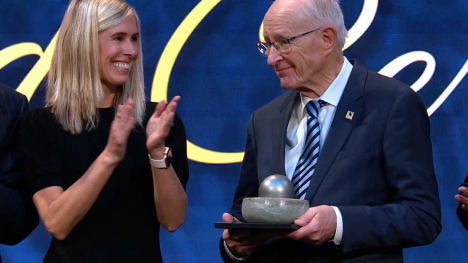
Huub Lelieveld receives the 2026 World Food Prize for six decades of work advancing food safety.
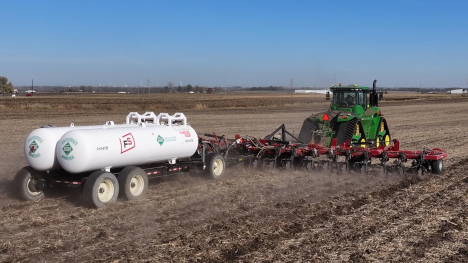
New federal plans target farmers' fuel and fertilizer costs through direct relief and investments in domestic fertilizer production.
Chris Robinson weighs corn recovery prospects, soybean price levels and the rebound in cattle.
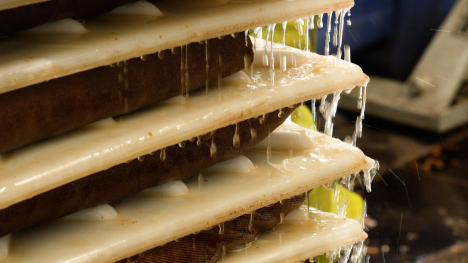
Minnesota’s Keepsake Cidery combines heirloom apples, traditional cider making and direct sales to help a small farm thrive.