Sugarbeet losses, diesel costs, Montana’s feral horses and market analysis with Shawn Hackett.
Harvest Pressure, Pricey Diesel and Montana’s Neighborhood Horses
Share


Harvest pressure is building, and so are the bills. An Oregon sugarbeet grower’s diesel cost to haul beets has nearly doubled as growers seek higher sugar import tariffs. In Montana, a county adopts a plan for feral horses roaming neighborhoods. Plus, economic reports ahead of the midterms and Shawn Hackett’s analysis of harvest pressure in grain markets.
Transcript
[PAUL YEAGER] Coming up on Market to Market, from beets to beans, farmers navigate high diesel prices at harvest. How one Western community is handling feral horses that have come to town. And commodity market analysis with Shawn Hackett, next.
♪♪
[ANNOUNCER] I wouldn't be here without my customers.
Yeah, I'd like to thank the customers. They're very dear to our hearts.
It's about the people that you're working with and the relationships that you have.
Thank you. Thank you. Thank you.
Thank you from the bottom of my heart.
♪♪
[ANNOUNCER] Family owned and operated for more than 60 years. Sukup Manufacturing is a full-service provider of grain handling, storage and drying equipment, helping farmers feed and fuel the world.
♪♪
[ANNOUNCER] Support for Market to Market has been provided by a bequest from Philip Lietz of Alta, Iowa, in recognition of public television's commitment to agricultural programing.
[ANNOUNCER] Market to Market is made possible in part by a grant from the Corporation for Public Broadcasting.
[ANNOUNCER] This is the Friday, October 16th edition of Market to Market, the Weekly Journal of Rural America.
[YEAGER] Hello, I'm Paul Yeager. The midterm elections are two weeks from Tuesday, and this week brought some of the last economic reports before voting day. A majority of these indicators were influenced by one thing, higher gas and diesel prices. Existing home sales rose in September by 1.5%, but remain below. A year ago. Buyers still face firm prices and rising interest rates. Consumer inflation came in hot. The consumer price index added 6/10 of a percent on the month and 3.7% on the year, with gasoline accounting for more than half of the monthly gain. Wholesale inflation posted its largest monthly expansion since 2022. The producer price index climbed by 1.3% in September and 6.3% from a year ago. Retail sales, which tracked total dollars spent by shoppers, went up 8/10 of a percent. Food and furniture sales gained, but gas stations accounted for most of the increase. AAA says Friday's average diesel price is $0.20, or 3%, below the record set 24 days ago. But it's still 73% higher than a year ago, making this an expensive harvest. From the bean belt to the beet belt for sugar beet growers, fuel is only half the squeeze. They say imported sugar is undercutting their prices, and they're asking Congress to raise the tariff on it. Our Mountain West bureau chief, Tammy Scardino, reports.
[NARRATOR] Gabe Flock is one of 600 sugar beet farmers who belong to the snake River Sugar Beet Growers Association. The sweet vegetable is newer to the mix of about 16 different crop plants.
[GABE FLICK] And the reason we did is, I mean, partly for the stability we needed another rotation crop.
[NARRATOR] Sugar beet harvest just started along the Oregon slope for this first generation farmer. So far, he says it's looking to be an average year for yields. About 45 tons per acre. The projected cooperative average is a little more than 40 tons per acre. Flick, like many in agriculture, is facing pressure from increased fuel costs.
[GABE FLICK] Generally, it costs us about $23 an acre in diesel just to get the beets from this field five miles down the road to the dump. And right now, we're running about $44 an acre.
[NARRATOR] He's also looking at tariffs, pulling down on the price of his beets within the U.S. Sugar import system. Tier one imports are the quota sugar, while tier two sugar importers pay a higher over quota tariff to enter the country. But in unlimited quantities. Samantha Parrott is the executive director of the snake River Sugar Beet Growers Association, which represents Idaho, Oregon and Washington state.
[SAMANTHA PARROTT] This is sugar above and beyond what we need for the market. And so right now, we're asking Congress to raise that tier two tariff in order to prohibit that extra sugar from coming in. That truly is undercutting our American farmers.
[NARRATOR] Parrott says on average, U.S. sugar beet farmers are losing $500 an acre.
[GABE FLICK] Still operating in a loss. But we're hoping that by next year that we kind of start to pull back up into the black.
[NARRATOR] For Market to Market. I'm Tammy Scardino.
[YEAGER] The wild free Roaming Horses and Burros Act of 1971 charges the Bureau of Land Management with managing herds of feral horses on public lands. Just last month, the U.S. Department of Agriculture invested $30 million to expand wild herd fertility control efforts nationwide to help safeguard the spirit of the West. The funding gives BLM agents access to more options in remote areas where the bands of horses exist. But the question of who handles abandoned horses came up recently in big Sky country, prompting action. Our Mountain West bureau chief, Tammy Scardino explains in this week's cover story.
[NARRATOR] It's not every day you see mares and their yearlings roaming freely in residential subdivisions, but over the last couple of years, these types of sightings have become more frequent. In the Miller Creek area south of Missoula, Montana.
[BOBBIE THOMPSON] Two things kind of happened at once. More housing started to be built down there, and it's really developing fast. Also, the horses, you know, we don't really know why. It could be predators that were after them. It could be, you know, they just found out that, hey, there's nice lush grass to graze on in the homes. But they did start going down into the Lower Miller Creek area.
[NARRATOR] The herd of about 100 horses roaming around the area are not considered wild because their ancestors were domesticated. Area resident Bobby Thompson says close to her backyard in Upper Miller Creek, rodeos used to be held with spectators sitting on the hillside. The only remnants left behind are this street sign and the ranch horses that were either let go or got loose.
[BOBBIE THOMPSON] Roughly a year after we moved in, which would have been in 2021. The horses would come up over the hill and graze in the area behind us here, and it was just lovely.
[NARRATOR] Thompson is a professional horse photographer, and she didn't pass up the opportunity to capture the moment for many years. It was unclear as to which government agency had jurisdiction over the horses. In an attempt to help clear up the confusion, the Missoula County Board of Commissioners considered the options. Among several reasons for adopting a new policy was a concern about road safety. Residents were worried vehicles colliding with a 1,500 pound horse could send a motorist to the hospital in September of 2025. One of the stallions from the Miller Creek Band was hit by a car and the horse had to be put down prior to the accident, some residents in the county had no idea feral horses were moving through local neighborhoods following the crash. It became a topic of conversation and there was an increase in calls to law enforcement. This incident also resulted in the formation of two Facebook groups. One of them, the Miller Creek Horse Alliance, became a registered nonprofit. Thompson serves as the interim vice president of the Horse Alliance Board.
[BOBBIE THOMPSON] I love having 8 or 10, 12 horses in the backyard when they come through. I don't want 50.
[NARRATOR] A part of the alliance's focus is to inform the public on how to act around the animals. They sent a letter to the school superintendent requesting educational materials be circulated. This included a safety notice that when the horses show up on school grounds or anywhere near humans, it's advised to not pet them due to the unpredictable behavior of the animals. Also, to not feed the horses because they can become aggressive and bite or kick, Thompson says. Staying at least 50ft away is your best bet.
[BOBBIE THOMPSON] If the horses get spooked, and that could be something as a loose dog, off leash charging at them, a child, making, you know, sudden movements, car driving by and making a loud noise. And in that situation, they're going to flee. You know, it would be a bad situation if a child or a person were in the way when that happens.
[NARRATOR] An official management plan was eventually adopted by the Missoula County Board of Commissioners in late 2025. When developing the policy, the board joined forces with several state agency representatives and experts in land and livestock to assess the situation. Among the public concerns were the possible spread of disease to domestic horses and property, damage to fences and lawns. Other groups advocated for the horses freedom and wanted to see the development of a humane management plan because it was almost certain the population would increase. Horse populations can double every 4 to 5 years. Josh Slotnick is chair of the Missoula County Board of Commissioners.
[JOSH SLOTNICK] And I'm really proud of it because we combined sort of scientific expertise with public engagement and really listen to the neighbors. And what we ended up with was something everybody was pretty happy with.
[NARRATOR] Ultimately, the resolution that was adopted provides a process to manage conflicts and ban population. The major also paves the way for future installation of permanent warning signs along county roads. Private landowners can now alert authorities of a problem horse on their property. Local law enforcement and Department of Livestock inspectors can then determine if the horse is in fact feral and does not belong to someone or has been reported stolen. The animal can then be vaccinated and rehomed by the state, the landowner or a nonprofit.
[JOSH SLOTNICK] People love horses. They love seeing them on the landscape. They love feeling like, wow, we are living in a kind of coexistence way with animals, and that makes them feel good about where they are. We can live that way. We just have to be smart about it.
[NARRATOR] For Market to Market, I'm Tammy Scardino.
[ANNOUNCER] Next, the Market to Market report.
[YEAGER] The market is dealing with harvest hitting full stride and extended sell off in the wake of USDA boosting yield projections last week. For the trading week ending October 16th, the nearby wheat contract sold off $0.11 and the December corn contract lost $0.06. Another large crop in Brazil and the fast harvest provided pressure on the soy complex. The November soybean contract fell $0.31 and December meal decreased by $8.50 per ton. December cotton sold off $0.54 per hundredweight. November class three milk futures added $1.27 per hundredweight. The livestock market was higher. December cattle improved to $1. 30th January feeders gained $1.93 and December lean hogs put on 310. In the currency markets, the U.S. Dollar index fell 37 ticks. November. Crude oil gained 10%, or 9.5 cents per barrel. Comex gold sold off $38 per ounce, and the Goldman Sachs Commodity Index was up by more than 13 points to settle at 75165. Here now to lend us his insight on these and other trends as regular market analyst. Shawn Hackett. Hello, sir.
[SHAWN HACKETT] Hey, Paul, wonderful weather. Thank you so much for the great feeling when I got off the plane.
[YEAGER] Anything we can do to make you feel like what it was like in Middle America this fall with all the rain and now the cold and the rain has been the story of the corn and soybean market. But let's talk about the wheat market for a moment, because rain has impacted domestic producers, given them encouragement to plant more wheat acres. Good idea.
[HACKETT] Well, with the price that we currently have, I mean, we kind of pencils out pretty nicely right now. And if the Russia Ukraine situation remains unstable, which everything says it's going to be, you know, that's not a bad proposition at this point to get some more wheat in the ground. It's not the most expensive crop to put in the ground. And if we come out in the spring with, you know, higher prices and such and good yields, they could have some pretty good balance sheets from that.
[YEAGER] Russia, Ukraine have been exchanging bombs with each other for quite some time this week. The White House gets involved and there's a deal about diesel, which then gives fuel to one of to Ukraine, into Russia. And there's a back and forth in a political situation that's happening that's going to play out, I think, in the wheat market. Is that an accurate read?
[HACKETT] I would say that's an accurate read. The market is very gun shy from what happened in 2022, when we had a grain result resolving deal that opened up the market there. And everyone's worried that that's going to happen again. And if that were to occur, wheat prices would certainly get hit, at least for a little while. You know, is it all about just ahead of the elections and we get past the elections and then everything's forgotten? Very hard to say. But my general feeling is, is that prices have been low enough and long enough. Exports have been down 50% from last year for long enough. And the planted acres in Russia are going to be no higher than they were in 2014. I think enough damage has been done that any short term sell off, should a deal be proposed, wouldn't last.
[YEAGER] And you mean a deal between the two countries? Not a deal necessarily. On one of the specifics, whether it's diesel or arms or Starlink.
[HACKETT] I mean, like, you know, cease fire. I got you something like that.
[YEAGER] Yes. Let's go to corn for a minute because and I think I need to start with the question. That's probably the best way to, to open this conversation. Dan in Iowa wants to know. Sean, the question that I think 12 others want to. More this would be in reference to last week's report that put a whole lot more bushels to the acre into this mix for both corn, specifically corn, but also beans.
[HACKETT] The reason that people trade the USDA report is because they know people trade. The USDA report like we know it reacts to the market. We know there's going to be big moves. And so, if you're somebody that's in the market speculatively or commercially, you know that you need to pay attention because you can get some very significant swings if it's above or below expectation. My issue with the USDA report this go around is that they really have enough harvest data to make a change of that magnitude. I mean, we hardly turn the wheel at that point in the corn grain belt. My problem is maybe they're right, but wouldn't it have been better to wait until November report when we have a huge swath of reported yields coming out of the field to make a better determination of their correct or not, instead of distorting the market? So, I'm not saying the right or wrong, but I'm saying I question whether they had the evidence to make that decision.
[YEAGER] The report's been made. Yes. The report's been issued. The report's been traded. What do I do now?
[HACKETT] Well, one thing that's interesting. They also increased the quarterly grain stocks report well above expectation one 180 million bushels. More than everybody thought. I also question that because when we look at cash basis since September to now, we've seen cash basis firm dramatically almost everywhere. If we have a couple of billion bushels of corn lying around, supposedly, I'm not sure that I would be expecting to see that kind of action. It says the market is just tighter than we're expecting. Is demand underappreciated? Are farmers just not selling? I don't know, but that's a very strange development in the market. And when you see cash basis improve, I'm not sure this is the best time to be selling your corn.
[YEAGER] Well, there was a report late this week that Gulf Basis had had firmed and now comparable to Argentina corn. What does that mean?
[HACKETT] Strong demand. One interesting thing I think people keep forgetting is that Europe had a 1 in 50 to 1 in 100 year drought. Their corn prices in Europe are like substantially ahead above ours. You'd have to believe that we're going to get some buying from those that would normally be looking at that corn and getting it from us. I just think demand is better than people think. It's not showing up yet in the balance sheet, but it's showing up in cash basis. And that's where it always shows up first. So, I'm much more optimistic that the oversupply that the current corn market's trading isn't as big as people are suggesting.
[YEAGER] But corn and beans, you can use it for either one. To answer this question. Usually after a report like we had last week, when the market sells off two, three, four days, that stabilizing. Has that happened, and has there been any indication that the selloff is over?
[HACKETT] I don't see any indication that it's over yet. Our general feeling is that we're going to struggle into the end of the month. And once we get into November, we think there's a lot of catalysts that could provide that reversal or that bullish turning point. We're going to start getting into more critical time for weather in South America. We're going to start getting more harvest results to give us a clarity on whether the USDA is correct or not. I and we're going to get through the elections. And there's a ton of uncertainty. What's going to happen with the elections and the markets hate uncertainty. And until we get through that, no one knows what a post midterm election will mean for agriculture or the rules of engagement on trade.
[YEAGER] We know this time of year is harvest. The harvest pressure is there in corn. The harvest pressure really appears to be there in beans. Is that the biggest factor in the soybean market this week?
[HACKETT] I think it's a key factor. The other factor, from my perspective is I actually think the USDA on the soybean yields are probably right. Or maybe they need to go up a little higher, maybe half a bushel or so. So, we I don't see any issue with the soybean yield. We got a big yield. We got a big crop. And even though the demand is very strong, we got great crush. You know, we still harvest all that in. Farmers love to sell beans out of the field. They like to store corn. And that means, you know, there's going to be greater pressure on soybeans, at least on the onset for that particular reason. So, I think it's a huge factor. Plus, so far we're off to a pretty good start with weather in Brazil.
[YEAGER] Which is where I want to go next. So, let's talk about that weather in Brazil and the size of their crop and the weather that is coming there. Tell me what those two factors mean for U.S. Producers.
[HACKETT] Well, right now the weather has been excellent. Planting is going well. You know, usually when weather is good, they're going to sneak a few extra acres in and they're supposed to. And so that means they're off to a really, really. We haven't had a really good start to the soybean crop in Brazil in a long time. The problem that not the problem, the issue that I see is a super El Nino that we're in that's going to continue to strengthen, does show that we should get much drier, hotter conditions in mid late November into December. When you look at setting pods in Brazil, the majority of the crop is setting pods between late November and early January. So, I would be thinking that a weather catalyst could come back into the soybean complex if this hotter, drier, super El Nino teleconnection comes into play, as we think it will, that's something to watch as a catalyst in November.
[YEAGER] And is the tail end of that or the converse of that here in the United States, if we have a continued delayed harvest, the harvest continues to be delayed, or is that not a factor anymore with this super El Nino?
[HACKETT] Well, I mean, we've been projecting a wet harvest. We've had a wet harvest. It has delayed. We are expecting a drier patch for the next week. We know we can rock and roll with harvesting and how much progress we can make. But we are going to get some more rain again the following week. So, I do think we're going to be behind, and I would be looking and watching for disease quality issues, things like that, that could start to soften the bearish tone that we currently have right now.
[YEAGER] Bearish tone in the cotton market. Or is that bull finally started to appear?
[HACKETT] Yeah. I mean, when you have interest rates going through the moon, everyone worried about the consumer not wanting to buy clothing. And the consumer economy. And you know, it just is not good for the cotton market. And the price is kind of caved in. And they are also, you know, we're getting into harvest season, fresh supplies coming in. But when I look at it, crude oil hitting $100 a barrel on the spot price, the polyester price surging again and everywhere in the world that we follow has had a poor cotton crop this year. We think that the market has overdone it to the downside, and we think we are getting ready for the market to turn back up.
[YEAGER] Let's look at live cattle. Secretary of AG this week said posted on X that there had been three consecutive months of declining beef prices. That would be for the retail. That's good for shoppers. That's not really good for producers. But what is happening for the December or yeah, the December cattle market for live cattle.
[HACKETT] We have some headwinds, right? We're bringing more beef in from import, even though it's the lower quality beef, it's still coming in. We finally opened the border to bring feeders in, even though it's not up to where it used to be. But we're every week, more and more is coming in. That's a headwind. And I do think that this this consumer confidence issue with higher interest rates and the worry over artificial intelligence, I'm going to lose my job in a year or two. I just think that this high beef price, people are balking at it. And the packer has finally said, we are going to run our business to make money, not volume.
[YEAGER] Yeah, I think packer margins this week I saw was posted was strong near $156 a head. We haven't heard about that in a while.
[HACKETT] They've made it. I think it's 3 or 4 weeks now. They've made a margin for after not making money for a long time. And whether that's in. They close some plants and they're going to operate the business for profit. If the cattle market takes off too high, and it's reducing that to a loss, again, I think they're going to pull back. And that's going to keep this market from running away.
[YEAGER] Anything else on feeders you want to add? You did kind of mention them already.
[HACKETT] Well I mean feeders obviously get a little extra boost when the corn price falls like we've seen. And so that's been a thing. But if we're correct about the corn market digging its heels in and maybe turning back up in November, we're going to start taking some of that lower corn price premium out of the feeders. And that could be another catalyst for the market to roll over and have another decline.
[YEAGER] Having said this in a while, hog market had a good week. Why?
[HACKETT] I think it's seasonal factors. Paul. You know, it's been a very disappointing market. I've kept feeling that this GLP-1 craze was going to increase the demand for cheaper pork. It has not happened. Where it has happened is in the dairy parlor, the powder protein, the dry weight, the demand, the prices through the roof. That's what we're really seeing this trend coming into the livestock sector class for prices $20 plus. And now it's impacting the class three price, as you said, up over $1 plus this week. Very interesting that we're not seeing in pork, but we are seeing it in milk powder protein.
[YEAGER] It's protein. And we'll get it from any direction. 10 seconds 10% up on crude. Again. Do we have another move like that? Are we back to those 10% moves?
[HACKETT] I think so things are devolving in Iran. They're not getting any better. And it could be that they're going to create mayhem ahead of these elections and create bigger problems. And I'd be really, really look, you know, monitoring that closely.
[YEAGER] We'll talk about it more and plus Shawn Hackett, good to see you. Thank you.
[HACKETT] Thank you.
[YEAGER] That's going to do it here. And you've been watching our market analysis. If you're watching online or on the PBS app, we are going to stay here, continue this discussion and Market Plus. That's our online only segment. Find it wherever that you get your podcasts or at markettomarket.org to watch, listen, or read. Our email inbox is always open. Use it to answer questions from our newsletter or register thoughts on the most recent program. Send us an old fashioned email to [email protected]. Next week, we are going to talk about pressing the pick of the crop into a profitable bottom line. Thank you so much for watching. Have a great week.
♪♪
[ANNOUNCER] Market to market is a production of Iowa PBS, which is solely responsible for its content.
♪♪
[ANNOUNCER] I wouldn't be here without my customers.
Yeah, I'd like to thank the customers. They're very dear to our hearts.
It's about the people that you're working with and the relationships that you have.
Thank you. Thank you. Thank you.
Thank you from the bottom of my heart.
♪♪
[ANNOUNCER] Family owned and operated for more than 60 years. Sukup Manufacturing is a full-service provider of grain handling, storage and drying equipment, helping farmers feed and fuel the world.
♪♪
[ANNOUNCER] Support for Market to Market has been provided by a bequest from Philip Lietz of Alta, Iowa, in recognition of public television's commitment to agricultural programing.
[ANNOUNCER] Market to Market is made possible in part by a grant from the Corporation for Public Broadcasting.
Trading in futures and options involves substantial risk. No warranty is given or implied by Iowa PBS or the analysts who appear on Market to Market. Past performance is not necessarily indicative of future results.
Watch More
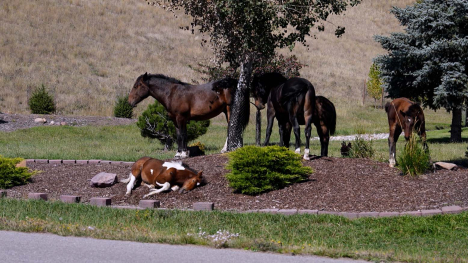
Montana residents balance affection for free-roaming horses with safety and property concerns.
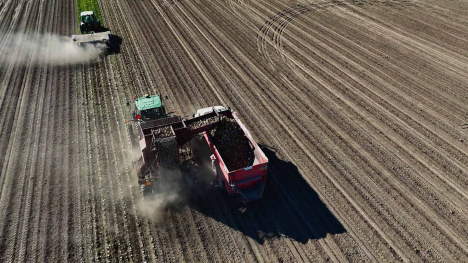
A growers association reports average losses of $500 per acre as sugarbeet harvest gets underway.
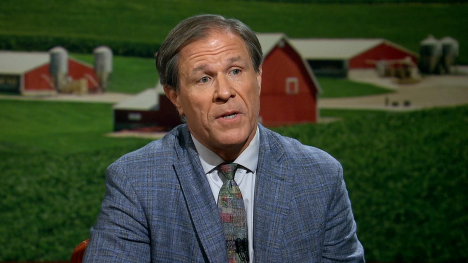
Shawn Hackett weighs corn demand, USDA yields and potential November turning points for grains.
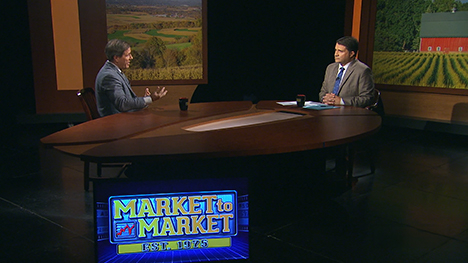
Shawn Hackett weighs storing corn versus selling soybeans and Brazil’s potential weather risks.
Global supply disruptions keep fertilizer markets volatile heading into 2027.
How grain prices rally this winter w/Naomi Blohm & Ted Seifried on USDA, China demand & S. America.