A new group is looking to get the same tariff carve-out for UTVs and ATVs that e-bikes and motorcycles received, saying it would save producers thousands per vehicle.
From Sugar Beets to Section 232: Weighing Trade’s Unintended Costs On UTVs and ATVs
Share


On the farm, a UTV is a pickup, a feed wagon and a fence-checker rolled into one. Todd Cranney, a fifth-generation Idaho farmer, says Section 232 tariffs now add thousands of dollars to each one. Cranney, part of Save America's Working Vehicles, tells us that a 2026 move to tax the full value of imported off-road vehicles hit producers already operating on thin margins — and that when the rate was lowered to 15% for farm equipment, UTVs were left out. He makes the case for a carve-out like the ones e-bikes and motorcycles received, and explains why sheriffs, rural firefighters and energy crews are part of the coalition.
Transcript
[Announcer] Today's Market to Market Podcast is brought to you in part by the Iowa Economic Development Authority, creating opportunity for business in Iowa by connecting companies, entrepreneurs, and communities with the resources to thrive. Learn more at businessiowa.com. Today's Market to Market Podcast is brought to you in part by Grinnell Mutual, which has been helping protect what people grow, own, build, and value with insurance products since 1909. Trust in Tomorrow® with Grinnell Mutual. Learn more at grinnellmutual.com.
[Paul Yeager] We like a good UTV or ATV ride, but they are more than just fun and recreation. They are a vital part of certain farming operations, whether they're chasing livestock or something big in the field like the one behind me. But they're caught up in what has been going on with tariffs and the impact on so many parts of the economy, including the farm economy. We're going to talk Section 232. We're going to dive into who is impacted most on at least one part of these tariffs that have impacted producers in Big Sky Country. We're going to go to Idaho today. And Todd Cranney, he's grown up on an Idaho farm, does help on the board of his family farm. They still farm. But he's also a part of Save America's Working Vehicles, and it is a campaign that is trying to get an exemption for the tariffs that have been put on these items, these UTVs and the ATVs, the alliance that has grown around this issue, and the different parts of rural America that rely on them in tough-to-reach areas and just in an economical sense and just getting the job done. So we're going to dive into tariffs in a different type and path. Hop on board for this one here. So we're going to talk some heavy details. But we're also going to do what we have discussed numerous times here on this MtoM podcast, and that is the nuance of trade and those impacted by decisions made thousands of miles away. I'm Paul Yeager. This is the MtoM podcast, which is a production of the Market to Market TV show, which is based at Iowa PBS. If you have feedback for me, send it to me, Market to Market at Iowa PBS. Thank you. And now let's get to Todd. So, Todd, it's November. I always think every farmer is super busy, but you're in a different part of the world. Tell me what crops should be coming into the field, or are you one of those that, "I'm done in August, I don't do anything in November"?
[Todd Cranney] Well, that's a great question. You know, out here, we just barely wrapped up harvest a couple of days ago, actually. On the farm, we just barely wrapped up sugar beet harvest. Actually, it's really kind of cool. And potato harvest as well. On the sugar beet front, it was really cool because it's actually raining pretty heavily down on our farm right at the moment, and we had a group of farmers that jumped in to help some guys get done before the rains came in. It was pretty cool, typical of farm community, everyone helping each other and trying to help others. It was a great story. It's on Instagram, but, like, there's a whole picture of just a whole host of farmers in the field trying to help their neighbors get done before the heavy rains come in, which we're grateful to have, because one of our biggest concerns right now is we've had a pretty severe drought. Our snowpack is extremely low, and we rely heavily on surface and groundwater in southern Idaho. Our farm is down in the Oakley area. I actually live up in Boise. It's been my family's for generations. We homesteaded there in 1907. I am fifth generation. I sit on the board of the farm and help oversee the business piece of it. My two cousins run the day to day of the farming business. My brother runs our cattle operation. We have our sixth generation back now that we're working on transitioning to right now, both sons of my cousins and of my brother as well. So we're excited about the future there. And then crop-wise, we have potatoes and sugar beets. Obviously, Idaho, we have [potatoes] as one of our biggest revenue crops. Sugar beets are big. We also grow a lot of wheat, barley and a little bit of hay, corn and mustard seed. So we are just wrapping up. We go as extensive as we can into fall, you know, preparation for next year, drilling fall wheat, etc., ground preparation for next year. But we're pretty done right at the moment with the rain occurring, and hopefully we'll be done for a while and we'll start seeing some snow start to fly here, because we need it big time.
[Paul Yeager] Well, for the moisture side of things, probably also for those that do skiing and winter activities. I know in Colorado that's been a major thing where they have not had as much snowpack. That's impacted their water and also impacted their tourism. And Idaho is no different when it comes to tourism in winter. You might as well cash in when you've got great mountains and a great setup on snow. So you mentioned — I lost track — I think was that seven different crops that you have? So it is kind of hard to keep everything.
[Todd Cranney] Yeah. We've got a lot of different crops we're involved in. So I think it was about seven. I'd have to go back and count it in my mind. But yeah, we've got multiple crops that are kind of occurring, and we just, like I said, just wrapped up in the field, pretty much done. I mean, sometimes depending on the weather, we can kind of go in a little bit in November again with prep work for next year, but we're largely done in the field. So now we kind of prepare for the rest as we move forward here.
[Paul Yeager] So what would be the biggest item that has had the most indigestion-causing, from a tariff perspective, for you, of your crops?
[Todd Cranney] Well, there is no question. You know, diesel prices are very good. Have been, you know, and obviously they're of peace. I think, you know, there are differing reasons for what we're seeing and the challenges of diesel prices. Obviously, the war in Iran is a big piece of that. But diesel — the tariff piece for us is probably more of the uncertainty. I think it just created some uncertainty in the commodity markets, which we've seen, which impacts everything downstream. But then obviously the tariffs have put some negative pressure on what we see in fertilizer and diesel prices, as all farmers and ranchers have seen. But, you know, I wouldn't blame everything on the tariffs per se. I mean, we know that the president is trying to help farm country and is a big supporter of rural America. And he is trying to reset the deck here with free trade. It's just sometimes what's happening, as you know, is there's these unintended consequences that are occurring here. And we're kind of feeling the pain on the diesel, on the fertilizer front, some of the unsettling nature of the commodity markets. And then what we're working on is a very specific issue where it's really causing problems for us on the equipment front, you know, and specifically what I'm working on in terms of UTVs and ATVs, which is something that we're grateful to be able to talk to you about a little bit.
[Paul Yeager] And we will dive into that fully. But what I want to go back to for just a moment, though: help me on some of the export destinations for your crops, because I don't know. Do they stay local? Are you one that ships to Canada, or it goes to the Seattle area and gets on a ship and heads out? Where are most of your destinations off the farm?
[Todd Cranney] Well, it could be anywhere, honestly. I mean, it depends on what crop you're talking about, but we're pretty much, as you know, just like everyone else, in a pretty global economy. I mean, Canada can be a big piece of the potato market, as can Mexico, as can Asia and Japan. That definitely impacts what we see on our potato prices. Sugar is very much a global thing that's very impacted by what the global market is doing, and then obviously wheat is just purely a global market deal where it goes everywhere. So in this day and age, to answer that question, I really couldn't answer it directly other than to say it could go anywhere and everywhere. And we're all interconnected in such a global way that, like I mentioned earlier, that's where some of the tariff piece has created some uncertainties. And I think it's definitely had an impact on commodity prices. The cattle business is the same way. There's issues going on there that people have seen in terms of the tariffs. And that's an even longer conversation for a different day. But ultimately, we kind of see it on all fronts.
[Todd Cranney] Interesting. I think that's one of the interesting things about this, is that the tariff directly hasn't been an issue. But tariffs have been in play for quite some time because other countries have been using tariffs. I mean, the potato market — we still don't have access to fresh potatoes in Japan because they don't let us do it. We've for years now been working on breaking into the market, and we've had everyone helping us there. Our governor has been over there multiple times and doing a great job of just trying to break in there. But the Japanese will not let fresh potatoes in. They're protecting their domestic market there. And that example is one of many that you could show. Again, that's kind of what the president is saying, which we understand. And I think farmers and ranchers understand that and agree that, hey, we've got some challenges here. We all believe in free trade, but it has to be fair trade. You've got a lot of things that Canada does, Mexico's done. I mean, we can show lots of examples of protectionism that has really impacted and has been an impact on our commodity prices for quite some time. And that's what the president's trying to do. I think the challenge is there's just all these things happening at once, very aggressively. And sometimes it's like, hey, we've got to land the plane on a few things here and get some things done here in order for us to be successful. So there's just a lot of dislocation and pain that's starting to happen. I mean, this is the worst farm economy we've seen in, I don't know, 30 years, back to the '90s, you know. And again, I would say it's not just tariffs, because again, you've got to go look market by market. I mean, the potato market is very driven by supply and demand, as it always is, and most of these purely competitive markets that we deal with in agriculture. And there's been some oversupply. You've seen some demand adjustments with GLP-1 drugs. You've seen the same thing with sugar. And then you go into the wheat market. You can see that wheat market can sometimes be driven by drought in Australia or, you know, Ukraine, the Ukraine war. That's an impact on the wheat market. So we've seen these things from time to time over the years and generations of farming and ranching. But it is the most acute time we've seen in quite some time, where everything's happening kind of at once, where you've had commodity prices drop off. We've seen some rallying on that front over the last little bit, which has been great. But previously we had this whammy of things occurring where the market was completely in the dumps. Same thing with the sugar market now, which we hadn't seen. Wheat market — everything's just, nothing going on with any commodity price. And then you top that off with diesel and equipment costs and inflation. And then we see the inflationary pressures on our bottom line in terms of the operating line that we have to operate off of because of inflation. And so borrowing costs are up, you know, just you name it. And so we just haven't seen it all at once. Everything's happening. So I don't have to tell farmers and ranchers that. They know that; they're feeling that. The cattle market has been a little different depending on what part of the cattle market you're in. You've got to be really careful with that conversation, because certain parts of the cattle market are doing really well. Other parts are not. And so you've got to be a little bit careful and have a very specific conversation, I think, about the cattle market. And I also think that's one of the challenges that this administration faces, is they're trying to do the right thing, but sometimes, you know, the devil is in the details. And I think sometimes there's a challenge of understanding the details of, okay, how does one thing affect the other. And the cattle market's one other example. So are tariffs right now. Again, intentions are great and we appreciate that. And I know the administration is trying to offset some of these things. But again, that's the world we're living in right now. That's difficult.
[Paul Yeager] I had a Tractor Ride-Along last year at this time, and she described the tariffs as everything all at once. So yeah, you two are kind of similar in the way you described things. Say you're walking down the street in Boise and you're able to have a conversation with someone who's not in your situation as a farmer. How would you describe Section 232 to them?
[Todd Cranney] Well, Section 232 — the design of it, and the intention of the administration, is to onshore production in the U.S., which we agree with. And I'm sure most Americans all agree with that. And so this Section 232, the history of this was, what they originally had done back in, I think it was 2005 — I don't have my dates right here in front of me — but originally there was a tariff that was placed on kind of steel derivative products, and at that time it really was just kind of anything that was the steel part of the vehicle. So say it was — in this case, what we are very focused on is UTVs and ATVs. So it was just the steel derivatives based on weight differential, etc. So there was a tariff, but it wasn't a super large piece. It was an increase in cost to the vehicle and to whoever would purchase it. But then moving forward in 2026, they've now placed a tariff on the full value of the vehicle. That's another $1,000 and $11,500 on top of what the price was. A few months later, they lowered that tariff to 15%, and so obviously there's some relief there. And that was for all agricultural equipment, tractors, etc., all the way down to ATVs. They didn't include UTVs in there, which again, this is kind of what I would say is an example of just these unintended consequences, and the devil's in the details. Again, we actually use UTVs much more on the farm than we do ATVs. And again, most people — the misnomer would be all these are just luxury items people mess around with. And some people do that. But on the farm, we use these things quite extensively, you know, to move equipment, check cattle, check fences. I mean, we're talking — as you know, and I know I don't have to tell you this or really your audience — but we're talking about expansive pieces of real estate that we've got to cover, and places to get into. It's hard to get into these places with large pickup trucks or large vehicles, or they're too heavy. And so these vehicles are very helpful to us. That's why we call it the Working Vehicle Coalition, because they're working vehicles that we use very extensively. So the layman's terms, I would say, is this is just increasing cost in an environment where, again, we have tight margins. We just talked about the challenges in the farm economy. We operate on tight margins in the best of times in farming, but we particularly are operating on tight margins right now. So every dollar counts, and we're trying to look for relief here. And we've seen the administration do this well. They'll do carve-outs and they'll fix these problems when they realize, okay, wait a minute, that wasn't our intention. We understand their broader intentions and we support those broader intentions. But hey, look, this is several thousand dollars it's costing the farmers and ranchers, and so we can carve that out. They did this with e-bikes and motorcycles previously. And so that's what we're trying to do, is raise awareness so that hopefully they'll give us a carve-out. Again, a lot of problems, we understand, in the ranking of things. This is maybe not the biggest problem that farmers and ranchers face, but it's a problem, and it's a fixable one that can be done. Some of these other pieces of the tariff policy are tough. I mean, there's all these different unintended consequences or moving pieces, but this is a very simple one where they have a precedent that they've done before, and they can fix this. So that's why we're focusing on this, even though some farmers are actually like, "It's not the most important thing to me." I understand that it's not. But every dollar counts right now. And so we're looking for every way we can save any amount of money. And I do think the administration is also looking to help any way they can and try to correct some of maybe these unintended consequences. And we think this is an opportunity for them as well.
[Paul Yeager] One could claim that the carve-outs are what you are fighting against in, say, Canada with the dairy production issue. And they could say from their vantage point that that is a carve-out, and the American producers say, no, that's the one that's really hurting us. I'm not saying that that's what your situation is. But at what point, though, if you're going to make big change — I had a pork guy years ago, at the beginning, I think, of Trump One, say, you know, "We're the tip of the spear." But you know what? Nobody wants to be the person that gets hurt or the industry that gets hurt the most. But you're kind of caught in this. How receptive are people who can make change, listening to what it is that you're telling them, that we need help here?
[Todd Cranney] Well, I think you make a fair point. I don't disagree with any of that. I think the challenge for us right now, we're kind of early days of this. The last several months, we've really just been getting up and going, recruiting voices, industry leaders, farmers, ranchers, and doing the educational piece of this, like with the process we're doing with you, which we appreciate the opportunity. So it's still early days. I think the challenge is there's so many moving parts, like you said, and so many other unintended consequences, that it's kind of getting their attention and helping them understand. And yes, everybody's working on kind of their issue and their priorities. So there's a little bit of competition there. But again, our piece that we are very focused on is that there's kind of a historical precedent. They have seen this problem before. So if they're going to grant relief to e-bikes and to motorcycles, they really should be, in our view, granting you no relief to ATVs and UTVs. But part of the process is helping them understand this, educating the policymakers on these nuances that perhaps they don't understand or know about. And, you know, I don't expect everyone to know what happens on a farm and ranch across this country. As you know, this is becoming a diminishing thing, where people don't understand it as much as they used to. So, so far, I think it's been receptive. Again, we don't question the intentions. I think the challenge is just so many moving parts and so many unintended consequences. The other piece I would note that's been helpful to us is, obviously this is a farming challenge for farmers and ranchers, but this is also a challenge in the public safety sector, where they use these ATVs and UTVs. For example, where I live in Idaho, we have just a huge rural area. We have county sheriff deputies right there using these for search and rescue. We have a lot of Forest Service, BLM land. It's helping federal governments be more efficient and using these to get around and manage our federal and state lands. So there's a public safety aspect to this. It also helps some of these folks, you know, rural firefighters or rural fire districts, use these. And again, that is the same argument as you would make with a farm. They're less expensive than a full vehicle, and they can get to places that are hard to get to, for the public safety sector, for the energy sector. So it's not just a farming and ranching opportunity. It's also an opportunity to help some of our public sector folks, our energy sector folks. So that's another argument that we like to make, that we think also resonates with the administration, because those are things that they're obviously very favorable to and are looking for solutions there. I just think it's getting in the mix here because there's so many moving parts.
[Paul Yeager] Well, "just take your pickup truck across those fields" is a pushback, I'm guessing. And I've seen that pasture land. It is not going to handle it. You don't want to put a pickup out there. So that is the understanding of exactly what it is that you do. It sounds like the majority of your time is explaining, from our situation, this is why this policy or this exemption — yes — really hurting this. Am I hitting it?
[Todd Cranney] Yeah. No, I mean, yeah, your audience understands what I'm saying here. I don't want to talk down to them or tell them things they already know. But yeah, the audience we're talking to, a lot of them don't necessarily understand what's going on on a farm and ranch, but they also don't necessarily understand, to your point, how expansive it is in the Midwest and in the West and rural places. I mean, the East Coast is just a different, you know, urban center. East Coast places are just way different. And they don't understand, like, hey, what are we doing here? You know, they watch Yellowstone and this soup that we move cattle with horses. Don't get me wrong, horses are a very essential part of what we do on our ranching side, but we use ATVs to get to places a lot quicker and a lot easier, because we're talking about thousands of acres that we have to cover sometimes. You think about BLM and Forest Service land, and that, again, is one of the reasons why we want to mention the public safety aspect of this. It's important when you have these situations arise in rural Idaho, rural America, where again, you have sheriff's departments, fire departments that are trying to get to hard places — you know, search and rescue, you name it, stop fires. Fire's a huge issue in the West, as you know, and drought and everything. I mean, these vehicles are not just — again, they are play toys for a lot of people, don't get me wrong. But for us, what we do on the farm side, on the public safety side, they are essential vehicles. So we're not just talking about some luxury vehicle problem that somebody has. And it is hard sometimes for people to conceptualize that if they've not seen it. And that is part of our job, is trying to educate folks on that.
[Paul Yeager] Are you saying Rip's not out there on a UTV as much? He looks better on the horse, from Yellowstone. Sorry, I'm using your Yellowstone reference there. Well, you always look better on the horse, don't you? It doesn't look as good on film.
[Todd Cranney] Yeah. And there are certain places you cannot get to with an ATV or UTV, and you've got to have a horse. So don't get me wrong. We're farmers and ranchers. We'll use whatever tool we can use to make it work, and we will make things work. But people can make things work a lot easier with a few policy adjustments, in our view.
[Paul Yeager] It sounds like, though, you need an exemption within the exemption, because if I buy a UTV to be in my town of 2,000 and I make that one trip to the farm once a week, that shouldn't count the same as those who have 10 trips and nine of them are on the farm and that 10th is into town. So how does that look for an exemption, if it falls almost into that — that's a real farmer or a real producer, livestock person, or not? Then you really start labeling people. And I'm guessing that becomes problematic for you too, Todd.
[Todd Cranney] Yeah, we've kept it pretty simple. I mean, we really have to get into, like, can we just find some relief for UTVs and ATVs? Because, I mean, our focus is those that are using them for farm and ranch and public safety, etc. It's pretty hard to kind of differentiate when people want to use it for other purposes. But again, that's one of those things where we're very focused on the uses that are very productive. And we don't oppose the fun recreational pieces of that. And I would just say, look, the other argument to be made there on the recreational side is, look, recreation is a big piece of economies in Idaho. It is a big piece. And with that come jobs in the small areas — dealers who sell those vehicles, they have employees, they have people in the rural community. So it has an economic impact overall. And that's an argument I think can be made on the recreational piece.
[Paul Yeager] Can you find alliances, or have you found alliances, that have helped, that might be in a similar situation? I'm not exactly saying it has to be tied to UTVs and ATVs, but in the steel side or in the manufacturing side, that could possibly — we talk about a farm bill. Maybe someday we'll actually get one of them. But that is aligning the rural and the urban interests together. Is there a counter to yours that could maybe help in your efforts?
[Todd Cranney] You know, that's a good question. I mean, we are looking for alliances anywhere we can. We have reached out, and we have done some things proactively, beginning the educational process for Secretary Rollins, for the relevant House and Senate committees, Senator Boozman, who we sent — again, educational pieces trying to help them understand what's going on here. And he's obviously big on the farm bill. And so, yes, we'd like to see — maybe the farm bill could be a vehicle. Now, again, on this one, the administration can do this without the farm bill. But we would like to see the farm bill happen as well, so don't get me wrong. But we are looking for alliances anywhere we can, and we have seen them kind of in the area, like you said, beyond the farmer and rancher pieces. The dealers are good allies. The manufacturers are good allies. The public safety world is good allies. The energy guys are good allies. I mean, they all use these vehicles. And so just trying to partner with folks like that to point out, like, hey, the other thing about this, again, is this is a win for the administration. I mean, their intentions are very good. We know they're pro-America, onshoring America, pro-rural America, pro-farmer and rancher. We know that and we appreciate that. And we know their intentions with the tariffs are very good. And so it's just like, hey, how can we give you some wins here? Because this is a very straightforward win. There's some of these other pieces that are much more complicated and harder to deal with. But this is a very good win for them if we can kind of help them understand that. But, you know, they are dealing with a lot of things right now. So getting it on their radar is kind of our priority.
[Paul Yeager] And I'm not asking you to say, well, what's the part you're willing to give up to get this? But where does this rank in terms of importance for you?
[Todd Cranney] Well, it's very important for me. I mean, any relief we can get right now to farm and ranch country is great. I mean, we've seen relief now come from the president. But, you know, again, what we'd like to see in the longer term is, you know, fix some of these unintended consequences, like with ATVs and UTVs, look for other opportunities where they can do that, and continue to land the plane on individual pieces of the tariff trade policy to bring certainty to what we're doing on the farm and ranch side. I mean, we appreciate the efforts to provide relief. But again, relief is — we need long-term solutions that are predictable and that we can plan on. I mean, like any business, farming and ranching is very much that way. And again, I know that's what they're working on. But again, predictable, and demonstrating things that can help us set up for how we can set this business into the future. Because that's our priority, for my end, is, you know, this has been my family's for generations, and it's in your blood. And I'm proud of it and I'm grateful for it. It's a huge blessing. It's a huge responsibility. We want to see this continue for generations to come. And I know we're not the only ones. There are lots of farmers and ranchers out there. That's why they do it. It's more than just a business. It's a way of life. And we want to protect this way of life. And we know the president does as well. We know he's pro-us, and we know his administration is. It's just helping them figure out how do they land the plane on some of these things and bring some very clear-cut, predictable solutions that we can plan on and we can move forward with. And that's what we're hoping to see.
[Paul Yeager] We've kind of danced around the name of the group, but I think you call it — is it Save America's Working Vehicles? Do I have the name of the group right?
[Todd Cranney] That's correct. Yep. Save America's Working Vehicles. Yep.
[Paul Yeager] And you mentioned the coalition that you're trying to build. Who's in the tent, who needs to come in the tent here? I guess make one final closing argument. You just kind of did a great job right there. But who else needs to join in?
[Todd Cranney] Well, no, I mean, I think anybody. You know, we're looking for continued strength in stakeholders among industry leaders in the sectors I mentioned, particularly farming and ranching, but also public safety, energy and beyond. And then I think, you know, we always welcome individual farmers and ranchers that would like to speak up on this and other issues. It's also, you know, a great issue to talk about the broader issues like you've mentioned and talked about. Maybe this is a very specific niche thing, but it leads to the bigger-picture questions of things that are going on in the tariff policy world. And so we welcome more of those voices to get engaged and, again, help show what solutions are out there to the administration. Again, we've got to work with them and help them. Their intentions are good. They want to do the right thing. They're trying to do this for us. We're going to have to help them with some policy solutions. I think we have a very favorable audience, but we've got to come to the table with ideas and solutions as well that help us as farmers and ranchers be successful. So we welcome any and all voices that would be willing to help us with this and the broader issues that we're facing. But again, we've got to be a part of the solution and not just, you know, complain about what's going on, which, again — I'm a farmer. My family's farming, ranching. I know it's a very difficult time right now, but I do think we have a favorable group of people that want to do the right thing and want to help us. But again, we've got to be more active at helping provide solutions like this that are very specific, that can help lead to things that will make things better on the farm and ranch side for generations to come.
[Paul Yeager] Because you're looking specifically for — I guess I think we have danced around exactly what it is that you would like to see. I mean, we've talked about —
[Todd Cranney] Well, yeah. Sorry.
[Paul Yeager] I'm realizing, you know what, we should just —
[Todd Cranney] Going over the river and through the woods for you. I'm definitely — we're out talking on the farm here. So to be very straightforward, I mean, we'd like to see a carve-out like they've done with e-bikes and motorcycles, and waive the tariffs on UTVs and ATVs, which would relieve thousands of dollars per vehicle on those. And that will help, you know, on the bottom line on the farm and ranch side. And I think there's other solutions like that that could be added on to that, with other groups and other folks out there working on this issue.
[Paul Yeager] Because, Todd, you could argue that thousands of dollars on one item might be worth more than some of the other relief that's been presented or thrown out there. This is tangible dollars — yes, tangible cents.
[Todd Cranney] Absolutely. Well, and it's lasting and long-term, not just one-time fixed pieces, right? It's long-term. It's sustainable. It's predictable. We can absolutely deal with it. So yes, I mean, we think it's immediate. It's immediate. And it doesn't require the farm bill or Congress, which is a longer-term play, which we need. The administration can do this anytime they want. That's the other piece of this. So it can be quick and it can be immediate. And I think those are all very good things that help the administration. It helps us on the farm and ranch side.
[Paul Yeager] Do you feel that you have a better window, because this comes out a week after the elections? Do you feel like you have a better window in the lame-duck session or in the new Congress session, regardless of how the elections turned out? I guess this would be the "insert how the elections came out here."
[Todd Cranney] You know, I don't want to predict anything ever in this environment, particularly on the political front. And I would just answer you by being honest with you: I don't know. I think the reality for us is that the administration can fix this when they want, whenever we can get kind of their attention. And it's not going to change, no matter what happens, because we're going to have the same administration, at least for another two years. And so for us, it's really just, again, about focusing on the administration and helping them understand this. Don't get me wrong, I don't want to make it be that Congress isn't relevant. I mean, it definitely will be interesting to see what the political dynamics look like for the lame duck, and then in the next year, and we'll have to kind of deal with those dynamics, whatever they are.
[Paul Yeager] And we'll see how it plays out, and if we have to have another conversation. Todd, great to talk to you and meet you. And good luck here the rest of the year and moving forward.
[Todd Cranney] Hey, thank you so much for your time. We really appreciate it.
[Announcer] Today's Market to Market Podcast is brought to you in part by the Iowa Economic Development Authority, creating opportunity for business in Iowa by connecting companies, entrepreneurs, and communities with the resources to thrive. Learn more at businessiowa.com. Today's Market to Market Podcast is brought to you in part by Grinnell Mutual, which has been helping protect what people grow, own, build, and value with insurance products since 1909. Trust in Tomorrow® with Grinnell Mutual. Learn more at grinnellmutual.com.
[Paul Yeager] We are produced at Iowa PBS. Our production supervisor is Sean Ingrassia. His crew is Reid Denker, Kevin Rivers, Julie Knutson, Neal Kyer and David Feingold. The executive producer of Market to Market is David Miller. I'm Paul Yeager. We'll see you next time.
Watch More
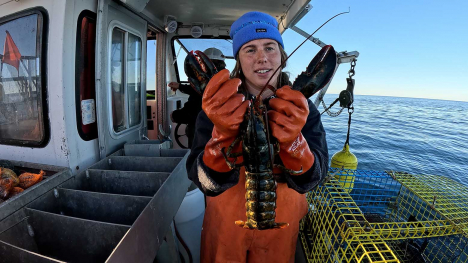
Warming waters push lobsters farther north, forcing fishing families to travel farther and spend more to bring in their catch.
Corn, soybeans and wheat are oversold like never before, says Ted Seifried in our Market Analysis.
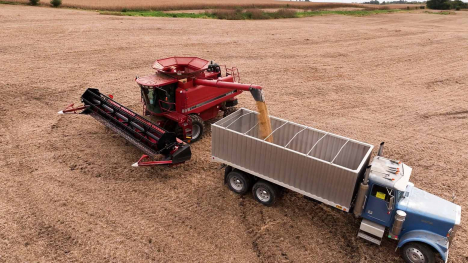
Agricultural lenders expect 40% of their borrowers to be unprofitable this year, according to a survey by the American Bankers Association and Farmer Mac.
Farm lending, hay shortages and warming waters challenge producers. Ted Seifried analyzes markets.
Ranchers in western Idaho face hay and fencing shortages after wildfire and drought. Neighboring communities are donating hay to help families recover.
Ted Seifried discusses corn recovery signals, soybean exports and South American weather risks.