Bison grazing permits face a challenge as rain slows corn harvest and China buys U.S. soybeans.
Bison Grazing Dispute, Corn Harvest Delays and China Demand for Soybeans
Share


Montana dispute over American Prairie's bison grazing permits puts federal land use in focus. Fall rain delays corn harvest as unusual warmth and shifting drought conditions shape the season. Kristi Van Ahn examines China's soybean purchases, corn's search for a market bottom and a critical point in the cattle rally.
Transcript
[PAUL YEAGER] Coming up on Market to Market -- drought eases across the country as the harvest finish line comes into view. Bison versus cattle a fight over grazing on federal land. And commodity market analysis with Kristi Van Ahn.
[ANNOUNCER] I wouldn't be here without my customers.
Yeah, I'd like to thank the customers. They're very dear to our hearts.
It's about the people that you're working with and the relationships that you have.
Thank you. Thank you. Thank you.
Thank you from the bottom of my heart.
♪♪
[ANNOUNCER] Family owned and operated for more than 60 years. Sukup Manufacturing is a full-service provider of grain handling, storage and drying equipment, helping farmers feed and fuel the world.
♪♪
[ANNOUNCER] Tomorrow. For over 100 years, we've worked to help our customers be ready for tomorrow.
♪♪
Trust in tomorrow. Information is available from a Grinnell Mutual agent today.
[ANNOUNCER] Support for Market to Market has been provided by a bequest from Philip Lietz of Alta, Iowa, in recognition of public television's commitment to agricultural programing.
[ANNOUNCER] Market to Market is made possible in part by a grant from the Corporation for Public Broadcasting.
[ANNOUNCER] This is the Friday, November 13th edition of Market to Market, the Weekly Journal of Rural America.
♪♪
[YEAGER] Hello, I'm Paul Yeager. As the weather turned colder this week, the inflation gauge ran hot on two readings, while one eased a bit. The producer price index rose 3/10 of a percent in October, less than expected. The year over year mark was the highest since 2022. Consumer prices rose 4/10 of a percent, according to the Labor Department. Shelter and energy led the way alongside food prices. Beef and dairy also moved higher. The average price for a gallon of gas fell below $4 this week, for the first time since July. Friday morning's AAA average was $3.87, but it's still about $0.80 higher than a year ago. The dollar hit a 19 month high on sticky inflation data and expectations. The Federal Reserve will raise its key interest rate next month. Existing home sales fell 5.5% to hit their slowest pace in 16 years. The National Association of Realtors say mortgage rates above 7% are keeping buyers on the sidelines. The first big freeze of the season is forecast. While a major storm filled with snow, rain and wind swept up the northeast, this false weather started out as a challenge for harvest, but producers have made progress. Laurel Bower reports.
[NARRATOR] This fall's weather pattern was dominated by rain and warmer weather. A delayed harvest in 2026 began after extended raids in September were followed by more precipitation over the last two weeks. USDA harvest numbers on Tuesday put the pace five points behind the five year average to 86% complete. Soybean harvest is actually ahead of the five year average, with 92% of this year's crop in the bin.
[ERIC HUNT] I think the bigger story this fall really has just been how consistently warm has been almost everywhere in the country, especially between the Rockies and the Great Lakes. Most places are record warm or near-record warm for average temperature. Minimum temperatures have been even more exceptional.
[NARRATOR] The big discussion point for row crop producers this year has centered around El Nino. The impact on North America has been seen through higher than normal amounts of precipitation. This fall across South America, there's the potential to have a drier, growing season in December and January.
[ERIC HUNT] We have seen a steady upward trend in temperatures as the planet warms, but the strong El Nino is supercharging the warmth so far this fall. And I think there there's expectations that we're probably going to see that warmth continue as a general rule, particularly for the northern US, as we head into the winter months.
[NARRATOR] The Drought Monitor issued this week revealed nearly 67% of the continental U.S. Is in some form of drought. While much of the Corn Belt has left those dry conditions behind, the biggest improvement was seen in the southwestern and southeastern portions of the country. However, drought conditions intensified throughout the lower Mississippi Valley and over the Great Lakes.
[ERIC HUNT] That basically equates to drought levels that you should see about 1 or 2 out of every 100 years. So, this is basically a worst case scenario type drought down there. And that a lot of that degradation has occurred in the last three months.
[NARRATOR] Some of the areas expanding in drought miss fall moisture that can at times come from hurricanes. This was the first time since 1925 that there was only one named hurricane for the entire Atlantic season. The formation of Ice's was also the latest named hurricane in 121 years. For Market to Market. I'm Laurel Bower.
[YEAGER] The bipartisan rebuilding America's National Cowherd Act, or Ranch Act, is an effort to help rebuild the U.S. Beef cattle herd, which is at its lowest size in over 70 years. The proposed law would create a voluntary program to convert up to 20 million acres of marginal cropland back into grassland for grazing. But it's the Taylor Grazing Act and bison that are at the center of a court battle in Montana. Our Mountain West bureau chief, Tammy Scardino, has the details in this week's cover story.
[RAYLEE HONEYCUTT] Ranchers who are grazing on those public lands are living in communities, providing economic impact, putting kids in schools and really keeping rural America open for business.
[NARRATOR] Raylee Honeycutt is the executive vice president of the Montana Stock Growers Association, or MSGA. Members of the MSTA are pushing to have federal grazing permits revoked for bison. Herd, owned by the nonprofit group American Prairie. In 2022. The 142 year old cattle producer group joined the state of Montana in filing motions to intervene over the issuing of permits they say violated the Taylor Grazing Act of 1934. The nearly century old policy regulates the grazing of livestock on public lands. The Bureau of Land Management is the federal agency that authorizes livestock grazing permits. After a federally ordered review, the BLM came to the conclusion that American Prairie, based on their own public statements, manage their bison as wildlife used primarily for conservation and ecological restoration. BLM officials say the grazing permits are only for domestic production oriented animals.
[RAYLEE HONEYCUTT] We work really hard to make sure that agriculture and the livestock industry remains the number one industry in Montana.
[NARRATOR] A series of back and forth court proceedings have left the future of American prairies. Six federal grazing permits in limbo. Market to Market. Asked the Bureau of Land Management about the case, but officials with the BLM say they are not able to comment on pending litigation.
[RAYLEE HONEYCUTT] We really feel that public land grazing should be looked at universally and to ensure that it's being fair and adequately done across, you know, different states as well as within our state.
[NARRATOR] In September, a U.S. District Court judge granted American Prairie's request to block the BLM's final ruling until the appeals process plays out. For the time being, this allows the bison to remain on public lands. The ruling only applies to American prairies. Three federal allotments where bison are currently grazing three additional allotments that American Prairie obtained for future herd expansion, must remain bison free until the court makes its final decision. The six allotments encompass more than 60,000 acres. Scott Heidebrink is the director of landscape stewardship for American Prairie.
[SCOTT HEIDEBRINK] We'll get kind of back to our normal programing now of harvesting bison, shipping bison. Now that we have this preliminary injunction, we can kind of move forward and plan to have those allotments and plan for growth, plan for shipping and all the other management that's needed of the animals.
[NARRATOR] Heidebrink says the genetic reestablishment of wild bison is not their only focus with the animals. Over the past two decades, the nonprofit has donated some of those bison to local tribal communities for food and other traditional uses.
[SCOTT HEIDEBRINK] From our perspective, we. We just want to be treated like everyone else is treated. We have followed all the rules. Everything that has been asked of us.
[NARRATOR] American Prairie's main goal is to create one of the largest nature reserves in the U.S. And to expand their private land base beyond the more than 600,000 acres they manage. The organization started out with 16 bison in 2005. Since then, the population has increased to just over 1000 head.
[SCOTT HEIDEBRINK] We're here as a neighbor. We're here as part of the community. And so, although we have a different animal on the landscape, we have we have great people that are out living on the landscape, working on the landscape, working with these animals.
[NARRATOR] Honeycutt says the court process is frustrating for her members because it can take years for a final decision to be handed down. Attorney fees are building up for the association, while American Prairie might be eligible to recover its legal fees, it is unlikely MSGA will qualify for reimbursement.
[RAYLEE HONEYCUTT] There's a significant amount of money going into court systems, and two attorneys, and to legal battles just to fight for their livelihood and for their businesses to remain open.
[NARRATOR] Both sides look forward to the legal resolution of the dispute.
[SCOTT HEIDEBRINK] Even if this does bring change, we can we can adapt and continue to grow and continue to have bison on the landscape.
[NARRATOR] For Market to Market. I'm Tammy Scardino.
[ANNOUNCER] Next, the Market to Market report.
[YEAGER] This week's WASDE report cut, yield and ending Stocks on corn. Initial reaction by the market was a move higher than eventually gave way to pressure on the grains. Before Friday rebound for the trading week ending November 13th. The nearby wheat contract added $0.03 and December corn gained a nickel. Tighter stocks in the soy complex led to a two week high. The January soybean contract improved $0.37 and December meal expanded by $9.70 per ton. December cotton lost $0.23 per hundredweight. December class three milk futures were up $0.48. The livestock complex was higher. December cattle gained 6.58. January feeders put on 1702 and the December lean hog contract strengthened 2.57. In the currency markets, the U.S. Dollar Index added 115 ticks. December crude oil dropped 208 per barrel. Comex gold fell 1.99 50 per ounce, and the Goldman Sachs Commodity Index shrank by almost ten points to settle at 600 8988. Here now to lend us her insight on these and other trends is regular market analyst Kristi Van Ahn. Hello, Kristi.
[KRISTI VAN AHN] Hi there.
[YEAGER] I don't normally mention the dollar in the beginning of the program, but a 19 month high. Yes. Warranted that. What's the headwinds for commodities with that rise?
[VAN AHN] Yeah, absolutely. I think it's something that needs to be talked about right now. I do think it's having an impact on some exports. Not soybeans. Right. I think soybeans are extremely strong right now. Eventually it could have that impact. But I think you're meeting some obligations. But I do think that that dollar is detrimental right now to both corn and wheat. And really when you're trying to round out a bottom in corn and you're searching for a bottom in wheat, that dollar is kind of that elephant in the room and nagging on the markets. And I think it's slowly kind of gotten to where it's gotten and quietly gotten to it. But now I think everyone's focused on that. And a lot of talk on inflation lately. We had CPI data come in a little bit hot, and I think that paired with the US dollar you're starting to talk about you know is it one interest rate hike. Is it multiple interest rate hikes now? And we have to remember a fight on inflation is not generally a good thing for commodity prices.
[YEAGER] And that fight has been going on. I think the number in the script was since 2022 the highest number on one of those inflation gauges, which means we've seen this story before. But is there any difference between the 2022 inflation discussion and this one?
[VAN AHN] I not really I think you still have those same conversations. Obviously, we know that there's some bigger roles being played, some wars causing, you know, energy prices that was talked about highly throughout the midterms. So that was talked about. That's well aware of those situations. And so, I do think that overall, when you look at the big picture, it's still a fight on inflation. And it's still going to be one of those things that kind of weighs on the market and keeps it in check. Overall.
[YEAGER] We now get two commitment of traders reports. So, we get a little bit of a more mid sense of where people are at. Are they going long in wheat? Are you, do you see that? And if that is happening is that a good thing.
[VAN AHN] They have not flipped like last Friday's report. They sold pretty much everything commodities, energies, metals, everything except for rice. There were small buyers of rice. And so, I'd like to see them flip. I mean, when you look at the big picture, they've sold over 400,000 contracts of corn. You have to think of them selling that. And you have farmers selling during harvest as well. It was like the perfect storm. So, there's those situations. We do need to see them stop being sellers of these markets to find a bottom. I think that's one of the key situations we need. And they don't really like to be buyers of wheat as the tough thing. They usually use wheat as a short end of a spread. And to be honest, what is going to make them be a buyer of wheat at this point? You look at kind of conditions in winter wheat country, they've really improved conditions there. They've gotten those timely rains. We haven't really been able to pick up demand. And I thought, you know, a couple of weeks ago, China was sniffing around for some wheat. I thought that would have played a much bigger role in this market. But it seems right now this market is dead set on not being able to do much with it. Until we got this was started to build off of that.
[YEAGER] Easiest move is lower.
[VAN AHN] Yes. Right now it is.
[YEAGER] All right in corn you have bullish report to start kind of expected on the yield. What was your take on the stocks and the carryout?
[VAN AHN] Yeah I thought the report was friendly. Both corn and soybeans really nothing there for wheat. I think if you break it down we can talk about corn first. You were expecting a yield decrease. You saw that a little bit more than you actually were anticipating. I think that's a general sentiment around the market. It'd be really hard to find a lot of people that have better yields than they did last year for corn, except southern Minnesota, which they desperately needed a good year after some rough years. So, you've heard good yields out of there. But overall, I just think in general, you look at kind of what USDA did for corn. They lowered yield, but they also lowered feed use and exports, which exports were justified. You know, we are behind pace where we need to be. And so that was justified. But I do think that the sustained trade really at a lower price for corn, will drum up that demand, that it's not such a bad thing that we're at these suppressed prices. Let's build the demand, let's get it booked, and then we can come in here down the road. And if they've already decreased yields, if you can bring those back up now, you're like 1516. If you can get there and you know, feed use has been a thorn in my side for at least over a year. If you've talked to me, you know that feed use has just been so annoying to me. And now you're coming in here and actually giving the cattle back across the border to the U.S. And now you're like, actually feed use is going to be lower. So, I find that dynamic really weird and possibly that they'll come back and change that.
[YEAGER] Well, you already kind of answered Robby in Kansas question, but let's put it up here anyway. Robby is asking, is corn bottomed out yet? And is this a good level to buy corn for feed needs?
[VAN AHN] Yeah. So typically, when I'm coming on this show, I think about what questions might be asked. And this is definitely a question that I feel like was going to be asked about rounding out a bottom in corn. And I do think you are desperately trying to do that. You have not completely done that on the charts yet. I'd like to see some confirmation there, but I do think this market is trying. So many of the technical indicators are starting to try and flip. You push this market so low, you have managed money that was aggressive sellers. You should be past kind of the harvest pressure. Usually you have your set harvest, obviously, you know, driving down here, I saw a couple fields. Yet we know that Iowa's behind pace. And then you have your like ten days of some delayed pricing that you have that window. So, we should be getting to the end of that. So, I do feel like over the next couple, like I would say week, week and a half, we're really desperately trying to round out that bottom. And I think it's taken those first action steps to feeling good about it.
[YEAGER] You mentioned earlier about China and the dollar and it not impacting soybeans. China comes in this week. Maybe book some sales. Maybe is the is the thought. We've always seen this story before. Does the market buy that soybean is serious about making this purchase?
[VAN AHN] Yeah. So, it does affect the US dollar definitely affects soybeans. Don't get me wrong. I just think that right now China is committed to fulfilling those purchases, which if you ask me, six months ago, I had very little faith that they were going to commit to this. And they seem to be doing just that. And so, I do think that demand is there. We had it again here this morning to have those private sales. And honestly, I think when you look at soybeans, soybeans have progressively picked up demand at these lower prices. I mean, we were consistent on private sales. And not only that, you still have crush. That's extremely strong. So, I think that soybeans have the writing on the wall to have a friendly story, a very friendly story. If they want to. My biggest concern is that that will be materialized when you have a South America crop. Okay. And then what do you do? You have a washout that the US is saying, hey, things are a little tight here, but the big picture is okay because of South America. So, I'm hoping we materialize that sooner rather than later.
[YEAGER] Which means we have what, 1 to 2 months here before we get in? Because I did see that there were some comments made last week by Ted that talked about Matto Grasso planting. Then I've got a Brazilian claim it's going to be a Brazilian farmer saying, no, we actually are at a great pace. We are ahead. How much can the U.S. Farmer, the American farmer right now, sit here and look at that South America weather, knowing they only have six weeks. They really can't take the holiday off right now with marketing. What's the sign for them to make a move? There's a question there finally.
[VAN AHN] Yeah, absolutely. So, I think what's great is that the technicals did flip for soybeans. They look great. They really have started to open up some price counts after today's action to, you know, 12681298 those are probably some targets I'm looking at for soybeans right now. But you are on a tight window. And I also think that everything we have done in the US eventually materializes itself in Brazil. And so, the rhetoric around planting used to always be, you know, get the corn in right away, get it planted early, and then work on soybeans. I feel like over the last few years, you've started to say, I can see the payoff. I'm putting beans in early. So now you have Brazil saying I have really good conditions. It is a little bit early, but I have those conditions. Let's see how it works out. Obviously, some different climates between different areas, but I do think that you are seeing that aggressive, aggressive pace of planting there because the conditions are favorable. A month ago, a month and a half ago, all you talked about was super El Nino and how it was going to ruin the crop in South America. That is still a possibility, but now you're getting them in okay conditions that we know. See, genetics can play themselves out and eventually give you some strength. So, I do think you have a tight window. There should be no changes in the December WASDE. Typically, they just kind of leave everything as is. So, then you're looking at January as kind of hopefully that last hurrah to be able to get some marketing done. And I do think that time frame is also when you could be looking at some basis opportunities for both corn and soybeans as well.
[YEAGER] Where do covered feeders a little bit, but let's go to cattle because when we show that chart here in a few seconds, we are going to see some massive moves here all of a sudden. Yes. What's going on?
[VAN AHN] Yeah. You've had insane volatility. When you look at the cattle markets. And so, I think what you're seeing right now is that doom and gloom. We completely washed out. And you can also go back to manage money. I mean your record short holdings in hogs. You've been selling your cattle markets. You've been selling your grain markets. They have not stood a chance against managed money, a lot of these commodities. But now we are able to round out a bottom. And we're approaching this 50% 50% retracement for live cattle. We got through that for feeder cattle. And now I'm looking at the situation in live cattle. And to me, when you look at a chart, this is a make or break area. If you fail at this area, if you fail at 50% retracement on live cattle, I am concerned what we could see moving forward seasonally, you should find some support through Christmas. So, if we can just get through this resistance point on the chart, I will feel very good. Feeders were able to do that.
[YEAGER] Well, I want to interrupt though about the technical side. Let's look at the fundamental story that has developed in live cattle. You talk about curves and moves. The new world Screwworm is not going in the direction of containment. And so, is that a factor in this?
[VAN AHN] You know, I always find it so funny that something can be such a big deal. And then you do something about it for so long, and then all of a sudden you just refuse to even talk about it. And that's what happened, right? All of a sudden you have all these cases, they're tracking them, they're posting them, but it's like, it's all right. We're just going to push it out and not pay attention to it. And I feel like that's what's happening right now. But there's a big difference between what is more important. Is it the cases that are rising, or is it the fact that we are letting in volumes of like 60% of normal volumes across the border now? So, what is the bigger one there? And I think the market's trying to decide on that.
[YEAGER] Anything else on feeders since I made you answered way out of order.
[VAN AHN] Yeah. I just think, you know, you got through a key resistance point on feeders. I do think it opens up some possibilities to the top side to the recent highs, maybe five bucks short of that. However, I am friendly-ish on corn and friendly corn usually doesn't go friendly feeders.
[YEAGER] And hogs have had. I can't believe it. An actual up week. Is this the start of something big or just something?
[VAN AHN] You know, I think you could just put wheat and hogs together and cry in a corner over them. There is nothing good to say about them right now. Hogs. When you talk about them, record short holding on managed money exports have been strong, but our domestic demand on hogs has been horrible. And so, I'm hoping we can start to pick that up. We are probably a couple of weeks away from being current, and I'm thinking as soon as we can get current, we could get managed money back in. We could get buyers back in. But it has been an ugly ride for anyone that has hogs right now.
[YEAGER] All right. Good. Good job there. I got a couple of things I'm going to pin you down here on Plus we're going to play a little either or game. Okay. We'll see how that goes. Christy great to see you. Thank you so much. Thank you. Christy Von on everybody. And you've been watching our market analysis. If you're watching online or on the PBS app, we are going to stay here, continue this discussion in market. Plus, our online only segment. Find it wherever you get your podcasts or at Markettomarket.org where you can watch it, listen or read it. We also have a new feature on our YouTube channel. That's the playlist that involves many of the topics that we cover on this program. Check out the stories grouped on technology, crops, trade and policy, just to name a few. Check us out at youtube.com/MarkettoMarket. Next week, one family's effort to renovate the land and keep the cranberry harvest coming. Thank you so much for watching. Have a great week.
[ANNOUNCER] Market to Market is a production of Iowa PBS, which is solely responsible for its content.
[ANNOUNCER] I wouldn't be here without my customers.
Yeah, I'd like to thank the customers. They're very dear to our hearts.
It's about the people that you're working with and the relationships that you have.
Thank you. Thank you. Thank you.
Thank you from the bottom of my heart.
♪♪
[ANNOUNCER] Family owned and operated for more than 60 years. Sukup Manufacturing is a full-service provider of grain handling, storage and drying equipment, helping farmers feed and fuel the world.
♪♪
[ANNOUNCER] Tomorrow. For over 100 years, we've worked to help our customers be ready for tomorrow.
♪♪
Trust in tomorrow. Information is available from a Grinnell Mutual agent today.
[ANNOUNCER] Support for Market to Market has been provided by a bequest from Philip Lietz of Alta, Iowa, in recognition of public television's commitment to agricultural programing.
[ANNOUNCER] Market to Market is made possible in part by a grant from the Corporation for Public Broadcasting.
Trading in futures and options involves substantial risk. No warranty is given or implied by Iowa PBS or the analysts who appear on Market to Market. Past performance is not necessarily indicative of future results.
Watch More
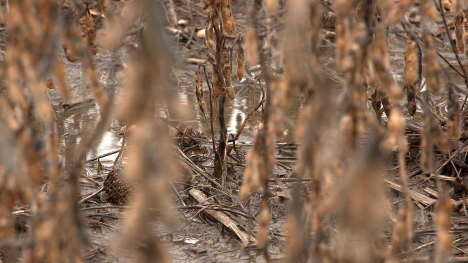
Fall rain slows corn harvest as drought eases in some U.S. regions and worsens in others.
Kristi Van Ahn discusses grain sales, basis opportunities, 2027 planting and cattle risk.
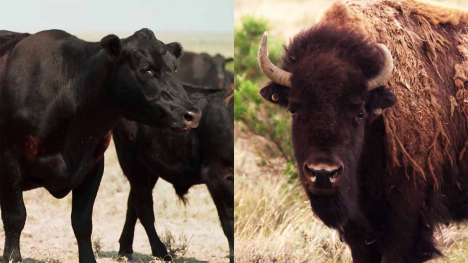
American Prairie's bison grazing permits face a legal challenge over use of federal land in Montana.
Kristi Van Ahn weighs China's soybean buying, corn's search for a bottom and the cattle rally.
A new group is looking to get the same tariff carve-out for UTVs and ATVs that e-bikes and motorcycles received, saying it would save producers thousands per vehicle.
Corn, soybeans and wheat are oversold like never before, says Ted Seifried in our Market Analysis.