Market Analysis with Naomi Blohm


Market Analysis with Naomi Blohm
Transcript
[Brooke Kohsldorf] We are recording on Thursday this week due to changes in our production schedule. The war with Iran continues to put pressure on the market. This is coupled with a temporary stoppage of soybean exports from Brazil and a return of severe winter weather across the U.S.
For transactions printed on March 12… The nearby wheat contract lost 18 cents and the May corn contract gained 2 cents. Reuters is reporting that Cargill’s Brazil operation temporarily paused soybean shipments to China. The move came after new rules were implemented to reduce pests and weeds in each load. The May soybean contract added 27 cents, while May meal rose by $3.00 per ton. May cotton expanded 94 cents per hundredweight. Over in the dairy parlor, April Class Three milk futures cut 66 cents. The livestock market was down on Thursday. April cattle shed $3.33. April feeders fell $8.63 and the April lean hog contract dropped $1.28. In the currency markets, the U.S. dollar index moved 75 ticks higher. April crude oil found $3.35 per barrel. COMEX gold fell $53.40 per ounce, and the Goldman Sachs Commodity Index was up by more than 25 points to settle at 697 - 91. Here now, to lend us her insight on these and other trends is regular market analyst, Naomi Blohm. Thanks for being here, Naomi.
[Naomi Blohm] Yeah, thanks for having me.
[Brooke Kohsldorf] We have a few things to talk about. Right. I don't even know where to begin. So we're now almost entering our third week of the war in Iran. So oil was kind of all eyes were on oil this week. It went up to 100, almost $120 a barrel at one point, came back down, went back up. Is oil guiding the grain markets?
[Naomi Blohm] Absolutely. Right. Now this is our black swan event of the year so far. And you know, you think back to just a few weeks ago and the outlook for the grain market was still leaning negative with large global supplies, large U.S. supplies. But now with the threat of crude oil rallying and and potentially not getting some of the fertilizers into the country that they were talking about earlier on the show, the market is waking up. So we're seeing the funds exit, the hefty short positions that they had in the corn market and the wheat market going to more of a neutral stance. And for the grain markets right now, we're waiting for a few things. We're waiting and watching crude oil. And the biggest thing to take away right now is that if crude oil trades through $125 a barrel, and you're right, we got up to near 120 on Sunday night. But if we go through $125 a barrel, then we would be taking out a downtrend line that had been established since 2008. That would lead to more technical buying for crude oil, more fund buying for crude oil that spills over to the grains. And if crude oil works higher, then you're going to see December corn blast through $5 resistance. You'll see November beans blast through $12 resistance, and you're going to start to see panic in the world. And that's really going to shift the dynamic pace of this market. Then in a couple of weeks, the other things we have to be watching for corn and soybeans, we have to be keeping an eye on the weather in Brazil as they're finishing soybean harvest. Second crop corn getting closer to three quarters planted, and it's going to be getting into pollination season there. If there's any weather issues there and it's getting drier, the market's going to really respond with higher values as well because global supplies of corn are actually dwindling a little bit lower over the past 5 or 6 years. So this is setting up to be something very potentially substantial. And then you have the Planted Acres report on March 31st. So what had been just such a bearish sentiment back in January might be turning into something absolutely unexpected for 2026.
[Brooke Kohsldorf] And one of those unexpected things with oil being so high is fuel prices and diesel prices up. Even if the war ended today, how long would it take for prices to come back down?
[Naomi Blohm] Yeah, I would say if the war were to end, you know, over the next few days, it's probably going to take, you know, 3 to 4 weeks to try to get that price at the pump to come back down. And these poor farmers with the heating oil futures going through the roof, that's taking the diesel prices higher. And they're starting to think about what their needs are for spring and spring planting. And the inputs are already horrifically expensive. And now getting to the point where they can be even more expensive. So there might be last minute shifts of acreage. Yet for the spring, because we continue to hear how high it is for prices and inputs for corn and corn planting that we might all of a sudden see a bigger shift to soybeans than expected. It'd be very curious to see what they say on March 31st. And then what actually transpires in the spring.
[Brooke Kohsldorf] Okay, that fertilizer story, we've we've known about this for a little while in the ag community. It's now kind of making national news. And is all of that attention putting more pressure on the markets in some way then?
[Naomi Blohm] Yeah. So what's happening then? It's giving more incentive for the funds to definitely maintain a neutral position with corn right now. Because if that fertilizer doesn't get here or if it gets here, then the cost is too high. There's of course, then the, the temptation for producers to not put as much fertilizer on because they can't afford it. So if we don't have that on there, then we're not going to have those record yields that the USDA thinks that we could have. So there could be a possibility of lower production in the United States just because of the cost of fertilizer.
[Brooke Kohsldorf] Okay. So is corn the the grain that's mostly tied or most closely tied to what oil does?
[Naomi Blohm] Yeah, very much so. And of course, a portion of that is just because of how corn is used for ethanol. And it's a part of an energy. But the other portion of that is the fund balancing their portfolios. And a lot of times they'll have a bushel basket of commodities. And if they're buying more crude oil, then a lot of times they'll start to take the grains higher as well.
[Brooke Kohsldorf] All right. I have a question from social media. This is Glenn in Ohio. And he says how many black swan events does it take to make a flock? We're surrounded by increasing market volatility combined with strong corn demand. And we haven't experienced any weather related events yet. You kind of alluded to this earlier.
[Naomi Blohm] Yeah. So we are definitely in that black swan situation with the conflict with Iran. The next part of that would be the higher fertilizer costs. And to his point, if we get into a weather issue with Brazil on that second crop, corn or potentially anywhere in the world with wheat as the wheats coming out of out of winter dormancy, and especially the United States, the spring or summer, then you're really going to see the funds. Want to take the market to a longer position. And remember when they go along with corn for funds, their long 350,000 contracts. And right now they're just long, maybe 30, 40,000 contracts. So there's room for this market to run. If the fundamentals, if our black swans kind of continue to flock together.
[Brooke Kohsldorf] With soybeans. We heard earlier in the show that Cargill had halted shipment of Brazil corn or soybeans to China. Is that something we really need to keep an eye on?
[Naomi Blohm] Well, it makes you wonder, you know, is there, you know, deeper political connections and ties to it. The segue to that would then be President Trump still potentially going to visit President XI in China at the end of March and early April. And there still is the hope that China comes in and buys more American soybeans. Ever since President Trump put on social media a few weeks back that he thought China would come in and buy 8 million more metric tons of soybeans, they haven't bought anything, so there still is, you know, the hope. Do they get a trade deal done? And the United States soybeans become a little bit more competitive. But right now, the bottom line is that the soybeans in Brazil are about a dollar cheaper than the U.S. market. And I'm very curious to see what transpires out of what Cargill had done with the Brazil soybeans.
[Brooke Kohsldorf] And there's a meeting this weekend as well, I think, with a couple of the leaders. Right.
[Naomi Blohm] That's what I think I heard too. So we'll see what happens. You know, it's always like on the weekends you're like, okay, what's happening with the war? And you want to like, you know, go with one eye open looking at the Sunday night grain trade and the Sunday night crude oil trade. So absolutely, you have to keep tabs on markets and market news throughout the weekend as well.
[Brooke Kohsldorf] You wrote that beef demand is really good right now. Earlier this week with commodity prices a little higher and potentially fuel prices as well. Where's the market going.
[Naomi Blohm] Yeah. So I think we saw that this week with with cattle futures. We had amazing weekly export sales for the cattle market. And we know the domestic demand is strong. But there's a very real correlation that if gas prices get too high, that the consumer has to check their budget and other places. And so you could see, you know, people trying to then buy less expensive proteins at the grocery store to help, you know, balance their budget, so to speak. So the cattle market this week has tested support levels, major moving average support levels. And we're waiting to see, I think, what crude oil does. If crude oil works higher. I think you see funds reallocation where funds exit long cattle positions. We start to see technical selling and we could see the cattle market slide lower fast. Just on technical selling. But we do need to keep an eye on what the consumer is doing, especially in the face of high crude oil prices.
[Brooke Kohsldorf] Okay, so with all of that said, what about the pork market right now? Are more consumers? Yeah. Considering eating pork and is that impacting the market.
[Naomi Blohm] Well I think for sure. And the hog futures prices have been trading near recent highs. And we started to see that market back off a little bit too. But you go to the grocery store and still, you know, chicken is is less expensive than beef. Pork varieties of pork still less expensive than beef. So I think you are going to see that shift. If the energy prices keep going higher. And that'll be something to watch. And export sales for pork this week were lower than normal. So that was interesting to see. But we'll see what the consumer does ultimately. And it's all about crude oil right now. That's our leading indicator for all of these markets.
[Brooke Kohsldorf] I know this is kind of a big question to end with. And we've only got about a minute. But are there inflation fears at this point?
[Naomi Blohm] Yeah. So actually there are. And if you remember ahead of the or going into the Ukraine and Russia conflict there, coming out of Covid, there was the concern of inflation happening. And so the funds bought commodities as a hedge against inflation and caused the inflation. And so that concern is becoming real again, where they're going to come in to some of these cheap agricultural commodities like cotton is cheap. We have cheap corn, we have cheap wheat. And they could push things higher if they decided to become buyers. And then, of course, that would spur inflation and all of that talk again. So it's going to be a very, very, I think, tumultuous next 2 to 3 weeks in the marketplace. And again, we have to keep an eye not only with the conflict in Iran, but what is going to be happening with President Trump and President XI, because that is a huge global chess piece to this entire situation for how global trade is going to happen.
[Brooke Kohsldorf] We got to a lot. Naomi. Thank you. We'll continue in Market Plus. All right. You've been watching the analysis portion of our program. And in a moment we'll continue our discussion in an online only segment. You can find it by searching Market Plus with Naomi Blohm wherever you get your podcasts. You can also go to our website at Markettomarket.org to listen. And as a reminder, this is the annual pledge period for many of our stations. If you value this program, please call or make contact with your public TV station to offer your support. You are the key in our continued coverage of rural America. Next week, a drug's expansion in the marketplace helps spur demand for animal protein. Thanks for watching and have a great week.
Announcer: Market to Market is a production of Iowa PBS, which is solely responsible for its content.
Announcer: (Pioneer) I wouldn't be here without my customers. Yeah, I'd like to thank the customers. They're, they're very dear to our hearts. It's about the people that you're working with and the relationships that you have. Thank you, thank you, thank you. Thank you from the bottom of my heart.
Announcer: Tomorrow, for over 100 years, we've worked to help our customers be ready for tomorrow. Trust in tomorrow. Information is available from a Grinnell Mutual agent today.
Trading in futures and options involves substantial risk. No warranty is given or implied by Iowa PBS or the analysts who appear on Market to Market. Past performance is not necessarily indicative of future results.
Watch More
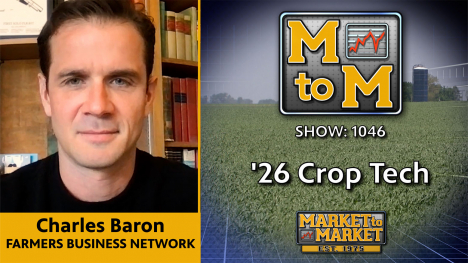
FBN's Charles Barron discusses how AI is transforming farm decision-making in 2026, from an AI advisor named for Norman Borlaug to price transparency that has saved farmers more than $500 million. Plus: tariffs, input costs, and why some farmers are still leaving serious money on the table.
The head of U.S. trade is called to Capitol Hill to answer questions about tariffs along with producer and consumer prices. One egg producer is expanding his supply chain, one small farm at a time. And, commodity market analysis with Dan Hueber.
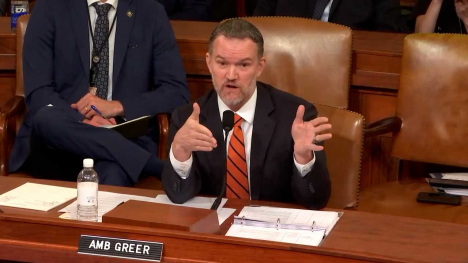
USTR Jamieson Greer appeared in front of the U.S. House Ways and Means Committee this week. Committee members focused their questions on President Trump's tariff policy.
Dan Hueber talks higher markets, trust in numbers, the Iran War and weather.
Dan Hueber talks corn, cattle and market rallies.
Vital Farms has found rapids growth in specialty eggs by working with hundreds of farms across the "Grazing Belt".