Local dirt tracks generate millions for rural businesses while preserving racing traditions.
How Small-Town Racetracks Drive Millions in Rural Economies
Share


Underneath the fun and excitement surrounding the rituals of dirt track racing at local speedways are the spinning wheels of economic good that smalltown race tracks bring to their communities. Motorsports contribute more than $69 billion to the U.S. economy and nearly $1.7 billion in Iowa. In Marshall County alone, racing generates more than $15 million annually. Racers and fans support restaurants, gas stations, parts suppliers and jobs while sustaining a small-town tradition.
This story originally aired on May 15, 2026.
Transcript
Underneath the fun and excitement surrounding the rituals of dirt track racing at local speedways are the spinning wheels of economic good that smalltown race tracks bring to their communities.
Karen Bailey Chapman, senior VP of Public and Government Affairs, SEMA: “You know, oftentimes people think of racing as the big super speedways, which we all see and know and love. But the fact is that there's 1500 other smaller racetracks all around the country serving our communities.”
Karen Bailey Chapman is a senior vice president of the Specialty Equipment Market Association, an automotive industry trade group that supports motorsports. To help shine a light on the fiscal importance of the sport, SEMA set out to quantify how weekly events at rural race tracks contribute to the economies of surrounding communities.
Karen Bailey Chapman, senior VP of Public and Government Affairs, SEMA: “For every race car you see out there, there's parts that are being sold by manufacturers around the country. There's venues that also employ people to make it all happen. And then, of course, the the outer part of, of that impact is, you know, from the hospitality perspective. And so we really wanted to, to really focus in on what the story behind this story is and the fact that it's, you know, I think there's a lot more that goes into what you see every weekend at your local racetrack than just the cars racing around.”
According to a 2025 study by SEMA subsidiary Performance Racing Industry, motorsports across the country contributes over $69 billion to the U.S. economy. The study revealed that in Iowa, the total economic output of motorsports neared $1.7 billion last year. In Marshall County Iowa, home to the Marshalltown Speedway, Performance Racing Industry calculates the financial boost from motorsports to the community at more than $15 million annually.
Jerry Vansickel, General Manager, Marshalltown Speedway: “For 63 consecutive years, there's always been racing in Marshalltown. It always happened. You know, what these racers bring when they come to town, they're stopping at, their gas stations, they're stopping at restaurants there. So it does, it does impact the, the economics of the city.”
With its high banked turns, the quarter-mile Marshalltown Speedway is nicknamed the “Bucket List” track… a track drivers want to race on at least once. The attraction to this oval track and its legacy have helped cement the speedway's relationship with the city of Marshalltown.
Jerry Vansickel, General Manager, Marshalltown Speedway: “We are lucky here. We have a lot of community businesses that support the racetrack.”
From replacement parts and fresh tires, to fuel and food, owning and driving any race car can be an expensive investment which often only yields the thrill of racing.
Jerry Vansickel, General Manager, Marshalltown Speedway: “Some of these guys have got, you know, 70, 80, $90,000 invested in their in their race car, which is, you know, for the weekly racer as a hobby. It's not, you know, they're they're not getting rich. If you want it to have fun, you're doing it. They are passionate about it.”
Vansickel adds the passion for motorsports can be seen as a lynch pin connecting the drivers and the fans.
Jerry Vansickel, General Manager, Marshalltown Speedway: “Reality is you can't drive a car at 100 mile an hour into a corner out on the street, but you can come watch somebody here do that.”
Pat Rachels, China Grove, North Carolina: “At this level, you don't really have the opportunity to sort of overanalyze stuff. That's in a nutshell why I love coming dirt racing.”
Jerry Mackey, Announcer, Southern Iowa Speedway: “Appreciate you all coming out, we appreciate you all being here, and we want to wish everyone the best of luck tonight.”
Pat Rachels, China Grove, North Carolina: “Pat Rachels, China Grove, North Carolina. Original hometown was Knoxville, Iowa.”
Pat Rachels, China Grove, North Carolina: “I mean, the whole experience is is awesome, right? I mean, I love everything about it. I mean, my favorite part probably is in, in the heat of the race.”
Pat Rachels, China Grove, North Carolina: “Everything happens fast. You don't really have time to weigh your options, right? It's you just. You're just making decisions and going. Things flying, things are flying at you, and it's it's always different. Every lap is different. That's probably my favorite, favorite part about it.”
Pat Rachels is a second generation owner/driver who had a hold of a steering wheel before he could walk. Rachels has carried his love of racing into adulthood as a senior engineer with Toyota Racing Development in North Carolina. His work supports multiple teams in NASCAR and other professional Toyota racing crews. When the opportunity presents itself, Rachels finds his way to his favorite dirt track in the country, the Southern Iowa Speedway.
Pat Rachels, China Grove, North Carolina: “It’s almost two completely different worlds. At the NASCAR level, everything is so fine tuned and there's so many people and resources behind a single car, millions of dollars and, and, you know, tens or hundreds of engineers and mechanics.”
Pat Rachels, China Grove, North Carolina: “At this level,/you and a couple of your buddies do it all, you just have to go with it. You know, you make it work and you get to the racetrack and, and, and everybody at the racetrack is in the same situation when you race, you know, at a local level like that. And, that really makes the comradery tighter because, everybody's living what you're living to get to the racetrack and, and so you, you end up developing some really good friendships.”
Jerry Vansickel, General Manager, Marshalltown Speedway: “You know, the racing's about family. If you've got a race track in your community and you've always thought, I. Why should I go just go to support it. It supports the community. It supports the people that are passionate about it. And a lot of times it is a business and it supports that business and it keeps that avenue open for the people who really enjoy it every week.”
For Market to Market, I’m John Torpy.
Watch More
Chris Robinson weighs corn recovery prospects, soybean price levels and the rebound in cattle.
Minnesota’s Keepsake Cidery combines heirloom apples, traditional cider making and direct sales to help a small farm thrive.
New farm relief, a food safety honor, Minnesota cider and commodity market analysis with Chris Robinson.
Chris Robinson answers viewer questions on corn yields, crude oil and cattle, and explains his soybean outlook.
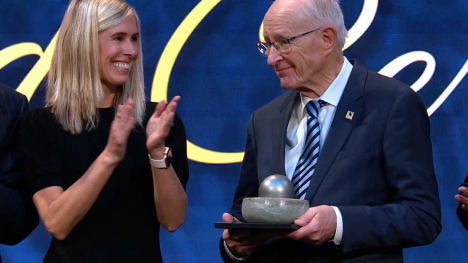
Huub Lelieveld receives the 2026 World Food Prize for six decades of work advancing food safety.
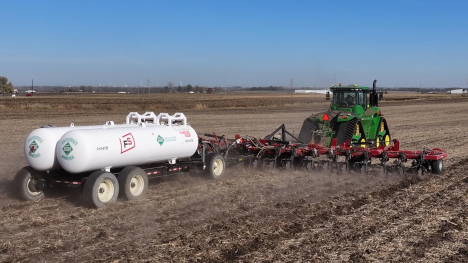
New federal plans target farmers' fuel and fertilizer costs through direct relief and investments in domestic fertilizer production.