Brad Matthews discusses the commodity markets with stories of weather, seasonality and Iran all in the mix this week.


Markets continue to face uncertainty, and Brad Matthews talks about options for farmers in wheat, corn, soybeans, and cattle.
Transcript
[YEAGER] Overpriced sentiment in wheat and China's interest in U.S. Corn influence. The holiday shortened trading week for the week ending May 29th. The nearby wheat contract lost $0.36 and the July corn contract fell by $0.17. Meal helped add some resilience to the soy complex and helped buffer a big sell off. The July soybean contract sold off a dime, while July meal declined 210 per ton. July cotton, weakened by $1.30 per hundredweight. June Class three milk futures contracted $0.34. The livestock market was lower. August cattle fell $0.33. August feed. 19 $0.90. In the currency markets, the US dollar index was off by 32 ticks. July crude oil weakened by 880 per barrel. Comex gold was up 3830 per ounce, and the Goldman Sachs Commodity Index was lower by more than 42 points to settle at 6.9415. Here now to lend us his insight on these and other trends, as market analyst Brad Matthews. Welcome, Brad.
[BRAD MATTHEWS] Thanks for having me.
[YEAGER] Well, unfortunately, you get the you got to start with a much lower week. And wheat was just lower, lower part of this story has been weather driven. I didn't get the memo that weather improved. So why the sell off?
[MATTHEWS] Well, it's funny you say that, because if you take a look at the seasonal patterns, wheat basically went to a seasonal high, right when it was supposed to. So, we had the bullish report was at May 12th limit up that day. We started off that overnight next day up a little bit, but then that was basically all she wrote. Right? What you're seeing is that they're basically saying, tell us something we don't already know. Give us something new. They've priced a lot of that in the funds got pretty long in the KC wheat, which has been the driver. So, they always say in the wheat complex in a bull market, you want Kansas City to lead over Chicago. Before that rally started, it was at a negative and it got to 70 over once again, right in that time frame in which you're supposed to get a seasonal high. So, once you started to see a little bit of that profit taking from all the longs that they put in, it's just continued. And other outside factors are allowing the funds to continue to pile out of that wheat market.
[YEAGER] Well, that's a theme I'm afraid. We're going to talk about the longs getting out of many things. So, if I'm sitting here watching, we already know that the winter wheat crop is not good. Is there any hope for the spring contract? Is there any hope for the US producer right now?
[MATTHEWS] Price wise, I believe that where we are right now, we've hit a level of support between here and about a dime lower. Now, if that doesn't hold, I will say there's about another $0.40 lower that it can go. But I do believe at some point in time, fundamentals here will take back over. I would say that gives you some form of a synthetic floor opportunities for rebound. But because the highs came when they did and the way that they did, I would say that your first good rally, if guys aren't far enough sold, they need to get more sold on that next good rally.
[YEAGER] And we're still in territory that we've not normally been in for a recent time. So, you just have to we're just off the highs. So, let's flip to corn. If we could. On your drive, you get a chance to see pretty much everything is in. Everything is up. But the problem is there's this weather story developing. But we'll get to the new crop in a minute. Let's go, old crop. Should we be all done with all that old crop? Is there any reason to keep anything left?
[MATTHEWS] Well, the carryout is big, right? So, it's every rally is going to be muted from this point on because farmers have more grain still to sell. And what you saw this week, starting yesterday, we saw more today. You might see a little bit more. Monday is what they call the Rodgers roll. And that is where the index funds your long only funds are moving out of their long positions in the front month and going into a deferred contract. That's why you saw July down a lot more than what you saw, the September and the December down. Now it's supposed to be three days. Monday should be day three. So, we should see the spread start to strengthen back up after that. But yes, your first decent bounce back, which seasonally you're supposed to get, you know, a high typically middle to third week of June, something like that. Need to be looking at cleaning it up.
[YEAGER] So this, this sounds more technical than it is. China's interested in US corn.
[MATTHEWS] Well that's the problem is they say that the White House said that they are right 17 billion. And then you hear these rumors yesterday, which is why we were up about they might be getting rid of or lowering their tariffs on grains. The question is, do they come in and buy? And if they do, when. Right. If they do come in and buy corn, then I would have to think once again, that synthetic floor concept is going to be in. You're going to get a nice spike up. Just that one rumor from the Sunday night we were up $0.21. Problem is, then the trade sat there and said, okay, where are they? Are they buying? Nobody stepped in. Nobody bought China didn't confirm the rumors. So, we went right back down. But yes, that that could be a big wildcard. Still.
[YEAGER] Let's go to new crop then and I'll go back to my weather sentiment. Looking at the drought monitor. It had been the majority of the I states and the Corn Belt had been ideal planting and early growing conditions. However, we've seen the pattern dry up in some spots. When does the market start taking notice of that?
[MATTHEWS] I think it's a little early. In some cases, the market kind of looked at that as in other areas they were too wet. So, the dryness was a good thing. The GDUs, you know, allowing it to grow. But I do think if we're still having this conversation in a week and a half, two weeks, then they're going to start putting some premium in. But before you even get to June 1st is a little too early.
[YEAGER] Okay, so it's early, but what does a producer need to be doing to take advantage of before that could happen? If I'm a buyer or a seller of corn.
[MATTHEWS] If you're a buyer of corn, I think where we are right now to about $0.15 lower is a spot to be accumulating corn. And I believe that because there's once again, we talked about these wild cards, China, if they do step up and buy, you're going to get a rally. You have all the summer to get through, which they say around 80% of the time you get some form of a weather rally, whether it's just a scare, actually production problem, but some form of an opportunity. And if things don't actually have this memorandum of understanding a deal, if that goes south again, with Iran, there are multiple things that can cause the market to go back up. So, this area on corn down to 455 is where I would be accumulating corn to get through the summer months.
[YEAGER] Okay. So that's the low end of things. Where's that top end right now? Not even that's before a weather story because five was a very good number for a while.
[MATTHEWS] I think it five is going to be the number five. Five and a quarter is where corn can get to. If the Iran war gets south again and you put some premium back into it, if the funds buy back some of these contracts that got out of or if China buys some. But if it's a combination, you know, where you have what they call the perfect storm, where the Iran thing goes south, you have a weather problem and China is buying. It's tough to say how high we can go, but it could be quite a bit higher.
[YEAGER] I'm not going to take it easy on you. I have a question that somebody wants to give you. And I think it's tied into what you've just been talking about. Jim and North Iowa wants to know when oil goes up, corn stays steady. When oil goes down, corn goes down. Why the correlation with this cycle?
[MATTHEWS] There's only very little correlation. In the beginning there was a lot of correlation. And then the two had somewhat divorced themselves. And it's more about where are the funds positioned and what are the fundamentals in each individual market. On rallies, there's a lot of old crop corn. You're going to have grain get sold.
[YEAGER] So if the funds position -- So you've already mentioned in wheat, we're already talking about it in corn. There's the one thing that's been said from your side of the table here for the last few weeks is these commodity markets have been boosted by what's been going on with Iran. That's where the inflation has hit commodities. Are you in that camp?
[MATTHEWS] Oh, absolutely. I mean, the funds got to was it 330, 340,000 net long in corn at one point on their peak in a normal year, they get long typically at least once a year. Right. And 220 to 250,000, about as long as they typically get. There's a few outside years, maybe two out of every ten where you're talking three, 50, 400, usually those are very high inflation years. So, the fact that they got to 330, 340 was absolutely the funds driving up price as a hedge against inflation.
[YEAGER] Let's talk beans because old crop China, Brazil, the world. What's the big story right now for that old crop?
[MATTHEWS] Honestly, what you have to take a look at is bean oil. Bean oil is driving the market. Biodiesel demand is fantastic. The crush is fantastic. If you take a look at a bean oil chart and then you go take a look at beans, you'll understand why beans have stayed as firm as they are. You got a very big difference though, between old crop and new crop beans. Old crop beans. After they had the big break from their high, it's really been a lot more sideways to little rally than they failed back into the sideways range, where new crop was able to make new highs and continue to stay around those highs. And just so the guys know here listening 1170 is what I'm looking at right now. If you have a close below 11 70th November beans and you don't have enough sold, that would be my indicator that what I call an upward rotation, which is what we're in right now. We're in an upward rotation, which means the market should continue to try to work its way higher. I'm wrong on being an upward rotation on a Closable 1170. Get more aggressive on sales.
[YEAGER] So that 1170 last I checked below 12. Where do you feel about the 12 on the new crop then?
[MATTHEWS] Well, we're at 1190 today I believe is right around where the settlement was. And if Beano continues to do what it does, I think that we should have opportunities to continue to see a 12 in front of it.
[YEAGER] All right. I'm going to ask you again, if you're in a certain camp, there's this discussion that formed this week about acreage discussions that maybe it wasn't as much of a story. Maybe the inputs didn't cost as much. And I stayed with what my plan is. Maybe I wasn't going to change my plan no matter what. What happened with acres?
[MATTHEWS] Well, they're still high in corn, 95.3 million is a pretty large number. I mean, you go in history. Yeah, it's several million less than last year. But historically that's a big number. So, whether we see any acres switch from corn to soybeans because of the cost or is there something else, I think it's going to be limited. I think in certain cases you could see that. And I do think there might be some. And I'm in the camp, that 95.3 is the highest number we see. We're last year, if you go back to March to the time we got to basically January, it was up every month basically. Right. I I'm in the camp that 95.3 is the highest number we see for the year.
[YEAGER] Speaking of high months and high camps, live cattle seems to be maybe for now, we've seen the peak.
[MATTHEWS] So before the peak came there were some warning signs. The basis started to weaken. It wasn't as strong as it had been in the past. And the other thing that you saw in the previous high, not only did it have a very strong basis, but you had very large open interest. This time when we were going back towards the highs, it was basis weakening up and open interest shrinking in a big way. Those are what we call in the armor. So, I'm not going to sit there and say for sure that the high is in. But what I would say is, I believe that we've seen enough to say, if you don't have things protected, you better get stuff protected. At least some form of a floor, because the risk in the cattle market right now is that how expensive it is for these feeders, how expensive some of this some of the inputs are for them, where the break evens are at. If you happen to have a black swan event and the futures do have a $20 break, it's going to be a bad thing for them.
[YEAGER] You can't predict a black swan. But let's go back to what you said earlier about if there's a memo of understanding with the US and Iran. We've already seen what some of the steam coming out of this valve could do is cattle. One of those first things that we're going to see be caught up in this downward trend.
[MATTHEWS] I feel like if the memorandum of understanding is actually a real thing, you're going to continue to see it more so in the corn and then in the wheat.
[YEAGER] Okay. All right. Let's talk feeder cattle for a minute. Back to weather because we're getting some precipitation in some of these feeding areas and these grazing areas that need it. Is that what is that influence on the market for the feeder cattle.
[MATTHEWS] Feeder cattle right now, you know, a lot of these cattle are coming to the market, going to the feedlots early because of the drought, even some fires they're talking about in Nebraska. And so that has caused some of the issues. Now, I don't know how quickly with some rains they can rebuild that. Right. I feel like feeder cattle though right now, similar to fats, it's being driven a lot by the funds as well. They had a very large long position in both fats and feeders. They have peeled that back some, but there is still quite a bit of risk in that if they continue to get out. Yeah.
[YEAGER] Because we were middle of the week, we were at the 50-day moving average. Now we are below the 20-day moving average, which is probably a warning light that has come on.
[MATTHEWS] It concerns me because they still have a lot of length, especially feeder cattle market. That is a very thin market. I mean, you compare the volume in that to say, a corn market. And it's probably about 5%, 10% of what corn trades in a day.
[YEAGER] All right. Only 30 seconds for this one for hogs. What's going on?
[MATTHEWS] Okay. Hogs are trying to find a bottom during the seasonal low period. Okay. This is the time frame. They try to bottom out. And typically, you look for a rally back into around that Fourth of July period. If you get a 7 to $10 rally, take advantage of it.
[YEAGER] Very good. You got the timing down and everything on your first try. Way to go, Brad.
[MATTHEWS] Thanks.
[YEAGER] All right. Thank you very much. That's Brad Matthews everybody. Thank you so much for him. And I want to let you know that you have been watching the analysis portion of our program. In a moment. Brad and I are going to continue our discussion in an online only segment. You can find that by searching Market Plus with Brad Matthews, wherever that you get your podcasts. You can also go to our website at Markettomarket.org to listen. X marks the spot and we've had our account for years. Give us a follow and engage with our handle at Market to Market. Next week, breaking down the forces, reshaping the cattle market. Thank you so much for watching. Have a great week.
Trading in futures and options involves substantial risk. No warranty is given or implied by Iowa PBS or the analysts who appear on Market to Market. Past performance is not necessarily indicative of future results.
Watch More
Brian Strasser is an Iowa farmer who figured out that the same months the farm goes quiet on cash flow are the same months travelers fill up a rental car app — so he built a fleet, and turned the seasonal gap into a financial advantage.
Weather is part of the discussion in the wheat, corn and soybean markets while our Market Analysis with Karen Braun also covers the cattle on feed report.
Wet and dry weather have different impacts on the commodities market. Our Market Plus is with Karen Braun.
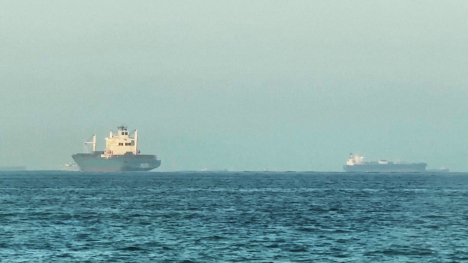
This week, the G7 summit in France became the stage for an official pause in the war between Iran and the United States.
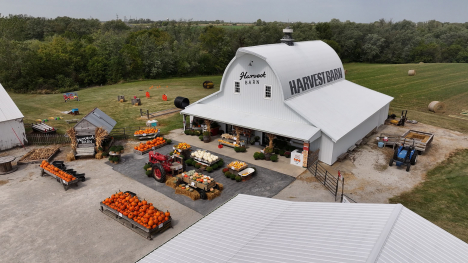
The Boyer family made Iowa their home in the 1990s, venturing away from family farming in Pennsylvania to pursue their own agricultural vision.
The G7 tone changes with a memo of understanding in the mix. Another weather system sweeps across the Corn Belt. One family’s love of farming has cultivated something bigger than the farm itself. And, commodity market analysis with Karen Braun.