Brian Strasser is an Iowa farmer who figured out that the same months the farm goes quiet on cash flow are the same months travelers fill up a rental car app — so he built a fleet, and turned the seasonal gap into a financial advantage.
Side Interests Help Drive a Hedge For Iowa Farmer
Share


As farmers look for ways to boost revenue - sometimes the search is off the farm with a side business. For 5th-generation farmer Brian Strasser of Homestead, Iowa, the answer is a fleet of cars and trucks as part of the peer-to-peer car sharing app called Turo. We discuss the merger of different interests and experiences to keep farming, diversify income and hedge the books.
Transcript
YEAGER: Last year I was on a vacation with the family and we decided to rent a car. It was through an app called Turo — peer-to-peer sharing of vehicles. Save some fees. Pretty simple. Never thought it would be run by a farmer — or at least one operation in Iowa. A farmer has many side jobs, not just this one. It might be selling insurance, seed, or working at a dealership. This one — Brian Strasser from Homestead, Iowa — operates basically a Turo franchise. It's not a franchise, but it is. He's got six cars for rent out of the Cedar Rapids/Iowa City area. We're going to find out who his clients are, the conversations he has with them, how this all works, and how he balances the side job with the agriculture job. That's today's MTM podcast. I'm Paul Yeager. New episodes come out each and every Tuesday. A reminder to get signed up, subscribe, like, share. We love it when you tell a friend. I hope you like this interview with Brian.
YEAGER: Brian, it's a nice cloudy day. Did you get any rain overnight?
STRASSER: Yeah, we did. About three inches in the last 12 hours. The creeks are full, the banks are completely full and even running a little bit over.
YEAGER: Were you in need of a rain?
STRASSER: Yeah, before the weekend we were in need of some moisture. Definitely affecting the sandy hills and such.
YEAGER: Tell me about the farm you have.
STRASSER: I farm about 850 acres. I actually live on the original farmstead from my mother's side — I bought that house and everything. I've got a hog finishing facility on there as well. I've actually always had a job until about the last year, so I've done other things to facilitate that.
YEAGER: Corn and beans and hogs — the big three. 850 acres used to be a thing that could make it. What's your current situation? Are you working to fill, or are you working because you like to work?
STRASSER: A lot of farmers like to work. But the 850 I just got all accumulated finally this year. I partner with another farmer — he and I work together. I run a lot of his equipment and take a lot of the other responsibilities. I have a technology background. I was a computer programmer, then a John Deere dealership employee on the tech side for 17 years. That actually led to one of my businesses, Farm Tech Hive — I still get paid to support local growers and make sure their John Deere equipment works to their comfort level.
YEAGER: And with your technology background, when you saw the invitation for this podcast come through, you were comfortable with it. You've done some podcasting before.
STRASSER: Yeah. I worked for Advanced Tiger Linux and we had a podcast — Advanced Analytics — that I was part of. I was actually the producer for it.
YEAGER: How did you get people to talk — you know, some of your guys sitting in their car?
STRASSER: Well, most of our guys were out in the field, so they had the car quite a bit. Yeah.
YEAGER: I almost prefer it when guests record from a tractor or a field. It gives you that real background. The connectivity these days is quite good.
STRASSER: Exactly — it gives you that authentic background. The technology, the phones, the connectivity we have these days is actually quite good.
YEAGER: The reason you are in a vehicle right now is why we're talking. You have many cars.
STRASSER: I actually have a Turo business. I'm a host on the platform — Turo car sharing, peer-to-peer. We've got six vehicles on there and we use that to supplement income from farming. It really works well and melds well.
YEAGER: Tell me how Turo works.
STRASSER: You look through a whole list of cars and pick the one you're most comfortable driving — no surprises. I can deliver to Eastern Iowa Airport, Metro Cedar Rapids, Iowa City, or multiple places. You could also go pick it up. We actually pay for parking when you fly in so there's no confusion. There's a lockbox on the window for contactless key pickup. Customers love it because they walk out the door, don't wait in line, and they're in their vehicle in five minutes.
YEAGER: It sounds like a car rental, but it is different.
STRASSER: Very much so. It's definitely peer-to-peer. That allows people to do what they're good at, allows gas to be covered, and really takes customer service to the next level. It's my business — people love working with the owner, and as a farmer and salesperson, I always loved that too.
YEAGER: Homestead, Iowa is between Cedar Rapids and Iowa City, west of there. You're still in the country. How does this work? You said you're close to the airport, but do you get business from farmer-to-farmer travel?
STRASSER: Not so much farm to farm. It's all about contacts and relationships. I have quite a few local people who rent from us. Our local spot is Exit 225 on I-80. But I also get a lot of people coming in and out of Cedar Rapids for business. I've had four or five guys who have rented my vehicles every other week or even every week for business. One customer was putting in fiber lines up in the Waterloo area — every week he'd rent my truck and go up there. It worked out really well.
YEAGER: Why this specific side job for you?
STRASSER: Turo works really well with my farming operation because when cash flow is low during summer, Turo is at its peak. The most business comes during early to late spring all the way through early fall — the same time cash flow on the farm tends to be a little light. So Turo allows cash flow during those summer months. And it's not ag-centric, so I'm able to tap into a lot of metro activity.
YEAGER: So to use the farm term — you are hedging your financial risk.
STRASSER: That really is a key component. We hedge on the board all the time, but this is a financial endeavor not involved in farming, and it allows farming to actually let me do Turo. I can move the focus back and forth — and during summer, maybe we're spraying, but I also have more time to manage the Turo side.
YEAGER: When something comes in late April or early May, how do you balance farming and the side job?
STRASSER: I have the most amazing wife you can have. Plain and simple. She works locally and at night — or when she gets off work at 3:00 — she'll go do a couple of hours of Turo prep, getting vehicles ready during the heat of planting or harvest season. She takes over at that time. I can still manage all the communication and the technical side from the cab, but she gets the vehicles where they need to go.
YEAGER: It sounds like a perfect hedge. But there are some governmental or regulatory challenges you have to watch, that may be good or not so good for you.
STRASSER: When Turo was less regulated, it made some people feel unsafe — they'd just stick with traditional rentals. A bill was recently signed by the governor that put regulations in place. It was good for the consumer or guest because it created protections for them, good for me as a host because now I know what's expected of me, and good for Turo as a platform because they have a regulated workspace. This legislation has passed in 30 other states — Iowa became one of the states with a regulated peer-to-peer network. It works for everybody involved.
YEAGER: When you say regulated, what does that mean?
STRASSER: Basically the bill set requirements — you have to have insurance coverage, protections for the guest, protections for the host and the vehicle. If a guest damages it, you have to have a platform that is sustainable enough to fix that vehicle. Those are the protections put in place for everybody involved.
YEAGER: Do you feel like there are other ways policy could assist you further, or are you at a good space?
STRASSER: I'm very happy with the space we're at today. It sets a level playing field for everybody involved, it's a great space to be in, and it allows very nice cash flow during the summer months. And once the consumer or guest has something like that regulatory framework, they feel a lot safer using the service.
YEAGER: I'll disclose — I've used the service. When I saw your pitch come through, I thought, oh, I know this. Mine was a guy in Hawaii juggling a few cars. Came, picked it up, took all my pictures, all those protections. You sound like you've had a more hands-on direct relationship with customers, with some repeat customers. How does this compare to other side jobs you've had in terms of customer relationships?
STRASSER: I get to work with all kinds of different people — international guests, people from all over the United States. Iowa City and Cedar Rapids grow really good people, and they always seem to go fly out to other places but come home to visit. Cedar Rapids is really booming with business right now, doing a great job. I get weekenders coming for family, and business people during the week. Really good match — all different personalities, real differentiation.
YEAGER: I haven't looked at your inventory, but you know the joke about agriculture side jobs and the generic white Ford F-150. Do you have one to make everybody feel like they're in agriculture?
STRASSER: I do not. I'm very picky about my vehicles. I only have one that's not red. All my vehicles are a maroon or deep red because I think it pops on the screen a lot more. I feel I get more bookings because of that. I've got a silver RAV4 that doesn't pop quite as much, and I'm actively looking to move it into a red one.
YEAGER: You mentioned working at a dealership and in technology. Do you still have other off-farm jobs?
STRASSER: I've got Farm Tech Hive — that's still in existence today. And I actually have a trucking business as well. I help my brother with that — he drives locally for a manufacturer and I run the truck once a week on a local route when he's gone to Chicago with another route. I love that my day-to-day is never the same. I'm in the truck, in another customer's rig, in a Turo car delivering, or in the farm field going back and forth.
YEAGER: And you're not necessarily going door-to-door as an agriculture salesperson or doing insurance. Those are fine jobs but don't sound like they're you, Brian.
STRASSER: Variety is the spice of life for me — that is 100% true. I've always had that, my entire career since working after high school and college, over 30 years now.
YEAGER: You weren't supposed to say that part out loud, Brian. That's the secret of our age.
STRASSER: Exactly. But having variety has always given me a kind of symmetry. That's just who I am. I don't like doing the exact same thing all the time, and this allows me to do that.
YEAGER: Do you know of any other farmers doing the same thing with Turo specifically?
STRASSER: I personally don't know of any. I know other metro people in Iowa City and Cedar Rapids who do it locally. When I go to farm meetings and they ask what I do, and I say Turo, people say, 'Whoa, what's that?' It gets into a whole other discussion. People think it's quite unique, and a lot of them say it actually makes a lot of sense.
YEAGER: You could franchise this out — your Fargo office, your Saint Louis office. That could be a possibility for you, Brian.
STRASSER: Actually inside Turo we do have the option to co-host other vehicles. If someone has two or three vehicles and wants to get into it, we could co-host — that's what they call it. Yeah.
YEAGER: I didn't plan to ask this, but — when people find out you're a farmer, is this an outreach opportunity for you to answer questions about agriculture for someone who might not be familiar?
STRASSER: It's surprising how often that comes up. They ask what I do normally, and I say, 'Well, I do this full-time but I also farm,' and that gets into a whole other conversation. People ask, 'Oh yeah, what's it like?' I have the gift of gab, so it doesn't take long.
YEAGER: You also hold a board position with the Iowa Soybean Association. That probably comes up as well. What are guests asking you about right now?
STRASSER: A lot of guests ask how stable farming is — what's it really going to look like in five years? The people I interact with are genuinely concerned about the health of farmers — not necessarily ag as an industry, but farmers as people. That's a big differentiation. They're genuinely concerned.
YEAGER: The physical and mental health, or financial stability too?
STRASSER: Financial stability too. We hear about how prices are suppressed or depressed at certain times. But they're genuinely concerned. They want a healthy set of farmers because they know where their food ultimately comes from.
YEAGER: And they can say they actually knew a farmer, or rented from a farmer. What's the takeaway for someone who wants to understand what you do in agriculture?
STRASSER: The takeaway is being creative and doing something with what you have. Not everybody can farm 100% as a farmer — that's quite evident. A lot of farmers are very innovative. I really look at myself as an entrepreneur inside of agriculture. That's how I like it. [Rain audible in background.] But yeah — being innovative with farming and allowing that entrepreneurial spirit is really the key.
YEAGER: What was the path to get back to the homeplace? The 1980s conversation — 'there's nothing for you in this setup, you're going to have to come up with something else.' What was that like, Brian?
STRASSER: I am a fifth-generation farmer, but I'm not part of a big farming operation. My predecessors — I have so much respect for them. My grandfather came through the 1980s with a paid-for farm, and that was not an easy task. A lot of farms did not come through. So I have so much respect for that. But I've had to build it up myself. I put my own hog finishing facility in. I'm currently building some grain bins on the farm. I've been creative and trying to nickel-and-dime my way into prosperity, and I think — in my personal opinion — I'm finally hitting some nice strides.
YEAGER: And you're doing it in a whole lot of ways.
STRASSER: Very much so.
YEAGER: Last question — another agriculture question. You're at Iowa Soybean Association meetings, you hear different briefings than the average farmer. You can see what the Board of Trade does, what exports are or aren't. How are you feeling right now, in the middle of 2026?
STRASSER: I'm feeling optimistic because I think we have a lot of ability. We're hardly selling anything to China — very, very little — and we still have over $11 beans. That's actually very respectful. It means we domestically have picked up the pace on demand for soybeans specifically, and other products as well. Personally, I'm very optimistic because I have a lot of different ways to become and stay profitable this year. I'm very tight on land costs, which is a big deal for everybody in farming. I don't have high cash rents, and I'm trying to build it up from the bottom up. Very optimistic.
YEAGER: Which vehicle are you in right now?
STRASSER: I'm in my Hyundai Palisade.
YEAGER: That's going to get some extra advertising — as seen on the MTM podcast.
STRASSER: Certainly. Right there on the Turo platform. Yes.
YEAGER: Brian, thank you so very much for the time. I appreciate the insight. Everybody's thinking outside the box. I love it. Thanks, Brian.
STRASSER: Thank you very much. I appreciate the time.
YEAGER: We are produced at Iowa PBS. Our production supervisor is Sean Ingrassia. His crew is Reid Denker, Kevin Rivers, Julie Knutson, Neil Kyser, and David Feingold. The executive producer of Market to Market is David Miller. I'm Paul Yeager. We'll see you next time.
Watch More
Naomi Blohm and Ted Seifried question USDA’s corn yield surprise and weigh China’s soybean demand.
Higher USDA yields pressure grain. Plus, opportunities/costs of putting local food on school trays.
How grain prices rally this winter w/Naomi Blohm & Ted Seifried on USDA, China demand & S. America.
An Iowa school district connects local farms, food hubs and students through the lunch tray.
Farmers rarely seek mental health help. Farm Dog offers care from people who know farm life.
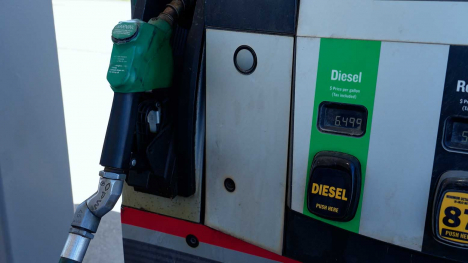
Rising diesel and freight costs squeeze farm margins and could reshape plans for the 2027 crop.