A big sell-off in cattle with several grains and the significance of the 100 day moving averages for corn, wheat and soybeans with Naomi Blohm in our Market Analysis.
Wheat Takes Corn and Others For A Ride As Cattle Fall - Market Analysis with Naomi Blohm
Share


The cattle market’s sell-off has hit 15 days but may not be indicative of a major trend change. We also hear about many 100 day moving averages being hit in the wheat, corn and soybean market in this Market Analysis segment.
Transcript
[Yeager] The closure of the Kerch Strait provided a boost to the grains for the trading week ending July 17th. The nearby wheat contract gained $0.43 and the September corn contract added a nickel. The bullish crush number and China's lack of buying were on the minds of traders in the soy complex. The August soybean contract increased $0.13, while August meal fell $0.20. December cotton lost $2.91 per hundredweight. August Class three milk futures improved $1.13. The livestock market was mixed. August cattle sold off for a 15th consecutive day and closed down for the week by $10.77. August feeders cut eight. 65 in the August Lean hog contract gained two. 65 in the currency markets, U.S. Dollar index fell by 15 ticks. August. Crude oil gained 11. 34 per barrel. Comex gold was off by 96. 40 per ounce and the Goldman Sachs Commodity Index added more than 33 points to settle at 6.7305. Here now to lend us her insight on these and other trends is regular market analyst Naomi Blohm. Hello.
[Blohm] Hello.
[Yeager]I'm not great at math, I admit, but even I can add almost $0.83 in two weeks on wheat. A lot of that came towards the end before the straight story in Russia. Ukraine. What's allowed that story to continue into this week?
[Blohm] It has been the continuation of the attacks on the ships in new parts of of the Black Sea region. And so that's just created a potential fear of getting the wheat out of the country. So the wheat is there. We don't have a wheat shortage in the Black Sea region. The wheat is there. It's just, is it going to be able to be exported? And Russia is looking at different ways to potentially export it out of the region. And so that uncertainty is what allowed for the wheat rally this past week. You know, along with some slightly lower production levels starting to kind of, you know, whisper up around the world. So the wheat story is supportive. And then next week, we're going to be looking at, to see is, is there any new additional news to justify prices to break through the highs from this week, which matched the highs from earlier in the year? So it's going to be interesting to see how next week falls. We'll either see wheat blasting higher, another 50 to $0.60 or having a very simple recovery reprieve and go lower 50 or $0.60.
[Yeager] Well, you kind of answered what I was thinking about. So opportunity is here right now to take advantage of this price, given the volatility that could be coming.
[Blohm] Yes, absolutely. And I think there's been a lot of wheat producers who have been able to take advantage of this cash sale. I know where we're harvesting wheat in Wisconsin, right? In my neighborhood, there's been a lot of folks who have been able to capitalize on this opportunity right at harvest. It's been a really big blessing for Wisconsin farmers. And again, like I said next week, it just depends on drama in the Black Sea. Potential escalations in the Middle East and what the fund traders want to do. Are they going to start to exit more of those short positions. And that could push prices higher. Or like I said, are we going to see the market have a pullback lower seasonally for the wheat market. Chicago wheat Kansas wheat. And we'll get to soybeans and corn later. July 19th is when there is a pullback lower for prices. That has a tendency for the five year and 15 year seasonal to be about a two week pullback.
[Yeager] And I listen closely when you say that because you also talked about the Mother's Day peak. And that is held up until here this week. But I want to discuss pulling along. Another commodity. Is that what wheat did to corn. Is that the biggest driver for the corn market on the old crop side?
[Blohm] Yeah, absolutely. I think if wheat had not rallied, corn would have had trouble getting much higher than where it is September corn right up against 450 resistance. December corn at 475 resistance. The 100 day moving average, a big target for corn on daily charts. So corn of course, you know, we knew the dry weather was was here this week and the high temperatures. A lot of producers though had just enough rain going into this week where they said, you know what, my crop still looks good in spite of the heat. So next week with the cooldown that's coming and the central Midwest expected to get rains, it will be interesting to see what the, is of the crop that's out there, the Western Corn Belt. Of course, still staying on the drier side, there's no doubt about it. But for the most part, the crop looks pretty darn good out there. And like I said about the wheat, seasonally, corn has a tendency to fall a little bit lower. The last two weeks of July, unless there's some major outside market influence.
[Yeager] It's what I was talking about with Ted last week. We were counter seasonal because we. How many times do you hear, oh, I got to empty these bins in July and this price is not good and it's very hot. These two things just make life miserable, which ties into our question a little bit. You've kind of answered it already. This one is a combo platter, so I want to thank David, Glenn, Phil, Dan all for asking how much drought in Nebraska, Wyoming, North Dakota, Europe, South Africa or South America, Australia matter to the market?
[Blohm] Well, let's actually go back to May, the last time I was on the show and we said that was probably a significant spring high in prices would go lower. And then on that show, I said, I'm really friendly for 2027. And so all of the little details are starting to occur to give us something exciting for 2027, because we have just enough lower corn production in Europe. Now, with the drought here in the United States, depending on how this yield ends up, we may have lower production or just sufficient production, and we'll want to be watching, of course, what's happening around the world, because now that global ending stocks of corn are finally trending lower, it sets us up for something substantial down the road. And right now, the world is waiting to see what the United States farmers are going to be able to do. I think the 183 yield right now is appropriate. I have most of my clients saying that the crop looks just fine, and in a week or two, we'll get some of those early satellite images and they'll give us a yield number. But it's going to take a yield less than 180 in the United States to get this corn market to rally in the short term.
[Yeager] Okay. I've been saving this one, but I thought we'd maybe do it in. Plus, I think we need to discuss it. Okay. The color of the crop in so many areas. You referenced it this morning in some of your commentary about just how good some things look. How does a producer take last week's news and not get too excited? But yet other news of realistically, there is a lot of good opportunity for a very high yield number. How does one position themselves for the next few weeks?
[Blohm] Yeah. So if you have old crop, I feel this would be a great opportunity to be making some sales just because there still is a lot of old crop corn that has to come to town. The old crop story in and of itself is not friendly. The new crop story could become quite friendly, but maybe not until mid to late August when we have a truly a better handle on what the yield is or isn't. So my thought would be, if you're making any cash sales right now, if we see a pullback here like we normally do, only three out of 20 years has December corn rallied throughout the entire month of July. Only three out of 20. So if we see a pullback then in August when we find a harvest though, you're going to want to look at some ownership strategies. Vice versa. If you are on the camp of this market's going to go higher, then I would suggest maybe some short term puts just in case. You know, if there's no drama in the Black Sea this weekend, if there are, there's not any further escalations in in the Middle East. And if the rain comes in the forecast next week, well, that would really put a nice seasonal play to see that pullback lowering prices. We're at this this crossroads here. And it's it's it's all going to be whatever happens over this weekend and what the weather forecast is Sunday night.
[Yeager] Much more in corn than it is in beans. Those influences.
[Blohm] I think so. So soybeans are still under the influence of good demand in the United States. The notebook crush was amazing this week. Finally, China coming in and buying. They bought over a million metric tons. So they're just starting that 25 million metric tons that they're going to be doing. But China also likes to buy on sale. And so I think they're probably waiting for a little bit more of a pullback before they get into their next round of buying. And you know, the global ending stocks for soybeans are big. So it's a little bit of a different story where I think soybeans are a little bit more of the follower. Wheat and corn could be tied in first place as leaders.
[Yeager] So that probably puts an impact then on that new crop outlook for beans, if you're talking about because that's the carryout is a different story there.
[Blohm] Yeah. So new crop beans have resistance at $12 on the November futures. We're kind of essentially at a double top from the May highs. So it's corn and soybeans and wheat and even crude oil all at major resistance levels heading into the weekend. And then again, it's whatever happens this weekend is going to decide if the all four of those markets can push through resistance and work higher, or if we get that seasonal pullback to the downside.
[Yeager] In the dairy market, talk to a couple people this week about their outlook. It's more on the animal side. But let's talk about the production side in class three.
[Blohm] So milk production still huge. So that is the overall negative aspect of the marketplace right now. And that is what had been weighing on prices. But class three milk futures rallied over a dollar in seven business days because the market had been oversold. And we had some decent spot cheese cash, cheese news this week. And so that allowed for a marketplace to work higher. But similar to the crude oil and the grain markets, the milk market got right up to the 100 day moving average. I'm like, how many times can I say that today, the 100 day moving average. But that's, that's a big technical resistance line for the market. And so next week we have a milk production report out on Wednesday. And that's going to be what we're watching as far as are we still seeing this glut of production in the dairy complex or not. Demand has been, of course, you know, decent, but we have so much milk production and that's just weighing on prices.
[Yeager] Again, I'm not good with math, but in the live cattle market, I mentioned 15 straight days of sell offs. On June 22nd. The high was somewhere around 2.50. We're around 225 in a four week period. Is this, the truly the beginning of the fall off in this market?
[Blohm] I'm not sure. It's quite frankly the answer because the underlying market fundamentals continue to be supportive. The last time we got to these price areas in early June, the market turned around and had that correction higher. So I'm wondering if we start to see an uptick in cash trade next week. That's what we're watching. Cash was lower for the last two weeks. So that's part of the reason why the futures market went down. And now that the glut of the Fourth of July holiday has been met, do we look forward to new types of demand? So we'll be watching that. I think it's interesting, though, that now that we're doing this new tariff thing on Brazil, with the 25% tariff, beef is not on that list. So that means that we could still easily import.
[Yeager] Easily, bring some in quickly on feeders retention. Is this the signal now to maybe start retaining that.
[Blohm] That's a good question. That's kind of something that we're keeping an eye on out for. As far as like feeder prices. It's mirror image of what live cattle futures are doing. What I'm curious to see was the fund action this week. Did they exit some of those long positions in live cattle and feeder cattle or not? But the opposite was true for the hog market. Finally, on the up and up. And I think the new slogan campaign taste what pork can do is the is hitting the consumer. And that hog market has had a nice rally for a good month.
[Yeager] Are we thinking that's consumer driven now?
[Blohm] I think it's it's the rally is because the funds are exiting short positions, but the consumer is pivoting to cheaper pork. And and we're seeing it substantially. And also with the protein craze happening with the country, you know, people are needing more protein, wanting more protein, looking for different sources of protein. So I do think you're going to see a little bit of an uptick for, for the pork complex. It's really, it's kind of nice for them.
[Yeager] I have just a couple of seconds, $82 was the crude oil closed today? Is that also tied to its future with what you had just said about all the impacting corn, specifically global story?
[Blohm] Yeah. Global story. We're going to see what's happening with the Middle East over the weekend. If things simmer down over there, crude oil then would not have a reason to rally much further. And we'll see a pullback next week.
[Yeager] And we will see you in just a few minutes for Market Plus. Thank you very much. Naomi Blohm. Great to see you. And that is what we've just done. We call that the market analysis of our program. In a moment we're going to continue this discussion in an online only segment. You can find it by searching Market Plus with Naomi Blohm. That's BLOHM. Wherever you get your podcasts. You can also go to our website at markettomarket.org to listen. We enjoy your commodity questions and commentary. Our inbox is always open. It's also available. We like to have a note from you, send your comments, your emails to Market to Market at Iowa PBS.org. Next week. The challenges facing the livestock industry in times of high prices. Thank you so much for watching. Have a great week.
[MUSIC]
[Announcer] Market to market is a production of Iowa PBS, which is solely responsible for its content.
[Announcer] Market to Market is made possible in part by a grant from the Corporation for Public Broadcasting.
[Announcer] Support for Market to Market has been provided by a bequest from Phillip Leitz of Alta, Iowa in recognition of public television's commitment to agricultural programming.
[MUSIC]
[Announcer] (Pioneer) I wouldn't be here without my customers.
[Announcer] Yeah, I'd like to thank the customers. They're. They're very dear to our hearts.
[Announcer] It's about the people that you're working with and the relationships that you have.
[Announcer] Thank you, thank you, thank you.
[Announcer] Thank you from the bottom of my heart.
MUSIC]
[Announcer] Tomorrow, for over 100 years, we've worked to help our customers be ready for tomorrow. Trust in tomorrow. Information is available from a Grinnell Mutual agent today.
Trading in futures and options involves substantial risk. No warranty is given or implied by Iowa PBS or the analysts who appear on Market to Market. Past performance is not necessarily indicative of future results.
Watch More
Wednesday's USDA report traditionally is quiet on yield, but risk is in the air according to Kristi Van Ahn-Kjeseth.
Wheat stalls, corn struggles and cattle turns cautious, according to Kristi Van Ahn-Kjeseth in our Market Analysis segment.
The Farm Bill fails to make it out of the Senate Agriculture committee.
Iran casts a shadow over the jobs report.
A grocery store keeps a community from turning into a food desert
And commodity market analysis with Kristi Van Ahn-Kjeseth.
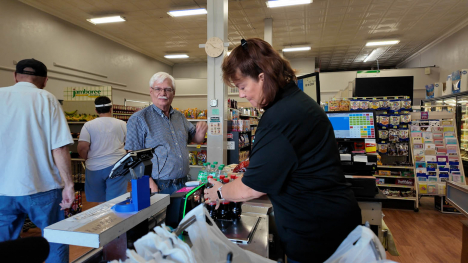
Facing closure, Gowrie's only grocery store was saved by 60 residents and $250,000.
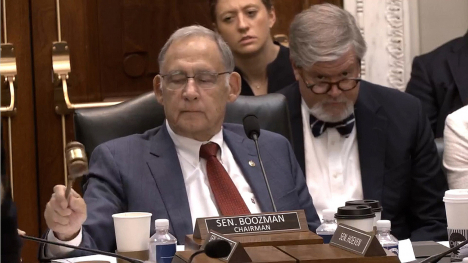
A battle over SNAP kept the Senate Farm Bill from advancing before August recess.

Data centers are spurring debates all over the country especially in a time when grid stress is already happening. Communities have leverage to ask for money back in the developer’s fee along with part of the solar generation, battery usage and water accommodations according to ESP.earth founder Kerry Duggan.