This week, Secretary of Agriculture Brooke Rollins appeared before the House Appropriation Committee to discuss the spending priorities of the USDA.
Sec. Rollins Appears Before House Appropriations Committee
Share


This week, Secretary of Agriculture Brooke Rollins appeared before the House Appropriation Committee to discuss the spending priorities of the USDA.
Transcript
This week, Secretary of Agriculture Brooke Rollins appeared before the House Appropriation Committee to discuss the spending priorities of the USDA.
Local food policies and rectifying California’s Prop 12 law were two topics of the hearing.
[Rep. Marie Gluesenkamp Perez] (D - WA) “And I think what I hear is that why is it so difficult for me to just sell school food to the school, my smaller schools, they can't go through the regulatory, burden of of getting in those programs. what my farmers want is guaranteed market access. They want to be able to know that they can grow real food and bring it to our schools.”
[Secretary Brooke Rollins] (USDA) “I agree, I agree with that really quickly though, on the local food, because I think it's important that when that money was pulled back, your state of Washington has 7 million of $11 million left in that fund. And so part of the reason that that was really became a conversation piece and a part of the decision making is because many of the states not mean, but many of the states had so much money left, they couldn't spend it quickly enough. And so why we're looking at the $405 million a day we're spending in nutrition just from USDA. There's got to be a better way to balance the taxpayer interest with the interest that you just outlined. So I look forward to working on that.”
[Rep. Ashley Hinson] (R - IA) “You talk about some of the consequences for our farmers and producers if policies like this that, you know, are really state by state really start to flow down and impact interstate commerce issues.”
[Rollins] “I think it's really important. And no one is a bigger believer in federalism and the 10th Amendment and allowing the blue states and the red states and the purple states to be the laboratories of democracy. I think that's one of the geniuses of our Founding Fathers vision when they wrote the Constitution. But when a state like California or other states passes laws that have significant impact outside of their state border, then that is not sustainable. And specific to prop 12, we have understood that. We see it. I think it's pretty bipartisan, maybe not 100%, but very bipartisan across both sides of the aisle. That that is not, it's just not sustainable. So having a a federal approach to that, ensuring that we're protecting our pork producers, especially some of our other livestock producers underneath the regime of prop 12, is is important. So we'll keep working on that together. And I really look forward to it.”
For Market to Market, I’m Peter Tubbs.
Watch More

Wages aren't keeping up with prices. How negative real wage growth and higher fuel costs are changing what Americans buy, and where businesses feel it most.
New farm relief, a food safety honor, Minnesota cider and commodity market analysis with Chris Robinson.

Minnesota’s Keepsake Cidery combines heirloom apples, traditional cider making and direct sales to help a small farm thrive.
Chris Robinson answers viewer questions on corn yields, crude oil and cattle, and explains his soybean outlook.

Huub Lelieveld receives the 2026 World Food Prize for six decades of work advancing food safety.
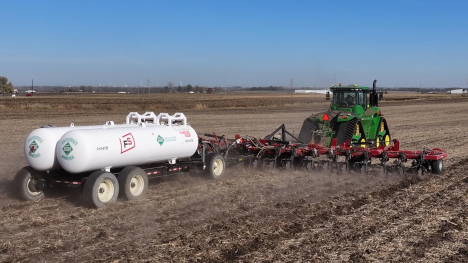
New federal plans target farmers' fuel and fertilizer costs through direct relief and investments in domestic fertilizer production.