This week, Brazilian agronomist and scientist Mariangela Hungria received the World Food Prize for her work in biological nitrogen fixation.


This week, Brazilian agronomist and scientist Mariangela Hungria received the World Food Prize for her work in biological nitrogen fixation.
Transcript
This week, Brazilian agronomist and scientist Mariangela Hungria received the World Food Prize for her work in biological nitrogen fixation.
Hungria’s work in utilizing naturally occurring soil bacterias to fix nitrogen has increased crop yields while reducing farmer dependence on synthetic fertilizers.
Hungria believes that expanded use of biologicals for nitrogen fixation in agricultural areas, especially pasture, can double agricultural productivity in Brazil without reducing the country's rainforest.
Mariangela Hungria, World Food Prize Lauriete: “And by improving this pasture, we can release the same area we have cropped today and double the area we are cropping without having to cut one tree. So that’s our goal today, to contribute, because we do not want, and mainly do not need to cut one tree in Brazil to expand our agriculture.”
Former Iowa Governor Tom Vilsack believes that society has a moral imperative to assure that every person on the planet has access to a meal.
Governor Tom Vilsack, D, IA: “I learned that it takes a team to feed the world, that partnerships and collaborative efforts are absolutely essential to allowing us to meet that moral imperative. That means government, the private sector, non-profits and individuals, working collaboratively, as a force multiplier, to getting the job done.”
Laureate Hungria hopes that her recognition can inspire the next generation of farmers and scientists to seek new solutions for feeding the world.
Mariangela Hungria, World Food Prize Lauriete: “And I deeply admire Brazilian farmers who are responsible for our global leadership in the use of biologicals. I feel especially honored to receive this prize as a woman. For centuries, women’s role in agriculture have been invisible and unrecognized. Yet, in most countries, we are the ones cultivating the land, saving the best seeds and passing down traditional knowledge through generations. I am sure that we will lead agriculture of the future, one that produces enough food while protecting the planet and restoring soil health.”
For Market to Market, I’m Peter Tubbs
Contact: [email protected]
Watch More
Global supply disruptions keep fertilizer markets volatile heading into 2027.
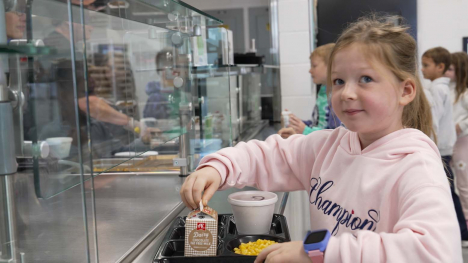
An Iowa school district connects local farms, food hubs and students through the lunch tray.
Naomi Blohm and Ted Seifried question USDA’s corn yield surprise and weigh China’s soybean demand.
Higher USDA yields pressure grain. Plus, opportunities/costs of putting local food on school trays.
How grain prices rally this winter w/Naomi Blohm & Ted Seifried on USDA, China demand & S. America.
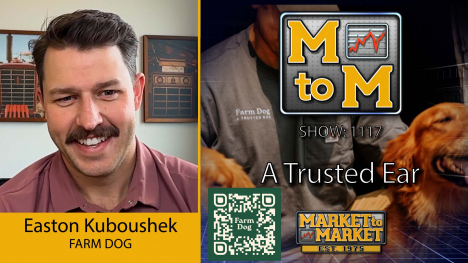
Farmers rarely seek mental health help. Farm Dog offers care from people who know farm life.