Warming waters push lobsters farther north, forcing fishing families to travel farther and spend more to bring in their catch.
Environmental Changes Drive Up Costs for the Lobster Industry
Share


For four generations, the Townsend family has fished out of Provincetown, Massachusetts. Now, rising costs and warming waters threaten their livelihood. Laurel Bower reports on how they’re using ocean data to adapt and protect their family legacy.
Transcript
Provincetown, Massachusetts is widely recognized as the birthplace of commercial lobstering in North America. For generations, local families have counted on these waters for a great catch.
Chris Townsend, Captain F/V Heidi Lyn: “It started with my grandparents. My dad’s parents came here to fish and my father started fishing here in the 60s and then I started in the 80s. Caitlin started in the 90s, so we are four generations fishing out of Provincetown.”
At 27 years old, Caitlin “Caity” Townsend works the deck of the family boat, the Heidi Lyn, side-by-side with her dad, Captain Chris Townsend. For Caity, the calling to fish was something she felt from the very beginning.
Caitlin Townsend, 4th Generation Commercial Fisherman & Advocate: "He always said my whole childhood I’d be like daddy where are you going. He’d say we’re going on the boat and I’d say can I go, can I go, can I go? I always wanted to go on the boat. And then they would let me skip school sometimes, and then in high school I got to skip a lot more school to go fishing. And yeah, it stayed in my blood ever since, and there's nothing else I would rather do. And now I’ve kind of graduated from being a fisherman to doing fisheries advocacy and policy at Cape Cod Commercial Fishermen’s Alliance."
Chris Townsend is a “full gang” lobsterman managing 800 traps, the maximum legal limit. It is grueling, year-round work.
Chris Townsend, Captain F/V Heidi Lyn: ”Being a fisherman is about being able to adapt, being able to change, being able to reinvent yourself. You know, you must live with both grit and tenacity. That’s how you live every single day.”
For Chris, the financial and environmental stakes have never been higher. Historic harbors have been turned into places where it is increasingly difficult to make a living.
Chris Townsend, Captain F/V Heidi Lyn: "I’ve had to reinvent myself a number of times in my 40 years fishing here. It’s largely been focused on lobster fishing. That is the population that has remained the strongest and the fishery that has been the bottom line of my income. I feel very fortunate that I’m still doing it today. Not everyone in my fleet is still with us in a commercial capacity."
The environmental conditions the northeastern fisherman face tell a stark story. The Gulf of Maine and surrounding waters are warming faster than 99% of the world's oceans. Lobsters need cold water to survive, warming seas are forcing them further north.
Caitlin Townsend, 4th Generation Commercial Fisherman & Advocate: "When I was sixteen, we had our gear in Cape Cod Bay and I remember days where we were just swimming in lobsters, but it changed drastically.”
Chris Townsend, Captain F/V Heidi Lyn: "Now, we are running twice, three times as far. You know fishing offshore, burning twice or three times as much fuel, using more gear. It’s putting more into our business for less income out of it.”
The warming waters pushing lobsters farther away has been combined with coastal real estate runoff causing algae blooms. When the algae dies, it strips oxygen from the seafloor, creating a dead zone locals call "The Blob." No fish or lobsters can live in it. These environmental factors have been combined with strict government tracking rules and seasonal fishing bans. The result is an increased struggle for all fishermen to make a living.
To survive, captains are fighting back with data. They utilize the eMOLT program –Environmental Monitors on Lobster Traps and Large Trawlers.
Dr. George Maynard, National Marine Fisheries Service: "Having better information now about what's happening in the moment can help fishermen make decisions about what’s coming in the next couple of weeks or next couple of months and plan their businesses."
Currently, nearly 200 fishing vessels like the Heidi Lyn participate across New England and the Mid-Atlantic.
Specialized sensors are zip-tied inside lobster pots, automatically recording temperature and depth data.
Dr. George Maynard, National Marine Fisheries Service: “When the fishermen set their pots, uh lobster pots, the sensor starts sampling very quickly because it detects a change in pressure. So, it samples every second on the way down to the bottoms. And that allows us to get a picture of what the water column looks like from the surface all the way down to the bottom. But it also gives us an idea of what's happening at the bottom over the full duration of the time that the gear is down there.”
Every time Caitlin and Chris haul up a pot, the data automatically transmits to a dedicated computer inside their wheelhouse. From there, the data routes straight to shared cloud servers—giving both regional scientists and the captains immediate, real-time access to temperature, salinity, and oxygen levels. The data gathered by the eMolt system will help fisherman like the Townsend’s better understand what’s happening in their fishing grounds.
Dr. George Maynard, National Marine Fisheries Service: “They're developing a hypothesis about the environment, and they're going out every day and testing that hypothesis by putting their gear in the water. And if they were right, they come back and they make money. If they were wrong, they don't. ”
Caitlin Townsend, 4th Generation Commercial Fisherman & Advocate: “I feel like The Lorax. The trees are speaking. The ocean is speaking. The fishermen are speaking, and you need to listen to them."
For fishing families like the Townsends, this real-time data has become a critical business tool as the environment becomes less predictable. Yet, the true driving force behind the Heidi Lyn remains the deep bond between a father and daughter working to protect a family legacy.
Chris Townsend, Captain F/V Heidi Lyn: “I’m very proud of the fact that the Townsends have been here for so long. And I’m very proud of the fact that we are a big part of this community.”
Caitlin Townsend, 4th Generation Commercial Fisherman & Advocate: “It’s emotional. I don't know. It just makes me cry because I get to, I get to interact with so many fishermen on a day to day basis and get to see the older generation and, and get to, get their blessing of like, all right, I got this. I'm going to try to take over. And this is my home and everything leads back to MacMillan Pier."
For Market to Market, I’m Laurel Bower.
Watch More
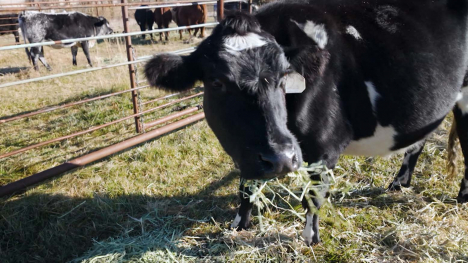
Ranchers in western Idaho face hay and fencing shortages after wildfire and drought. Neighboring communities are donating hay to help families recover.
Corn, soybeans and wheat are oversold like never before, says Ted Seifried in our Market Analysis.
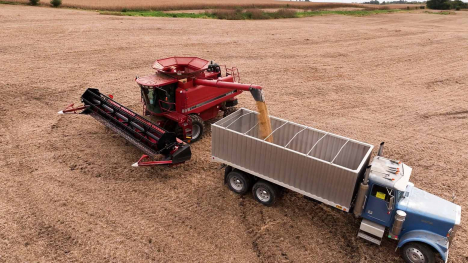
Agricultural lenders expect 40% of their borrowers to be unprofitable this year, according to a survey by the American Bankers Association and Farmer Mac.
Farm lending, hay shortages and warming waters challenge producers. Ted Seifried analyzes markets.
Ted Seifried discusses corn recovery signals, soybean exports and South American weather risks.

Twice as many Americans say their finances are getting worse as say they're getting better. Glynn Tonsor of the Meat Demand Monitor explains how that K-shaped split shows up in restaurant visits and what's for dinner.