Don Roose discusses the economic and commodity markets in this web-only feature.


Don Roose discusses the economic and commodity markets in this web-only feature.
Transcript
[Paul Yeager] Welcome back to the table for the. Friday, March 27th, 2026, installment of Market Plus. Joining us now, Don Rose. Don, I really cut your knees off right at the end of the television show. My apologies. I wanted to wedge in one more thing, and it was about biofuel policy we have been hearing for days, weeks. There was going to be a big announcement come Friday and there was midday on the South Lawn. There was this long line of farmers I've seen on X that were there. He called it the biggest gathering of farmers ever in the White House. But what EPA was saying that we're going to have the set two rule for the RFS. It's the highest volumes in the 20 year history of the program. But the biodiesel number they're claiming is going to be up 60%. Do you buy into that? This is policy that is attainable by the American farmer and the energy community.
[Don Roose]: Well, glad to be back, Paul. But I think when you look at it, yeah, what we're talking about is the overall going up 2 to 3 billion gallons each in the next two years as far as the overall program. But we left the ethanol at 15 billion gallons, you know, so that's completely unchanged. The big one on that then beat oil reacted very negative to it. It's been the big leader to the upside is we allowed foreign feedstocks. In other words foreign competition of oil. South America bean oil, others to come into the U.S. at the same credits. Rin credits 100% as we do here in the U.S. A lot of the trade thought is going to be 50%. So bottom line is it allows the foreigners to bring in more bean oil and other feedstocks than we thought was possible. And that's what the push to the downside was. As far as our overall RVO, it was pretty much what it was expanded. That's true, but it was what was already anticipated.
[Paul Yeager] The headline ethanol doesn't really change. It was the change in other little side components of this, right?
[Don Roose]: It was a side component. It was a side components. It was really it was the feedstock is the one that you were really focusing on as far as the expansion of the others, 2 to 3 billion gallons, you know, in the next what, 2728 that was pretty much anticipated. That's why these biodiesel plants are being built. They're anticipating this.
[Paul Yeager] Is this enough policy to stabilize things?
[Don Roose]: I think what it tells you is that the soybean oil, the big leader to the upside, is probably reached, has already probably put in too much risk premium. And it's not going to take a lot to, to tip it over and get the funds to move to the sidelines. A lot of it's going to be dependent on what happens with the war, what's going to happen with the energy going forward.
[Paul Yeager] We had we have always a big report in January, but we have one coming up on Tuesday. That is planting intentions and also stocks. So Gary in Wisconsin is going to lead us off with questions. If we could Don off the USDA was way off on acres last year in normal conditions. Can Tuesday's numbers be traded with confidence? With so many variables this year?
[Don Roose]: Well, number one, it's a big market moving report. It's a big one. It's what we have to go forward as as our base. You know, I think the question, you know, squarely, if we come up with 94 million acres down 4.5 million from last year. Typically we add back a couple million acres. So maybe that's where he thinks it's off. It hasn't historically been off a huge amount. You know, we've added back acres, but it also is it really starts to set the tone for this next year where we're going.
[Paul Yeager] But can the variability really be factored in right now? Because so many times I've heard people in your chair say decisions are made, they're not going to alter it because of one thing or the other. It is a long time to October. I'm just going to go ahead and plant corn. I'm just going to go ahead and plant beans. I'm just going to go ahead and plant cotton. Is that accurate this year?
[Don Roose]: Well, you know what usually happens, Paul, is, you know, the producers are trying to juggle around, you know, year end tax things. And a lot of this, a lot of their decisions on planning are made before the end of the year. And I think those have been made. Usually what happens is it's the variability with the weather as much as anything else that changes how many acres are planted. The market may be a little bit, but not as big a factor.
[Paul Yeager] Let’s Talk weather in the fires in the Plains. Brian in Iowa has a question for you. Are the drought conditions in Texas and Oklahoma so dire that some acres are being zeroed out? A total wheat crop failure looks imminent in a vast swath of the plains. Given that the Dakotas have stopped planting wheat in a historic amount, this looks to be one of the fewest bushels harvested in recent memory. So why is wheat not two times the price it is now? Given the dire conditions that are setting up?
[Don Roose]: Well, we're planting already corn in Texas. We're about 50%, 60% planted. So, you know, we haven't seen any acres switch there. But he is right. We're kind of we're in a drought in Texas, Oklahoma, for the most part. Zaner drought in some of the other areas. But as far as the wheat, why isn't it moving up? Yeah, we've had a double top at 650 technically on wheat. We spiked up March 9th. Couldn't get over it. That was on all the fears and everything we were running. And part of the reason is because the there's just a lot of wheat in the world market, and the stocks are big in the U.S. and our March 1st stocks look like they're going to be pretty big. And let's just say we're at $7 in the Gulf wheat. You've got Ukraine cheaper. You've got Russia cheaper. Let's just say they're down around 650. You got Europe cheaper. So all those other countries are 30 to $0.50 cheaper.
[Paul Yeager] Let's keep on the global, if we could here. I want to go to Steve in Wisconsin. I'm going. I'm skipping one there. Steve wants to know about El Nino, La Nina, the Iran war, dry conditions and wildfires are feeding headlines with prices creeping up on new crop corn and beans. What's the best way to protect a profit and not sell too soon?
[Don Roose]: Well, I think the number one thing, and this is a year where you have a chance because you can put some floor contracts in and we're seeing people do it. You know, for example, you can buy a March, $5 march of 27 crop year for next year. You can buy $5 puts, you know, for somewhere around $35.40. I mean, that locks in a price that you can live with. And then you get all the upside. So the floor contracts, there's just so many variable contracts that you can work with if you understand them, that give you the chance to protect this, where you can make money for most people and still give you a chance to rally to the upside. So you're in a window of risk management that you should be looking at.
[Paul Yeager] I think you've said this before, and forgive me if I go way too far. I think you have said sometimes marketing is like baking a cake and some of the ingredients are maybe not as variable. Right now the cake seems to be baked on 26. We're only going to have a certain window. Are you saying there's a much more wider window still on 27 that we should take advantage of?
[Don Roose]: Well, I think 27 but you know what I was really alluding to when I said. 27th March corn I was really because December of 26. Coming out of the 26’ - 27’ so what I'm saying is if we get a drought, the December March corn spread will come way, way together. So you can beat that. At least you've got ten cent carry going out to March. And then you can see what happens. It's a low risk way to look at risk management. That's in your favor right now. It may not be before. I always say, you know, if the window is open, you got to jump through it because it may close again, you know, and this year it could close quickly. We know the funds are bloated right now. We know that we've got a lot of uncertainty out here in the world, and we've got risk premium in the market. And like I say, it's very similar to a weather market. You take the stairs up and the elevator down eventually.
[Paul Yeager] Well, how much do you peak though? Let's talk about December of 27. Do you peek at that right now?
[Don Roose]: I think if we if we have normal fertilizer that comes at us, you know, if we have energy prices go back down. I think you do. I don't think it hurts to have some small percentage out there. Paul. You know, we're seeing people put five and 10% for 27 just because they hope it's their worst sale. But you're doing something to help yourself at numbers that you can. They're not the best, but you can at least pay the bills.
[Paul Yeager] Do something, not nothing.
[Don Roose]: That's a usually a good program.
[Paul Yeager] All right. Okay, let's do, let's do Ronald in Iowa. I don't think I've asked this one yet. This one is interesting for a couple of things because we talked about it briefly on the show. Could this Iranian conflict be bullish for corn from the standpoint of rising input costs, particularly urea for the Brazilian safrinha crop this year?
[Don Roose]: Well, most definitely, you know, this year, maybe not there much like we are though. I mean, they've sidedress with ammonia. That's probably, you know, their biggest concern. Of course that could be our biggest concern too that ammonia is not booked. But no doubt we've got inflation fertilizer inflation in the market here. Also this year some how much next year you know, could be more.
[Paul Yeager] All right. Heaviest question of the program. Any surprises that Iowa beat Nebraska on Thursday night in basketball.
[Don Roose]: I don't think so. From an Iowa Iowa person and go Iowa State.
[Paul Yeager] And we have and that's the thing we have our director as a Nebraska guy. So now corn again, too, is going to take place on Saturday between Iowa and Illinois. Isn't it crazy how everybody talks about corn and soybeans on these national broadcasts? Is that a good thing?
[Don Roose]: I think it's good PR because we know agriculture and the rest of the world and the rest of the country should know agriculture.
[Paul Yeager] Yeah. And they have to and they've got to get this basketball done so we can all start focusing on planting, right.
[Don Roose]: I think, by the way, we've started to have people planting in the Midwest on soybeans already.
[Paul Yeager] It's going to be quite a year, or at least the next few days, right?
[Don Roose]: It's going to be a wild the NCAA tournament, but it's also going to be wild markets on the weekends. Like we said many times, much like weather markets, it's uncertain and it's going to move fast.
[Paul Yeager] And it's been that way for the last few weeks. So we should be used to it by now.
[Don Roose]: Well volatility I mean I don't know if you ever get used to it. But you know it's something that you have to live with and you have to trade around. And there's a lot of tools you can use, Paul, to make sure that you can take advantage of that.
[Paul Yeager] Well, we appreciate you coming in and helping us out as always with insight. Thank you, Don Roose
[Don Roose]:Thank you for asking me back.
[Paul Yeager] Great to see you. That's Don Roose everybody. Next week we are going to talk about a grocery store that's helping keep a community from turning into a food desert. And Chris Robinson is going to be with us. Thank you so very much for joining us. Have a great week.
Trading in futures and options involves substantial risk. No warranty is given or implied by Iowa PBS or the analysts who appear on Market to Market. Past performance is not necessarily indicative of future results.
Watch More
Wednesday's USDA report traditionally is quiet on yield, but risk is in the air according to Kristi Van Ahn-Kjeseth.
Wheat stalls, corn struggles and cattle turns cautious, according to Kristi Van Ahn-Kjeseth in our Market Analysis segment.
The Farm Bill fails to make it out of the Senate Agriculture committee.
Iran casts a shadow over the jobs report.
A grocery store keeps a community from turning into a food desert
And commodity market analysis with Kristi Van Ahn-Kjeseth.
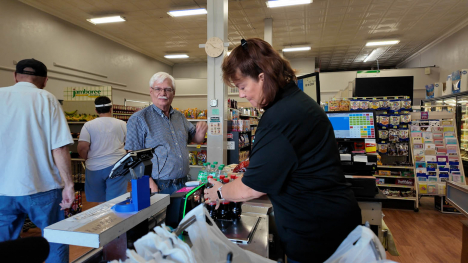
Facing closure, Gowrie's only grocery store was saved by 60 residents and $250,000.
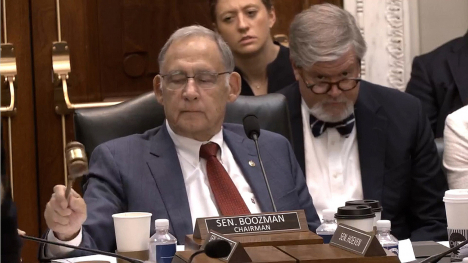
A battle over SNAP kept the Senate Farm Bill from advancing before August recess.
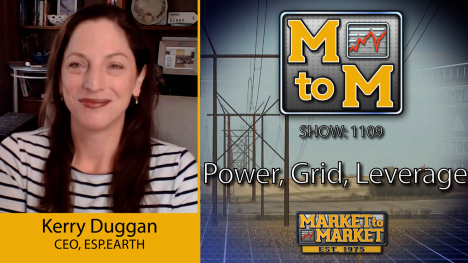
Data centers are spurring debates all over the country especially in a time when grid stress is already happening. Communities have leverage to ask for money back in the developer’s fee along with part of the solar generation, battery usage and water accommodations according to ESP.earth founder Kerry Duggan.