Cotton, Hormuz Straight, inflation, energies, the Mexican border closure, drought and the Fed's balance sheet are all topics covered in our Market Plus.


Crude oil is casting a big shadow over commodities now and could be a major story in 2027. We look the impact of inflation, energies, the Mexican border closure along with drought and the Fed's balance sheet with Arlen Suderman in this online only segment.
Transcript
[Paul Yeager] Welcome to the table for the Friday, May 1st, 2026 installment of Market Plus. Joining us now, Arlan Suderman Arlan, one thing we don't normally talk cotton, but there is a reason to. I forgot the number. I should have looked this up 6% $4.83. Last week we had a rally of 4 or 5 days in a row. This can't be just about acres.
[Arlan Suderman] Oh no, it's about fuel. Fossil fuel prices. What's the biggest competitor to cotton on the in the fabric market? It's the synthetics. Synthetics have a fossil fuel base, and they've been cheaper than cotton. That's one of the reasons we had such cheap cotton for so long. That and the fact that China was going to Brazil for cotton instead of us, because Brazil was selling it to them cheaper. But now suddenly, with fossil fuels being expensive, so are the synthetic fibers. So, demand coming back to cotton and increasing the demand. And that's why we've seen the big increase in price.
[Yeager] Crude oil is the headline on pretty much every economic show. And on the local news, the national news, we talk about it. But there's other factors in this. The Strait of Hormuz continues to have the challenge. The world has a global crude oil and fertilizer challenge. What is it right now? What's the biggest challenge?
[Suderman] Well, right now it's the fuel part, the crude oil and the products market, because you have to have crude oil to make the products. And so, when you reduce it by roughly 13, 14%, that's a significant reduction in the supply with the strait being closed, fertilizer has the same problem, but with the timing of it, the fact that much of the fertilizer is in place in the northern hemisphere for where it needed to be used, not all, but most was in place, et cetera. The energy is the immediate story. The fertilizer is the long-term story. Now, once the state reopens, neither one of those stories are immediately fixed. If you look at Iran, Iraq, Kuwait, once the storage gets filled up, they have to shut down the wells. And if they don't shut down the wells, just perfectly, those wells start gumming up and plugging up permanently. And so, you lose production for years out of that. And Saudi Arabia, on the other hand, has a different geology, and it can be back up in a couple, 2 to 3 weeks. So, it's much different. So, we're going to be seeing reduced oil production for a while. Natural gas, the feedstock for the fertilizer, much of it came out of the South Pars gas field. It has been hit. We don't know the extent of the damage. There's evidence of a significant reduction in output. So how significant is the damage when things reopen. Therefore, we'll have a reduced supply. Where will fertilizer rank in in the priorities for getting it? Probably below other things. That means reduced feedstock for producing fertilizer. To this point, we're not aware of infrastructure damage on fertilizer, but there may be. But the feedstock issue is significant. So, we think 2027 will be the bigger year on fertilizer. And it's possible it could go beyond that South Pars gas field, depending on the scope of damage, could be two three years or more for repairing that.
[Yeager] So that's the fertilizer crude side. But what happens in this country when other countries come calling for our oil, are we going to sell it to them?
[Suderman] Yeah, that's the key question here because a lot of people are saying, why do we have such high prices when we have adequate supplies of fuel, of fertilizer? And it's because prices as high as they are here are much, much higher. The rest of the world, especially in Asia, but also in Europe. And in fact, you can't even get those fuel or fertilizer sufficiently at any price. In some areas there. And so, what they're doing is trying to pull from the United States. There's been a little bit of fertilizer that's been reexported not a lot. So why is that? We're not sure. Is it fertilizer companies are afraid of Trump coming after them? Maybe. I don't know, energy, though, is we're setting records on exporting crude oil. And we're exporting a lot of diesel. And I think there will be a lot more of that happening. That's one of the big reasons we have high diesel prices is the amount that we're exporting, because prices, for example, a couple of weeks ago, I read where France is going to reduce corn acres this year because high fertilizer prices and oh yeah, the fuel prices are diesel prices over $10 a gallon.
[Yeager] So, they're looking out for their bottom line now. And who knows what ripple effect that has on the market. So, a lot of things at play, we have an incredible amount of good questions again this week. Arlen I'm looking at the clock. I better get moving to some of these. Otherwise, we get in trouble. I do with everybody. Brian and Iowa, let's start here. At what point are we going to actually admit the winter wheat crop in the Midwest? Maybe the lowest harvested bushels in history. If it's not a maybe anymore, why is wheat so low? You talked about this in the show a little bit. Answer. I guess I should let you answer the question before I expound.
[Suderman] Well, Kansas City, Minneapolis, wheat are already in the $7 area. Chicago soft wheat is lagging behind that. But the fact is we are no longer a major player in the world wheat market. In fact, hard Red winter will end this year with over a half years surplus going into the next year. And that's why prices aren't higher than they are.
[Yeager] And we had a good amount of discussion on this in the main program. Two about wheat. Andy and Iowa is the thing that we always talk about, and I think you and I have discussed this before, maybe it's backyard itis, but my planting percentage is very low compared to previous years. Do the corn soy markets care about that yet?
[Suderman] No, they're looking at the total planting progress numbers and total of corn of soybeans. And so far the market is happy with those. It's going to be cool. We're going to see slow emergence. But they're going to see the crops getting planted at a pace that they're happy with.
[Yeager] And we saw huge percentage jumps last week. We'll probably maybe not as much this week, but right now as we sit here, it's going to be a busy weekend for a lot of people because some of that rain has stopped.
[Suderman] I think we'll see bigger jumps than you think on Monday, because last week's numbers were underreported, in my opinion, by significant amount.
[Yeager] That'll be something to watch. Okay, let's go. Robbie in Kansas, do you think busting the 250 wall that the Packers defended for weeks has a positive or negative move for the long-term health of the cattle industry? And how close are we to consumers saying enough's enough? By pricing ourselves out of the affordability to everyday families?
[Suderman] Yeah. Remember when we had $18 soybeans and $8 corn for a brief time? That's been a few years. That's one reason Brazil is such a competitor. They are to us now, and that's what we're worried about now, is losing permanently. Some of the business, our share in World beef and pork market, particularly beef market. The question here is because the high prices are stimulating, production in other areas of the world. Are imports at a record high amounts? And with the border closed, Mexico is really investing in its packing industry.
[Yeager] And there's always the Screwworm is always a discussion about when that opens. You talked about it right there earlier. There's a lot of parts to this that are different than anything. We've really kind of experienced before, right?
[Suderman] Yeah, exactly. Right. And the fact that Secretary Rawlins canceled her press conference in Arizona at one of the border locations, which was 800 miles away from the most recently Screwworm, tells me that there's still problems there, keeping that border closed for a while.
[Yeager] All right. This is more of a weather question. I'm going to go a little out of order. We're going to go. Bradley. Nebraska's first question here first. This one you can answer it from both the old agronomist side of if it's too dry in certain spots. But economically. Does this make sense? Bradley wants to know how far can a farmer afford? Second question. Sorry. I'm really they're really going to hate me in the control room more than normal. Can a farmer afford the risk of planting corn behind wheat in the current economic climate, if they can't insure the crop? Answer it that way. And then also look at the moisture side of this question, if you could.
[Suderman] Well, they're related to each other. So, the first question is like, how high is high? That depends on how much risk you can take. A young farmer who heavily leveraged can't afford to take as much risk as an established farmer with very little leverage. So that's the first part. The second is with the weather. What are the chances of a crop failure? And I would say with a particularly a strong El Nino, which is where we're headed now, it looks like that decreases, doesn't eliminate, but it decreases the chance of hot dry. The two closest analog years were wet and mild. One of them, 97, had some dry pockets, but still end up above trend yields. Those dry pockets though, would have been hurt. The other 1 in 2015 had above trend yields most everywhere except for the Mid-Atlantic.
[Yeager] Let's look at it then heavily from not necessarily the analog years that you're discussing with the El Nino factor, the current conditions of how wet or how dry it is in western Nebraska. We're talking about allotment changes. We're talking about no change in forecast, super dry. You can't afford to do nothing. Or is that what you're going to come money ahead if you do nothing?
[Suderman] Well, the forecasters that I follow seem to believe that everything is still moving in the direction of significant improvement in the weather pattern in the plains. It's hard to change a weather pattern when you've got drought well established. So those of us who've been around tend to have some skepticism. But so far, things are still moving in that direction.
[Yeager] All right, let's close with monetary policy one more time. Now, Bradley's first question. Oh, I'm not going to hear the end of this one. Sorry, everybody. Okay. Bradley wants to know how fast can the new fed chair shrink the monetary balance sheet and lower interest rates? We talked about it before, but I want to go back to it again.
[Suderman] I really the more I read about Kevin Warsh, the more I like about him. I, I've been concerned about the size of the balance sheets. I think they need to be shrunk. But I think the fact that we're in the war right now, the fact that the economy has become very dependent upon them, it's going to be a challenge, a multiyear challenge to be able to do that. And but if you can, I do believe that you can lower interest rates in a healthy economy.
[Yeager] It's going to be, that is what we're going to talk about. We're all experts now on monetary policy. When the president keeps talking about it, people do pay attention to what's happening, and we are watching things. The discussions that are going across the country. You know, one of the things that all these regional federal reserves look at are health of the ag economy, health of manufacturing. You talked about it already. Manufacturing rebounded in March. If things start rebounding in certain sectors, what does that do you think that's the lower rate is more probable than the higher rate.
[Suderman] If we can continue to get that health. And the challenge here is the Iran war, will inflation become so high that it drags this economy down? We're not there yet. March numbers showed a rebound. April numbers so far are showing a continuation of that rebound. If we continue on that path, then that should help the overall interest in commodities as well. Feeling like the commodities were undervalued coming into this. And it's a healthy direction for us to be. The war throws so many uncertainties into it, though, that I think it hurts people's confidence level that we are. But I am impressed with how well we're doing.
[Yeager] Which happens first. The Chiefs build their stadium in Kansas, or the Royals build their stadium in downtown Kansas City.
[Suderman] Probably the Chiefs.
[Yeager] See, we got to end on something positive.
[Suderman] Yeah.
[Yeager] A little more fun. Arlan, great to see you. Thank you so much.
[Suderman] You bet. Paul, good to be here.
[Yeager] It's Arlan Suderman appreciate your time. Next week we are going to look at how one U.S. State grows 99% of the nation's hazelnuts, and they show it hasn't been easy. And we'll have Kristi Van Ahn-Kjeseth here to break down the markets. Thank you so much for joining us. Have a great week. We'll see you next time.
Trading in futures and options involves substantial risk. No warranty is given or implied by Iowa PBS or the analysts who appear on Market to Market. Past performance is not necessarily indicative of future results.
Watch More
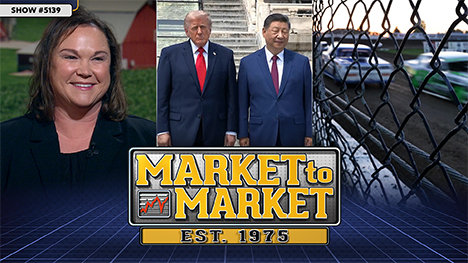
Agriculture gets sorted to the side during high-stakes negotiations with China. The yeas have it - E15 is approved in the House but not without some pushback. Revving up fans, drivers, and rural communities on the dirt track. And, commodity market analysis with Naomi Blohm.

Tariffs. Input costs. Brazil. Elections. Uncertainty. These are more than buzzwords in today's farm economy as producers face what is actively reshaping how American farmers see their future. Purdue University's Michael Langemeier gives us the inside look at the monthly AG Economy Barometer survey and what it's been telling us about the state of rural America.
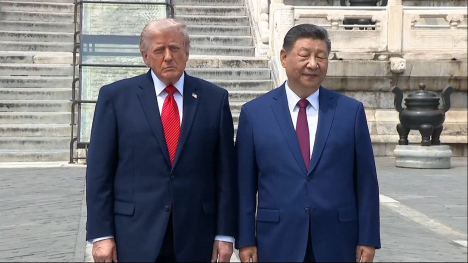
President Trump met with Chinese President Xi this week in a highly anticipated two-day summit.
Oil, fertilizer, and protein join the discussion for our Market Plus with Naomi Blohm along with corn, soybeans and weather.
One wet blanket hangs over the corn market in our Market Analysis with Naomi Blohm. We also cover cheese and soybean demand as part of the commodity story.
The U.S. House approved the sale of year-round E15. The bill now goes to the U.S. Senate.