Weather concerns and global conflict are adding risk to corn and soybean markets. Don Roose discusses whether seasonal lows are in and how producers can protect prices without giving up potential gains.
Corn and Soybean Markets May Be Turning Bullish – Market Plus with Don Roose
Share


Corn may be in overbought territory, but Don Roose says that alone does not signal a market top. Weather problems in parts of the Corn Belt, drought in Europe and continuing global conflicts have changed the market outlook since prices declined earlier this year.
Roose examines whether corn and soybean markets have established seasonal lows, the summer outlook for live cattle and the effect of heat on crop yields. He also discusses marketing strategies that use puts to protect a producer’s bottom line while leaving room to benefit from higher prices.
Have a commodity question?
Send your question to [email protected] for a chance to have it answered on a future Market Plus.
Get market insights in your inbox
Subscribe to Market Insider for weekly analysis, agricultural news and a look at what producers should watch next.
Transcript
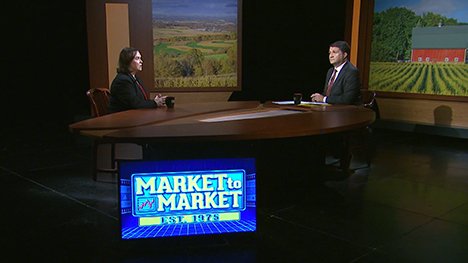
[Brooke Kohlsdorf] Welcome to the table for the Friday, July 24th, 2026 installment of Market Plus. Rejoining us Don Roose. We'll pick up where we left off. Don, a couple of questions from social media that I want to get started with Bradley and Nebraska is asking “Is December corn in overbought territory?”
[Don Roose] Well, you know, he's got a good question. When we are in overbought territory and you can get some real setbacks when you're overbought like they are. We've got a very good system that tracks that. But the problem with the overbought is you can stay overbought longer than you can believe. It can happen. So it's not really a good a good tool to pick a top in a market more than anything else, you want to keep trial, trial following the trends. So I would say right now, yes, we're overbought, but I've seen these markets like big markets, like we went to 3 to $8 on corn. They stayed overbought the whole time. So I would say yes, we're overbought. Is it a sign of a top. No. Is it a place where you could get a little bit of a technical setback? Yes. Doesn't mean much. You know, maybe.
[Kohlsdorf] Okay. What about Jake in Indiana asking are the corn and soybean markets going to fail like they did earlier? Or excuse me, fall like they did or fail like they did earlier this spring? Or will we be staying above where we are now?
[Roose] Well, the reason they failed before is because we were in a seasonal time frame, and we thought we had a big crop coming, and not only in Europe, but here. And we also didn't have a lot of weather. We didn't have a lot of the problems with Russia, Ukraine, with the US war. And so what's really happened has changed greatly. And what I would tell him is that the odds that we put in are seasonal, low, are probably higher than we've had for the last number of years. And by that, I mean, we had a key reversal. June 30th. The stocks in all positions Acres report. And since then we've been going up. And on top of that, we've had things just have been on fire around the world. We've had, like we alluded to, the the dry drought condition in Europe. We've had the US Iran war, we've had the Russian Ukraine war. We're in an El Nino situation. And now we got a weather problem here with two hotter temperatures in the US, so vastly different than the last time we went down. And that's why we say we don't really know until the cards come out. But they're coming out bullish.
[Kohlsdorf] What's what about soybeans. Soybeans. Have they or I'm sorry. Let's go to the next question which is asking about live cattle. But I do want to talk about soybeans. So have we hit rock bottom on the live cattle?
[Roose] Well, if you look at it from a cattle standpoint, last year we were in a contra seasonal. In fact, we went usually typically during the summer, from spring to summer low, we'd go down about 10% of the value last year is contra seasonal. Those are dangerous. We went up rather than down this year. Really what's happened is we're back to more of a normal seasonal. So we've dropped about that normal seasonal break right now in the futures market. Even have more of that discounted. So to answer this question squarely, we're now we're more and more of a seasonal. So seasonally, we usually go down into the summer. Summer we did. We have. And now you usually start to get into school lunch buying. And you usually get Labor Day buying. And usually we try to seasonally go back up again in that time frame. So let's see if that happens. It feels like we're in a seasonal remember the government. Not that they're right, but in the last government report, they put the average cash cattle price for next year. 254. So pretty lofty number from where we're at right now.
[Kohlsdorf] All right, let's Dan in Nebraska is asking about fertilizer costs, which I think that's probably on the minds of some people right now with cost and availability causing some producers around the world to apply lower rates. Do you think global corn, soybean and wheat yields are being overestimated?
[Roose] Well, I don't think it's from the fertilizer cost because I think most producers are going to do everything they can to get as large a crop as they can, because the other input costs are just too high. Do we get into a problem with fertilizer as we hit the fall, with Brazil not able to get adequate fertilizer supplies, and we see acres switch. That's a possibility. But I don't think the fertilizer by itself is the is the the big issue for lower yields. I do think it's the weather in the eastern corn Belt. We were just too wet early. If you remember. And I think, you know, we're in a beauty contest now. The crop looks pretty good over there. But let's see. And now we're into hot of a too much of a hot dry pattern in big key area from Texas all the way up into south North Dakota. So I think it's more the weather right now. On yields. And I do think he's probably alluding to the crops are lower yields than we think they probably are along that last year we had a yield on corn one 86.5. To put it in perspective, the government has us at 183 right now. Last year was the first year that we ever had a yield over 180. So are we going back to more normal, or was last year abnormal? Good question. But crop ratings are well under a year ago on corn.
[Kohlsdorf] Okay. Even though as you said, there's this clear division the East or excuse me, the western part of the Midwest has really dry conditions. The Dakotas. But here in Iowa, we've had lots of rain.
Speaker: Well, I think that's how it's going to shape up this year. I think what it's going to be is it's going to be the Far West, the Far East. You know, we're going to have some some problems. How big a problem is. I think it's still yet unknown. And in the middle of the corn Belt is going to be probably pretty good. Is it going to be well above average? Average. I think it looks like average for now could go above. We'll see how August goes. But you're right. It's a split. You know the middle looks pretty good. The wings look not so good.
[Kohlsdorf] Okay. Looking ahead to the rest of the summer with soybeans, when does the market start paying attention to the heat?
[Roose] Well, you know, August is a month on soybeans, and I think we're here. And I think if you look at the charts, that's why soybeans are in contract highs. You know. So we're watching that pretty close. And like we said in the main program, North Dakota is the fourth largest acres on soybeans. South Dakota is the sixth largest you know, big numbers. And Nebraska is not that far behind him. So those far the far western corn belt, far western corn belt acres total are about 30% of the total acres. So big, big acres out there compared to what we had years ago. And a lot of heat coming at us, Brooke. So we'll see what it does.
[Kohlsdorf] How should soybean producers be marketing their crops right now? Should they be considering selling well?
[Roose] And I think that's a good question for all the producers. I really what they're trying to figure out is, you know, from a producer standpoint, you can take some marginal years, maybe you have to sell it, break even. But eventually I'd like to get some real prices where you can make some real money, don't have to count on the government. I would say if this is a year, it's shaping up with the cards coming out that if we're going to get into a contra seasonal and get some real prices that give us some real satisfaction, this is probably one of the best years that we've had for at least the last four. So how to market it? What we're seeing a lot of producers doing is buying. You can buy like 1250 bean puts out there for about $0.50. You can buy March corn puts $5 puts for about $0.30. We're seeing people do that. Make some sense, give the upside wide open and at the same time protect your bottom line.
[Kohlsdorf] All right. If you could give producers one thing to watch before markets open on Monday morning, what would it be? A lot can change over the weekend. We know.
[Roose] A lot can change. But and again, I don't think it's just one thing you're watching. But and he's right. I think I always say each day, what's the dominant issue in the market. And I think come Monday, I think one of the dominant issues is probably going to be tied. I think you're going to look at what's happening with the weather. Do we have a high pressure system come in and sit in the corn belt. Does it move around. And then I think you're going to watch the Russia Ukraine war pretty close. But then right behind it I think you're going to watch what's happened with the war in Iran and U.S.. So this unusual year, Brooke, it's not just one thing. I think there's a number of things that we have up in the air. And usually that means you add risk premium.
[Kohlsdorf] And it seems like it's not even sometimes the issue, but just the uncertainty about what's happening that drives, sort of, the markets. Would you agree with that?
[Roose] Yeah, most definitely. I think that's it. I mean, because if you don't know what can happen, you're certainly going to be careful selling it. And actually I think that's where the farmer is to a certain degree. He doesn't want to get over aggressive selling because you're not sure what diesel fuel prices are going to be. You're not sure what the fertilizer prices are going to be. You know, you can probably make some make a profit right here, but you're not sure. So that's why I go back to the marketing. What we're seeing do happen, just like we pointed out.
[Kohlsdorf] Okay. Don, we discussed a lot. Thanks for joining us.
[Roose] Thank you for asking me.
[Kohlsdorf] Yeah. Have a great weekend. All right. Next week, surviving a record smashing fire on the Great Plains and commodity market. Market analysis with Dan Huber. Thanks for joining us and have a great week.
Trading in futures and options involves substantial risk. No warranty is given or implied by Iowa PBS or the analysts who appear on Market to Market. Past performance is not necessarily indicative of future results.
Watch More

New tariffs heighten U.S.-Canada trade tensions, USDA backs $10 billion in emergency farm aid, and cattle producers confront continuing market pressures.
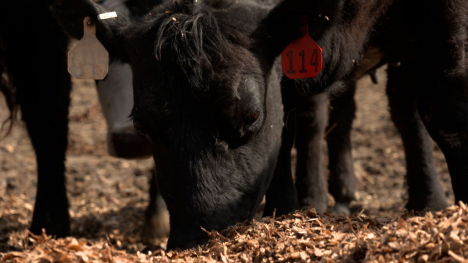
Despite historic cattle prices, many producers still aren't expanding their herds. White Oak Pastures owner Will Harris explains why.
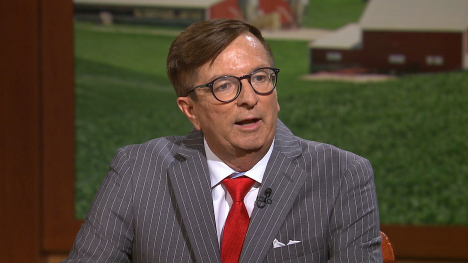
Weather concerns, global conflict and renewed Chinese buying are supporting grain prices. Don Roose discusses whether corn could continue climbing and how producers should approach the market.
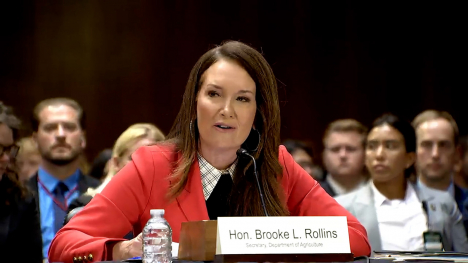
USDA Secretary Brooke Rollins supports $10 billion in direct aid for farmers facing high input costs and losses during the 2026 growing season.
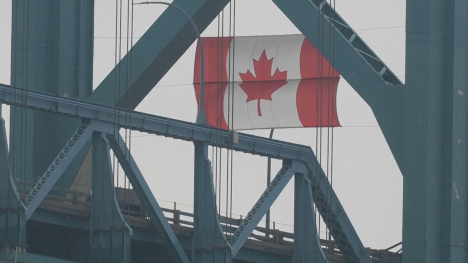
President Trump announced new 50 percent tariffs on many Canadian imports, heightening trade tensions with America’s second-largest agricultural export market.
The window to sell old crop is looking good right now and there’s a big event happening July 19 as Naomi Blohm talks about in Market Plus.