Kate Gordon has watched American energy policy evolve for two decades across multiple presidential administrations. Her frank conversation about rising utility bills, surging demand from data centers, the complicated truth about coal's comeback and whether an all-of-the-above energy strategy still exists in America or whether we're now just picking winners and losers.
Energy Demand Surges, Sources Shrink in Energy Transition in Coal v. Renewables Debate
Share


Electricity has become a staple of modern life as it powers our homes, devices and now our cars. But how we generate that power is shifting back toward coal and oil under the Trump Administration, even as regions across the country continue building on their own energy strengths through wind, solar and ethanol. The CEO of California Forward Kate Gordon, is also a former senior advisor to the Secretary of Energy explains why she believes that national turn is the wrong direction — and why the regional approach she now champions through her work in California may point toward a more durable answer.
Transcript
Yeager: Where is power going to come from? Is it the ground? Is it the air? The wind? The solar? The coal? What's going on? It used to be there was a discussion of an all of the above approach to energy generation. But things have changed as the issue of energy, as we all know, is more political than not. And today we're going to dip just a tiny bit into the politics of energy. But really, we're just going to talk about energy specifically on the renewable side and what has changed and what the current administration is providing for some things to succeed and others. Tonight, we're going to have a little bit more of the alternative energy source as the discussion center. But we will talk a lot about coal. We're going to talk a lot about wind and solar. We'll get into ethanol as well. Kate Gordon is the CEO of California Forward. She is also a former advisor to the secretary of energy. She's worked in a couple of presidential administrations. So we will talk about that. She's got Wisconsin native, ties. So we do, of course, have to talk about Wisconsin. And you're going to have to see the last question. It might just be one of the most controversial I've ever asked on this program. And I have to keep watching to see what's going on. So, we will talk, about a whole lot of things when it comes to energy and demand. What's driving this demand? What is possibly something that can reduce our demand. And what has changed recently? We'll talk right now, two years ago, four years ago. And for sure, the last 20. I'm Paul Yeager. This is the MToM podcast, a production of Iowa PBS and the Market to Market TV show. If you have something that I should know about, please send me an email. [email protected]. Now, let's get to Kate.
Yeager: Kate, when people find out you are from Wisconsin, what do you lead with on bragging about your state? And I'll give you three choices. Is it the beer, the brats, or the Packers?
Gordon: Well, that's a tough choice. I mean, I have to put the brats and the Packers up there. Let me think between them. I mean, the Packers are great because they're, you know, they own the team. So I think there's something very kind of progressive Wisconsin about that. You got a co-op team and it's a great team. So I'll go with the Packers. But I do love Brats.
Yeager: Do you have your ownership slip hanging up in your room?
Gordon: Oh my god I know.
Yeager: So Wisconsin area. But then you've lived across the country. What vaulted you into working all around?
Gordon: But when I was in Wisconsin, I actually started my career on energy and climate in Wisconsin, at the university, at an institute called the Center on Wisconsin Strategy, or Cows. That's in Madison at the university. It's now called Hybrid Strategies, but it was called cows when I worked there. And, and I started work there, really looking at energy as an economic development issue. I did a big report for then Governor Doyle on Wisconsin building up its bio economy based on, you know, waste, waste, products from agriculture, from forests. Actually, waste beer is an input to the bio economy. So, so really, interested in this idea of, like, how do we look at places with their unique assets and their unique opportunities in this sort of emerging clean energy economy? So I started that work in Wisconsin. But it was, really for a national, turned out to be for a national, organization, which we called the Apollo Alliance, and started doing that kind of work all around the country, ultimately ended up first in California, actually leading the organization. And then in DC at the center for American Progress at a think tank in Washington, doing a lot of this similar work, during the first Obama administration. So, really, I think that intersection of kind of places, I'm a very place oriented person. I think it really matters. People love where they are. It really matters that we're building an economy that works for where people are. But connecting that to both this emerging clean energy economy, which was a big deal for security reasons as well as sort of climate reasons, and then increasingly on climate change, as just a big economic issue.
Yeager: Well, you bring up, you say it right there at the end of where I wanted to go, let's go to the beginning of why we even talked about nontraditional sources of energy. Give me years, give me reasons.
Gordon: Yeah. I mean, it's interesting, you know, Paul, when I started in this space, we were still importing natural gas. It's hard for people to remember that. But all the terminals that are now gas terminals where we export, we're all import terminals. So we were importing gas and there was a real energy security and national security imperative to figure out how to be less dependent on outside sources. So when I started, that was the driver.
Yeager: Yeah. What year?
Gordon: So this year, kind of 2004, 2005, you might remember 2008, we had actually the Apollo Alliance where I was we wrote Green Jobs. We contributed to the green jobs platforms of not only the Obama and Clinton campaigns, but the McCain campaign had a green jobs platform. If you, you know, look up John McCain and green jobs, you'll see an entire strategy for that campaign. And that was because there was real bipartisan understanding that we needed to figure out a way to really invest in these domestic energy sources. This is actually back when you see Iowa really getting into wind, for instance, you see the Midwest getting into wind. You see other states getting into solar, back in this era and then Obama's first term, there's a lot of policy backing that up that really changed with the advent of fracking. I mean, fracking was just this sea change technology for the energy industry really the biggest thing to happen kind of in my lifetime, honestly, on energy, which all of a sudden all the import terminals become export terminals, you know, we start producing a lot of gas. But by then there was a really clear global understanding, not only by scientists, but by business and by policymakers, that climate change was having these extreme impacts. So really we saw a shift. And this is in kind of the mid, I would say 2010, 2012. We start to see a shift leading up to 2016 and the sort of big UN Paris Agreement on climate. We see a shift toward this understanding that, yes, domestic energy is important. It makes us more secure, it makes us less volatile. But also we have to have a global shift from fossil fuels to cleaner sources of energy. So I think it was like, that's really the trajectory.
Yeager: You mentioned a couple of key parts there, the fracking boom of North Dakota, which then opened up things in Texas and put some lines back in the water. And you mentioned then to 2016. So are those the two bookends to where we're at today that I guess tent poles probably is maybe a more accurate thing because there's still stuff on the outside of these tents that we're talking about with energy.
Gordon: I mean, I would actually and, you know, look, I worked in the Biden administration as a senior advisor to the secretary of energy. And so I'm very I have a lot of loyalty to the Biden administration's approach on this stuff, which I think is the other bookend, which is really more of a domestic industrial policy approach. So you go through sort of the Obama era, a very global approaches to climate change. Right? Like very global agreements, global targets. We see a lot of emphasis put on making clean energy cheaper here in the United States, looking kind of across the globe to build it wherever we could make it cheaper. Right. Like a lot of emphasis actually on supply chains overseas during that period, both Biden and Bush, I'm sorry, Obama and Bush. But then in the Biden administration, I think you have a really important shift economically, which is this shift toward, you know, kind of brought on by Covid and our recognition of what happened when we lost our supply chains for a little while and how dependent we become on other countries. So I really see that as the book. And it's like you start with, we're very dependent on gas from other countries. Biden is like, we're dependent on everything, like we're now dependent on these clean energy supply chains. We're dependent on manufacturing supply chains. And we start to see sort of an industrial policy like domestic production approach to energy and all those policies, the, the infrastructure bill, chips and science, the Inflation Reduction Act all basically are about being smart and strategic about what kinds of things we need to build here for national security reasons, for climate security reasons, for energy security reasons. And I think a really big push there. I think that is an incredibly important period of time for this story.
Yeager: And now today, as we sit here, it has become, you mentioned America first or looking inward, and that's where we are. But we've not necessarily looked at everything that we produce in this country because we've seen wind projects, solar projects become targets. Ethanol is kind of floating in the wind, with support year round. Have some of those alternatives that have come up are not quite in favor. Am I reading the country right?
Gordon: Yeah. I mean, I think you're absolutely reading it, right? I think today we have this really kind of perverse situation where we have a lot of, a lot of talking about domestic manufacturing. But the reality is, it's it's those industries. So there's kind of a picking winners thing going on where we're picking losers, where the losers are, ironically, these clean energy industries that actually are quite important to our economic security and our energy security, they can come online quickly once you build them. The power's free. I mean, they create this domestic, source of kind of taxes and jobs for folks. But you also see, frankly, Paul, I mean, the tariffs have actually just you have actually put a, put a, you know, real, really slowed down manufacturing across the board. It's not just clean energy. We've lost 100,000 jobs in manufacturing under the Trump administration so far. So actually, what you see is this real disinclination toward manufacturing at all. And I think a shift toward this economic idea of like, we just need to produce a bunch of energy, a bunch of fossil energy here that will give us power similar to Russia's power with oil and gas, similar to China's power with critical minerals. And the three of us will sort of battle it out in this 19th century resource approach to global domination. Like it's a huge shift. But it's not just a shift in clean energy. It's a shift kind of in everything. Really, really problem for the clean energy side, though, because we're we're seeing a boom in energy demand while we're cutting off these energy sources here at home.
Yeager: All right. So that's the next three hours that we're getting to answering that the follow ups to that question. But the day before we record this, Kate, the president received an award on coal. And coal has become, a favor, a favorite item for energy generation. Can that be a sustainable, long term solution? I mean, we think that there's coal as endless in the ground. You and I are. Lifetime probably is the case, but it has its drawbacks.
Gordon: Yeah. It's, you know, when I was in the Biden administration, one of the things I did was staffed the white House and the energy, agency on the coal transition strategy. So we call it the Interagency Working Group on Coal and Power Plant Communities. And that was really focused on a couple of things. I mean, number one, coal was already in decline. I mean, it's become very automated from a jobs perspective. So you saw a big decline in coal jobs actually over the past 30, 40 years. This is not new, right? So calls being been very automated. We also saw a big shift in coal because of the quality of the coal from kind of Appalachia, which is where everyone thinks about. They're being called to Wyoming and the powder River basin Cleaner burning, and but very automated, not mountaintop mining, but very automated coal. So we already saw a decline in jobs. We'd already seen a shift toward a different, a different type of coal, which I think it's important because there's market realities to this stuff. Right. Like coal is great if there's no alternative to it. Wood was great before that. If there was no alternative to it. Horses were great when there was no alternative to them for transportation, when there are alternatives that are cleaner, more available and create more local, better local economies, we shift to those alternatives. The reason we shifted from coal to gas was because it was cleaner, it was more available. We could build the plants faster. It had less impact on the environment. Like these are just realities of the market. So the market had turned on coal before any of the regulatory, pieces that the president likes to talk about. So my point is, you know, coal was already on the decline. Bringing it back is essentially saying, we're going to bring back something that is a least good alternative in a marketplace where we have gas, which has gotten cleaner. It is not ideal in the long term for a bunch of reasons. But we also have solar, we have wind, we have solar with batteries, which is in fact works all day long, 24 hours, because the batteries store the solar power. We have had green hydrogen. We have this bio based fuels for the liquid fuel side. There's all of these amazing innovations that have happened since we started taking coal out of the ground. Let's not go back to horses for our transportation option. I mean, it just does not make sense from a market perspective, a technology perspective. And then at the end of the day, of course, it's one of the worst things for the climate. It's creating, some of these big climate impacts you see right now are because of decades of burning coal.
Yeager: You said the word all. And any time we have an energy discussion, at least in market to market land, I had a boss long ago say energy policy starting with Bush at least was an all of the above. Yeah. Is that exists today in 2026 and all of the above. Or is it more of a some of the above?
Gordon: I mean, globally it definitely exists. So globally people are doing all kinds of things. People have realized that solar power is very mobile. So, lots of really interesting innovation in Africa, actually, around solar power and small scale, around microgrids at a small scale. So there's cool stuff happening all over. We have big stuff on nuclear happening big moderate, you know, modular reactors. We have new innovations there. Hydrogen, globally really innovative. Also pulling carbon out of the air is a big, important new innovation because we've realized we can't just stop it from being emitted on the ground. We have to actually deal with the current atmosphere we have. So globally, which all of the above, here, again, I think this administration is picking winners and it's picking losers. Here you really see some just hard hits, particularly to the wind industry. I mean, these wind projects that were nearly online or coming online being stalled or stopped, you're essentially just cutting off your nose to spite your face, right? Like you're cutting off something that's producing clean power to communities, to these new data centers, to innovation, to manufacturers trying to come to the United States, that's a huge problem. So here I think we don't see it. But I will say pulling all of the above, like like anything else in the economy, right? You don't want to use the things that don't make sense anymore. So it's all of the above where it makes sense. It's all of the above. Given technology advancement. It's all of the above. Given the serious reality that we have to do something about climate change, global climate change and climate impacts are going to bankrupt cities and states and countries. If we don't get ahead of this problem. That is not a small thing. That is a big thing, and it's got to fundamentally drive a lot of these decisions. We're super lucky that technology is advanced so far, that we have a lot of options.
Yeager: Was you mentioned the advanced manufacturing of some of the the facilities, the the solar. There was a concern that the solar panels were coming from China and they were flooding the market, and that was throwing off part of it. The wind turbines had been built in areas, I can think just down the road here from where we're at in Iowa. They were building them. They're not building them there. Now, some of those jobs that started here aren't here anymore. Do you think that's at all part of this decision making on maybe why we've shifted?
Gordon: You know, it's a great question. It's hard to tell what is super logical about it. I mean, there's it's absolutely true that the solar I think more than 80% of the solar supply is at ten is in China. That's true. China did a very comprehensive industrial policy. During, the sort of 2010 to 2020 actually continuing to this day. But they did a lot of investment into solar supply chain. So I think that's true. And solar wind is different because wind turbines, you know, this they're really big. So you're not going to kind of basic economic development right. You're going to be competitive in things where you have access to the raw material and processing close to it. You're going to be competitive in things where transportation of the thing is so expensive that you have to either make it or assemble it close to its final place. You're going to be competitive in a thing where there's a national security imperative, because the Defense Department will invest in things just for national security, right? Even if it's not as competitive as semiconductors, is a great example of a national security imperative.
Gordon: And you're going to be competitive in things where you have to be really close to innovation and you have the innovation. There's just a bunch of things, decisions that people make about where to invest in manufacturing, where they will be competitive. No one wants to invest in a thing and have it go away because of a political change, or because the winds change on, on our relationship with other countries.
Gordon: So it's a pretty tactical set of decisions. Companies make these decisions all the time, locations, decisions. So what I saw in the Biden administration was a lot of tactical decision making. There was an executive order on supply chains that was very clear about a set of things that the U.S. needed to invest in from national security, energy security, climate security reasons. Those are the things you saw investment in. I think this is a lot less tactical. What's going on now? I don't really think it is about jobs or economic activity or competitiveness. I think it's about a really outdated, maybe inspired by Russia, approach to power, using the economic resources as power or power. I think watching Russia deny Europe gas and the impact that had was very compelling to the president as a kind of an approach.
Yeager: Right. But now we're also seeing Russia is to be blocked from providing certain powers to they don't want other countries buying things from Russia as part of the ongoing Russia Ukraine. I need to go exactly. I need to we could discuss global politics forever, but I want to discuss the last 2 to 4 years on something you had said. You mentioned data centers, which gets into demand. Has that 2 to 4 years ago, all these facilities start being ground broke and coming online. The. Is our demand any different than it was or is just part of this problem is fast forwarded because of the demand from these data centers and warehouses that are out there.
Gordon: Yeah, demand is going up. I mean, there's it was very stable for a long time actually going down. And I'm in California now and we're famously we famously have extremely good energy efficiency. So we have some of the highest, energy electricity costs in the country by kilowatt, but the lowest energy bills, because we don't use a lot of energy. So we demand was going down or was stable. It's now going up significantly, not just because the data centers actually data centers are a piece of it. So is the electrification of the, of homes, but also the transportation system. So is manufacturing. You bring manufacturing back to a country and it increases demand. Manufacturing is a high energy industry. And the thing people leave out, as the world gets hotter, places like the southwest, you know, places actually up into the Midwest as they places get hotter, people use their air conditioning more, that's incredibly important on demand. So these things are all coming together. Demand is absolutely going up. What we're seeing right now is, as I said earlier, there's, we're seeing, electricity sources taken offline to meet that demand. So, so, solar, wind, renewable energy is a very fast, actually. Wait a minute. You can put up those systems pretty quickly, connect them to the grid pretty quickly. It takes about seven years to build a gas plant. So if you're looking between about two years to put up a renewable system with a backup battery system versus about seven years on gas, we should be building every single one of those renewable systems we can. Getting it online, because that demand is going to keep going up. These are profound shifts in the way we do electricity from the kind of a petroleum, liquid based, system to, to more of a grid based system with electricity, and that's just going to keep increasing demand. Those data centers are not going away.
Yeager: The grid system seems to always it gets to be a story when there's a major storm, whether it was in the South, up to the east, Texas, from a couple of years ago was the that exposed some holes. And in that system is the grid. Is the grid a long term? Is it going to be here or are we going to reverse it where we're all putting some type of panel generation on our own properties?
Gordon: Yeah, I mean, look, big infrastructure systems are vulnerable to weather, right? I mean, look at hurricanes in the Gulf of Mexico and what it does to gas prices, right? Big infrastructure systems are vulnerable to weather, whether those are oil rigs, whether those are pipelines, whether those are the grid. Weather is getting more unpredictable and more extreme. That has a lot to do with climate change. So we need to be thinking about resilience to systems everywhere. We build everything where we build roads, where we build the grid, where we build pipelines. It is a super important piece of decisions today, even more than it used to be. To your point, yes, I think we need to be really looking at these systems that like bring that more local. We've relied for a lot of years, for decades on big centralized systems that are connected by pipelines or wires. Right. We need to move take a little bit of a step back from that, especially in places that are the most vulnerable to extreme weather. Think about microgrids. Think about smaller, systems where you've got like a business park or, housing development or university or that are off that big grid. We need to be thinking about, localizing power. I think in a lot of cases, it you look at other countries again in the global South that have had extreme weather for a long time. This is what they do, to be more resilient. So I think we should be getting much more innovative about it. The system we have is pretty old. I mean, the grid system we have is over 100 years old that we started drilling oil out here in California 150 years ago. I mean, these are not new systems, right? So so we really do need to be paying attention to like, let's design for the reality of today, the technology, the climate impacts, the weather impacts. Let's not design for the reality of 100 years ago.
Yeager: And you mentioned reliability. Part of it is what the energy companies have told me when or when when I read about these topics, it's like, well, okay, if you on all of 10th Street, ninth Street, eighth Street, all have solar panels, well, that's inconsistent. And you're trying to feed our grid. We don't know if you're going to get power on a regular time. That's not good. We need to have, much more reliable. And that's what coal has done for us because we know we can burn it. That was a thinking for a while. It was right. And now we're starting to see some of these energy companies have a little more flexibility of, yes, I will take in some of your energy, but I'm going to have coal on standby for those lulls.
Gordon: Yeah. You know, I if you talk to me ten years ago I would I used to say this, I would have said fundamentally for stable power. We used to call it baseload power. You need to choose between coal gas and nuclear. Like if you don't like coal, you've got to figure out what your alternative is, right? Because gas is coming online. Nuclear power has been the backup for a lot of people for a lot of time, actually. So it's hydropower. But, you know, Nuclear's been there today. I would not say that today. I would say long duration battery storage is exceptional. We have significant opportunity to use solar plus storage or wind plus storage, battery storage is making those former intermittent power sources like renewables into long duration power sources. So it's a different story today, Paul. But I also think, you know, I understand a lot of renewable advocates want gas to be there for a backup. Coal as a backup does not make sense. Coal is incredibly intensive thing to you have to mine for it, which is a hugely land disruptive and land intensive thing. You have to then move it around, moving it around creates a lot of particulate matter in the atmosphere. It's extremely dirty as an input and we don't need to do it anymore. It's it's been eclipsed by other technologies. So I just think again it's like, do we really want to go back to where do we want to go back to burning wood in our stoves. It's it's essentially that.
Yeager: And the environmental side of this is to me, that is much more of a political Partizan issue than maybe the understanding of we need all approaches because in corn country they look at corn for a third of it to be used for ethanol. They look at a third of it to be. Yes. And so it's it's a regional then approach.
Gordon: It is some I think goes back to where we started. Look, I think energy is by definition a plant. And the economy, they're place based, right. Like you, your economies look different depending on the region you're in. Not only are you do you have a you have an agriculture. I was the state most dependent on agriculture, right? For its for its overall GDP. You're going to be paying attention to ethanol as a hedge for a commodity market that's very volatile. Right. Makes total sense. How do we think about new generations of that? How do we think about a bio economy that's more sustainable? How do we think about giving farmers, you know, money for, planting carbon crops that'll take carbon back out of the atmosphere? Those are the kinds of things you're going to think about out in California. We're going to think about wildfires. We're going to think about wood coming out of forest management for the fires. How do we use that to create value for forest in communities? How do we think about, you know, our extremely urban areas and there and the data centers that we're building for energy demand? I mean, these are all very, very regional and very place based issues. I think you're absolutely right. The great thing about the current energy economy is there's a lot of options for every place, but it is going to take us investing in those options, investing in, you know, different things in different places, giving states the ability to do that, having a sort of a, an underlying system that puts value on innovation, puts value on scientific discovery and puts value on building for the economy. We have not the economy we had a hundred years ago.
Yeager: I knew we would talk quite a lot about, country things. But I do want to talk California. You're with California forward. Right now, you got to tell me what that is and how this plays into what we've been chatting about today.
Gordon: Yeah, absolutely. California for it is a basically what we call a think and do tank out here. It's statewide and we're focused on all the things you and I've been talking about. We're focused on building an economy that's more sustainable and resilient across every region of the state. California is a huge state. I think you can't really get your head around it unless you work at the state level, which I did for a number of years. We have everything we have for us. We have farms, we have coastlines, we have Hollywood, we have tech, we have national security. Like we a huge defense and aerospace sector. So we have everything out here. It's super rural areas, right? And super urban. So we're trying to work on an economy that works across every part of the state, but that like, fully recognizes and is honest about our need for an energy transition away from a set of energy inputs that, frankly, are outdated and toward, dealing with climate resilience. We have a huge wildfires. You know, we have a huge wildfire, risk issue because we're so forested. But we also and we have these strong winds and other things. We're we're we dry out, but we also have a huge extreme heat issue. The Central Valley is, gets extremely hot. And from a climate perspective, that's the most deadly. Climate impact is extreme heat. So we're paying attention kind of all across the board and trying to help build that economy. We do that through both kind of state policy reform. But also a lot of work on the ground, a lot of work helping industries grow. We're doing a big project on the bio economy. So how do you take that waste wood?
Gordon: How do you take the kind of the almond trees that get cut down and cut up in the, in the orchards and put them into some kind of a system? We have a lot of innovation. So taking that feedstock, putting it into an innovation system. And then we have LA SFO that wants sustainable aviation fuel. How do we think about building sort of a pipeline across those things.
Yeager: Well the sustainable aviation fuel is a constant discussion. Yeah, I like that. When we and in our program, I mean, that is what almost every one of our panelists comes on and says, well, if we can get, approval for that, that might help Ido a little more of the demand and help. So there. Yes, lots of people are interested. So let's close with this. Kate. Will energy ever not be political when we talk about the discussion we've had?
Gordon: Will it ever not be political? You know, that's a great question. It's been political for a really long time, actually. If you think about oil as energy that has driven political and geopolitical and conflicts for a very long time, I actually think that the more local we get, the more we're focused on a diversity of sources that work in different places, that get us away from this kind of broad geopolitical, oil based economy, I think it will be less and less political and less and less risky and less and less, of a problem for, you know, war and conflict. But it'll that'll take a while. The energy transition is not going to happen overnight, and it's not going to be one for one replacement of petroleum with something else. This is going to be about choices that work in different places. So yeah, I hope so. I really hope so. Because fundamentally it's the basis of the entire economy. So we've got to get it to be something we all understand and are, feel good about and feel like it works for in our communities and for our economies. There also, I think we're we're just going to continue on this this road we're on right now, which is, not a very stable road.
Yeager: Last hot take New Glarus or Leinenkugels?
Gordon: Leinenkugels.
Yeager: Represents the home state more.
Gordon: I mean, I'm a New Glarus fan. I'm from near there. So, you know I got to go with New Glarus. I did spend my high school years drinking Milwaukee's Best though, so yeah, I'm not going to pick that one. But it did did me proud in high school.
Yeager: I appreciate it.
Gordon: Thank you so much for this, it was fun.
Yeager: This podcast is a production of Iowa PBS in the Market to Market TV show. Our senior production, our production manager is Sean Ingrassia. Our senior producer is David Miller. Sean's crew. Let's go back to his side of the aisle. Reid Denker, Kevin Rivers, Neil Kyer, Julie Knutson and David Feingold help make this production possible. I'm Paul Yeager. We'll see you next time. Thank you so much for making this a part of your internet experience.
contact: [email protected]
Watch More

Montana residents balance affection for free-roaming horses with safety and property concerns.
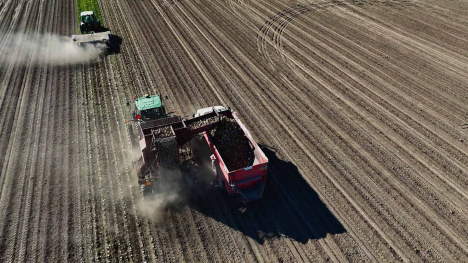
A growers association reports average losses of $500 per acre as sugarbeet harvest gets underway.
Shawn Hackett weighs corn demand, USDA yields and potential November turning points for grains.
Sugarbeet losses, diesel costs, Montana’s feral horses and market analysis with Shawn Hackett.
Shawn Hackett weighs storing corn versus selling soybeans and Brazil’s potential weather risks.

Global supply disruptions keep fertilizer markets volatile heading into 2027.