Spring 2026 has started dry. Eric Hunt of UNL Extension breaks down the Drought Monitor, disappearing snowpack, and why the next two weeks of rain could define the entire growing season.
Changing Weather Patterns Resemble 2018 for 2026 Crop Year
Share


Cooling temperatures of Pacific Ocean water is feeding the theory this growing season is shaping up to look a lot like 2018. University of Nebraska Extension Meteorologist Eric Hunt is back with us to look at what’s developed the last few months and gives some indication of the skies and precipitation ahead. Hunt has a front row seat to a major story developing in Nebraska as well. We’ll get into the lack of snowfall in key areas that’s also of concern along with record warmth in the West and cold conditions in the East.
Transcript
Announcer: Iowa Soybean Association is driven to deliver for Iowa's 40,000 soybean farmers. We're proud to provide objective agronomic research, a helping hand with soil and water stewardship, and timely industry news powered by the soybean checkoff. Learn more at Iasoybeans.com.
Eric Hunt: Well good afternoon. This is Eric Hunt for University of Nebraska Extension. I host a Cropwatch podcast here in Nebraska. But I’m kind of lost today. Yeah, I'm speaking with Paul Yeager for MtoM podcast over in Iowa. How are you, Paul?
Paul Yeager: Perfect. It's like you've done this before, Eric.
Hunt: A couple times. Yes.
Yeager: Yeah. I want to have you back because it's always fun to discuss the planting season. I mean, we're in the middle of winter. The last time we talked, you are unfortunately, were spot on. We got really cold. People got really grumpy. So why not? Let's make everybody grumpy again as we go into March.
Hunt: Okay. Well, I'm. I probably tell people stuff they don't want here all the time. So it's par for the course.
Yeager: It's the way it goes. Okay. So how do we do? This is you've got a slide show. We're going to show the slides. And this week, the week that we were recording this, we are coming off of a massive blizzard again in the East. We'll get to that. And we're going to talk about this dryness that has set into the West. But then all of a sudden it has it. And we've got the Sierra Nevadas that are having crazy amounts of snow after not having any. I think that's what we're going to cover today. Right?
Hunt: Yes, indeed.
Yeager: All right. Drought Monitor, all that fun stuff. So let's start with the warm in the west, cold in the East. Right here in the middle of the country. Eric. It has been there's been some times where this is the thickest ice I can remember in Iowa. And quite some time. And that's the second ice we've had. That's a rare B just kind of a very cold winter. Why?
Hunt: Well, a lot of what depends on where you are in the U.S., if you are in the western third of the country, has been a very mild, if not a record warm winter. Now, if you're in the eastern seaboard, particularly in parts of the northeast, it's been probably the coldest winter you've had in a couple, maybe three decades. I think for a lot of the Midwest has been oscillating between Cold War miles. You get out toward our way. We've been generally pretty mild with a few cold pulses. Eastern part of Iowa, especially going toward the Great Lakes, has been generally cold, with some occasional warmer intrusions. A lot of this is really just been the upper air pattern has been fairly stagnant for a lot of the winter. We've had ridging in the west and a lot of troughing in the east, and a lot of that troughing that we've seen across the eastern seaboard, you know, Great Lakes, Northeast, a lot of that has been very strongly tied toward where we've had the polar vortex stretching or vortex or.
Yeager: Good. Yeah, we've had the polar vortex this year, right.
Hunt: There's been stretching, been doing a lot of yoga this winter. Stretching.
Yeager: Yeah. That's the only thing we can do to stay warm at certain points. So. Okay. Is there a certain reason that the line is where the line is?
Hunt: Well, so to a large extent, the stretching this year has been predominantly oriented, you know, kind of coming from northwestern Canada, Siberia into, you know, basically the maybe the eastern part of the Midwest and getting into the northeast and occasionally getting down to the Mid-Atlantic region. And at times we've been able to stir up some pretty good storms off the East Coast. They've had a lot of snow in parts of the northeast this winter. And, you know, if you look at that active storm track on that one slide, we've had a lot of cut of what we call clippers coming through, at times. So we've actually had decent snowfall this winter like Milwaukee and Chicago and Detroit and indeed parts of Indiana, Ohio. We've had lots of lots of snow at times this winter. You know, I think parts of Iowa have done okay on snow. Now, granted, Nebraska we have been it's way short on snowfall that we did big up some ground last Thursday. I think we had more snow at our house in two hours. We had almost the previous two months, of course that had that happen during rush hour.
Hunt: Fantastic.
Yeager: It was quite it was. Yeah, it was quite the mess here too. And that was so that's a whole another discussion for another time. But I want to talk about the Western United States, one of the stories we had recently on, market to market was talking about the avalanche that happened. And it was the the new snow didn't have a chance to bond with the old snow because it had been so long between the snowstorms. Where is this most impacted? Where we are short in snow.
Hunt: Yeah. So most of the western U.S. is short and snow. What's been interesting in the West this year is it parts of California? A lot of California and most of Washington have actually had pretty good moisture this winter. Oregon, generally speaking, has been pretty short of moisture. So it's like, you know, times Washington got it. The California like their precipitation has been kind of like week on a month off. So like they've been getting blasted by storms for like over like 2 or 3 storms a week. They get nothing for month and then, you know, blasted nothing for months. So they recently got blasted again. I forget exactly how much snow they had this year, but there are places I think they were. They were talking more on the order of like 6 to 8, nine feet, not inches, feet of snow. And, you know, unfortunately some skiers took some risk they maybe shouldn't have. And the avalanches do occasionally happen in that part of the world. But at times this year, that part of the West has gotten bombarded or we have not had snow. Is the southern Rockies central? Most of the Rockies have not had much snowfall. And if you're in western Nebraska. So I cover my whole state. The lack of snowpack in the central Rockies is a major issue, and I've highlighted my slides, the South Platte Basin, and basically what this slide shows is that, you know, that that dark of that light blue line or purple, whatever color that is, shows you like the max or so water cloud they've ever had that basically back to like the 1980s. And then that red line is the historic medium. Well, that black line is a season to date. And you'll notice that by and large, we have been paralleling or even slightly below the historical minimum, meaning there is not much snowpack in that area, which is probably obviously bad for tourism. Skiing has been not great. Therefore, you know, from several people I've heard talk about going out there to ski so far this winter. But more importantly, that water is relied upon by, surface water irrigators in western Nebraska, probably also other parts of the West. And, you know, unless we just have a really robust finish the season in, you know, Colorado, Wyoming, there's going to be a lot less water coming in some of those rivers. And what's certainly optimal, probably even it's going to be a rough growing season if we don't get a good finish to the snow season. Now, granted, March and April are often their two snowiest months. There's also the snowiest months for the western part of our panhandle too, so there's still time to make up some of this deficit, but it would take a miraculous finish to get back to the median.
Yeager: And that, I think, has already been reflected in commodity prices a tiny little bit when it comes to wheat. That's more southern plains. But pretty soon we're going to have that discussion, I guess, in Kansas, in Colorado or, Nebraska, in Colorado, in some of those wheat growing areas, because that's going to impact aquifers, rivers and any other water sources for irrigation. Is that what I'm also picking up from you?
Hunt: Yes. Yes, indeed. Yeah. I mean, you basically you have to irrigate to get real crops, you know, corn, sugar beets, you know, those are kind of some of the biggest, staple crops out of the Panhandle, especially corn. I mean, you have to irrigate out there, and there is no such thing as a successful rate. That crop of the panel is too dry out there. Yeah. The Southern Plains, though it's been very dry down there the last several months. The times they've been very warm, they had that one brutal cold snap with some ice back in late part of January. But by and large, they've not had much winter down there. And I think there was a I've heard stories that some of the wheat did not really, truly go into fertilization until sometime in January. Parts of Oklahoma, Kansas is in better shape. They've actually been like, so Kansas and North Dakota have had decent moisture this winter. Oklahoma is generally not. Nebraska is definitely not had good moisture this winter, but Kansas for the most part has. So my I think as long as they have a decent spring, their wheat crop should probably be mostly okay. My understanding though, the southern Panhandle, which is kind of a big wheat area, Nebraska, the wheat out there is that, very, very poor spider standing further, easy to see. Oh, sorry.
Yeager: Go ahead. Well, this is not anything new, right? This this this drier conditions have been going on for a while.
Hunt: It's been not been a good decade out there. I think they've had a couple of years that were a little better. I think last year was somewhat better for wheat. Out there. I think the state as a whole was a little bit better for wheat last year. But yeah, there there's been a lot of poor years. The other concern I really have with the dryness out there, the just the wheat is the have some that's good range country and that extends into the Sandhills. And there's just been very very little moisture of any kind so far this winter really dating back in some cases back to back toward the end of last summer. And it's something I like looking at kind of year round, but I, I actually think it'd be very important in the winter is potentially evapotranspiration. So do you have really mild winters particularly in the in the Plains and, you know, middle Midwest region, if you don't have frozen soils and you have warm days, especially a sub wind and you have sun, you're losing moisture out of the ground. So not only are you not preserving moisture with snow, if you have open ground and it's 6065 degrees several days roll decent breeze like you're losing, what little way should you have out of there? And that's really setting you up even for even worse situation. If you just had got moisture, my prognosis for the spring would be things would be tough in the high Plains. Looks like western Nebraska, northeast Colorado, eastern Wyoming. I think it'd be a tough go of it. Going to spring, with just a lack of moisture. But if it's been colder this winter, I think things would be better. They are now. The fact has been very warm as well as dry as a so it's a huge issue. It is this lot in the last five years.
Yeager: And this is the is this the ETI that you're referring to in the graphic? What is that word, that phrase. You.
Hunt: So that's even that's evapotranspiration. Potential evapotranspiration is basically like if you had a, you know, like a well water, it's primarily used for like the term like how much could a plant transpire like grass or corn? You know, if you had just a full profile of moisture, you know, based on sunlight and wind speed and temperature, you know, things like that. Like how much moisture? Like what would your potentially evapotranspiration be? And there's times in the summer, particularly in, you know, we'll say McCook or Imperial Nebraska, if it's 105 degrees and a dew points 50, what's blowing out the southwest at 20 miles an hour, you could probably lose a half inch of water in a day. You know, for most of the Corn Belt, most of the eastern half of the US, the typical potential evapotranspiration in a given day be in this in mid-summer would be. Yeah, between 1500 to 3 tenths of those returns. And it's been kind of on the higher side.
Yeager: Okay. And this graphic this has a ridiculous color over Nebraska. That's not Husker red there. That's worse. That's more extreme. That's beyond in the drought categories there. Right.
Hunt: Yeah. So mean this it's basically this is the potential evapotranspiration percentile. So if you're in that dark red, that basically means that you have either never or seldom ever had a evapotranspiration this high consistently through the winter months. It does extend into parts of western Iowa. And you'll notice that pretty much the entire most of the western part of the country, most of the central U.S, has had above average potential evapotranspiration. So even in places like, you know, Iowa, Missouri, Illinois, where, you know, I think they've been a little bit cooler. But we also we've not had a lot of moisture there in some cases winter either at a times it's been warmer. In those days it has been warmer. The ground sort outlook. You probably have lost more waster, than what you would have had if it just had been colder northeast where it's like colder, more cloud cover. They've had less potential evapotranspiration. Normal. Now again, we're not talking about, you know, large amounts of potentially to you at a given day because it is still winter. But, I mean, if you are potentially losing an inch of moisture a week, that's all that's happening. But if that is your potential over week, I mean, that is still not trivial. It's bettering that. That's not that's more than what you would typically get in a month in a lot of this part of the country. And, you know, for Mother Nature.
Yeager: And that means that also the soil moisture is short already in a lot of areas.
Hunt: Yes, it is so, the, the, the grant, there's different soil moisture percentile products out there. I like this NASA grace one just because it's based on a couple of different satellites and a glance, relatively robust Lancer model. It's good to kind of puts it into perspective, a longer time series going back to late 1940s, thoroughly, 2018. So, I mean, it's based on kind of like a longer period of reference. And, you know, again, I just I'm very concerned about the conditions in eastern Wyoming, western half of the Braska in northeast Colorado. We have a lot of good range wheat country. There is is really, really short of moisture. And I think it's, you know, there are ranchers are going to have to make, some hard decisions on herd size. You know, I've already heard stories from the educators that cover, that part of Nebraska that there are ranchers already talking about selling off more of their herds because they don't have they don't have the feed. They don't have the they don't have the pasture and the forage. I'm sure they'll be emergency haying declarations. I don't think it disturbs me quite a bit in the next month or so. Is any time we have windy, warm days. We're going to see high fire danger in this part of the country. That's been kind of common the last five, five years or so. And, you know, it's only start getting some better moisture. Things kind of start greening up a little bit more, which out there takes takes a while. We're going to have high fire danger risk. And I, Governor Pihl, and our governor put out a bourbon for the western two thirds of state for a while last spring, and he may have to do that again for a period of time this spring. And I would I would point out that even places, you know, further east into the states, that you might have to be concerned about more red flag warnings this spring if we don't get moisture. I think there is some good moisture coming for the states in the next couple of weeks, so that may not be as much a video issue, but still that moisture is actually there in the ground. Those red flag warnings, you know, that fire risk is going to be there.
Yeager: But, two weeks ago we had fires that went through, Kansas, Oklahoma, parts of Texas. But I want to go back for a minute on this soil moisture short and it'll tie into the drought monitor, because, yes, we've been talking about Nebraska and Wyoming and Colorado, but I want you to talk to me about this area, of North Central to northwest Illinois. That's dry. I have a friend, Chad Bell, who had been a featured, Tom guest a couple of years ago through his crop year. He posted a picture of him doing field work in the month of February. He's never done that in North. He's east to the quad Cities there. And so that's the type of thing. And it's not he's kind of he was like, this isn't what I want to do, or normal to do. So how dry is it getting in that world? Because then all of a sudden there we have to shift not from wheat, but to the corn being discussion real quick, because that's a pretty good, land over there to for those two crops.
Hunt: That I was going to get to that here shortly. So thank you for the introduction on that. Yeah. It's been very, very dry across the eastern part of Iowa, and a lot of northern western Illinois in the last couple of months, they have not had as much snowfall as they've had over toward Chicago. If you look at the like the Drought Monitor, like we still have, parts of Illinois, Indiana and Ohio. So there's some pretty prime corn, soy acres and there that are still in extreme and severe drought and normally you're going into the spring like they're probably trying to get rid of moisture over there, or at least they're not necessarily like needing a really good wet march. You know, my prognosis is if it is not if March isn't wet in that region, there's a lot of folks that aren't normally going to be dealing with, you know, really dry type soils in that region are going to be dealing with that, this coming spring. Now, I think the, the forecast, I think actually is pretty good for moisture where there's I'll get to that after a little bit. But I do think the, the, the summer outlook, I think actually is fairly favorable for a lot of the corn soy producing regions of the U.S. the summer. The contingency, though, is that if we have a very dry march in the spring, is a dry mid spring, is as dry as I think it could be, then we may be setting ourselves up where we have to have an absolutely perfect summer. Maybe a situation we still where we had a 2023. But, you know, we aren't normally starting seasons a short of moisture in, you know, a lot of Illinois, Indiana and Ohio. So it's going to be very imperative the next six weeks. We actually get really good moisture, in the ground. I do think it's a possibility.
Yeager: Okay, we'll get to the outlook in just a moment. I want to focus again, drought monitor for a moment in a couple of areas. I'm looking at Florida, southern Georgia, southern Texas. It's big concerns. We've already kind of talked about the Colorado, Wyoming, Nebraska section, a little bit of the Montana. Are there areas of huge concern of expansion in that drought that's not already there?
Hunt: Yeah. So the area that I'm probably most concerned about right now will be more drought expansion in the southern Central Plains region. So right now a lot of Kansas is in the normal dryness. Right. Well, okay. So there have been nothing. The latest seasonal drought look does show some expansion. Being pretty likely eastern Colorado. So that's, you know, central, southern High Plains region I had anticipated it's going to be a rough, go for it for a while. Texas. Now, I do think there may be chances to get some improvement in the eastern part of Texas in the next couple, several weeks or so, and I do think there's going to be possibilities for getting some improvement in, say, the Mid-South region. But like, you'll get again, the eastern Iowa, Illinois, Indiana or parts of Ohio, like that causeway area, very, very dry right now, some real drought issues. They also been extremely dry versus wetter in a lot of Arkansas. Tennessee uses, you know, kind of secondary corn, soy acres down there that absolutely have to get some really good moisture the next six weeks. Florida, it's been I don't think Florida always gets a lot of attention when they get really, really dry, because I think people always associated with it being equal to storms, the average. Well, that's really kind of more so the summer phenomena, winter, they can't get good moisture. They have not had good moisture this winter. And at times like they've drawn me, that's been cold down. There are times, but other than, you know, a couple of frontal passes have gone through. They just really haven't got good moisture. And a lot of that state is in severe and extreme drought. And they they're having wildfire issues. And because the population has grown so much the last 30, 40 years, like, you know, when they have severe extreme drought conditions, they do start having, municipal water issues that you don't think about. It is an area that has healing theory, that much rain that comes in a year.
Yeager: When you say municipal issues and everybody thinks, well, my guy, it's surrounded by an ocean on two sides, whole different discussion for another day that we won't get into a drought relief is something the drought monitor is the now and looking back the the future, the forecast we just showed now the relief. You kind of teased it earlier. You think there's some rain possibly coming for the States?
Hunt: Yes, yes. Actually I feel pretty good about good moisture coming for a lot of the wheat and corn soy belt. Next, for a couple of weeks, we look to be going into a fairly active pattern by the end of this week, heading into next week, that might continue through the middle of March. So I think there's some time to make up some deficits in parts of the Mid-South, certainly Illinois, eastern Iowa, Indiana, Ohio, Michigan. You know, I feel pretty confident we we get some pretty good moisture, pretty good chances for moisture, potentially significant moisture ties, and mostly probably in the form of rain. Snow could be pretty useful. March to the ground's thawed you if you get a heavy, wet snow. It generally melts in a few days. It goes in. That's good, but I think a lot of us would be more in the form of rain. But there are also suggests that we may get some decent moisture back into parts of Kansas, parts of Nebraska. We may even see it get some moisture back into parts of central western Nebraska. That has really missed out so far in the last several months. No. I think it's going to take a long time to make up some of the Jeffersons, out there and, you know, getting a couple one two inch rains is not necessarily in the drought in, say, around Champaign or in parts of western Ohio.
But I think it would set us up for having good topsoil moisture. You know, to start off the season, the means you're going to April with a decent profile of moisture, meaning that we don't have to have a wet spring, you know, for us to possibly have an excess for summer, then, you know, what I want to see is what you ideally would like to see. Is it be a little dry time to spring? As we get the crops in, they get good root development, and then you start getting the good way for the summer. You know, if you go start off really, really dry. Now if you for, for the west of me, you can put on little irrigation. Good things to germinate. But that's not you know, no one really wants to have to do that. And, you know, I think that we are going to have opportunities here the next couple of weeks to, get some good moisture in the ground.
Yeager: Well, you know, the phrase plant and dust, those beans will bust. So, and you're thinking in March, early April, that's when that moisture outlook is. So, Sean Hackett was on, recently on the show. He likes to talk weather as well. He mentioned I noticed that, you know, what do you think about El Nino?
Hunt: Well, we are heading in. I mean, right now, the probability of us being in an El Nino by late summer is over 60%. That probability, you know, from NOAA and from the other global modeling centers. That probability has been increasing throughout the last couple of months. So I, I feel quite strongly I mean, I feel very, very confident.
Hunt: La Nina’s basically dead and that we are basically right now about neutral conditions. And there is a pretty good likelihood of us being in an El Nino just because we've had more, what we call westerly wind burst that help bring that warmer water from Australia, Indonesia back over to Central Pacific. The other thing I think is important to point out, looking at this one map, is that we not only have a lot of warm water off the South American coast, even though we're in a negative phase of the Pacific Decadal Oscillation. We do have warmer water off of California, off of British Columbia. And when when in years or we see El Nino plus and know warmer water across most of the eastern path Pacific basin, generally speaking, we tend to have good storm tracks coming. It's good, good pattern flow, coming into the north central part of the country that bring us not only some cooler air at times, but also, you know, chances for more routine chances of precipitation. So I do feel fairly confident this summer should be based on historic presence. This summer should actually deliver some decent moisture to most of us to most.
Yeager: And it's all about timely. And in the spring you're saying, just again, we talked about precip, but temperatures look a little warmer in the South.
Hunt: Yeah. The prognosis right now is the southern half. The country is probably going to be warmer than average. It might stay a little chilly. Northern Plains, Upper Midwest, and I do think that the last part of March, early April may be relatively chilly, probably colder than what people prefer. I think the middle of month generally is going to be relatively mild. I do think, though, that we are probably going to see more repeated pulses of winter type weather coming in through the middle, early mid part of April. It may resemble 2018 to a certain extent, and I do think we have good chances for moisture in your next few weeks. I do think there's a possibility that a lot of the region does get a little drier at times, and April maybe possibly to May. That's why I think it's so crucial that we get this good washer in the ground the next couple of weeks.
Yeager: Store it, get it, store it. Okay, sometimes when we get to the end of your presentation, we run through a few things. And I don't get you to define the thing. I need you to define for me, again, is the analog spring outlook. What does analog mean in your world?
Hunt: So when I talk about analogs I'm talking about years I think might be useful for context. So these are years in this case. These are all years. We were transitioning from a La Nina into an El Nino during the growing season. So in the 21st century, those are 2002, 2004, 2006, 2009, 14, 1823. Now, I'm not saying that it's this the spring and summer is going to look exactly like any of those years. Some of these may not be useful. All these none of these may be useful. You know, like I might like none will be useful. But you know, we so we rely on the global dynamic models. We rely on historic past precedent based on, you know, things like that. And so state in specific decay to oscillation and all the other connections. And, you know, if you think the tilt connections like the last 25 years during these will be kind of called common years, we do tend to be a little bit colder North Dakota, Minnesota. So this might be, you know, a little bit later spring getting stuff on the ground in the in the northern Plains, you notice a lot of the region is relatively warm. Some of those springs are kind of warm. I would point out, though, that the years that I'm a little bit more bullish on being analogs 18 probably is the one I, I'm a little bit more most bullish on. 1409 23. Also, it could be pretty useful. Some of those actually were a little cool, particularly across, I would say from eastern Nebraska through parts of Indiana, certainly times to some colder air. And I think some of those years we did have a few issues with delays because the colder soil temperatures. So that may be more of an issue if what I'm seeing from the European weeklies, because of potential for a polar vortex split here the next week or so, there's a possibility in early April could be kind of cold. So it's possible the soil temperatures are not going to be optimal as early as we would like them to be. The other thing I would point out, though, the reason I, you know, again, I really think it's important that we do get good moisture in the ground, particularly the Western and maybe central Corn Belt is there is a historic precedent that we often hear kind of dry central Plains, Western central Corn Belt. In April and May. Now, granted, if we get really good moisture March, April, May or a little on the dry side, you know, I don't think this is going to apply too much if they, you know, are able to get six days of field work done for four weeks in a row, they get up in, get other things done, that's that's okay. But you know, in areas where we are really short and shear force doesn't deliver, that's really going to put, you know, some people behind the eight ball for coming into the season. We got.
Yeager: Right in. That adds to the stress of of everyone. But you know the thing is yes, the crop gets planted. It's just a matter of when and then when does it have the right moisture. And the market will trade more drought than rain. Right. Is that kind of how that usually works?
Hunt: Well, that's how it works. And, you know, I, I do think that as long as we get good moisture central eastern corn belt in March, early April, I think if it does get a little dry April May, that's probably okay. Now, if we only get like average moisture and say Illinois, Indiana and Ohio in March and then April May, or you look more like 2023, then I think there's going to be real problems over there. And we're, you know, we put that potential for real problems in parts of Nebraska also, maybe parts of western Iowa, if we don't get some moisture. So the markets may react a little bit differently. If that is the case.
Yeager: And it all depends. So that's the spring. The summer has that. You're really like, we need that spring moisture because the summer looks a little drier and warmer.
Hunt: Well, the summer I think so the CPC has the entire country is warmer than average of the summer. You know, the June temperature trends across the entire country are extremely, like very strongly positive. That does include all the basically all the, you know, corn, wheat, soy belt. You know, if you think about the recent years, we really have not had a lot of tremendous prolonged heat in the middle of the country. I there are there's a lot of signals that, to me would suggest that, yes, there's going to be a stretch of the time to summer will be kind of warm, but overall I, I'm not super bullish on just, you know, long stretches of heat in in the Corn Belt Mid-South regions. I usually in the summers where we are transitioning El Nino, the heat tends to be confined to the West coast. Your Texas maybe sometimes both. Occasionally you'll see it, maybe further east. It's not common to see in an El Nino summer where at least like that transition El Nino, there's not a lot of precedent for it being just extremely hot from, say, central Nebraska through northern Indiana into Minnesota. That is not usually if that's going to happen. Usually that's like the second or third year of a La Nina or, you know, lightning paired with the really cold waters off of California. That's not we're looking at this summer. So, I mean, I'm not saying that couldn't happen, but if that would be a more of an outlier type scenario, I think the more to me I actually feel pretty confident that the growing season conditions for most of us are going to be pretty good. You know, I think the catches is going to be do we start off, do we have enough moisture to spring to set us up for, you know, the really high end yields? Or are we going to be looking at having to have, you know, those really timely rains or else type of scenario pretty good.
Yeager: Sounds differently than or else I think I take pretty good, right?
Hunt: I would definitely take pretty good.
Yeager: Yeah, the oral is what gets us a little nervous, but, you know, the analysts come on and say that, you know, that that might be one of the only spurs for a market higher is some type of weather challenge. And I guess if you had to put your neck out a little bit, Eric, in 2025, six. Let me get my year right. Average weather. How would you grade the weather of, for, for growth? And, trying to put together a big crop.
Hunt: I mean, I think actually, you know, I sort of say this is now is probably going to be the total opposite will happen. But realistically, I think if the next two weeks deliver good moisture, I think we have a very nice path. Said ahead for us were a very good growing season for a large portion of the country, the least, at least in terms of the corn soy areas.
Hunt: And I think also there's a chances for decent finishes to the wheat crop in Kansas, heavy parts of Nebraska and Oklahoma as well. You know, I'm just I'm not seeing anything right now. Let me suggest massive drought pressure coming in to a large portion of the Grain Belt. Now, again, if the spring is really dry, which again, I do think we could be looking at a drier spring. Usually a drier spring is followed by a decent timely rains in the summer. You'll. So you weren't super short going into the spring. That's usually the years we see. Really. You're really above trend yields, and I would point out the some of those analogs 0409 13 were a really, really good years. 18 was a pretty good year. The oh 2206 were not great. You know, if prices skyrocket, it's probably from something else the size of weather related challenge, at least in the U.S.
Yeager: I'd say that, but I think it's putting your neck out there. I think you just did it.
Hunt: Good job. So that's my prognosis.
Yeager: Yeah, we can see Eric on a number of places, including Market Journal, which is available on Nebraska, PBS, Nebraska Educational Television, or is it's Nebraska PBS now. Right. That's the official name.
Hunt: Its Nebraska Public Media. NET, Nebraska PBS. Sorry. Okay. So the Market Journal also you can get on YouTube. They have the entire, show where they also have individual segments, similar to what you have for market to market.
Yeager: And as we heard, you also have a podcast that you'll appear on from time to time.
Hunt: Yeah, I do, I run the Crop Watch podcast here for University of Nebbraska Extension. So I do a lot of weekly weather outlooks. Not grand. There are a lot more Nebraska centric, but I do occasionally throw in stuff that's going on elsewhere around the country. I don't do a lot of South American talk just because, you know, my focus is mostly on the state. And, you know, there's analysts like Eric Snodgrass, you know, they do a great job of kind of covering, you know, other parts of the world. But I to point out that I, once we are starting a news, it's called First Friday. So we have an event here, dude, and I'm hosting drive pals in here and UNL they have something called First Fry. We have coffee, get together. So we're doing a little climate weather outlook for the first half hour before that that I do live. We also recorded on zoom and we put it out. So if anybody's interested getting updates more regularly, you can see those every month as well.
Yeager: You're turning into a regular old empire over there.
Hunt: Sure. I wish I showed up on the revenue stream. That's right.
Yeager: Well, we got to find it wherever we can. So, Eric, always good to see you. Always good to catch up and, find out what's happening. And I remember in December shaking my head, going, oh, he was right. Spot on. So.
Hunt: No, I was right about the eastern. I was right about like your area east. I did show some cold potential western Iowa out here that didn't came to fruition occasionally, but not not like I kind of was expecting speeding east.
Yeager: Sorry, I completely forgot to ask this. This eastern seaboard business, you know, you think of, it was quite a bit Carolina North, once. And then again, does that signify anything when you get the big nor'easters and these major, I think I think I did see the word bomb cyclone put on there this morning.
Hunt: I, you know, I have a check to see if they totally qualify. It's a bomb cyclone means you had a 24 millibar pressure drop in 24 hours, which is a substantial pressure drop. I mean, anybody that's sensitive to, pressure changes would probably not be having a whole lot of fun for that.
Yeager: And then does that mean anything?
Hunt: Well, so when you have that kind of pressure drops you when you, when you have a really tight pressure gradient, lots of lots of wind, it just basically means that we've had a we have a pretty active weather pattern in that part of the world. You know, they have gotten pretty good moisture, over in the East, which is good cause they were doing some pretty bad drought conditions and a lot of, the northeast last summer. So I think they have had some decent drought improvement here or should be working their way towards some decent drought improvement. But in terms of having a lot of nor'easters in February into early March, I mean, that doesn't necessarily mean that, you know, we're going to have X, Y, and Z occur here in the central U.S..
Yeager: Yeah, we'll see how it all shakes out. See if that holds up. And we won't even talk about the, Punxsutawney Phil. We'll leave that for another discussion for another time.
Hunt: If they keep might have been, you know, actually, he's bright. About 30% of the time, we believe.
Yeager: Eric Hunt. Great to see you. Thank you so much.
Hunt: Yeah. Thanks, Paul. Take care.
Yeager: This is the MToM podcast. He's Eric Hunt from the University of Nebraska. I'm Paul Yeager. If you have feedback for me, send it in an email. [email protected]. We'll see you next time each Tuesday for a new episode of the MToM.
Watch More

Farmers rarely seek mental health help. Farm Dog offers care from people who know farm life.
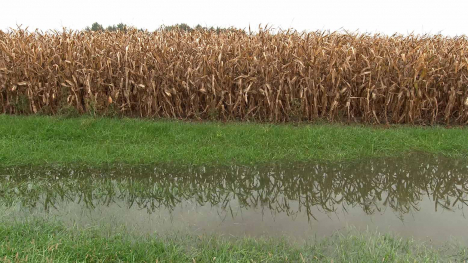
Heavy rain leaves western Corn Belt fields soaked, threatening harvest delays and crop quality.
Sue Martin examines grain stocks, harvest risks, soybean demand, energy costs and livestock markets.
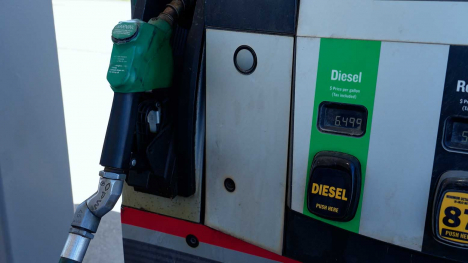
Rising diesel and freight costs squeeze farm margins and could reshape plans for the 2027 crop.
Trade frustration is muting the weather rally, according to Sue Martin in our Market Plus segment.
Midwest population growth brings opportunities near cities, while remote farm towns lose residents.