Jeff Irwin lost his father Gary to suicide on his 22nd birthday in February 1984. Now, 42 years later, he's telling the story — and writing a book — to help farm families recognize the warning signs and find the resources that didn't exist when his family needed them most.
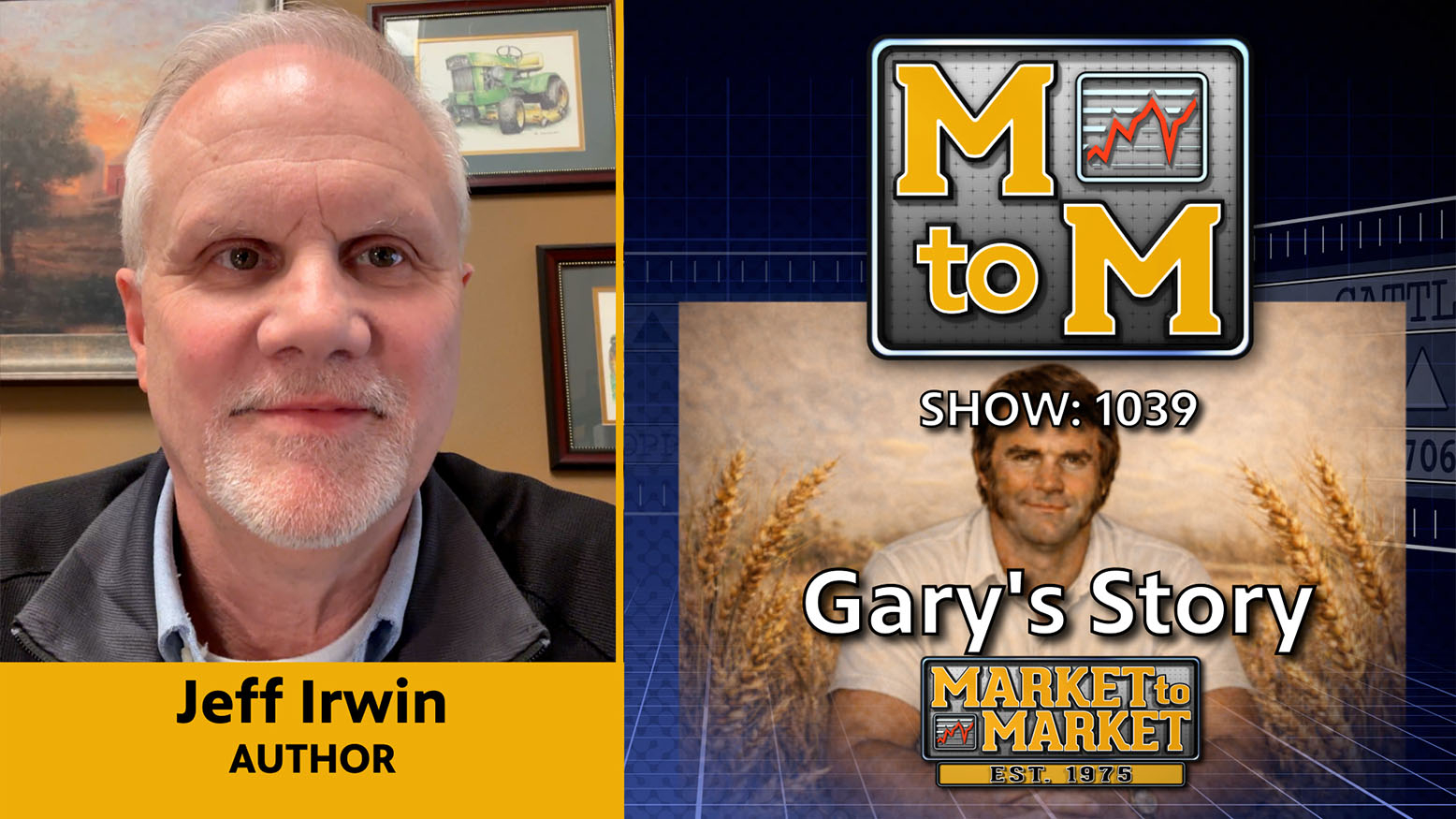
"One Day at a Time" Son Reflects on His Father's Suicide 42 Years Later
Share


The topic of farmer suicide is never easy to talk about, let alone write about. Gary Irwin was a North Dakota farmer who was facing financial difficulties in 1984 when he decided to take his own life. Gary’s son Jeff is writing a book about what happened and the impact it had on his community and the rest of his life.
Transcript
Yeager:
There's a new way to stay connected and know what's happening with market to market. When you subscribe to Market Insider, one email and a lot of information awaits you. Go to markettomarket.org and subscribe to Market Insider.
We got a heavy topic today. If you ever once in a while, you know, we cover about 3 or 4 topics on a regular basis. This is one of them. We're getting into mental health today and we're going to talk about suicide. The long month of January and February can weigh on a farmer's mind for many reasons, and it did for Gary Irwin in North Dakota back in 1984. The fall of ‘83 had a very bad storm come through a spring or a fall storm, lightning and hail and wind. The damage to crop it set him back financially. 1984, remind you, we know what was going on in that time. It's set him up for a deep depression in the month of January that in early February came to a conclusion. We're going to talk with Gary's son, Jeff, who was 22 when his father took his own life. Jeff is writing a book about his experiences, and there's a couple of reasons and motivations for this book, one, to tell the story of his father. Two, and most importantly, to help those who might be impacted or thinking some of those same thoughts. So we're going to find out a little bit about Jeff's story, kind of set up, what his career path has been. And in agriculture, not necessarily on the farm, but very close to it. We're going to talk about the pressures that his father was facing, other farmers were facing, and we're going to set the stage for his book. And I'm going to warn you, towards the end, we will get into the story of how his father took his own life, how coworkers of Jeff's were part of the town ambulance crew, the community township there, and what they found and tried to help Jeff one day at a time. That's really all we can do. A couple of websites, that are out there and that I want you to know, first is to know nine, eight, eight. If you know someone that is going through some tough times or that should get some help, call nine eight, eight or have them make that call and start them on that process. People just need to talk to. It's not necessarily helping anybody make a decision, but it's helping the person help themselves. Are you okay? Bridgette Reiddle helped us set up this interview. We've talked to her before. That was her big message. Let's find out here on the MToM podcast. I'm Paul Yeager, this episode with Jeff for when let's hear Jeff's story. Since you're at a dealership, one of my greatest memories as a child is going into the dealership. The smell I always of love the smell of the parts department. A little bit of that oil and and gas smell and then the stools and then sitting up there and just watching those guys go back and forth on the keyboards. I have fond memories of the dealership. Do you think that still exists today for people when they go in?
Irwin: I believe it, they do because, I know in our stores, you'll see, customers interacting with the parts guys and, a lot of times, I think in the parts department, what I found, you know, spending over 20 years in the parts department, farmers will come and talk to you almost like the bartender. And they'll tell you things, you know, and and that kind of leads and or subject to matter, too. Sometimes they'll tell you a lot of a lot of things that they maybe wouldn't even tell their wife, or their family. So, I believe, yeah, there's a great chemistry still in dealerships. It really is.
Yeager: It is. And I hadn't thought about it in the bartender standpoint, but it goes back to my stool comment of you just plop right up there and you talk, and you don't tell her how much this part is going to cost. Yeah, I can totally see how that's going to go. 20 years of being 20 years plus of being in the parts business. But you did grow up on a farm and that was in North Dakota, right?
Irwin: Yes. Correct. If you've ever heard of Forest River, North Dakota, and that's five, 8233. Just in case you're wondering, it's in the Red River Valley, the northern Red River Valley, and, yeah, I grew up on a farm. We were, you know, really, for the time, we were a very diversified farm. We had we had potatoes, we had corn, we had wheat, we had sugar beets, and barley and so and of course, some livestock. So there was our as my grandfather always put it, there was always something to sell. And, Oh, we had hogs too. I forgot about that. So my life growing up, it was work. And, you know, one thing I always remember. You never said you're bored. Never.
Yeager: Famous last words. You got slop to go clean. You've got to go tend to.
Irwin: Yeah, right. And we were, you know, fortunate we grew up on the same farms are my grandparents. So, it was a great way to, you know, grow up. And, I don't know, I thought about farming, but when I, when I became a senior, my dad said, you know, I just don't think there's going to be enough here because my other uncle was involved, so, and that violence with it was kind of a relief because, I still wanted to stay close to egg and that's really how I ended up in the, the equipment business. And so almost 50 years later, still still with it.
Yeager: Any siblings?
Irwin: Just one sister. And, she's married to a farmer, actually, they have taken over our family farm, so they farm the land, and now it's being turned over to my nephew. So, it's getting, you know, he is getting well set up. Compared to what? When he started, he didn't have a lot. So my, my sister really didn't want to marry a farmer. She said after seeing what dad went through, she said, I, I don't want to marry a farmer. Well, and now, 30, almost 40 years later, she's still married to a farmer.
Yeager: So we can deny and fight off, certain things. And it still comes back. And finds us. It's the old law of averages. You are that. You are the team that the stats say you are. Is is usually how that goes.
Irwin: Correct.
Yeager: All right. So your sister, let's go back to when you're making that decision of what your future might be. The late 70s, early 80s is where this is. We are experiencing high inflation and some global tension and some challenges in the farm economy. That's also, ingredients to this recipe, too.
Irwin: Yes. Yeah. What made my decision, I guess, you know, when dad told me that, I said, okay, well, I would like to, you know, look at getting a job. I would say that I'll still be here to help you. And I was living at home had. So I ended up, I ended up going to the local dealership and just being kind of a grunt, to be honest with you. And, spent a lot of time in the parts department and of course, I know a lot of the customers. They were they were neighbors and and so forth. So, I'm kind of a people person, so I really do like to interact with, you know, the people and so forth. So that's that's how I decided what I was going to go to college for. And at the time, you know, the program wasn't real long, but it was at least a foundation. My mom said, you're going to college, even though I probably wouldn't have had to. But it was the best thing I ever did because I, I still have lifelong friends, but, so I went down to North Dakota State College of Science, and, there are, parts marketing and merchandizing program down there. And so that's kind of how I got started. And then, my, the dealership I worked for, agreed to be a sponsor for me, to come back and, and then they, then they hired me full time. So, I was in there, you know, I worked for these brothers for about ten years, and then, then moved on to audio equipment and became a parts manager for them, and, and, in Fargo and then, following that, I was teaching the John Deere ag parts program down at the same college that I went to. So that was kind of surreal.
Yeager: Full circle of sorts.
Irwin: Yeah, yeah. So I did that for two years. And then, in 2002, then I came on board with Brandt Holdings as aftermarket support.
Yeager: So you're working in an industry that you're familiar with and you're really working and, you know, let's go back to the bartender, relationship with these farmers coming in. You know how tough it was at that point?
Irwin: Yeah.
Yeager: To did that set you up at all for what happened in 1984?
Irwin: Well, yeah, I was just fairly new in the dealership because I graduated in 80. And so, you know, really, 81, 82 is when I started and it was, you know, the times were tough in the 80s. And, you know, I remember, farmers in the at least in the northern valley there were going up to the Canadian border and they were taking hedgerow sections and throwing, throwing them on the interstate to stop the you know, cattle and grain trucks from coming across. I mean, it was desperation, in my opinion. But, you know, those are the kinds of things that were happening. And I remember a lot of farm auctions, and I just remember the tension, and, you know, even before this happened, but in 1983, it was the fall of 1983, and we were, having a great year, actually, the crop was looking very good. And our cash crop, at that time then we had transitioned to sugar beets, and then we went to edible beans. And it was kind of a new thing, you know, about that time. So we went into, pinto beans and we had a great crop. And in those days, you used to cut them rod with them, and then you'd windrow them so it was a three step process. And nowadays, of course, you go out there with a flex head and they just take them straight and they're done, you know, and but it was a lot of work. So we had it was in September I believe of 83. And we had this I think a bumper crop, I think 30 bags, you know, 30 big crop coming. And we had this we had a lot of, a lot of the crop already in Windrows. And I remember it was like, I think a Friday night and we got this thunderstorm that came through, you know, and it it took those, it took those windrows and just, you know, wrap the vines in piles. And I remember the lightning flashes going out with dad. And he was just, you know, he was just devastated because this was going to be such a good crop. And so we, had to wait, I think at least a week, because then it got rainy, so all those beans swelled up. They were splitting. And I remember and I still have old videos of us out there with pitchforks and an old 410 Massey Columbine, you know, riding the clutch because it wasn't hydrostatic pitching, being, you know, pitching these windrows because federal crop required you to try to harvest it. You know, I mean, I don't know if pigs would have even eaten this stuff because it was moldy. And so that kind of set the stage for, you know, the rest of that year. And that would lead really into 1984.
Yeager: So that I mean, at that point, obviously, though, I mean, again, what we know about the the economic setup, the stress set up, but that do you think was kind of one of those final things that maybe led to your father's decision to take his own life?
Irwin: I believe so, I believe so, I think, you know, in a way, he was really kicking himself. He said I shouldn't have cut and wind rolled. Those being so far ahead, I should have we should have, you know, just cut so much that we could combine. And, you know, he was second guessing everything at that point. And, you know, as I mentioned, you know, the stress was high. The financial pressure already, I mean, interest rates were I think 13 or 14%. You know, he had his lender at the time was FHA. And so, you know, he owed I think FHA probably, I don't know, $50,000. Well, back then that was a lot of money. And, I'm sure he just didn't see any way out. And so, he, you know, he kept he kept it to himself. I don't remember him being very vocal about it. He just. We just kind of grown through it. And, I think the reality hit after he had all the numbers in and really saw what, what the financial picture was at the end of the year or right into January. So we got through Christmas and everything seemed, you know, fairly normal. And then we got into January and, that's when it's like the shoe dropped. And so that's what kind of I say, that's what lit the fuze.
Yeager: Well, I think January is a long month. I know it is in Iowa. I know it's long. And Dakota, it's even longer. The winters get long. Your thoughts, your alone with your thoughts. You know, I have heard from previous people who've worked on market to market producers from that time and in covering agriculture in the conversations that they had and knowing that farmers were very isolated, whether it's, geography wise or emotionally, they were isolated. And that was more of the era of the time. Did you feel that your father, you said he didn't talk much about it, do you? Did he have friends that you think he could have talked to about it, or did and maybe just didn't take all those opportunities?
Irwin: Yeah, we had some very close neighbors and I, I believe he did. You know, there was some of that because in a sense, a lot of his neighbors were in the same boat. I don't remember them losing, you know, the crop like this. There, there possibly was. But, you know, we're so focused on our crop and, you know, we weren't, you know, but we we had great neighbors that we worked back and forth and such fond memories. And, but he, he definitely held a lot of things. And he might have talked to my mom some, but, he started my, my sister was, a senior at the time, living at home. I was out of the house, but, she said he went into isolation, pulled the shades, did not want to get out of bed. And he lost a lot of weight. Wouldn't eat. I never once, you know, saw my dad cry. I never, and my mom is telling me that, you know, he's he's waking up in the middle of the night with nightmares and he's crying. And then that wasn't like him. And so we had a I think the pastor had gone over and talked to him, and we we were trying to get him to go to the doctor and just get some help. And, you know, he just didn't want to do that. And that's going to cost money. And, you know, all these kinds of things. So it it just it was awful, you know, and we didn't know what to do. And I again, I was kind of oblivious because I'm, I'm 21 at the time and I'm not really in tune to what really is happening here. And, because I didn't I just thought, well, you know, he'll pull out of it. You know, things will get better and, you know, get it figured out, you know, tough, tough through it. But it it really got to be, pretty intense. And then, about the end, the last week in January, going into February, all of a sudden, you know, he just he starts getting out, he came to the dealership and just like, a few days, you know, before, you know, this all happened and he appeared to be getting better. I mean, he his spirits were up. You know, he'd lost a lot of weight. He looked pretty gaunt, but he looked like he was back on track. And, so I thought, well, that's good. I mean, it made me feel better. He had talked to our owner at the time because he had parts, bills and, you know, equipment repairs and things to settle up. And, and I even told him, I said I, you know, I can help here probably, you know, I wasn't making much an hour, but, you know, I'd be willing to, to help pay down the bill if that's what it took. He of course, he didn't want that. But he just, the big the big, takeaway here is, you know, be careful when things are looking better.
Yeager: That's after they had looked as dark as they were.
Irwin: Yes. So you pay attention to that.
Yeager: Jeff, do you think that he was settling up? That's what he. That's why he was in there at the dealership? No, he was just going to do.
Irwin: I don't know if he had made that decision yet or not, but I mean, it's almost like he came in and he he was want to work out a pay plan of some kind. So I thought, you know, was he if he was trying to work on a pay plan, had he made that decision yet, you know, yeah. All these things go through your mind, you know, when at what point did he or maybe he said, well, my out is I'm going to take my life and then it'll just be done. But maybe I can, you know, work some things out. So maybe he was at a fork in the road right there. I, you know, it's it's it's really hard to know. But the professionals will say, they've made a decision. Either they're going to move forward or they're going to end it and there's going to be relief, you know, with that. And so, I wish I could say, you know, with certainty that, you know, he had already made that decision, but looking back, he probably, you know, probably had maybe he was just putting putting on a good face. I really don't know.
Yeager: Clearly, 1984 was a long time ago, and you have probably had millions of thoughts about those days before, during and after this situation. You are now to the point that you are, I'm going to use the word bravely, looking at something that not everybody wants to talk about, or is willing to talk about for this book. What was it that what decision was it for you that felt that now was the time to tell your father and your family's story?
Irwin: Well, Bridget Readdle here locally, was on the radio, and she was, you know, talking about what's going on. And, you know, in the equipment business, we know we get first impact, usually because, you know, farmers, they need to buy seed and and chemical and all those inputs, they don't necessarily have to buy tractors, but they do, you know, usually they're buying parts and so forth, so parts and service, you know, help us.
Irwin: But, I think that, you know, hearing her, kind of not pleading, but she's just saying, if you got a story or I forget how she framed it and I just instinctively decided, I'll, I'll messenger and say, hey, I you know, this happened to us. It's been a long time. But if if we can help someone with the message, I'd be glad to do it. And at that point, I hadn't even, you know, really entertain the idea of writing a book about it. And so I decided I'd go on, she invited me on the show, and, and we talked and, and then, following, following that, I had a conversation with her, and, and I said, you know, I've been tossing around the idea after this interview about doing a book on this, but I said, I don't have the first clue how to to approach this. And then she connected me with a local author who has done a number of books, from her home town, actually some bestsellers. And so I had a conversation with her, and she's going to help. And all of a sudden, you know, people are coming out of the woodwork and it's like, I think this is God ordained, to be honest with you, to do this. And, then all of a sudden, she said, well, we'll have you on, you know, kind of after the first of the year, just just because of, you know, some of the things that I mentioned, you know, the finances are in the, you know, the, the tally is in, so to speak, and it's time to kind of see what things look like and, maybe head some things off for some people, the more you talk about it, the more awareness there is, the better. And so that's kind of how this all unfolded. And then then I get a call from Sarah Fitzgerald from Farm Journal and, the top producers, and she invited me on to a panel with some other folks. And so, it's been it's been pretty crazy. And then Bridget has sent some things out, obviously, which sparked, the connection here with you, Paul.
Yeager: So it's. Yeah. You know, Bridget's a past guest, and it was kind of, I think a divine somehow found her and and and connected and had conversations with her and her story. And I know that she's extremely passionate about the topic of mental health. And I know Jeff in, in I wouldn't call it maybe an outline, but it's more of an outline for your speech, let alone your book. But you talk about the pressures and what's next and the truth that everything's happening and and things to think about. And resources are out there. And that's talked about all the time in this story. What has been of all of those set up to writing this book has been the greatest help to you?
Irwin: Well, I think of interviewing like I called the neighbor that and, if you if you may, I'm going to back up just a little bit on the day it happened.
Yeager: And by the way, what is your what was your father's name?
Irwin: Gary.
Yeager: Gary. All right. Yeah. Well, let's talk about you. Go ahead. Your neighbor. Sorry.
Irwin: So, you know, dad was just a hard worker. I mean, he just. It's like it's all he did. But he, He was pretty private, you know? And, again, it's kind of typical. Holds a lot of things in. But, so as I mentioned, he had been in the dealership and we, we were thinking things were fine. So we'll, we'll go to February 3rd, 84, which is my 22nd birthday. So I'm at the dealership and, my grandmother stops in to wish me a, you know, happy birthday. And it's mid-morning. And she says, you know, your dad didn't show up to haul grain at the either the neighbors or my grandfather's place. They were going to haul some, some grain in to get some cash and so forth. So, he didn't show up and that definitely wasn't like him in right away. I, I thought, oh boy, this does not I don't know what to think of this. And I didn't talk to mom for some reason. She never, you know, called me or anything. And so a couple hours went by and, you know, really didn't hear anything. And, I was on the fire department, and we in the dealership, three of us were on fire and rescue, and we had a fire phone right, right behind the parts counter. So the fire phone rings and, you know, there's just something in your gut all the time, you know, when this happens. So the fire phone rings and my, my coworker, he grabs the phone and he said, okay, no problem. And I said, oh, is that a fire or do I need to go? No, he said, it's just it's an ambulance call. I wasn't an EMT, so I was just on the fireside. And he went back to my roommate, who is a technician at the dealership, too, and he was an EMT. He grabbed him and they took off. So about an hour goes by and I'm the only one in the parts department, so it's just a two man parts department. So I'm of course in, you know, February it's not real busy, but nevertheless, I'm the one holding down the fort and, the phone rings and it happened to be our neighbor, you know, two miles away. And she said, you need to get home. Well, right away, I knew, you know, I just had this feeling it's it's not good. And she wouldn't get into details on the phone, which I understand. I remember asking her, is he still alive? And she just. She said, you just need to get home. And so I, I jumped in the car and I'm heading out of town and I'm on the edge of town, and I meet the fire truck or the rescue truck with my roommate and my other coworker, and they stopped me on the road. And, you know, it's it's just a scene out of a movie where, you know, it's kind of half snowing and it's cloudy and the truck stops and my roommate jumps out, jumps in my car, and he said, hey, I'll drive. Why don't you why don't you jump in the passenger seat? So, so we, he jumps in, he puts it in drive, and we didn't say anything for a little while. And I looked over and I said, he's not alive, is he? He said, no, I did everything I could, but he said, I think he was gone before I even got there. And so, what had happened? My mom had called the neighbors and said, you know, he's not I don't know where he's at. Will you look for him? And so, two of our neighbors and close friends, they were out kind of in the area and it was only like three miles from the house. And where he went and he took a revolver and, and, and shot himself, you know, and so, that day was was really a blur. But when I got out to the farm and I walked in the, in the farmhouse and I looked at my mom, she's standing there just in a daze. And, you know, the look on her face, I mean, I it just burned into your psyche. I've never seen despair like that. And she just asked me. What? You know what? Now? What are we going to do? And I said, well, I said, we're just going to have to take it one day at a time. You know? I didn't know what to tell her. You know, I didn't have a solution. But I said, I'm here. I said, we'll figure it out. And we've got, you know, friends and neighbors and, you know, so, then the neighbors started showing up, you know, that evening and just the ashen faces and and just the, despair look on their faces. Just a shock. And the whole thing was a blur. And then we were supposed to make the funeral arrangements the next day, and we had one of the worst blizzards. I mean, it was it's it's. If you Google it, you can find it. And it actually, people in Fargo here died because I think the winds got up to 80 miles an hour, and I barely got back to the farm. And I got there and it was, you know, it was total whiteout. So we we called in and we talked to the funeral director and we just did it everything over the phone. We didn't even look at it. We trusted his judgment. And, so we made the arrangements over the phone. But I remember after that storm had, settled down, I, I walked outside and it looked like a lunar, the lunar surface, because the dirt was blowing so bad and it was just gray. I just just remember feeling that heaviness, of the moment and, just walking around and just, kind of in a daze and, but we got through the funeral and, you know, got through all that and thankfully, this is the other thing. He had taken a life insurance policy out, probably to cover the deaths or whatever. So he maybe thought that, you know, this was going to be the solution, but, there was a suicide clause and it had not been a year yet. Thankfully, there was still a like a whole life policy in place that he'd had for years. And my uncle was able to to to get that back in force, or it hadn't lapsed yet and made sure that, that paid out. So that really covered the bulk of everything and left some money. You know, afterwards we waited a year and, and then we had the auction sale and again, it's a kind of traumatic day when you see all the equipment.
Yeager: And it is it's another one of those days where you don't again, I want to go back to, you know, your response to your mother, what do we do? And it's like, no one knows. There is no playbook for that. And just for the equipment sale, there is no playbook for that either. You just sit there and watch all these things that have been acquired over the years, going out way for less value than what you think it's worth.
Yeager: It means so much to you financially and emotionally. And so again, it's it is it's opening up that wound again from a year before.
Irwin: Yeah, it was my mom and lost a lot of weight. But, she, you know, I didn't move back on. I stayed home for a little bit, but I didn't want her to get depended on me. And my grandparents were still on the farm, and I was close by, so. But the day of the auction, I have got it on video, and, you know, I'm going to be watching it again, because those are things that are going to go into the book. I've got a lot of outlines. I have a lot of notes and everything. Now I'm pulling it together. But, the last images you know, of that auction sale is my dad's tractor driving out of the yard and somebody else sitting in the cab. And so it really is, you know, it's very vivid that even 42 years later. But he was born in 1942. He was, 42 when he died, and it's been 42 years. So I feel like 20, 26 is a year to get this done. So that that's kind of the inspiration for the whole thing.
Yeager: And since you're doing all these interviews, we're getting it on record that you are working on the book. So see, we're we're here to do our part to help you, Jeff.
Irwin: Well, I appreciate that. And yeah, talk about peer pressure. This is the ultimate peer pressure. But I I've met a lot of people along the way that have already agreed, you know, to be some contributors because the story, is, you know, will draw you in. I think, you know, more people want to hear a real story, but it's the resources and it's the whole beyond, beyond the story.
Irwin:That's that's my, that's my goal for this and hope.
Yeager: I know that it's going to take a while to write, to publish, and then we'll we'll talk again. So let's, let's address a couple of things before we visit again here. Jeff, what if someone knows someone in agriculture or really any walk of life that might not know situation is the same, but in a situation where you just kind of the spidey sense goes off of, you know, I wonder how this person's doing. What do you want me to do? If I know someone that's in a situation that maybe your dad was going through right now, today in 2026.
Irwin: If you can get them talk, you get them help. I mean, get them talking. I mean, are you all right? You know, and some will, you know, they'll say, you know, they're all right. But you know, if you know them well enough, you'll know that they're probably not all right. And you know, I don't remember ever hearing of a nine, eight, eight hotline or a website to go to. Thereafter, not long after, because there was a lot of, in fact, the day of dads in Grand Forks County in North Dakota here, there was another one just, you know, 20 miles away. So there was two on the same day right there, you know, and in, in the, in the community. And so, there's a website, Valfarmer.com. Val farmer was a writer. He, you know, he's a, he's a PhD. And he worked, you know, through the extension office and then NSS use extension office. He wrote a lot of articles in our farm, publications. And he's got a website that's still up and, you know, operational, all kinds of great, resources in that one. But, you know, you need something right now. A lot of people aren't going to necessarily maybe go to to a website. So I think, I mean, if it's that critical, obviously you got to go 0988 and you got to get somebody immediately on the phone. Get some counseling. I was introduced, you know, and again, this this is just crazy. Her name is Doctor Carolyn Coleman. She just did her PhD thesis on, farm suicide, and she's interviewed, 34 farmers. And so she's another resource. And maybe, you know, at some point, you want to have her.
Yeager: It's like I have another guest, coming up.
Irwin: Yeah. I mean, she is phenomenal. And she was telling me some of the things that, she can help them with. So she's got a counseling service to, And then some of the folks that I met on the panel, those services, well, rural minds, dot org is, is the one that I'm really promoting a lot because, it's it's got just a ton of resources there. And I understand that they just did, an article through, for John Deere in the John Deere Leader, which is the paper, the newsletter that we get as, as dealers, it's a, you know, it's it's a long standing publication. So, there are very credible, resource there as well. But locally, you know, there's all kinds of resources. So as a family, you know, if you're seeing this happening, get ahead of it and don't don't let them go into isolation and just insist that even if it's I'm not big on medications and everything, but you may need something like that short term to get back on track and at least get your mind straight because you know you're not thinking straight. Really. I mean, things are disrupted when you're in high anxiety and all those things. It just things don't work. Well.
Yeager:
And as you said, one day at a time, that's all we can do.
Irwin: One day at a time. Yeah. And, you know, and, and and our pastor is even, has offered to do zoom calls. We've got, a seven step. It's called seven Steps to god.org and it. Well, he's got everything on video lessons of, you know, if they're not comfortable talking to someone, live, but they could reach out to me and I could get them connected. Or they could, you know, call our church to. But if they go on to it's the number seven steps to God, Lord. And I can send that to you to Paul. But that's a very good resource. And, because, as a believer, I, I just if you think that you're going to go from by taking your life, that things are going to get better. Irwin: And if you're not a believer for those who believe this, and you're going from the frying pan into the fire, literally.
Yeager: And I again, I hope whenever I do this topic, I just hope one person hears it and someone gets help and maybe changes the way that path was, was maybe headed.
Irwin: For sure. And be glad to speak to anybody. If you know, if you've got some listeners that want to just talk about this, I'd be more than happy to.
Yeager: All right, Jeff, good luck on the book and we will talk to you again down the road, when it's completed to see what we learned. It's the end test of the quiz that we'll do.
Irwin: Okay. Sounds great. Appreciate it. Paul.
Yeager: Again, those websites are published in the description for this episode. And, again, we will talk to Jeff again when the book is complete. We'll find out about that process. But again, share this with someone you think could benefit. And it might not be the person exactly who's going through the stress. Could be an adjacent family member, and maybe they can do some assistance to help, not have to go through what the Irwin family did in 1984. We will see you next time on the MToM podcast. If you have any ideas for me, send me an email at [email protected]. Our production crew here at Iowa PBS, Sean Ingrassia is the production supervisor. His crew, Reid Denker, Kevin Rivers, Neil Kyer, Julie Knutson, and David Feingold. The executive producer of Market to Market is David Miller. I'm Paul Yeager. We'll see you next time.
Watch More
Naomi Blohm and Ted Seifried question USDA’s corn yield surprise and weigh China’s soybean demand.
Higher USDA yields pressure grain. Plus, opportunities/costs of putting local food on school trays.
How grain prices rally this winter w/Naomi Blohm & Ted Seifried on USDA, China demand & S. America.
An Iowa school district connects local farms, food hubs and students through the lunch tray.
Farmers rarely seek mental health help. Farm Dog offers care from people who know farm life.
Rising diesel and freight costs squeeze farm margins and could reshape plans for the 2027 crop.