Chicago Fed agricultural economist David Oppedahl discusses the state of the Midwest farm economy in 2026 as we look at farmland values, cash rents, lending conditions, and why today's challenges look very different from the 1980s farm crisis.
Federal Reserve Keeps Close Eye on Cash Rents, Credit Quality and Weather
Share


The health of the economy is always top of mind at the Federal Reserve. The 12 regional bank approach allows focus on the things vital to an area. The Chicago region is heavy on agriculture and manufacturing. David Oppedahl is their agricultural economist and spends much of his time looking at farmland values, cash rents, lending conditions and commodities in general. This quarterly research includes items that end up in the Beige Book and as part of the discussion with the Federal Open Market Committee. Oppedahl also tells us a bit about his upbringing in Vermillion, South Dakota.
Transcript
Yeager: We dressed up a little bit for this MToM podcast today. I'm Paul Yeager. This is a production of the Market to Market TV show and Iowa PBS. We're going to discuss federal financial policy from the Federal Reserve. David Oppedahl is from the Chicago branch of the Fed, and we're going to understand a little bit about how all these Fed regions factor into the larger discussion about the health of the economy and what the Federal Reserve is saying about how things are going. David specifically focuses on agriculture when it comes to land sales, land lending, and who's renting. Those are three big things we're going to cover when it comes to the farming sector. We're going to talk about how things relate to the late 1970s and early 80s when the farm crisis hit, and what factors might be different this time around. And then we're going to ask: what are the three big stories farmers need to be watching for the rest of 2026? This was recorded in April and we're releasing it now. So if you're looking for up-to-the-minute updates on anything financial policy related, know that this was recorded on April 17th. That's my disclosure. Let's get to our guest.
Vermillion, South Dakota — you've got to tell me, is that USDA or SDSU?
Oppedahl: That's the University of South Dakota, the Coyotes. I grew up there, so I lived the rivalry.
Yeager: One time they were throwing jackrabbits out on the basketball court?
Oppedahl: Yeah, when I was a little boy. That wasn't so acceptable.
Yeager: Were you in town or on a farm?
Oppedahl: We were in town, but my grandparents had been in agriculture. One was close to Humboldt, Iowa, and the other was out in the Black Hills in South Dakota.
Yeager: Two very different experiences — one with a lot of rain, one that doesn't get it very often.
Oppedahl: Yeah, very much so. My grandfather had dairy cattle and then moved into beef later in life.
Yeager: You went to college at Wheaton, in the Chicagoland area. Was economics the study?
Oppedahl: I did some economics there, but I was actually a math major.
Yeager: Is math important in economics?
Oppedahl: Very important, especially in graduate school.
Yeager: At what point did you realize economics was a calling for you?
Oppedahl: I had enjoyed learning about economics my entire life. When I was thinking about what to study further after my master's degree, I decided economics was the way to go.
Yeager: At what point did you end up with the Federal Reserve?
Oppedahl: When I was in my economics program at Southern Methodist University in Dallas, I worked at the Dallas Fed. That was my first foray into the Federal Reserve System. I eventually made contact in Chicago, and that was my entry point.
Yeager: The Fed's setup is complex — by design. What does each region contribute to the overall larger conversation?
Oppedahl: One number really can't describe what's happening in every part of the United States. Each region has its own unique characteristics. Congress was very savvy in understanding that back in the 1913 era when the Federal Reserve started, so they created 12 banks. Each regional bank represents a unique part of the country and brings its perspectives to the national discussions in the Federal Open Market Committee. When President Goolsbee from Chicago goes to Washington, he's talking about what's happening in our agricultural sector as well as the auto sector, which is another key area in our regional economic analysis.
Yeager: Have the regional boundaries ever changed? Because regions change economically over time.
Oppedahl: That's a really good question. The economy of 100 years ago is very different than today — agriculture was a much bigger share of the workforce back then. The Federal Reserve System had some minor changes a long time ago, probably around 100 years ago when they were establishing boundaries. But in recent times it has not changed, and that has created some issues. For instance, Philadelphia covers New Jersey, Delaware, and about two thirds of Pennsylvania — a relatively small district whose presence hasn't changed over time. Meanwhile, the growth in California has made the San Francisco Fed bigger than many countries in terms of economic size. The Chicago Fed has kind of maintained its size, but as a percent of the U.S. population, we've shrunk.
Yeager: Size is one thing, but is influence another? Does size weigh more when information is passed up the line?
Oppedahl: I don't really think it does. Every one of the Fed presidents and the members of the Board of Governors are equal members of the Federal Open Market Committee. The one official exception is that the New York Fed president always has a voting role — all other Fed presidents rotate. Our president rotates every other year with the Cleveland Fed president, which is more frequent than others who rotate every third year. The New York Fed president's permanent role is primarily because of their role in open market operations and the financial center there.
Yeager: So if New York is maybe the brain center, the other parts are still the heart, the lungs, the legs. You specifically focus on agriculture — what does that mean for you?
Oppedahl: I'm on our regional economic team, and I've been assigned to focus on agriculture — analyzing the various activities and how our region's agricultural operations fit into the larger picture, both nationally and internationally. Exports and imports are a big part of the sector, and I look at things like corn and soybean yields. Last year was a bumper year, but prices were down so margins were thinner. With feed costs lower, it actually helps livestock producers — hog farmers in Iowa are happy for that.
Yeager: To buy some of those animals is expensive. Getting into the game with heifers is a big challenge. When you look at corn and soybean prices and profit, how much is numbers, how much is policy, how much is outlook?
Oppedahl: We try to keep our pulse on what's happening in the various markets. The numbers are a big part of that — what the USDA puts out is very helpful. I'm thinking more long term rather than day to day. I'm not buying and selling soybeans myself. We try to understand how risk management is impacting agricultural operations. One thing we monitor carefully is a survey of ag bankers in our five-state region, and I report the results in the Ag Letter. That's available on our website every quarter. It covers farmland values, whereas the USDA and Iowa State University put those out annually.
Yeager: Are the survey questions the same each time?
Oppedahl: We ask pretty much the same core questions each time, and then we rotate some others. We ask about cash rents just once a year — that will come out in the May edition of the Ag Letter.
Yeager: Land is absolutely top of mind for a lot of people. Let's start with buying and selling. A report I just saw before we recorded talked about the volume of sales. Do you track that?
Oppedahl: I don't track it directly, but I'm listening to the markets. It's definitely a quieter time — when planting is imminent, we see a drop-off in activity. It's definitely slower than it was a few years ago.
Yeager: I get asked all the time: who is buying?
Oppedahl: Not specifically in our survey, but we ask bankers whether they're seeing more investor interest. Farmers have maintained their presence — when a farm nearby comes up for auction, you often see several farmers going after those acres. But you also have various funds that are active, not as much in Iowa as in Illinois. Illinois seems to have more of that investment focus, given differences in its legal situation.
Yeager: The old joke is when the dentist from Evanston starts buying land downstate, that might be the top of the market. Ever heard that?
Oppedahl: Yeah. But right now it's unique — you have a lot of data centers coming into various places within our district, so you hear about sales at very high levels. What's a farmer going to do when he sells his land for $100,000 an acre? He's going to go find some good ground elsewhere. There's been a lot of 1031 exchange activity lately, where they're trying to save on taxes by buying other ground right away.
Yeager: You also hear it's the older farmer with cash, trying to find another investment to avoid a big income hit. Does that track?
Oppedahl: It definitely does. Someone who had some really good years not that long ago, maintained their working capital, and has the ability to expand — those seem to be a lot of the buyers. They have the knowledge and wherewithal to weather this tougher time by expanding and taking advantage when others aren't in as good a position.
Yeager: What's the temperature on lenders right now — willing to write loans, or a little more cautious?
Oppedahl: They're always a little more cautious, but they're out there and willing to lend to quality borrowers. At the same time, there has been a small increase in the number of operations they're not willing to lend to this year. You do hear about some farms still searching for their ability to keep going. It's not the worst of times, but it's not the best of times either.
Yeager: You have records going back to the 70s and 80s. Everybody wants to know — are we setting up for a repeat of a farm crisis?
Oppedahl: There's certainly a potential, but it seems a lot more like what we had maybe ten years ago, coming off some really good years. A number of operations are sitting in very solid positions, and others that maybe didn't market as well or cash-rent a bigger share of their base are struggling more. Cash rents are very high right now — landowners aren't letting you just use the land for free. You have to be able to pay the bills. There are challenges, but there are some doing well.
Yeager: Lending rates, debt levels, commodity prices — those are the three big comparison factors. But I hear from people in your position that the interest rate environment is much better, the debt load is way different, and we've learned from the past. Is that what you're saying?
Oppedahl: Yeah. And when the federal government has some ad hoc payments, those are helpful as well. That's come into play a little right now. Back in the 1980s, there wasn't as much of a safety net as there is today.
Yeager: What do higher or lower rents tell you?
Oppedahl: Higher rents are a strong indicator that the sector continues to generate income, because you have to be able to pay them and farmers are willing to bid. At the same time, last year there was actually a little decrease overall for our district in the reports from ag bankers. That shows it's starting to get a little more challenging — you can't just keep pushing them up. Operations with a very high share of cash rents tend to be the ones struggling most right now.
Yeager: Their neck is out further. Do you have colleagues in other districts you compare ag sector indicators with?
Oppedahl: We do. The Kansas City Fed has a new center for agriculture and the economy that they've labeled their flagship for looking at the sector. They organize the Fed ag reports that used to come from the Board of Governors. We also have meetings with colleagues from Minneapolis, Atlanta, Saint Louis, Dallas, and others over the years.
Yeager: All with different factors — heavy drought in some regions, the Corn Belt moving north, Minneapolis looking different agriculturally than it used to. Has that been interesting to watch?
Oppedahl: It's quite intriguing how things change and why. Part of the job is understanding those factors. You look at something like sugar beets — that's a fascinating sector that ties us in with Minneapolis. Then you have cotton farmers this year being told they can't grow cotton because they won't make enough money and should grow soybeans instead. Some bankers are taking a few decisions out of the hands of farm operations — if you want the money, you have to follow the directions given.
Yeager: How does a USDA balance sheet factor into what you look at?
Oppedahl: You try to figure out what the changes are and where they might lead in terms of various crop usages. It's actually something we're thinking about for our ag conference this year in October — when you have a bumper crop, where does it go? Feed is one of the key things, but the balance sheet doesn't tell you directly how much is being fed to animals. That's kind of a residual. There's science and then there's how you massage the numbers to come up with them.
Yeager: That massaging is the biggest concern a lot of people have. But the market usually tells you what's really out there. Have you found that to be true?
Oppedahl: Yeah, it's kind of a verification process. It takes some time over the year. Sometimes the market thinks early on — there's a weather rally, concern about acres — like right now, driving across to Des Moines you can see a lot of ponds out in some fields. How many of those are going to stick around? How many can they plant later? The market works through those questions eventually.
Yeager: And it's always, "We'll get it planted eventually." Late planting means trendline yields, which factors into everything. It's an ever-moving set of factors.
Oppedahl: Last year we got some ground planted late and there was concern about drought, and yet we had a huge corn crop.
Yeager: How does the Renewable Fuel Standard and RVO levels factor into your look at corn and soybean usage?
Oppedahl: It's become a bigger share over the last 20 years — it's pretty much baked into the bottom line now. If we didn't have a strong biofuels sector, that would definitely pull back on profitability. There are some better numbers for the next couple of years and hopefully stronger usage with E15 being a year-round possibility. That's helping support demand for corn in particular, and for soybeans as well. Some of the biofuels components are key to keeping Midwest agriculture profitable, depending on what Congress puts out — if there's another farm bill and when.
Yeager: Policy changes and trade discussions have created uneasiness among those looking for their crop to go to other markets. How do you factor in trade policy?
Oppedahl: We take a neutral view of policy implications as a Federal Reserve representative — we don't propose them, we analyze their implications. The numbers from China haven't been as promising in the last year or so, which has been a challenge for soybeans in finding a market. Better demand for biofuels would help offset that to some extent. Soybeans find a market eventually — they're not just going to sit there — but the price may not be as high as a few years ago.
Yeager: Is your role more reporter than forecaster?
Oppedahl: It is — trying to give our leadership an idea of what is happening to report to the Federal Open Market Committee as part of the discussion about the regional economy. I'd say policy advisor is probably the most accurate term.
Yeager: How much do you get into hypothetical scenarios when looking at policy?
Oppedahl: I'm not really getting into scenarios as much. You try to give a fair view on the potential impact for agriculture, but you're not trying to be a market mover.
Yeager: But everything you do is eventually looked at and parsed carefully by others, so being well-informed is paramount.
Oppedahl: Yeah. We put out the Beige Book two weeks before every FOMC meeting, which gives people insight into what we're observing from regional contacts across the various sectors of the economy, including the agriculture paragraph that I work on. That should give people some idea of where things are and where they're going.
Yeager: Your organization is way more than just an interest rate number — it's information.
Oppedahl: Yeah, there's all sorts of research, whether it's on the macro or micro economy. The agricultural sector is an important component in our region.
Yeager: What else do you watch that's not agriculture?
Oppedahl: I don't watch other sectors as much personally. The auto sector is key — we have Detroit as a branch in our district. But larger than that is manufacturing. A lot of ag equipment is made here in Iowa and across the Midwest, whether it's suppliers helping larger companies produce their products or other industries like insurance that have an outsized presence here.
Yeager: Is ag equipment manufacturing more tied to the agricultural economy or to auto manufacturing?
Oppedahl: Definitely more tied to agriculture. Ag equipment is purchased by farmers primarily. It's been softer in the last few years after some really top years. As things have softened in the ag economy, you've seen that in equipment production numbers as well — though more recently they've started to move up again, so maybe we've hit the bottom.
Yeager: Wall Street watches what Deere and Case do very carefully. Cutting jobs is a signal they're preparing, but you're watching that too.
Oppedahl: Yeah, you follow the reports and try to have a good handle on the various implications for the larger economy.
Yeager: Let's close with this: what are three things a farmer should be watching for the rest of 2026?
Oppedahl: Financial conditions — what's happening in terms of lending quality, which we report in the Ag Letter. Weather is always probably number one. And follow those land markets — whether it's cash rents or what people are paying for ground, a stable land market is helping keep a floor under the sector. It's not like the 1980s at this point, and that's good for the Midwest and for farming.
Yeager: Is the land market on stable footing?
Oppedahl: It seems pretty stable at the moment. Our data from the end of last year showed a little increase, but some other surveys show maybe a slight decrease in Midwest farmland. It's fairly stable right now.
Yeager: The Ag Letter is something anyone can subscribe to and read.
Oppedahl: Right, it comes out every quarter. May is the next issue.
Yeager: If you like policy, that's a place to dive in. David, thank you so much for your time.
Oppedahl: Thank you for having me.
Yeager: The production team at Iowa PBS is led by Sean Ingrassia. The crew is Reid Denker, Kevin Rivers, Neal Kyer, Julie Knudsen, and David Feingold. The executive producer of Market to Market is David Miller. I'm Paul Yeager. Thank you, and we'll see you next time on the MToM podcast.
Watch More
Higher USDA yields pressure grain. Plus, opportunities/costs of putting local food on school trays.
How grain prices rally this winter w/Naomi Blohm & Ted Seifried on USDA, China demand & S. America.
An Iowa school district connects local farms, food hubs and students through the lunch tray.
Naomi Blohm and Ted Seifried question USDA’s corn yield surprise and weigh China’s soybean demand.
Farmers rarely seek mental health help. Farm Dog offers care from people who know farm life.
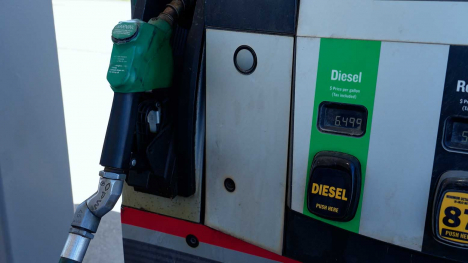
Rising diesel and freight costs squeeze farm margins and could reshape plans for the 2027 crop.