Commodities trading has ancient roots including the commodity price index that help hedge for all parties involved in a trade. Our Summer School series kicks off with Kurt Nelson and a course in how commodity futures markets work, why speculators and farmers genuinely need each other, and why the cattle price rally may not peak until 2027 or 2028.
The Three Legs of Speculators, Hedgers and Farmers
Share


Wall Street is always watching agriculture and there’s a reason that’s needed. For every seller, there has to be a buyer to make a deal happen. Kurt Nelson is a Minnesota native who is the investor relations manager for Summerhaven, Connecticut-based firm managing diversified commodity futures positions across more than 40 markets. Nelson leads off our Summer School series by unpacking the mechanics of price hedging and speculative capital, starting with the current cattle market supercycle and why its timeline could stretch to 2028. Drought, biology, ethanol demand, and a war in the Middle East are all quietly driving what you pay at the grocery store and restaurant where you are a producer, a trader or just trying to feed your family.
Transcript
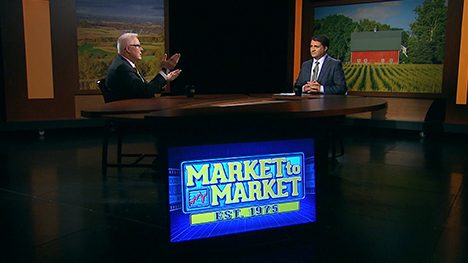
Paul Yeager: We're going to summer school here in the MtoM studio at Iowa PBS. I'm Paul Yeager. Thanks for joining us today. We're going to talk about commodities — which is what we do every week, so that's not news. But we're going to talk about the futures market, the cash market, the speculators, those working with commodities and those interested for other reasons, and why they all fit together. You've heard us talk about the three-legged stool before. We're going to get on that stool. We won't get all the way into dairy, but we are going to talk about the beef market heavily today. Kurt Nelson is the investor relations manager for Summerhaven. It is a group in Connecticut. So yes, we're going back to Connecticut for lessons on commodities. Why I'm interested in this — and I hope you find it too — is why are folks in Connecticut interested in what's going on in the Grain Belt or in the Plains? That's exactly what we're going to talk about today. The similarities of exchanging physical commodities and just the futures, the speculators, and again, why everybody is needed. We're going to talk about that cattle market. We know what some of the fundamental factors are, but what and how long could this rally go? That'll be a big part of our discussion. And the reason again goes back to inflation and what's happening in the Middle East and how long a tail that is going to have. Look for episodes this summer on the MtoM podcast where we go to summer school. We're going to do three of these. The first one is up today. We've got one coming in July, and we'll finish our summer session in August. If you have any feedback, send me an email at [email protected]. Now let's get to our discussion.
Nelson — sure sounds like a Minnesota name.
Kurt Nelson: It sure is, Paul. My mother's maiden name is Johnson, so —
Paul: Oh, you got the double there.
Kurt: Either way.
Paul: You spent a lot of time in the Twin Cities?
Kurt: I did — go Gophers. I went to the U for a couple years and have really fond memories of growing up in Minnesota.
Paul: In the city, not on the farm?
Kurt: Yeah, in the city. Although the farming goes back a couple generations. I was in Minneapolis, in the Twin Cities, but my grandparents homesteaded near Alexandria. On the other side of my family, my mom's family — the Johnsons — they were way up in northern Minnesota, in Warren, in the Red River Valley area.
Paul: Near Crookston — I need to say hello to Tim Dafoe. I'm going to make sure he listens to this. Probably he'll reach out and say he knows someone that knows your family. Expect that from me, Kurt.
Kurt: Before I started a career in commodities, I remember the grain elevator across the street from my grandmother's house. It was just something you got used to seeing. In Connecticut, where I live now, you don't see them as much, but I certainly grew up around them.
Paul: I guess this is a terrible pun, but did that plant the seed for your interest in commodities?
Kurt: I think so. Or maybe it was a leading indicator of where I was going to go. My career was not a straight line. I was a Wall Street person for 15 years — derivatives, equity markets, bonds, currencies, traditional financial assets. About 20 years ago, my company owned what was then called the Dow Jones AIG Index, today called the Bloomberg Commodity Index. It's like the S&P 500 of commodities — diversified futures. I got hooked and have been doing that for the last 20-plus years.
Paul: What was it that hooked you?
Kurt: I was a math nerd, and I got into derivatives because that's where finance and Wall Street meet mathematics. I remember my mom to this day — she didn't really understand what I was doing back then, but now she does. She actually listens to my webinars. She keeps me honest. She's my accountability partner — "Did it make sense? Did I explain it well?"
The thing with commodities is it's stuff we eat, stuff we grow, things we dig out of the ground to make cars, to fuel our cars, to heat our homes in winter. It's stuff. It's not financial. It's not fiat. You can print stocks by going to the SEC for a secondary offering. You can issue bonds off a shelf. You can go to any central bank and print money at will. And if you get in trouble, it can lead to pretty bad inflation.
Commodities — there's no shortcut. You've got to grow it. When you start to run out, prices go up. It's econ 101. It really made sense to me. What we trade is not physical money. I think you and your viewers know quite a bit more about actual farming than I do. Where I focus is on the futures markets, which are also very important to your viewers.
Paul: I want to get into that. But we need to go back a moment on something you just said. It was pre-2020, then Covid hit, and all of a sudden everybody got real interested in everything you and I are both talking about. Would you say that's a fair assessment of how interest in what we do changed?
Kurt: Absolutely. One of my co-founders wrote a paper — he's at Yale now, a very senior professor at their business school, devoted his career to commodities. He made quite a splash about two decades ago making the case for commodities as an asset class. But then through the 2010s, commodities weren't kind. Prices were lower generally while the stock market just couldn't go wrong and we had zero interest rates. People sort of forgot the little bit they already knew about commodities. It got off the radar. There's nothing like a cold splash of water from inflation bringing everything home again. We saw prices skyrocket in '21. Then they stabilized and everyone thought, maybe that was just momentary. But now we're back in it with a completely non-health-related issue — war in the Middle East that we're a direct part of, interrupting global supplies.
It's not a quick fix. It's not a human problem where we're disrupting people going to work and once we fix that we all go back to normal. It's going to take months, maybe years to resolve some of these imbalances being created right now.
Paul: Are those imbalances from the fundamental side? But let's talk about some of the technical sides. Here's where I'm trying to get: I deal with a lot of people who handle cash — that's their market. You're more in the futures. Tell me why the two need each other.
Kurt: You can go back to economist John Maynard Keynes — Keynesian economics. He wrote about commodity futures 100 years ago and specifically said: commodity futures markets exist for a very important reason. They're price insurance markets. That's where the farmer, the mining company, the energy producer — they have exposure to the underlying commodity. A farmer is long physical soybeans, wheat, or corn — even if it's not harvested yet, there's a capital commitment. In Wall Street we call it being long — you're exposed to price risk. By going to the futures market and selling futures, you can be both long and short. Now you're hedged. Maybe you hedge some of it, maybe all of it — that's up to the individual. But the existence of that futures market is to be a price insurance market for those hedgers.
The other side Keynes was fascinated about: who's on the other side of that trade — what he called the speculator, we call them investors. Those investors could be in equity or real estate or other things — they're attracted to the futures market. They're not hedged. So the farmer has physical corn, he's short futures, he's matched. The speculator is long corn through futures. In addition to bearing the spot price fluctuation of corn, there's strong evidence of a compensation — think of it as an insurance premium paid from the hedger to the speculator for wearing that risk. It's actually kind of like the equity risk premium over time. That's principle to everything we do.
We're entering that futures marketplace because it's liquid, it's transparent, it's cleared on an exchange — it's got all the features you want in a financial market. And there's almost a public good we're providing. I don't want to overstate it — Lloyd Blankfein said Goldman was doing God's work during the financial crisis; I don't want to go that far — but we are providing speculative capital to provide a hedge to all these diverse futures market participants. If we're not there, they don't have liquidity, they don't have access to the market. These things are critical to a functioning futures market. That's why some of these markets have existed for 200 years and still do today.
Paul: I've asked that question several times, and it comes up often on the show — when will outside money come into commodities, and how will we know they've exited? We do see some of that in the Commitment of Traders reports. But again, why we need everybody at the table — I think you're going to tell me something about that three-legged stool: if we just have two legs, it's not as much balance.
Kurt: Right. We actually have research on why commodity futures markets fail and what the conditions are. What we found is it needs to be something important to economic supply and demand today. Back in the day there used to be a very liquid, large market on silk futures — for decades, a huge market. It stopped around 1940. All the silk came from Japan. Think about where we were in 1940 or '41 with Japan — that was a little tense. FDR stopped the shipment of silk to the United States, the market froze, and it never restarted.
So it needs to be economically important. And when you have the futures market, you need hedgers and speculators. If you look at the Commitment of Traders reports — CFTC data, some of which we have going back to the '40s — you'll see a functioning commodity futures market has about 50% speculators and 50% hedgers. It's actually quite stable over time. We get the question: are commodity markets financialized? Maybe some viewers think about that — am I getting run over in the futures markets because all this hot money is coming in from hedge funds and high-frequency traders? That's a troubling question for us because we rely on these markets. And it turns out, no. If you look at CFTC data, hedgers and speculators were bounced around 50% in the '90s. Today it's still around 50%. The markets have grown in dollars and open interest by three times — which pumps money into the market and helps all boats.
Imagine an insurance analogy: does it make sense that an insurance company is paid a hefty premium for flood insurance in Florida? Yeah, it's also very risky. If insurance companies were required — by government or market conditions — to not be able to make any money offering flood insurance, they'd stop doing it and the market disappears. We think that compensation is higher and it's also riskier. You can also offer flood insurance in Minnesota from hurricanes — you're not taking very much risk, and Minnesotans or Iowans aren't going to pay you much for it either. Low risk, low return.
We actually think that's true in commodity futures markets — that risk compensation moves in cycles. Inventories are the fundamental driver. When inventories are low, volatility is higher. It's very hard to predict future price direction because there's no buffer stock. Any small shock to supply or demand creates an outsized price effect. Usually prices are higher, and that's when farmers want to lock in price — they can lock in their economics. There's more demand for hedging when it's riskier. We're attracted to those markets and we like to apply our capital there, because there's strong demand for that hedging and the economics are our favorite. We also know those are riskier times, so we manage that by diversifying. Cattle are part of what we trade, along with corn, ethanol, copper, gold, oil, natural gas — we trade over 40 different commodity futures markets.
Paul: And some of it is on your wall behind you — the historic part of Summerhaven. You have a strong interest in the history. Give me a quick tour of what's behind you.
Kurt: We're in our office boardroom and we wanted some eye candy related to who we are and what we do. One criticism I heard from people — financial players — was "commodities are new, don't really understand them that well." And I said, no — commodity futures in the U.S. have been around for 150 years, since the 1870s when the Chicago market started.
I have a picture on the wall — a painting, because we didn't have cameras back then — from 1835, from Japan. It's a rice futures exchange called the Dojima Rice Exchange. A woodblock painter was on a tour of the Japanese countryside trying to memorialize life in Japan, and this was one of the big things he saw. He painted this rice futures exchange that was 200 years old when he did his painting — it dated from around 1600, because rice was money in Shogun Japan. You can see people running around, people splashing water to stop trading, traders trading near a settlement window. In the back corner you can see the back office — people recording on paper the buyers and sellers for these rice futures.
We also have something fascinating from American history. It's a payment from the state of Massachusetts to a Revolutionary War officer. Inflation in the colonies at the time was about 100% a year — we were a bunch of colonies stapled together trying to fight England. Who would want to lend us money? So you'd fight for the revolution for three years on a guaranteed contract, and by the time you survived those three years, it might be worth 20% of what you started with in purchasing power. Connecticut fixed their payments to gold and silver. Massachusetts went a step further — in this employment contract, it says we'll pay you this amount of wool, this amount of corn, this amount of beef, this amount of leather — a commodity basket. We got prices for leather, beef, and corn, used cotton as a proxy for wool, and we said: did it protect? And it did. It actually immunized — I don't know if he survived, I never looked that up. But it's fascinating that even 250 years ago, Massachusetts out of necessity created a commodity index. Commodities are not new. One of the ways they've been used throughout history is to protect from inflation.
And we're entering that time right now. You can see it in beef in particular. We're at all-time lows on heads of cattle. I know the average weight going to slaughter is higher now, but when you look at the cattle census figures, it's quite alarming. I'd contrast hogs — we trade lean hogs as well as live cattle and feeder cattle futures. China went through this when they had to slaughter a lot of their hogs because of disease. You can make 20-plus piglets a year — litters of 10 to 13 — so you can replenish a hog population somewhat quickly if the conditions and infrastructure are right. There's no shortcut with cattle. One calf per cow, maybe 18 months, using forage or grain, cost of energy — lots of factors. We're looking at a long time, into '27, and maybe because of the Iran war, into '28, before we get financial conditions supportive of replenishing a herd. Meanwhile, prices continue to rise.
Paul: The herd size is what's driving us more now. But you're saying the current environment — Iran, inflation — is going to extend what we've seen into '27 and possibly even into '28?
Kurt: Yeah. And taken with a grain of salt, because the future is uncertain — I think that's Milton Friedman who said that. But I'll share what I think. If you look at beef prices going from $1.25 a pound to $2.50 a pound over five years, that makes sense because the herd keeps getting smaller. The conditions for ranchers are difficult — we've had drought, so forage isn't as available, and then you're feeding grain, and grain prices are going up. Ethanol is going up more — another Iowa story, right? Instead of corn being used to feed humans or livestock, it's being used to fuel our cars. With gas prices where they are and political considerations where they are, that's not going to slow down.
How does the Iran war figure into this? We don't export or import cattle to or from the Middle East, really. But there are critical commodities affected, and one is fertilizer. A huge amount of the world's fertilizer — in the neighborhood of 20% — comes out of the Middle East, because the marginal cost of production is related to the price of energy, and it's cheap there. There are other things being affected too. Aluminum, for example — one of the world's largest aluminum smelters is in Qatar and was unfortunately hit by a drone while producing. All the aluminum hardened and it's been offline for over a year. There are a lot of dominoes falling that you wouldn't think have anything to do with oil or natural gas, but directly the cost of fertilizer is already starting to go way up. Farmers know this. There will be places in the world that don't have fertilizer at any price, so yields will be lower. Farmers might decide not to plant.
So I think the price of corn is going to go up. Higher oil prices and higher distillate prices will affect transportation costs for cattle, and in effect, alternate proteins — poultry and pork — will probably go up too, which means beef prices will go up.
The conditions are higher prices, and maybe higher for longer. I'm sympathetic to the ranchers and these people who make a living growing cattle and taking risks to feed us. It's not a sure thing. The cattle business goes through these huge cycles. The concern in the administration right now is about the consumer. Recently JBS got called out by the administration for making prices high.
Paul: The big four meatpackers — that's what the administration is talking about. But then there are those who understand drought cycles and low herd numbers and how this goes.
Kurt: JBS just had first quarter losses that were twice their losses from 2025. So tell me how they're killing it and making all this money off the American consumer when they're losing money. They're a public company that has to report earnings and they're suffering. And yet they're being called out for it. I think there's some misplaced attention on the cause of this problem and how to fix it. Inflation causes interest rates to be higher, borrowing costs are higher, credit's tighter — so many conditions making it tough for a rancher, tough for a farmer. Lower supply means feedlots will have higher grain prices, less interest in loading up on cattle to fatten — all of those things mean smaller inventories, which mean higher prices.
Paul: And it's very tempting for a producer to sell and not hold back and build herd, because you think of the rancher who's like: I got burned for so long, I am cashing in where I can right now.
Kurt: Broadly, I think about this idea of a cycle — sometimes people call it a supercycle in commodities. I think it's a great notion. One thing that frustrates me is it's not very well explained. What is it? It gets used loosely without getting into the nitty gritty. With the benefit of 150 years of data, we go back and look and say, okay — with open eyes — are there these long commodity cycles that last years or decades? And what we found is, yeah, there are. Starting in 1900, we found five commodity super cycles. All that means is that commodity prices went up a lot for an extended period of time. It tended to be around wars — World War I, World War II — other events like the OPEC crisis in the '70s, and a shorter one from roughly 2000 to 2008 before the financial crisis. Five periods, about ten years long. That's 50 years out of 120 — not 1 in 10. During those times, diversified commodity prices went up about 15 to 20% a year for roughly ten years in a row. During those times, stock and bond returns were close to zero.
I think this is the story of how commodities relate to inflation. Sometimes copper is attractive but aluminum isn't. Sometimes we have oversupply or undersupply across the spectrum. Commodities were oversupplied in '08-'09 — not because we started producing too much, but demand fell off a cliff in that huge financial recession. It can cut the other way too. When demand goes up and supply is constant, like we saw in Covid, prices respond and we get inflation. I think we're coming up on an inflationary cycle that could last for years. It can certainly be fixed by demand destruction, increasing supply slowly, and by painful interest rate hikes. But are we ready to face that music? The longer we wait, the longer it will take to correct.
I tried to learn from the history of the '70s. During that sharp inflationary wave, we didn't have energy futures — all futures didn't really show up until the mid-'80s.
Paul: I didn't know that.
Kurt: Yeah. So all of the inflation we saw — in heating oil prices, gasoline prices — it wasn't showing up in futures because we didn't have futures for oil back then. We had two serious spikes — the '73 war with Israel and the OPEC-led crisis in the '78-'79 area when we were rationing gas. The Fed was reluctant to raise rates and made some policy mistakes. It wasn't until Volcker came in in 1980 and said, I'm going to do whatever it takes — hiked interest rates to 16, 18%, and just wrangled inflation down in a very painful way. I didn't know that Reagan had to create a special Secret Service team for Paul Volcker because of the volume of credible death threats from the financial pain he was causing by hiking interest rates. He did it because he said: I think this is the medicine. He created 30 or 40 years of prosperity and an incredible sterling reputation for the central bank. People don't fight the Fed because of him. It's going to take that kind of resolve again.
Paul: Inflation was a big deal of the '70s. There's this comparison — the Fed is going to have a hard road ahead. It's trying to be independent and do what's best for the economy, but there's always this: we've got too much cash in the economy, and there's never been a perfect landing. If you had the ear of someone making decisions, what would be your piece of advice right now?
Kurt: Follow the data. The tough medicine always works — when you have an overheating economy and overheating inflation, you raise rates. That's how you bring the temperature down. Don't predict the future, but don't ignore the facts, because there's no free lunch. The longer we wait, the more pain it will be later.
Paul: Historically we always say here at Market to Market: the cure for high prices is high prices; the cure for low prices is low prices. Does that still hold in what you're saying?
Kurt: Absolutely. High prices in beef will resolve — you'll have some demand destruction, people will eat smaller portions. Then it will create expanded production. There will be ranchers who find capital and make more. But there's a lag. That's why you get these cycles. I couldn't agree more — high prices cure high prices. The question is how long.
Paul: You mentioned you follow the lean hog market. Why hasn't hog price moved in concert with beef as an alternative — because that ribeye is too expensive, how about the pork cutlet instead?
Kurt: It will lag, because you can adjust much more quickly — in a matter of months — to a shortage of hogs, and you cannot respond the same way to a shortage of beef. So higher beef prices will lead to higher pork prices, but it will take some time.
Paul: Okay, one last thing about the guy in Connecticut talking to me about cattle in Texas, Oklahoma, and Iowa. What is the correlation and the importance — going back to that three-legged stool — of the money interested in this commodity and in this index you were talking about?
Kurt: Sometimes I get it — a guy working for a financial investment manager in Connecticut, and there's a perception that we're driving up prices. Just like JBS got called out for creating high beef prices, we sometimes get called out — you're causing corn to go up, you're causing gasoline to go up because you're speculating. I would counter that with: no. We're actually part of the healthy ecosystem of a functioning futures market. As we said, half speculators, half investors — and we don't take physical delivery. I can't corner a market because I don't take it out.
These markets are not arbitrageable in the way financial futures are. There's a true price risk transfer. For example, in currency futures, I can go long yen futures and sell cash yen and run an arbitrage — you can work out a theoretical futures price based on interest rates and carry. You can do that in equities and bonds. Can't do that in hogs or cattle. If you want to go long cash hogs and short futures, you've got to be buying a farm. If you want to go long futures, short cash — you can't short-sell hogs or cattle. So this comes back to the insurance mechanism. There is real price risk transfer from the hedger to the investor. We are participating in a functioning market and actually making it healthy. We're not taking delivery. We're providing liquidity and capital where it's needed.
Paul: You're healthy and needed. And if you disappear, we would certainly notice.
Kurt: You sure would. You'd lose one of those stool legs and you'd see it topple.
Paul: And then it's not considered a fair market. That's the beauty of what we're talking about — this market, though always with questions about whether someone knows information before somebody else — is still a pretty fair system.
Kurt: Let me give you a quick example with risk. Nothing's for free. One of the studies that's fascinating to look at was onion futures. You've never heard of them because the government made them illegal. There used to be a liquid onion futures market, and volatility was really high. They thought it was being caused by speculators. So they made it illegal to speculate unless you had a physical reason for trading — if you couldn't prove a physical rationale, you couldn't trade. The speculators disappeared, the market collapsed, and academics went back and looked at the volatility of onion prices before and after — and onion price volatility became much more unstable after the futures market failed and the speculators disappeared. It's a cautionary tale: be careful about who you call the bad guy and what you think they're causing. We actually think we're providing an important service, and we apply it where there's interest and demand.
Paul: This is completely off script, but it just reminds me of another market — this Kalshi "I can bet on anything" mentality, the raising of the 18-to-49 demographic that is heavily into gambling. Do we ever see a connection, or are there going to be more people in markets because of a tendency — I'll gamble, I think commodities is a gamble. Do you see an entry there?
Kurt: Probably. There are some futures markets we don't trade because we don't see this healthy partnership between producers and speculators. An example would be a lot of the Chinese markets — number one, we can't trade as locals and don't want to trade through a third party; but also they're 90% spec — speculators trading with speculators. It's gamblers trading with gamblers. You don't have the price risk transfer as a rationale for the market. I think that's something missing from some of these Kalshi-type markets. Are they going to try to wedge their way in? Probably. But I feel that we know why we're entering the market, and the farmers and mining companies know a lot and know why they're entering the market. These other people are tourists — inefficient capital. And they're going to lose. Hopefully that money goes to us and to the farmers through their inefficient trading, because we kind of know why we're doing it and when.
Paul: And that's a whole other thing — we'll have to put the academics on that one and see how it plays out. Kurt, I appreciate it. And I'm sure your mom knows what arbitrage means by now — you've covered that over time, right?
Kurt: I have had to explain it a few times, but I think she's got it.
Paul: I love it. Kurt, thank you so very much.
Kurt: Thank you, Paul.
Paul: We are produced at Iowa PBS. Our production supervisor is Sean Ingrassia. His crew is Reid Denker, Kevin Rivers, Julie Knutson, Neil Kyer, and David Feingold. The executive producer of Market to Market is David Miller. I'm Paul Yeager. We'll see you next time.
Watch More
Minnesota’s Keepsake Cidery combines heirloom apples, traditional cider making and direct sales to help a small farm thrive.
New farm relief, a food safety honor, Minnesota cider and commodity market analysis with Chris Robinson.
Chris Robinson answers viewer questions on corn yields, crude oil and cattle, and explains his soybean outlook.
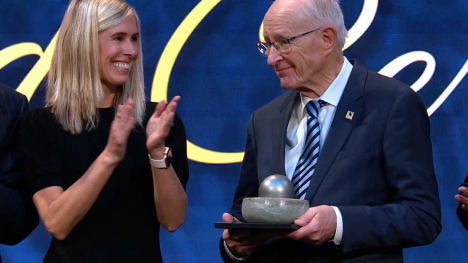
Huub Lelieveld receives the 2026 World Food Prize for six decades of work advancing food safety.
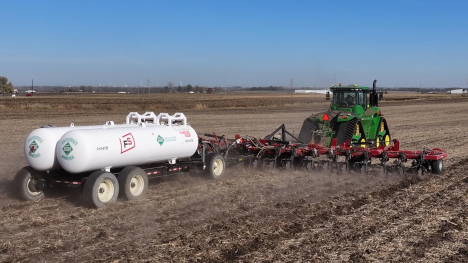
New federal plans target farmers' fuel and fertilizer costs through direct relief and investments in domestic fertilizer production.
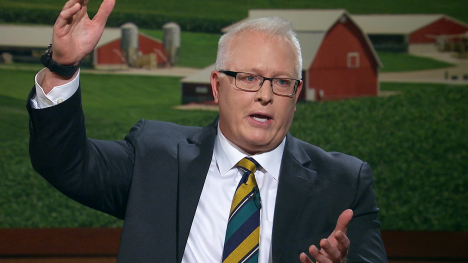
Chris Robinson weighs corn recovery prospects, soybean price levels and the rebound in cattle.