Tariffs dampen optimism in the rural economic outlook. First E15, now 45Z gets momentum and takes off in the nation’s capital. A progress report for a small solution to a growing problem. Commodity market analysis with Kristi Van Ahn-Kjeseth.


On this edition of Market to Market ...
Tariffs dampen optimism in the rural economic outlook. First E15, now 45Z gets momentum and takes off in the nation’s capital. A progress report for a small solution to a growing problem. Commodity market analysis with Kristi Van Ahn-Kjeseth.
Transcript
[Paul Yeager] Coming up on Market to Market tariffs dampen optimism in the rural economic outlook. First E-15 now 45 Z gets momentum and takes off in the nation's capital. A progress report for a small solution to a growing problem and commodity market analysis with Kristi Van Ahn-Kjeseth. Next.
[MUSIC]
[Announcer] I wouldn't be here without my customers.
Yeah, I'd like to thank the customers. They're very dear to our heart.
It's about the people that you're working with and the relationships that you have.
Thank you. Thank you. Thank you.
Thank you from the bottom of my heart.
[MUSIC]
[Announcer] Tomorrow., for over 100 years, we've worked to help our customers be ready for tomorrow.
[MUSIC]
[Announcer] Trust in tomorrow. Information is available from a Grinnell Mutual agent today.
[Announcer] This is the Friday, February 6th edition of Market to Market, the Weekly Journal of Rural America.
[Yeager] Hello, I'm Paul Yeager. The government shutdown was short lived. However, one impact will be a slight delay in this month's employment report, now scheduled for Wednesday of next week. The House Committee on Financial Services summoned Treasury Secretary Scott Bessent Wednesday to testify on the financial stability of the U.S. economy. He was also asked about tariffs, which have been hanging around the necks of U.S. producers looking for global destinations for their goods. A bipartisan group of former commodity group executives and farm leaders sent a letter to the four agriculture committee leaders this week. The communication is a warning to Congress about the deteriorating state of the farm economy, saying current conditions are potentially leading towards a, quote, widespread collapse of American agriculture. End quote. A data point in the case for action came in January's USDA report that left farmers uneasy, and it was reflected in the latest Purdue CME Group AG Economy Barometer. The survey revealed conditions in rural America were worse than a year ago. Peter Tubbs reports on another snapshots pessimistic view.
[Narrator] While fourth quarter GDP recorded surprising growth. Economic data suggests this is an economy that lacks direction. The Mid-America Business Conditions Index found that tariffs have reduced the value of goods being imported into Mid-America states, but retaliatory tariffs by trading partners has also reduced the value of goods being exported by the states. In the survey, tariffs on imported goods are paid by importers and American consumers. The Mid-America Business Conditions Index remains below growth neutral for the fourth time in the past five months, despite climbing two points to 49.6, with a GDP growth driven by huge investments in I.T., A.I. and data center buildouts. The rest of the economy is lagging.
[Ernie Goss] Hiring was not good. We are hiring index for the employment gauge was at 47.2. Now that is up from December's 44.0, but still not good. It's still below growth neutral. It's ten straight months that it's been below growth neutral. The national number likewise is we're mimicking the national number which has also been below growth neutral for most of 2025. The theme here is we're creating output GDP, but we're not creating a lot of jobs.
[Narrator] Additionally, a predicted $4 billion drop in 2026, net farm income from 2025 is limiting the economic outlook for many parts of rural America. For Market to Market, I'm Peter Tubbs.
[Yeager] Last week, the president vowed support for year-round E15. This week, the Treasury Department offered more details on credits aimed at increasing demand for biofuels, especially in the aviation sector. David Miller looks at the language emerging to assist America's renewable sector.
[Narrator] On the heels of last week's disappointment for the ethanol industry and U.S. corn farmers, the Treasury Department is proposed changes to an existing rule that could increase the flow of biofuels and put more money in the pockets of ethanol producers and farmers.
[Geoff Cooper] We finally have a proposed rule that begins to provide those details, and some of the clarification around exactly what ethanol producers need to do to claim this tax incentive.
[Narrator] The proposed changes for the Clean Fuel Production Tax Credit, known as 45 Z, include what will be considered a qualified sale for each gallon of ethanol and tax credits of $1 per gallon for ethanol not used for aviation, and a $1.75 per gallon for biofuels used as sustainable aviation fuel. It also includes cutting the provision that had previously been used as part of the calculation for carbon emissions that came from biofuel feedstocks planted on land that had been converted to row crops.
[Geoff Cooper] It is really going to help them reinvest in their operations and add new equipment and new technology, continue progressing toward lowering the carbon intensity of the fuel. And the reason that's important is because there are markets around the world, fuel markets around the world, and here in the United States that are requiring the use of lower carbon fuels.
[Narrator] In July, President Trump's signature on the one big beautiful bill extended 45 Z for two years and restricted feedstocks to the U.S., Canada and Mexico. It also retained previous inroads made during the Biden administration, allowing for CO2 recovery from biofuels production to receive credit for use in enhanced oil recovery. However, questions remain on how greenhouse gas emissions and the energy needed to brew a gallon of ethanol will be calculated.
[Geoff Cooper] So, in order to measure or quantify the carbon intensity of biofuel, you have to use what's called the Greaney model, which is essentially a carbon intensity calculator that is published by the Department of Energy. And we don't have that new version of the model available yet.
[Narrator] Comments on the proposed rule changes will be heard at a meeting scheduled for May 28th. For Market to Market, I'm David Miller.
[Yeager] Waxworms in the Upper Midwest are in short supply this winter thanks to efforts to help reduce rootworm damage on the corn crop. An Iowa based company uses the bait to produce nematodes in a process that eventually goes into the soil to attack pests. The one-time application has doubters, but as Keegan Shields, the company's CEO, told us recently, the proof of reduction in rootworm is visible in the field and in the grain hopper, with increased yields. Our previous MtoM conversation is this week's cover story.
[Keegan Shields] We sell a microscopic worm called the nematode. It attacks soil, insects and soil insect pests. We use them in agriculture for pest control. And kind of our unique angle is it's a one-time application and should be good for at least a few decades. Based on our research. This all came out of my father's lab at Cornell University. Over his career, and it was developed originally for an invasive pest. That's only in, I believe, northern New York. So, you know, pretty small market. He kind of stumbled on that. This works really well. And in corn and organic vegetables and other things. So now we've got ourselves a business and, and we're trying to get it out to the masses.
[Yeager] The lab is one thing. The larger application is another. You when we last talked, you had already kind of done and had clients. But as you've gotten bigger, does the idea still hold in what the vision was and what the research was?
[Keegan Shields] Yeah, it's it is a big jump to go from the lab, you know, to full production, as my father would say, entomologists are not very good corn growers. You know, they're interested in insect damage. I think it's been really cool to see professional farmers, professional corn growers and what they can do with the technology. We're even starting to see a benefit, even when there's not really bad rootworm damage. I had a guy call me last spring and he had a 12-bushel difference between his treated and untreated and treated with our biocontrol nematodes, and then the rest of his farm was untreated. So, you're talking, you know, 1500 acres compared to 2000 acres. And he was trying to convince me that it was our product. We went and dug his field. There wasn't, you know, real root damage, but the only difference was the biocontrol nematode. So, we think it's probably preventing some early root damage. And given the his cornfields a head start. So, it's constantly evolving I would say.
[Yeager] I mentioned Webster City where you're at and again center of a lot of corn. Is it still the center of where your clients are?
[Keegan Shields] Yeah, we're getting a lot of response in the livestock heavy areas. And the guys growing continuous corn, they've got a lot of rootworm pressure. They've really stressed out the traits that they're using to fight rootworm. And so those are kind of the initial clusters.
[Yeager] 2025 in some big corn growing areas was a challenging year for pests. We heard about the rust. That's not what you're trying to chase. But does that throw off results or understanding results of your product?
[Keegan Shields] Well, I think it everything's always interconnected. You know, we had a we had a field where the guy ran out of he was applying about our bio control nematodes to the field. He ran out of product for the last 20 acres he got. He was told by the applicator who came to spray fungicide that he couldn't get through the last 20 acres. So, because he had really bad rootworm damage, he wasn't able to spray for fungicide, he lost even more yield. So there seems to be all these kind of secondary benefits that you don't necessarily think about, and then you can't get through the corn to spray your fungicide in a year like 25, where plant disease was so widespread, so, you know, I think it's really having a healthy root system, I think is the foundation to a good crop. And you can really lower your inputs, which I know is top of mind for a lot of guys this year.
[Yeager] But what about those that just rotate beans, corn, bean, corn, alfalfa or whatever?
[Keegan Shields] This they, the nematodes persist just fine across rotation. There's quite a few soil insects in your soybean acres that that they can persist on. The original research in New York that we've got 30 years of data of persistence, data on there. That's for dairies. And they're on a four-year corn alfalfa rotation. And so, like one of the early studies was will this persist across when there's corn and alfalfa. So very confident. We I went back this fall this past November down to a field. We applied in 2019 in Roswell, New Mexico. And we went back and sampled. And the bio control nematodes are still there. They're still humming right along at the levels we'd expect. And we went back and tried to calculate what the benefits been over the last seven years. And it's between 4 and 500,000. It's a silage field. So, you know, silage is a bit more valuable than, than an acre of grain. But yeah, a huge ROI for I think the farmers spent $9,000 on nematodes. So, we're pretty proud of that big return for the grower.
[Yeager] We hit dry at the end of the growing season in Iowa and Illinois. I mean, it had various times and things like that. When you mentioned 20, 25, do you put the word success behind it yet?
[Keegan Shields] Yeah, yeah, I think it was a great year. We sold 25,000 acres. We basically sold out of product and we should have with our improvements, 30,000 acres available for this spring, trying to trying to double every year. We'll see how it goes. But yeah, I think overall a success. You could see the application line of where there were nematodes and where there weren't based on, you know, down corn and the coolest part that those nematodes were applied in 2024. So, they were applied the year before. There was no rootworm pressure. And then we saw a lot of rootworm pressure this year in that field. And it was it was a very compelling.
[Yeager] The full MtoM Podcast is available now.
[Announcer] Next, the Market to Market report.
[Yeager] The volatility train returned to the station Wednesday as a two-hour phone call was not enough to move all the trade for the week ending February 5th. The nearby wheat contract lost $0.03, and the March corn contract added $0.07. China indicated intent to buy 8 million more metric tons of U.S. beans, sending the complex higher. The March soybean contract improved $0.48, while March meal gained 960 per ton. March cotton contracted by $1.33 per hundredweight over in the dairy parlor. March class three milk futures added $0.90. The livestock market was mixed. April cattle fell $1. 20th March feeders put on 380, and the April lean hog contract expanded by 323. In the currency markets, U.S. dollar index rose by 93 ticks. March crude oil lost $1.55 per barrel. Comex gold sold off $27 per ounce, and the Goldman Sachs Commodity Index was off by more than seven points to settle at five 8385. Here now to lend us her insight on these and other trends as regular market analyst, Kristi Van Ahn-Kjeseth. Hello, Christi. Hey, Paul. So, this phone call came a little bit out of the blue. We knew there's always we knew what China's intent to buy had done to the market before, but we just thought it's in the past. We're done. And then this phone call comes. How come it was so emotional to the markets?
[Kristi Van Ahn-Kjeseth]I think it was probably emotional because you over the last 2 or 3 weeks, I think people have decided that China met their 12 million metric ton. We haven't really seen any private sales lately, and that they just kind of assumed, hey, beans got their run. Let's step away. You also had managed money. Really step away from the market as well. And so, I think people just kind of gave up on soybeans. So as soon as you started to see that information, you saw those buyers start to come in. And then I think it was that FOMO, right? The fear of missing out that people all of a sudden jumped in and they said, hey, I, I sold I don't want to sell my beans too low. Like if they're going to come in here and buy this, I need to be part of this and then manage. Money really was flat. And so, you had them jump in. I think it was that that spiral that led it higher. And it has been a while since I have had a wild day in the grain markets. And when it started to creep and then it jumped from pretty much 30 to $0.50 higher, and then before, you know, it was back down to $0.25. And you just had a lot of people saying, hey, I want to be part of this movement. And I think a lot of marketing got done, which was the smart thing to do in my opinion.
[Yeager] Well, that's what I was going to ask is, so are you recommending or hearing? People are like, yes, I have my blip, it's time to sell.
[Van Ahn-Kjeseth]Yeah. So, we actually moved to 100% marketed in old crop soybeans off this move. We were 90. So, you know, it was only 10%. But we decided to move on the rest of them. And we really went with either sales. If you had a decent basis. Otherwise, I really like April and May puts you get a little bit of carry into the situation, and April is actually very reasonably priced because it doesn't get you to the March 31st crop report. So due to that, you have a little bit of that lower volatility, lower price action, lower interest, because people want to see the report. I don't think you need to see the report for downside protection in soybeans. I could be wrong on that. You never know. But I think the writing on the wall is that we're not going to see the Bean Acres and that we're going to have to do something about it. It was really nice to see follow through again today after that sell off, initially from the high, but really, when I look at beans, I have really hard concerns about them buying another 8 million metric ton. So, you're asking them to buy with Brazil having fresh soybeans on the way.
[Yeager] And that actually leads to a question. I want to go to a viewer question, if I could. Gary in Wisconsin, let's talk about that next crop, because that is going to maybe be where there's more discussion to be had here. Gary says if China does buy that number of soybeans this year, does that cut 26 corn acres to under 92 million acres?
[Van Ahn-Kjeseth]I think you'd need to see a sizable rally in soybeans to get that cut. So, I think the writing on the wall is actually pretty friendly for soybeans next year, because especially if China comes in here and let's say they don't buy eight, they buy 4 million metric ton, right? They went from 12 to 16. We still don't have like a ton of wiggle room for them to be buying soybeans at this point. So, it would be friendly. And now you're coming into the writing on the wall that I think you're going to see Lower Bean Acres compared to corn. Again, corn just seems to be more profitable, and you can get yourself in a tight situation especially, you know, we're going on three years of pretty good growing conditions that if you have a hiccup, you know, things could get really tight in soybeans in a quick hurry, especially with China committing to 25 million metric ton for next year. So, I don't know if you're going to be able to see those repercussions yet. I think it's more we're going to have to deal with them later. You would have to see soybeans, in my opinion. New crop soybeans run an entire dollar before you start to eat away at some acres from corn.
[Yeager] Let's talk about corn, then. Let's go backwards. The new Let’s Talk old crop. First, though, how come this phone call didn't do anything to corn?
[Van Ahn-Kjeseth]Because corn has a ton of production. I mean, I think that's the most probable, like the biggest problem right now for me on corn is that you are at a 17-billion-bushel production number. That is so much corn that needs to get sold out of farmers hand compared to last year. And even though our demand is hot like corn has been doing a fantastic job with its demand structure, but it still doesn't make up for the fact that we had ginormous acres, huge harvested acres, huge yield. And so, we're sitting here with 17 billion bushels of corn that needs to go somewhere. And I feel like the writing on the wall is that you're going to be met with selling pressure moving forward over and over and over again. Anytime we can get a rally. And we've proven that the last couple times corn has been able to get to 435 area off March futures. It's sold off right away. Now. Today was a good day. We saw a strong close. Hopefully we'll carry through with that, but I'm just fearful that this. 435 to 445 or any time somebody could get close to $4 cash or 420 cash, that range is going to bring out selling pressure. And I think you're looking at a situation that we know a lot of bills need to be paid over the next 60 days, that there's going to be some grain sold.
[Yeager] Yeah. And I have a question about that that we'll get to in plus about a little more planning and trying to be profitable new crop real quick here on corn. You mentioned possible acre change again. But really, let's be real. There's not that much change that's going to happen on this news.
[Van Ahn-Kjeseth]No, I don't think so. And honestly, I have been to a lot of ag meetings over the last month and a half, and I have yet to really meet somebody that said they're interested in planting more soybeans than they did last year, and that makes me really worried because we had so many corn acres. But I think on a profitability stance, soybeans just aren't there. And I think, to be honest, people are starting to get a little bit annoyed with how finicky soybeans have been the last couple of years. You have to do more to soybeans right now than you had to do five years ago, and you have not seen the, you know, the reward for that on a yield. As much as you can see, the reward on corn.
[Yeager] Any reward in wheat coming anytime soon?
[Van Ahn-Kjeseth] Man, wheat is a dog. It is not fun to deal with right now. And you know, personally, we are far behind on marketing because there just has not been opportunities for wheat. You know, you're not at profitable levels. You haven't been for quite some time, but what is going to bring us out of this? We've increased demand in wheat, but it's still not enough. You're slowly starting to decrease acreage over the last few years and wheat still not enough. We continue to get good yields. You had this cold snap through winter wheat country, and that got its little bit of a push, but I just don't see a situation that can really prove for wheat to buy out of here. And we got that setback. For now, I just think you're consolidating and you have to look at wheat on more of a standpoint of basis opportunities. If for some reason you see one take it.
[Yeager] Right. So, we're just kind of holding until something better comes along, not really sticking our neck out.
[Van Ahn-Kjeseth]Right? I think it's going to be more of a follower than anything.
[Yeager] All right. Let's go to livestock. This live cattle market last week this this inventory report. Did you expect more reaction on Monday than what happened?
[Van Ahn-Kjeseth]No, I think you're you know, you're looking at a situation where cash remains strong. You're still off of the highs. You're kind of all over the place and trying to decide where we're at as far as the economy goes, what are we going to see happen with interest rates? And so, you know, to be able to bring those fresh buyers in, I did think you had a great reaction. Obviously we had some problems today, but I still think the general logic around the market is a friendly market. And I think what you're looking at is that, you know, we're 12 bucks off the high for live cattle, 20 bucks off the high for feeder cattle. I feel like they have a good chance of getting back to those highs. And when you can have a steady Eddie market that's not overly obnoxious, not like a silver, let's say, or something like that, something that can gradually get to that point. It's a much healthier market.
[Yeager] The I think you're referring to what happened in Feeders on Thursday as a sell off, a huge sell off to open kind of rebound a little bit. And that was a JBS strike in Colorado that's impacting it. Next week we're going to have a story about the Tyson plant in in Nebraska. Closing, are we that precarious of a position now in the in the cattle market, if 1 or 2 major plants go offline, we're going to have reactions like this.
[Van Ahn-Kjeseth]Yeah, I think so. You know, it's very problematic to see that production start to shut down or the fear of that. Right. We know demand is running strong here in the U.S. consumption, when you look at it as a whole, I think this next generation is very heavy on protein consumption. And they want quality protein. And so, I think that's one thing we're looking at. But yeah, I mean it's very reactive to any sort of story. I would say the biggest fear would be, you know, the border opening back up. And I don't see that happening with these new screwworm cases.
[Yeager] And therefore, the influx from Mexico is you don't see that happening anytime soon. No, because there's a school of thought that says it's going to open and whatever happens, happens. I mean, you're not in that camp.
[Van Ahn-Kjeseth]I'm not there yet.
[Yeager] What about in the hog market? Because that's a market that had, again, a little bit more of a positive turn this week. Why?
[Van Ahn-Kjeseth]Yeah. So, I just think, you know, once again, protein consumption huge driving market. But we're at a point here for those deferred contracts. Those summer contracts for hogs that you start to get a point where you should really be looking at hedging where between third and fourth price counts. And I think that they need to be met with some form of hedging to take off some risk off that table. You look at the premium of summer contracts right now at a nearby contracts. It's there. You're not that far off from those recent highs 110 to 112. In some summer contracts that I think it's the right thing to do.
[Yeager] Last week I put Jeff on the spot talking about metals. The metals do anything this week that that caught your attention. Or is that story, last week's news?
[Van Ahn-Kjeseth]I think that metals can just prove to you that there is volatility in some markets. And the grain markets have been sleepers for quite some time, that there will be that moment again where you're looking at them and you're like, this is absolutely nuts. But right now, for the most part, you've had very, very narrow range bound trade. And especially for corn, I'm fearful that that's what we're going to see moving forward as well.
[Yeager] Well, moving forward, we'll talk to you for another few minutes. But that's it for now. Kristi, thank you so much. Thank you. Time goes fast. When you've been watching the analysis portion of the program, because that's what we just finished. We're going to keep going in Market Plus search Market Plus with Kristi Van Ahn-Kjeseth. Wherever you get your podcast to hear that conversation, or just go to our website, Markettomarket.org. Each Monday we preview the week ahead here on the TV show and a reset of just what just happened in the studio and deliver it to your email inbox. If it's new here, we'll outline it in that market. Newsletter sign up now at our website. Next week. The overall effect of one community's packing plant closure. Thank you so much for watching. Have a great week.
[MUSIC]
[Announcer] Market to Market is a production of Iowa PBS, which is solely responsible for its content.
[MUSIC]
[Announcer] I wouldn't be here without my customers.
Yeah, I'd like to thank the customers. They're very dear to our heart.
It's about the people that you're working with and the relationships that you have.
Thank you. Thank you. Thank you.
Thank you from the bottom of my heart.
[MUSIC]
[Announcer] Tomorrow., for over 100 years, we've worked to help our customers be ready for tomorrow.
Trading in futures and options involves substantial risk. No warranty is given or implied by Iowa PBS or the analysts who appear on Market to Market. Past performance is not necessarily indicative of future results.
Watch More
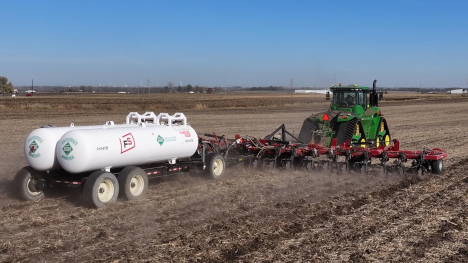
New federal plans target farmers' fuel and fertilizer costs through direct relief and investments in domestic fertilizer production.
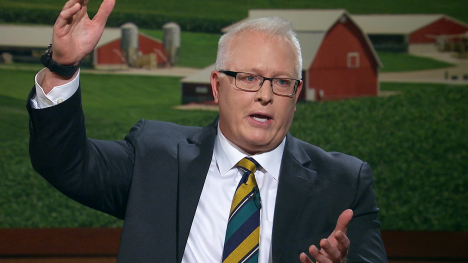
Chris Robinson weighs corn recovery prospects, soybean price levels and the rebound in cattle.
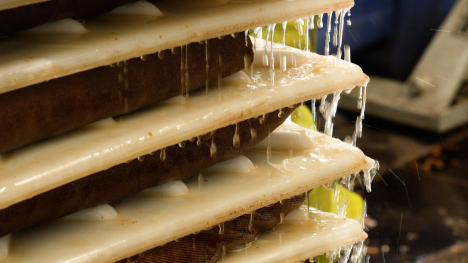
Minnesota’s Keepsake Cidery combines heirloom apples, traditional cider making and direct sales to help a small farm thrive.

New farm relief, a food safety honor, Minnesota cider and commodity market analysis with Chris Robinson.
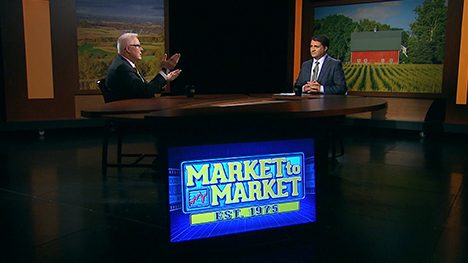
Chris Robinson answers viewer questions on corn yields, crude oil and cattle, and explains his soybean outlook.

Huub Lelieveld receives the 2026 World Food Prize for six decades of work advancing food safety.