An E15 waiver at the pump may give benefits to row crop farmers. Encouraging more women to step into leadership roles on the farm. And, commodity market analysis with Don Roose.


An E15 waiver at the pump may give benefits to row crop farmers. Encouraging more women to step into leadership roles on the farm. And, commodity market analysis with Don Roose.
Transcript
[Paul Yeager] Hello, I’m Paul Yeager,
[Don Roose] Coming up on Market to Market an E15 waiver at the pump may give benefits to row crop farmers, encouraging more women to step into leadership roles on the farm and commodity market. Analysis with Don Rose next.
[Announcer] (Pioneer) I wouldn't be here without my customers. Yeah, I'd like to thank the customers. They're, they're very dear to our hearts. It's about the people that you're working with and the relationships that you have. Thank you, thank you, thank you. Thank you from the bottom of my heart.
[Announcer] Tomorrow, for over 100 years, we've worked to help our customers be ready for tomorrow. Trust in tomorrow. Information is available from a Grinnell Mutual agent today.
[Announcer] This is the Friday, March 27th edition of Market to Market, the weekly Journal of Rural America.
[Paul Yeager] Hello, I'm Paul Yeager. U.S. stocks have struggled again this week, adding a fifth consecutive losing week, the longest stretch in nearly four years. One of the biggest factors on trade has been the war with Iran. Gains were followed by losses as the possibility of an end to the conflict waned. The instability of transporting oil through the Strait of Hormuz has pushed volatility into the crude oil market and other downstream products. That includes gasoline, homegrown fuel advocates have long been working on solutions to expanding the use of corn for ethanol, and received some good news this week, even before an Oval Office meeting and South Lawn event Friday. President Trump announced loan guarantees for farmers and the easing of pollution requirements, along with increases to the volume of biofuels to the highest levels in program history. Peter Tubbs looks at the news of the week.
[Peter Tubbs] This week, the White House worked to reduce high prices at the gas pump and seek some relief from the political backlash over high energy prices brought on by the war with Iran.
EPA Administrator Lee Zeldin issued a temporary emergency fuel waiver on Wednesday to allow the nationwide sale of E15. Nearly one-third of the U.S. corn harvest goes for the production of the renewable fuel.
This is the fifth consecutive year that a waiver has been issued allowing E15 to be sold nationwide at any of the 3,000 gas stations in the country that are properly equipped to dispense the blend. Roughly 2% of the gas stations in the U.S. can sell the blend marketed as Unleaded 88.
The waiver starts on May 1st for an initial run of 20 days, but can be extended if high fuel prices persist due to the Iran War. Ethanol industry and agricultural lobby groups applauded the move.
Nation-wide year-round sale of E15 has long been a goal of the ethanol industry. Eight Midwestern states currently sell E15 year round.
Fuel industry analysts believe that the additional sale of E15 could shave a few cents off the price at America’s pumps. The average price of gasoline in the U.S. has risen 33 percent in the last month, to over $3.98 per gallon, up more than a dollar from before the initial offensive on Iran.
In response to attacks by the U.S. and Israel, the Iranians destroyed petroleum infrastructure in the region, as well as struck shipping in the Strait of Hormuz, effectively closing the waterway to oil tanker traffic. The Strait is the access point for 20% of the world’s petroleum and liquified natural gas exports.
For Market to Market, I’m Peter Tubbs.
[Paul Yeager] USDA used National Agriculture Day to launch an awareness campaign on their new voluntary “Product of the USA” label program announced January 1.
The banner is designed to help producers of meat, poultry and eggs label their products and inform consumers on the origin of their food.
The face of those producers has been changing for decades. Today, more than one-third of the 3.4 million Americans involved in agriculture are female.
The share has dipped a little from the previous survey, but the new and beginning farmer number is rising and women are a big reason for the increase.
Colleen Bradford Krantz looks at the issue in this week’s Cover Story.
[Colleen Bradford Krantz] As an animal science undergrad at South Dakota State University in the late 1970s, Franny Fritz was so used to seeing nearly all young men in her classes that she would hesitate if she noticed too many women.
Franny Fritz, Iroquois, South Dakota: “In my animal sciences classes, if I walked into a room that had more than five women – I’m not kidding, more than five women – I’d back out thinking I’m in the wrong room. Gracious! I’m in the wrong room.”
[Colleen Bradford Krantz] She wasn’t phased by being outnumbered, however, and earned her degree in 1978. She returned to the family dairy farm her mother had been managing in the five years since Franny’s father had died.
Franny Fritz, Iroquois, South Dakota: “I milked cows for 10 years. Mom and I did. And in ‘88, it was to the point of: get rid of the cows, get rid of the milk cows, or keep the milk cows and get rid of the beef cows.”
[Colleen Bradford Krantz] At 69, she’s just completed her 47th calving season, which still involves more than 100 cows.
Today, most college agriculture classes look much different than what Fritz experienced nearly 50 years ago. A 2012 study showed women enrolled in all agriculture majors slightly outnumbered men in undergraduate programs at 70 of the nation’s land-grant universities.
According to USDA, about 1.2 million women now represent about 36% of all producers. In Arizona and Alaska, the percentage of producers who are female sits at 48 percent, nearly matching their male counterparts. Nationwide data from the most recent Census of Agriculture shows that only 11% of female producers ran a farm alone in 2022, compared to 37 percent of male producers.
Fritz, who received the Dakotafest Woman Farmer/Rancher of the Year award in August at a ceremony in Mitchell, South Dakota, felt many were initially skeptical of her running a ranch on her own while others were encouraging. She says most skeptics came around after losing the local bet that she wouldn’t last a year.
But the negative encounters did take their toll, especially in those early years. One moment that stands out happened at a tractor parts counter.
Franny Fritz, Iroquois, South Dakota: “This parts man was not kind to me. He just wasn’t. And he could be a pain in the rear end. Well, I went in one day. I was not having a good day. I just flat out wasn’t having a good day. I had a list of parts I needed. I didn’t know what the given name was for any of the parts but I could tell him where they belonged. And he started in. And I looked at him and I said: ‘Look, you don’t want to wait on me? That’s fine. I’ll stand here until somebody that does want to wait on me waits on me.’ And it was just like a switch went off in that man and he’s the best parts man today. Isn’t that something? Why did I have to do that? Why did I have to say that?”
[Colleen Bradford Krantz] It may have taken years, but she feels she has the community’s respect now.
Franny Fritz, Iroquois, South Dakota: “I now could go into a parts place… and the parts men are all there and it’s: ‘Hi Franny.’ You know? Or I can go into Magness where I sell cattle, and they know me there. I’m blessed. I am blessed.”
Cheryl Tevis, an agriculture journalist and magazine editor who spent 36 years at Successful Farming magazine, helped Iowa State University and several industry groups when they made plans to bring women involved in agriculture together for monthly meetings started in 2004.
Cheryl Tevis, President, Iowa Women in Agriculture: “Women possibly did not feel as welcome or comfortable in going to meetings with other farmers and others. And felt maybe in some cases somewhat inhibited to ask questions even though the questions they had were probably the same ones that were on the minds of everyone else there.”
[Colleen Bradford Krantz] By 2005, the monthly gatherings evolved to become the non-profit Iowa Women in Agriculture, which is still going strong 20 years later.
Cheryl Tevis, President, Iowa Women in Agriculture: “We also heard that women enjoyed learning with other women... It was about sharing experiences and also, you know, being able to have a good laugh.”
[Colleen Bradford Krantz] West central Iowan Tammy Deal had a father who made a point of asking if she or her sister wanted to take over the family’s farm.
Tammy Deal, Producer, Panora, Iowa: “If you think back to the late 70s and early 80s, that was kind of unique at that point in time. But Dad was pretty open minded, and he wanted to give us the opportunity if we wanted to do that.”
[Colleen Bradford Krantz] Neither sister was interested in taking on the job after college. Deal eventually moved to Kansas City and worked in the tech industry. However, when her father became ill in 2011, she decided to move back to Iowa to learn how to run the farm.
Tammy Deal, Producer, Panora, Iowa: “Much to my surprise I think, I ended up finding agriculture just really really interesting. When Dad had originally asked me, I didn’t think it was something I wanted to do at all. And then I knew Dad was needing more help so I thought okay I’ll give this a try. And I’m so glad I did.”
[Colleen Bradford Krantz] She now manages the farm alone, having lost her father in 2016. She crop-share leases to three younger farm families, who grow corn, soybeans and small grains on the land.
Deal now organizes what she calls “Ladies Lunches” where she brings in guest speakers for other women landowners in Guthrie County. She is also helping introduce a nephew to farm management because he has interest but little background.
Tammy Deal, Producer, Panora, Iowa: “I think a lot of us don’t know how very complicated a farmer’s job is, but they have to wear so many different hats to be good at their job.”
[Colleen Bradford Krantz] Franny Fritz agrees it is important that both men and women be encouraged to at least consider agriculture.
Franny Fritz, Iroquois, South Dakota: “Find something that you have an inner peace with. I don't care what it is, but if you have an inner peace and you're just peaceful. Yeah, we all have bad days. Yeah, the world…can feel like you've been dumped on really bad. But if you have that inner peace… you'll get through it.”
For Market to Market, I’m Colleen Bradford Krantz.
[Announcer] Next, the Market to Market report.
[Paul Yeager] Grains moved lower at week’s end as rain entered the forecast and the trade finalized positions ahead of Tuesday’s prospective plantings report.
For the week ending March 27…
The nearby wheat contract added a dime and the May corn contract lost 4 cents.
Bean oil was the big driver in the soy complex for most of the week.
The May soybean contract fell 2 cents, while May meal rose weakened by $12.70 per ton.
May cotton was up $2.15 per hundredweight.
April Class Three milk futures declined by 7 cents.
The livestock market was higher. June cattle improved $5.35. May feeders put on $13.45 and the June lean hog contract expanded $1.65.
In the currency markets, the U.S. dollar index gained 65 ticks.
May crude oil increased 93 cents per barrel.
COMEX gold sold off $61.10 per ounce, and the Goldman Sachs Commodity Index was down by more than 11 points to settle at 733 - 45.
Here now, to lend us his insight on these and other trends is regular market analyst Don Rose. Hello, Don.
[Don Roose] Hello, Paul. Glad to be back.
[Paul Yeager] Good to have you here to start the conversation like we do usually with wheat. And this week it has merit. We're talking about whether we're talking wildfires in certain places, dry conditions. How is it or is it the main driver in the wheat complex right now?
[Don Roose] Well, you know, I think you're right. I think one thing we switched from South America, some of the Europe watching the weather there too. Now we switch to North America. So we're clearly, you know, watching that very close. We did get some moisture in the soft red winter wheat area, but the Western Plains, we're still in a dry drought status. I think as we move into April Paul, we're going to need some moisture or we're going to continue to add some risk premium to the market, but we'll see.
[Paul Yeager] Well, I was saving this question for later, but I might as well go into it now. Are we shaping up for a repeat in weather patterns to 2012?
[Don Roose] Well, you know, there's a lot of people last year thought we were going to have that 89 year drought. But if you look at so far, it looks like, you know, the extended maps that we've got some moisture coming to the Western Plains. So let's wait and see. April is very key. I would say that we've got weather premium in the market already on it, but so far, the weather maps look for the summer, it doesn't look like it looks like it's going to be a more normal year. But then you know how weather is unpredictable.
[Paul Yeager] Yeah, it could be 91 on a Saturday up here. And you know, in March. If you're in wheat right now and you're sitting here going, do I do something? Because given the weather potential, do I put something down? Do I do something or do I hold for a little bit?
[Don Roose] Well, let's look at it. We've got an important stocks and all positions report and an acre report on Tuesday. There's no shortage of grain in the U.S. or in the world market. So it's more about do we take some premium out for war, for inflation, for some of these other things. It looks like the stocks are going to be about 60 million more than a year ago on the wheat. So this is a good place. We usually start to get into a seasonal downdraft. If we get some moisture as we get close to May. Because remember harvest is going to get going as we get into June.
[Paul Yeager] I'm going to go out of order here in corn for a minute. Let's keep on the acreage intentions report. As we look at that December contract. Do you anticipate major changes from USDA's February possible? You know, the way they say it might happen to what they're going to release on Tuesday?
[Don Roose] Well, it's a big report. This is a market moving report on acres and stocks, Paul. And you know, your question squarely is on the acres. It looks like we're going to be down about 4.5 million acres. That's probably right. But we usually add back one, usually 2 million acres in the June report on corn. So we'll see. Meantime, soybean acres down, about, up about 4.5 million. But I think the big one is the stocks and all positions report on corn. Remember we couldn't get these corn last year over 480. That was our top. Now we got closer to five. And our stocks as of March 1st, about 950 million bushels bigger than last year. So we got a lot of stocks of corn sitting around and a lot of stocks of soybeans.
[Paul Yeager] That doesn't seem to compute for me, does it for you. I mean, given what you're saying, we're sitting on more corn, but the price is higher. So if I hear what you just said, what's a good thing you're hearing people are maybe going to do?
[Don Roose] Well, I think when you look at it, you know, as is, we've added energy premium, we've added war premium, inflation premium. Now we've added fertilizer premium. So we've got a lot of push in the upside on the market. It's like a card game Paul. You know it's as we cards come out 52 of them as we go through the year we're going to be a little bit smarter. They're coming out pretty fast right now. But if you look at it from a producer's standpoint, you can put some big floor contracts in through some different products, over $5 on corn. Now for the winter of 2027. So you can do things that are profitable right now for most people, is what I'm saying. So I think we're in risk management territory is what I tell producers.
[Paul Yeager] Yeah. And that's exactly what I'm hearing. I know we went back to May, but December when we're talking 490, I have the auctioneer brain or voice in my head. I have 480. Who's going to give me five? And that would really. Are there going to be people starting to hold out for that number?
[Don Roose] Well, and that's why I say because we don't know. I mean, you could have the war could be extended energy could go a lot higher than we think. You know, fertilizer could go up for next year. Inflation could go up. We don't know. But we know that we're in a profitable zone. So that's when at least your radar has to get, you know, pretty active. Watch what you're doing and don't look back. You know, so often we say, oh, well, I wish I would have could have, you know, but not now. Look at it.
[Paul Yeager] All right. Don saying there's don't be looking back. Look forward. All right. Let's talk about beans then for a minute. Do you have the same story when it comes to profitability in the soy complex right now?
[Don Roose] Yeah. I mean, look at the soy beans. I think that's, you know, exactly the same thing. The only thing that we have with soy beans is acres. Probably going to be up this next year. South America, we know, had just a huge crop, probably Brazil alone. When we get it all sorted out, is probably going to have a 6.8 billion bushel bean crop alone, not counting Argentina. We had about a 4.3 billion bushel bean crop stocks in all positions report that we're going to have next Tuesday. Probably going to show we have 150 million, billion beans larger than we did a year ago. So there again, it's no shortage of soybeans. It's just a matter of that. We've dialed a lot of risk premium into the market. Maybe we can keep it. Paul. Maybe we get into some big weather problems. But those are all ifs and buts and that doesn't help the bottom line.
[Paul Yeager] Right. Is the sensitivity to the market for yes. There's going to be action in Iran. No there's not. Has that waned.
[Don Roose] It hasn't. I tell you the market was very volatile. But you know on this. But I think when you look at it where we're stacked right now, soybean oil, we've never had a fund position this long in soybean oil. We're 30,000 contracts, 230,000 contracts in soybeans, 30,000 just off the record. Corn, 300,000 long. I guess what I'm saying, we're sitting here at almost a record fund long. I mean, they've puffed pretty hard into this market. And, you know, I'm just saying you're at a point where it's almost buyer beware. A lot of things can go on and we can accelerate, but a lot of things can go the other way too. Paul.
[Paul Yeager] Well, speaking of a lot going on, there's a lot going on in this question that was submitted by Mark W, and it's covering some of the things you said, but some very specific things here. Fertilizer and diesel prices and availability are concerning. If commodity futures prices run up following crude oil, the rule of thumb is to make sales. If the Iran war continues on in the supply issues continue, a profitable sale is a tough number to put your finger on. Don, what advice can you give on wheat and soybeans with these factors?
[Don Roose] Well, I think with those factors, you've got tools in the toolbox that you can use. You can use some put options, and you can lock in some good lumber's right now, you can give yourself all the upside and protected to the downside, and you can do it at levels that for most people are profitable. So there are tools in the tool chest that you can use. And I would use them and we're seeing producers use them. And it's the wise thing right now because what we're telling people, I'm telling people is this very much like a weather market. You don't know what the next weather forecast is going to do. You don't know how you're going to react. And in this market right now, we've never had it in history like this. We've got headline news that has moved in the market, but it's being moved almost daily by a year president. So there's a lot of risk out here, good and bad. And you know, so we'll see how it all unfolds as we go forward. But you have to be optimistic that eventually that this the war gets solved sooner rather than later. Maybe not. But that's what we're being told. And that energy prices come down. So that's the way I'm looking at it is kind of running with what we know from what we're being told.
[Paul Yeager] As we started to record on Friday afternoon, the stock market was headed for its fifth straight week of losses. Tell me the correlation right now between equities and commodities in any of those headlines, like you're referring to.
[Don Roose] Well, you're exactly right. What we've had is a rush. We talked about how we've had record funds going into the commodity market, and that's what's happened. Record fund position into the commodities because energies went up. We've had inflation going up. We've had small businesses. Their profitability goes down, stock market goes down. So what you're really asking is if we solve this war, what's going to happen and what's going to happen, more than likely is you're going to have commodity selling in a big way. Energy coming down in a big way, the equity markets going up sharply and the dollar down sharply.
[Paul Yeager] So again, like conventional wisdom again, back to what you said sometimes look at the weather market for a guide or a blueprint other way. All right, let's go to livestock for a minute if we could.
[Don Roose] Sounds good.
[Paul Yeager] JBS strike is still going on. This doesn't look like it has an end. There's a claim by one side that they're not bargaining in good faith. What's this doing to the cattle market?
[Don Roose] Well, the good news on that is we've got an excess cattle capacity for kill. So what's going to happen is those cattle are. And they're telling us that they're going to get shipped around to other plants. So what's that doing to the market. Not much. You know. And I always say it's more important how the trade reacts than actual news. Well, we didn't react to it at all when it was announced. It's more about are we going to be able to move the beef going forward, Paul.
[Paul Yeager] And can we continue to look at this from a fundamental story, or is this truly a technical chart? I think right now?
[Don Roose] Well, I think what we're really at is we have a tight supply of cattle. There's no doubt about it. It's not going to be a lot of twins and triplets to, you know, to beat the system. There's just no way. So you know, what we're going to have is a tight supply. And it takes a long time to build it up. So what you're really looking at is the demand side of the market. And what we're doing is we're really stacking a lot of weight on these cattle. We're sitting here adding with the extra weight, 20,000 head of cattle a week. That's a lot. The Packer tries to move the box beef up over $400. Can't sell it. It backs off. So it's this back and forth. And we're watching the consumer very close. In a week after Christmas we start our grilling season. Demand comes in. But then how long can it stay for the summer?
[Paul Yeager] What's the feeder cattle market indicating to you right now?
[Don Roose] Well, the feeder cattle markets watching the corn market very close. You know, corn market came under pressure a little bit at the end of the week. Feeder cattle go up, you know a lick. And I think that's where we're really at. The feeder cattle supply is going to stay tight. But then it all goes down to the profitability of the back. Cattle come down in price, corn goes up. You know, the feeders go down. So cow calf guy still in the driver's seat on all this.
[Paul Yeager] We had a quarterly report in the hog market this week. Pretty much neutral. Is that the way you interpreted it?
[Don Roose] I would say neutral for the upfront months. Bullish to the back months. Paul. We were up a couple hundred points to end on to end the week. And that's primarily the six years in a row the breeding herd has been down. It's just been the efficiency going up. We've added 1.7 pigs per litter to it. But the June August farrowing down 2%. That's bullish. And the farrowing, that's intense. And the actual farrowing were down 1.5%. So some of that's disease issues, I think, Paul. But I would say most looks like we're going to try and see if we can add some premium back to that market.
[Paul Yeager] We're going to go back to grains for just a minute or 30 seconds, I want to talk about the policy that happened just before we started to roll. There was the PFS set two rule talking about the highest volumes in the 20 year program history, but biodiesel up. When you look at government policy like that, can that do anything to jolt the markets one way or the other?
[Don Roose] Well, let's just look at it. How do we react to it? We reacted negative. Soybean oil has been pushing up. We talked about how it's all bloated and everything else, but probably a couple takeaways from that is actually allowing foreign feedstocks to get 100% on Rins. Everybody thought it was going to be 50%. So that means more soy oil coming in.
[Paul Yeager] We'll talk more about that in just a moment. Thanks, Don.
[Don Roose] Thank you Paul.
[Paul Yeager] Appreciate it. And you have been watching the analysis portion of our program. In a moment we will continue our discussion in an online only segment. Find it by searching Market Plus with Don Roose. Wherever you get your podcasts. You can also go on to our website at Markettomarket.org to listen. This week, the Market Insider newsletter featured the story on these new set pieces that we unveiled last week. Find out about other behind the scenes information on this program and the stories that we have in the works. When you subscribe to our newsletter, when you go to our website, Markettomarket.org next week, a grocery store that is keeping a community from turning into a food desert. Thank you so much for watching. Have a great week.
[Announcer] Market to Market is a production of Iowa PBS, which is solely responsible for its content.
[Announcer](Pioneer) I wouldn't be here without my customers. Yeah, I'd like to thank the customers. They're, they're very dear to our hearts. It's about the people that you're working with and the relationships that you have. Thank you, thank you, thank you. Thank you from the bottom of my heart.
[Announcer] Tomorrow, for over 100 years, we've worked to help our customers be ready for tomorrow. Trust in tomorrow. Information is available from a Grinnell Mutual agent today.
Trading in futures and options involves substantial risk. No warranty is given or implied by Iowa PBS or the analysts who appear on Market to Market. Past performance is not necessarily indicative of future results.
Watch More
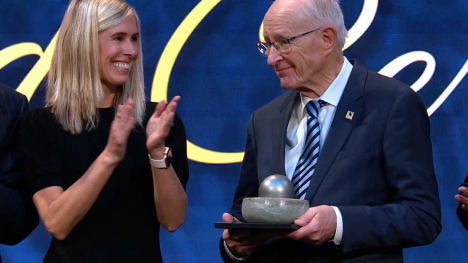
Huub Lelieveld receives the 2026 World Food Prize for six decades of work advancing food safety.
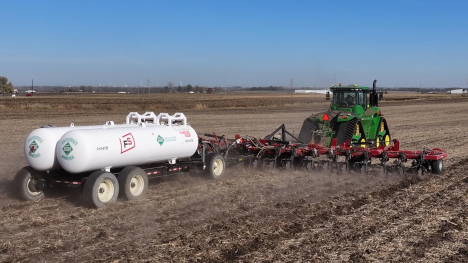
New federal plans target farmers' fuel and fertilizer costs through direct relief and investments in domestic fertilizer production.
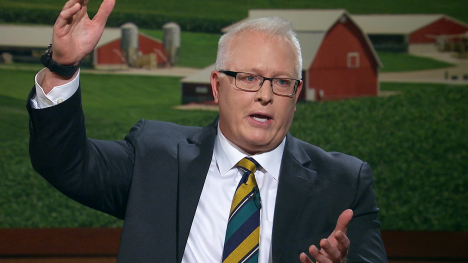
Chris Robinson weighs corn recovery prospects, soybean price levels and the rebound in cattle.
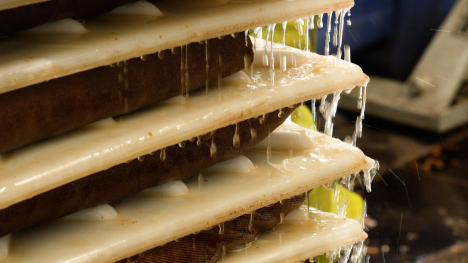
Minnesota’s Keepsake Cidery combines heirloom apples, traditional cider making and direct sales to help a small farm thrive.
New farm relief, a food safety honor, Minnesota cider and commodity market analysis with Chris Robinson.
Chris Robinson answers viewer questions on corn yields, crude oil and cattle, and explains his soybean outlook.