Farm lending, hay shortages and warming waters challenge producers. Ted Seifried analyzes markets.
Lending Pressure, Hay Shortages After Wildfire and Changing Lobster Industry
Share


Ag bankers expect 40% of their borrowers to lose money this year, but most still plan to lend in 2027. In Idaho, ranchers face a hay shortage months after the Tartar Fire. A Provincetown, Massachusetts, lobster family adapts as the Gulf of Maine warms. And Ted Seifried on oversold grain and livestock markets ahead of Tuesday’s WASDE.
Transcript
[PAUL YEAGER] Coming up on Market to Market -- add lending to the squeeze on producers in the coming year. Recovering from wildfires takes a toll on hay production. How a changing climate is redrawing the map for global fisheries. And commodity market analysis with Ted Seifried next.
♪♪
[ANNOUNCER] I wouldn't be here without my customers.
Yeah, I'd like to thank the customers. They're very dear to our hearts.
It's about the people that you're working with and the relationships that you have.
Thank you. Thank you. Thank you.
Thank you from the bottom of my heart.
♪♪
[ANNOUNCER] Family owned and operated for more than 60 years. Sukup Manufacturing is a full-service provider of grain handling, storage and drying equipment, helping farmers feed and fuel the world.
♪♪
[ANNOUNCER] Support for Market to Market has been provided by a bequest from Philip Lietz of Alta, Iowa, in recognition of public television's commitment to agricultural programing.
[ANNOUNCER] Market to Market is made possible in part by a grant from the Corporation for Public Broadcasting.
[ANNOUNCER] This is the Friday, November 6th edition of Market to Market, the Weekly Journal of Rural America.
[YEAGER] Hello, I'm Paul Yeager. Tuesday's midterms gave Democrats control of the House and Senate. The stock market rallied Wednesday and then sold off Thursday on concerns about the future of data center construction. The big economic report came Friday morning. Employers added 165,000 jobs in October, and the previous two months were revised higher. The unemployment rate slipped to 4.1%. The Purdue CME AG Economy Barometer rose three points last month, even as respondents voiced concerns about higher costs and interest rates. The Mid-America Business Conditions Index stayed above growth neutral for a ninth straight month. The current Congress still has work to do. The stopgap spending bill expires December 11th. The farm Bill is waiting on the full Senate, and there's a push for year round E15. Now, many farmers and ranchers are watching which bills move on to the next Congress, along with keeping track of the economic pressures weighing on their own balance sheets. Many of those producers will be turning to lenders for operating money. A new survey looks at how willing some of those lenders are to provide funds for next season. David Miller reports.
[NARRATOR] There is a lot of pressure squeezing farm profits. According to 75% of the U.S. Agricultural bankers responding to this year's American Bankers Association and Farmer Mac survey, lenders estimate that 40% of their borrowers will not be profitable this year.
[AUSTIN PEIFFER] The person who's lending you money, they're probably a good person. They're probably not trying to put you in a bad position, but ultimately, their interest is in making the loan and getting it paid back.
[NARRATOR] The survey also revealed high energy costs and inflationary pressure was being offset by projected record federal payments and history making cattle prices. Responses varied based on commodity and region where the loans originated. Loan performance was strong, but agricultural loan delinquencies and debt write offs were higher. However, only a smaller share of lenders plan to tighten underwriting standards next year. The loan approval rate is expected to reach 88%.
[AUSTIN PEIFFER] They'll say if you're at 50%, debt to equity ratio, that's high. You're in a distressed situation. I'm not sure I've ever seen a client come in with even as low as 50% debt to equity ratio. It's the people whose attitude is, I'll keep farming as long as the bank will keep lending me money.
[NARRATOR] For Market to Market, I'm David Miller.
[YEAGER] So far in 2026, fires in the U.S. Have consumed more than 9 million acres, with several still burning across the country. One of the hardest hit regions is now experiencing a supply shortage, as farmers and ranchers forge ahead. Our Mountain West bureau chief, Tammie Scardino, has the details.
[NARRATOR] The morning fog is lifting as Bruce Winegar drops her off at the family's feedlot in Washington County, Idaho, back in August. It was smoke from the Tartar Fire that filled the air. The blaze made a 20 mile long path across the county in two short hours, moving toward the small town of Wieser. Tristan Winegar is Bruce's son.
[TRISTAN WINEGAR] And as soon as that wind started, the only thing you can do is get out of the way.
[NARRATOR] Ranchers could only watch as acres of ungrazed forage crops were consumed in the summertime inferno, along with hay bales, water troughs and miles of fencing. The Winegar's lost 90 head of cattle in the fire that ultimately scorched 158,000 acres. Carl Hayes is the president of the neighboring Payette County Farm Bureau.
[CARL HAYES] There's lots of facets that it really messes up families, ranches, life there for several years.
[NARRATOR] Hayes helped Winegar move cows out of the fire's path. But in the wake of the blaze, finding feed and fencing supplies in the northwest hasn't been easy. Drought in the West had already driven up prices due to out of state buyers pulling supply away from the area.
[CARL HAYES] There's a tremendous push for hay right now. One of our dairymen told me that they were offering $125 an acre to graze cornstalks this year, and that just tells you how hard of a push there is for places for cattle to go.
[NARRATOR] Ranchers in five surrounding counties donated hay to many in the area, including the Winegar's. They remain grateful for everyone who rallied to help get them back on their feet.
[TRISTAN WINEGAR] There were a few homes that were lost, which is very devastating and I feel for those people. But I will say that one good thing that came from the fire was the outpouring of love from the community.
[NARRATOR] For Market to Market. I'm Tami Scardino.
[YEAGER] Warmer water is changing fisheries well beyond the coasts. On Lake Erie, it's slowing the migration of the shad and minnows that walleye feed on. On Monday, the United Nations opens its annual climate talks, and some scientists are calling this year's meeting the Ocean Cop off Cape Cod. The Gulf of Maine is warming faster than nearly all of the world's oceans, and it's adding to the challenges already facing families who make their living on the water. Laurel Bower reports in this week's cover story.
[NARRATOR] Provincetown, Massachusetts, is widely recognized as the birthplace of commercial lobstering in North America. For generations, local families have counted on these waters for a great catch.
[CHRIS TOWNSEND] It started with my grandparents. My dad's parents came here to fish and my father started fishing here in the 60s. And then I started in the 80s. Caitlin started in the 90s, so we are four generations fishing out of Provincetown.
[NARRATOR] At 27 years old. Caitlin Katie Townsend works the deck of the family boat, the Heidi Lynn, side by side with her dad, Captain Chris Townsend. For Katie, the calling to fish was something she felt from the very beginning.
[CAITLIN TOWNSEND] He always says, like my whole childhood, I'd be like, daddy, where are you going? And he's like, I'm on a boat. Can I go, can I go, can I go? Like, always wanted to go on the boat. And then they would let me skip school sometimes. And then in high school, I got to skip a lot more school to go fishing. And yeah, it stayed in my blood ever since. And there's nothing else I would rather do. And now I've kind of graduated from being a fisherman to doing fisheries advocacy and policy at the Cape Cod Commercial Fishermen's Alliance.
[NARRATOR] Chris Townsend is a full gang lobsterman, managing 800 traps. The maximum legal limit. It is grueling, year round work.
[CHRIS TOWNSEND] Being a fisherman is about being able to adapt, being able to change, being able to reinvent yourself, you know you must live with both grit and tenacity. That's how you live every single day.
[NARRATOR] For Chris, the financial and environmental stakes have never been higher. Historic harbors have been turned into places where it is increasingly difficult to make a living.
[CHRIS TOWNSEND] I've had to reinvent myself a number of times throughout my 40 years of fishing. Here. It's largely been focused on lobster fishing. That is, the population that has remained the strongest, and the fishery that has been the bottom line of my income. I feel very fortunate that I'm still doing it today. Not everybody in my fleet is still with us in a commercial capacity.
[NARRATOR] The environmental conditions northeastern fishermen face tell a stark story. The Gulf of Maine and surrounding waters are warming faster than 99% of the world's oceans. Lobsters need cold water to survive. Warming seas are forcing them further north.
[CAITLIN TOWNSEND] When I was 16, we had all of our gear in Cape Cod Bay, and I remember like having days where we were just swimming in lobster. And then it changed like drastically.
[CHRIS TOWNSEND] We're running twice, three times as far, you know, fishing offshore, burning twice or three times as much fuel, using heavy gear. It's putting more money into our business for less income out of it.
[NARRATOR] The warming waters pushing lobsters farther away has been combined with coastal real estate runoff causing algae blooms. When the algae dies, it strips oxygen from the seafloor, creating a dead zone. Locals call the blob. No fish or lobsters can live in it. These environmental factors have been combined with strict government tracking rules and seasonal fishing bans, with the result being an increased struggle for all fishermen to survive. Captains are fighting back with data. They utilize the E molt program, environmental monitors on lobster traps and large trawlers.
[DR. GEORGE MAYNARD] Having better information now about what's happening in the moment can help fishermen make decisions about what's coming in the next couple of weeks or next couple months, and sort of help them plan their businesses.
[NARRATOR] Currently, nearly 200 fishing vessels like the Heidi Lynn participate across New England and the Mid-Atlantic. Specialized sensors are zip tied inside lobster pots, automatically recording temperature and depth data.
[DR. GEORGE MAYNARD] When the fishermen set their pots, lobster pots, the sensor starts sampling very quickly because it detects a change in pressure, so it samples every second on the way down to the bottom. And that allows us to get a picture of what the water column looks like from the surface, all the way down to the bottom. But it also gives us an idea of what's happening at the bottom over the full duration of the time that the gear is down there.
[NARRATOR] Every time Caitlin and Chris haul up a pot, the data automatically transmits to a dedicated computer inside their wheelhouse. From there, the information routes straight to shared cloud servers, giving both regional scientists and the captains immediate real time access to temperature, salinity, and oxygen levels. The data gathered by the system will help fishermen like the Townsends better understand what's happening in their fishing grounds.
[DR. GEORGE MAYNARD] They're developing a hypothesis about the environment, and they're going out every day and testing that hypothesis by putting their gear in the water. And if they if they were right, they come back and they make money. If they were wrong, they don't.
[CAITLIN TOWNSEND] I kind of feels like The Lorax. I feel like the Lorax. So, I'm like, the trees are speaking. I'm like, the ocean is speaking, the fishermen are speaking. You need to listen to them.
[NARRATOR] For fishing families like the Townsends, this real time data has become a critical business tool. As the environment becomes less predictable. Yet the true driving force behind the Heidi Lynn remains the deep bond between a father and daughter working to protect a family legacy.
[CHRIS TOWNSEND] I'm very, very proud of the fact that the Townsends have been here for so long, and I'm very proud of the fact that we are a big part of this community.
[CAITLIN TOWNSEND] It's emotional. It's like it's your yeah, I don't know. I just it makes me cry because I get to I get to interact with so many fishermen on a day to day basis and get to see the older generation and, and get to get their blessing of like, all right, I got this. I'm going to try to take over and this is my, this is my home. And everything leads back to Macmillan Pier.
[NARRATOR] For Market to Market. I'm Laurel Bower.
[ANNOUNCER] Next, the Market to Market report.
[YEAGER] The grains struggled to overcome Black Sea talks and favorable South American growing conditions for the trading week ending November 6th. The nearby wheat contract fell $0.12 and the December corn contract lost $0.06. Exports were strong in the soy complex, but China's buying appeared to be in Brazil. The January soybean contract tumbled $0.41 and December meal declined by 540 per ton. December cotton added $1.28 per hundredweight. December class three milk futures were up a nickel. The livestock complex was lower. December cattle weakened by six 90th January feeders cut 1340 and the December lean hog contract sold off another $5.35. In the currency markets, U.S. Dollar index improved by 30 ticks. December crude oil dropped 13.92 per barrel. Comex gold gained 192. 30 per ounce and the Goldman Sachs Commodity Index shrank by almost 50 points to settle at 6.9985. Here now to lend us his insight on these and other trends as regular market analyst. Ted Seifried. Hello, sir.
[TED SEIFRIED] Hi, Paul. How are you doing?
[YEAGER] I'm all well. I'm very well.
[SEIFRIED] Good.
[YEAGER] The markets though, it's a different story this week. It has been a lot of low, low, low and lower. Let's start with wheat for a minute. Yep. Prior to Tuesday's election, there was already discussions of some type of peace and that kind of hung around the market the rest of the week. Prospects of peace. Look what and what has that done to the market?
[SEIFRIED] Yeah. I mean, look the prospects of peace have been very on and off again. Right. And so, when we have prospects of peace, something happens and we throw it out the window. But with the election now, I think that makes it more difficult to wage war. That's at least the market's feeling. And that maybe prospects for peace might be stronger at this point. So, you saw it in crude oil. You just mentioned how much crude oil lost this week. That is your canary in the coal mine for that conflict, trade or conflict premium that happens in some markets. It's one of those markets. And when you see that conflict premium coming out of crude oil as much as it did, you have to expect that it's going to happen in wheat as well.
[YEAGER] And that's what it did Wednesday, Thursday. And then all of a sudden we've kind of rebounded a little bit. So, is there a specific reason why crude oil rallied? And then again, what impact that would have on wheat and maybe corn.
[SEIFRIED] Well, so crude oil, I think, had just gotten pretty oversold in a short period of time. And in front of a weekend where you never know. We seem to get a lot of the big happenings, especially when it comes to the conflicts. They happen over the weekend. So short covering in front of the weekend, profit taking in front of the weekend, I think was a big part of it. But also, I mean, Paul, I can't remember in my time in doing this, which is going on 20 years now. When we've been so oversold across so many markets, you look at the big three grains and oil seeds, corn, wheat, soybeans, all at or flirting with or below the extreme case of being oversold. When you look at a relative strength index, soybeans closed below that extreme case on Thursday. Under 20% 20%. That extreme case threshold 30% or below is oversold. You're across the board, oversold in the 20s again. I don't remember seeing that. And then you look over at the livestock. You look at hogs in particular. But now cattle too. We are just so very oversold across the board in agriculture. So that's maybe also part of the reason why you found a little bit of a bounce there on Friday, just exhausted.
[YEAGER] Is there any canary in the mine about commodities, one that would lead the others out of this drop?
[SEIFRIED] Well, that's a great question. You know, I think a lot of that is being determined right now with the volatility that you saw in the stock market this week because of the elections. At first you had a relief rally because, hey, we've got this point of contention behind us, this uncertainty behind us. But then Thursday happened and we took back all of the gains and then some in the equities markets. So, when you have something like that, then you start to wonder if you're going to start seeing flight to quality happening. Flight to quality, flight to safety happening in commodities. You did see that in gold, silver, things like that. Crude oil is doing its own thing because it's trading conflict and it's got a whole lot of conflict premium in it. So that's its own animal. It's not something that we would look at right now as being a gauge for commodities, although we know that there's a big energy portion of the grains. But the problem is, is if we have a longer term break in equity markets, that starts to create deflation and that becomes concerning for commodities as a whole. So, I don't see this as being a longer term positive thing. This is not inflationary. Yes, you can get flight to quality flight to safety. It didn't seem like the grains were really getting a whole lot of that. But yeah, longer term it's a concern more than anything else.
[YEAGER] Let's dive specifically on corn here. If we could. We do have a report coming on Tuesday. Do you expect that to have any type of correction coming? We already heard a little bit a couple of weeks ago about a correction to a report. And is there anything that that is going to do to spark action before next week.
[SEIFRIED] Well, I don't know what you mean by correction per se, but yes, we do expect to see a new yield estimate.
[YEAGER] Maybe I should have say an adjustment in the number.
[SEIFRIED] Absolutely. It's not going to be the same as it was last month. I mean I the likelihood of that is very, very low. I very much in the camp of a lower yield for corn and a higher yield for soybeans. That is reflected in the average trade guesses as well. Not everybody's guessing for a lower yield in corn. I do think the, the I have corn yield coming down by 1%. That is lower than the average trade. Guess. I think ultimately in January, based on what I've seen with my own eyes and what I've heard from my producers and my farmers, it's going to come down. Maybe quite a bit. I don't think the 172 and 173 numbers are realistic anymore. But I personally don't think 180 plus is realistic. And in my mind, we'll see what the USDA has to say with that. On Tuesday. Soybeans, I don't know. Yeah. That number I think goes higher. I mean, everything that we've been hearing, basically after the first couple weeks of harvest has been better than expected in soybeans. This is, I think, very likely going to be a new record. National average yield for soybeans by possibly a fair amount.
[YEAGER] And you had a technical sign. A couple of technical things. We closed below $12. We have a 62% retracement. That was very, very close going into the last session today. Technically, what does this market tell?
[SEIFRIED] Long term trend line support in soybeans we need to hold here. Otherwise, the $11 mark comes into focus. So, we need to we would really like to see soybeans hold here. If we think we have a chance at going higher. Yeah. Again, being very, very oversold as well. So that's all positive. The one thing that does still concern me for soybeans though, is that you still have funds really rather long. The commitment of traders report that came out minutes before we started talking here still had had had the net fund position rather long in soybeans. We're getting past the time for harvest pressure, which is great. But if the funds continue to liquidate their long position, they will take the place of the natural seller. So that is I mean, that is the concern that I have in soybeans. What does the USDA say on this, this this report also, you know, trade talks have really been heating up again? And it's not us talking to China or China talking to us. It's us talking to media, China talking to media. And it's kind of it's not been very positive. Now that can go the other way. But I think that's something that we're going to be talking a lot here over the next couple of weeks too.
[YEAGER] In the livestock market. You kind of mentioned it already. Big sell off again, live cattle. Is that tied to yesterday's sell off in the Dow and the S&P and the Nasdaq, or is it still that underlying factor that we have been talking about here in the last few weeks with cattle?
[SEIFRIED] By that I think you mean New World Screwworm but –
[YEAGER] Well that too. Yeah. That's a factor among just the overall numbers. I know that's more of a feeders question.
[SEIFRIED] Well they've been feeders. Been feeders were the leaders down to the downside this week. So that is definitely a factor that is spreading in the states. And that's becoming a bigger concern. Cash cattle were down almost $10 this week. You know just a week ago for the last couple of weeks we had been flirting with the idea of 230. And here we were trading 218 instead. So that put a lot of pressure on the market. There's a fair amount of concern out there about tech stocks in particular being under a lot of pressure. You know what the government's going to do with AI given the change in the Congress that we just saw. And so yeah, that really concerns that bodes concerns about what happens from demand. From a demand perspective. What does it mean when we go to the butcher's counter? Are we willing to pay the high prices for beef, or still willing to pay the high prices for beef? And packers seem to be wanting to take a step back from that. As I said, cash was under a lot of pressure. We're also in kind of a little bit of a lull in between demand seasons. We're past the grilling season. We're not to the we're not to the holiday season yet. So, it is a seasonal time for, for a bit of a slowdown. But man, we've really been under a lot of pressure as funds have been. It just feels like there's a lot of risk off out there not wanting to be long. These things, not knowing the uncertainty of what government interaction we might see in a whole lot of different markets.
[YEAGER] I don't have my number in my brain feeders going into Thursday or after Thursday. It was a six week low. I mean, that is continuing to be again, you can't necessarily crystal ball it, but do the factors give any indication that that run is over lower?
[SEIFRIED] We are not as oversold in the cattle complex as we are in the grains, so we're not feeling like we're quite there yet. We do have some technical support. Is that September low? That's not too far away. Maybe. But if you keep if you continue to see a break in the equities markets, then I think you have a growing concern about the demand side of the equation. For the first time in a really long time here domestically, that kind of changes the math for the cattle complex.
[YEAGER] And for the hog complex. It hasn't been any better. And it just continues to be worse. Any, any hope at all there.
[SEIFRIED] For I mean, the funds keep pushing record short position. I mean, they really, really want to be short. I mean, some of that spreading against beef. But now that's kind of turned I don't know. You know, this is another market that's really very oversold. So technically speaking, we should see some sort of consolidation or some relief of that oversold condition of the market. But I mean looking for a low in the hog market has been a fool's errand here for the last couple of months.
[YEAGER] Well it's a lot to digest and we're just getting started. And we'll see if you brought anything with you here to discuss in Market Plus. How about that?
[SEIFRIED] That sounds great, Paul.
[YEAGER] It's Ted Seifried everybody, thank you so very much for your time here on the TV show. And you have been watching our market analysis. If you are watching online or on the PBS app, we are going to stay here and continue this discussion in Market Plus our online only segment. Find it wherever you get your podcasts or at Market to Market .org where you can watch, listen, or read. On Tuesdays, you can get a double shot of Market to Market. We are now releasing the M to M podcast and the Market Insider Newsletter. On the same day. Sign up for The Insider on our website of Markettomarket.org. Next week. Bison versus cattle. A fight over grazing on federal land. Thank you so much for watching. Have a great week.
♪♪
[ANNOUNCER] Market to Market is a production of Iowa PBS, which is solely responsible for its content.
♪♪
[ANNOUNCER] I wouldn't be here without my customers.
Yeah, I'd like to thank the customers. They're very dear to our hearts.
It's about the people that you're working with and the relationships that you have.
Thank you. Thank you. Thank you.
Thank you from the bottom of my heart.
♪♪
[ANNOUNCER] Family owned and operated for more than 60 years. Sukup Manufacturing is a full-service provider of grain handling, storage and drying equipment, helping farmers feed and fuel the world.
♪♪
[ANNOUNCER] Support for Market to Market has been provided by a bequest from Philip Lietz of Alta, Iowa, in recognition of public television's commitment to agricultural programing.
[ANNOUNCER] Market to Market is made possible in part by a grant from the Corporation for Public Broadcasting.
Trading in futures and options involves substantial risk. No warranty is given or implied by Iowa PBS or the analysts who appear on Market to Market. Past performance is not necessarily indicative of future results.
Watch More
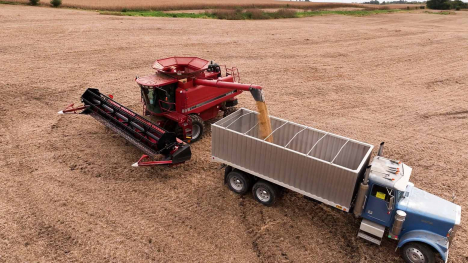
Agricultural lenders expect 40% of their borrowers to be unprofitable this year, according to a survey by the American Bankers Association and Farmer Mac.
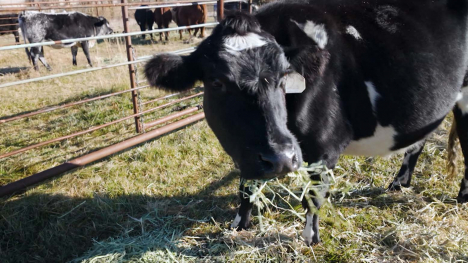
Ranchers in western Idaho face hay and fencing shortages after wildfire and drought. Neighboring communities are donating hay to help families recover.
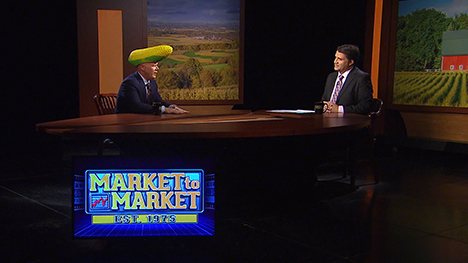
Ted Seifried discusses corn recovery signals, soybean exports and South American weather risks.
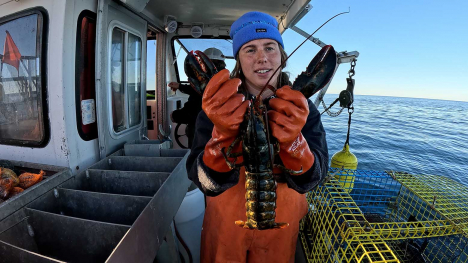
Warming waters push lobsters farther north, forcing fishing families to travel farther and spend more to bring in their catch.
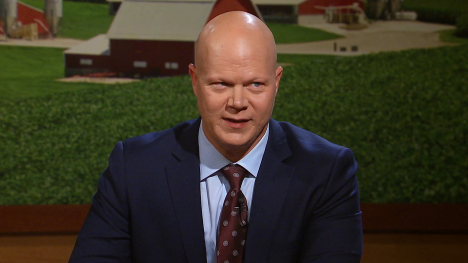
Corn, soybeans and wheat are oversold like never before, says Ted Seifried in our Market Analysis.
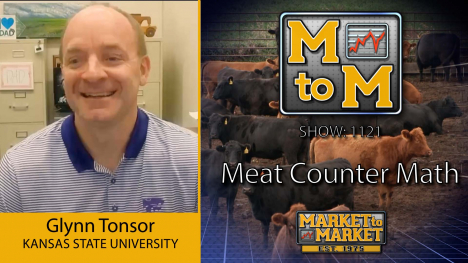
Twice as many Americans say their finances are getting worse as say they're getting better. Glynn Tonsor of the Meat Demand Monitor explains how that K-shaped split shows up in restaurant visits and what's for dinner.