Ted Seifried discusses corn recovery signals, soybean exports and South American weather risks.
Ted Seifried on Calling a Corn Bottom, Brazil Planting and Re-Ownership
Share


How do you know when a market has bottomed? Ted Seifried walks through oversold signals, corn spreads and fund positions. In this Market Plus, he explains why Brazilian farmers are racing to plant ahead of El Niño, why U.S. soybeans aren’t a bargain once freight is added, whether trendline corn yields can keep climbing and how he is starting to rebuild a long position.
Transcript
[PAUL YEAGER] Welcome back to the table for the Friday, November 6th, 2026 installment of Market Plus. Ted Seifried is with us now, the Ted spread. Hello, sir.
[TED SEIFRIED] Hey what's up Paul?
[YEAGER] I was looking through my notes. Make sure we didn't miss anything. There's a couple of points that we have, but we have a lot of. As always, you always do a great job of generating conversation online, let's put it that way. I want to start.
[SEIFRIED] I don't know if that's good or bad. Okay.
[YEAGER] It's always good. Let's start with the old standby fill in Ontario. Canada wants to know soybeans have had nine straight days down going into Friday. So, what's it going to be next. Is it about Brazil weather and can we expect beans in the teens again in 27?
[SEIFRIED] Yeah. Lots of questions there. Phil, how you doing. You know we did break that streak on Friday. We did close. Jan Beans higher. So okay we didn't get that 10th day in a row. By the way, when beans ended the day on Thursday, they were below 20% on a relative strength index. That is an extreme case of being oversold. So, you kind of felt like we would see some sort of stabilization at some point. But the big question right in front of us is, what is the USDA going to do with yield on Tuesday? Pretty much everybody expects it to go higher. But the question is by how much? And then to take that one step further, what does it mean for the balance sheet? Is the USDA going to find more demand on the balance sheet in order to offset an increased supply, if it is a higher yield, if it is a higher production? So that will be the that will be the focus for the first couple days of next week. Then beyond that, it is 100% on what we're what's going to happen in South America. The Brazilian soybean farmer in particular. Look at Mato Grosso. They are off to the races for planting. It's not just above the five year average. It's above the range of the five year average. They are really trying very hard to plant this crop quickly. And in my mind, it makes me wonder if they're going to end up with a couple more acres. My first thought there was, oh wow, this is that's a really risky move. But the reality of it, Paul, is I think this is actually to avoid risk. They're trying to get in front of the El Nino, super El Nino that's been widely advertised for months. They're trying to push this crop season forward into what are currently good conditions to try to have a better yield, even if El Nino does start to really affect them later on, will it work for them? I don't know, we'll see. But it is I, I think it is an effort to have that better crop, to have those earlier planted soybeans that have that better chance at a higher yield potential. So, we'll be watching South American weather very closely. There's a lot of expectations for that super El Nino to have a big negative impact on their crop. If that starts to happen, then we've talked a lot about boxes in my last few times being here. That is a box that needs to get checked in order to potentially see beans in the teens. Again, if that box does not get checked, though, that's kind of a problem because again, the production here from our last crop, our crop that's just about to be finished getting harvested could be bigger or quite a bit bigger than what we had been anticipating. So, our domestic balance sheet doesn't seem to be getting tighter unless we're getting more exports from the rest of the world. That would depend on a problem with South America.
[YEAGER] Well, and that's a question I had. I probably should have asked you during the television program was, are U.S. beans on sale right now? According to the world?
[SEIFRIED] Shipping, shipping rates are getting in the way of that. Paul. So yeah, if you look at our flat price versus Brazil, we're cheaper. But if you look at the freight rates on if you factor in the freight rates, no, we're not. And so that's the problem. We also really don't have a whole lot of business on the books to countries that aren't named China. I mean, yeah, China's been buying. It's been great night and day versus what we were looking at this time last year. But what's kind of getting swept under the rug is that we're not getting the rest of the world business. The demand displacement of China buying from us is pushing some demand down to South America. And you got to wonder what's going to happen to change that. And it would be, again, a problem with the Brazilian crop. If that doesn't happen though, I have a hard time justifying the U.S. Or I have the hard. I have a hard time justifying a higher export number than what the USDA is using right now. Because of that rest of the world business lagging behind, but not necessarily behind expectations, but, you know, it's just it's really not as strong as it has been in years past.
[YEAGER] All right. That's a good dive on beans. Let's do a little dive on corn if we shall. TJ wanted to know on X trendline yields in corn. Is that a forever trend that cannot be broken? New diseases show up all the time like tar spot. I feel like I have a perfect growing season everywhere to hit trend. I feel hybrids and tech have plateaued though, so the question is, are we trendline from here on out? Does that trend line just keep? No matter what happens, the super El Nino hits, the disease hits.
[SEIFRIED] Well, we haven't. The one thing that wasn't mentioned in that was weather. Right. And so, we always have weather. We have a weather market. And it's funny though, I mean, especially in the last ten years or so, we have years where we think, oh wow, conditions have deteriorated into the end of the growing year. And, you know, this crop got really hurt with a hot and July hot and dry. July didn't rain from July 4th to August 4th. Really anywhere. And yet, you know, we're hearing people talk about a 183 plus national average yield. So, I don't know. Yes, we have new diseases coming every year, but we also have better hybrids every year. I guess that's more of a question for an agronomist, but from my standpoint, from my point of view, yeah. I mean, it's tough to really destroy a corn crop. Now we're going to have some variability. We're going to have some issues where it's maybe one year's better than another and whatever. But yeah, it does seem, and I mean, reflected in the USDA's trendline yield. That's the whole point is that we keep getting better at growing more bushels. And I don't see that changing.
[YEAGER] All right. I said we're going to talk about. But we're going to come back to in a minute. I have something else I need to ask you about. And again, should have asked you this in the program. Of course, Julie, we're going out of order. Let's see. I want to go to the one we were supposed to do in the show. 606 That's Richard in Minnesota. We number them. Sorry if I say I really did just break the wall right there. Richard in Minnesota, is this market telling us something fundamentally more bearish? What would you need to see to confidently call a bottom?
[SEIFRIED] Well yeah. Right now it feels like catching a falling knife. But when I look to when I look for a bottom in markets, I kind of run through a number of things. I keep talking about that relative strength index and how oversold we are and things like that. That's one of them. And we are at a point on being oversold or oversold. This or relative strength index that this is kind of an area where we should be looking for some sort of stabilization, not necessarily saying that we're going to turn around and streak higher from here. I think we would need to check some boxes for that, Paul, but at least some sort of stabilization. Another thing I look at is spreads. And you look at the July, December 27th corn spread has started to stabilize. It's getting pretty close to about as bad as it gets. Big of a as bad as it gets. How about this? As big of a carry as we normally see at this time of year, I don't have any fundamental, fundamental reason that I think it should go much further than that. So, I have spreads kind of telling me that we could be close to a bottom. We just need to get past this USDA report without getting a 185 or a big bullish, I'm sorry, a big bearish towards markets bullish towards yield I guess. But a big bearish yield number from this report. Beyond that I do think there is a good chance a good reason for seasonality. I would look to see a recovery into the end of the calendar year. We have reason I think to put in a weather premium there for South America. Both Brazil and Argentina could have negative effects from the Super El Nino. And I think we've maybe overshot the mark to the downside. I also have funds pretty much flat at this point. Net flat. Some are still long. Some have started to create a short position. Do we have a fundamental reason for them for the funds to get really short the corn market? I don't really think so. I think we're pretty fair price or maybe even below fair price in corn at this point. But you don't know. I mean, they're technical traders and we have certainly done a lot of damage to that chart.
[YEAGER] Well, in the I've been listening to you talk today a lot about technical signs, not fundamental signs. I mean, the fundamental news was gone, kind of all the energy was focused on an election. And now you talked about the certainty that came from. We now know at least what happened Tuesday, that uncertainty is gone. So, I guess that kind of sets things up for let's go again. Back out of order. Jeremy in Michigan. His question, which is obvious. And once they go off of me on camera, I can do set up all the set up. This next answer when Jeremy wants to know Ted, when will the corn hat be back?
[SEIFRIED] Yeah, well it's back, you know, Paul, we're going to keep trying it until it works. I think that's one of the things. But no, I mean, in all seriousness, I really do feel like corn has been pushed too far to the downside for this time frame. Right. There is still a lot of crop risk out there for South America. And we do still have. Yeah. Okay. So, our corn export sales and our corn shipments aren't what they were last year. Last year we were in a time frame where we weren't really exporting much in the way of soybeans. So, we had a ton of capacity for corn. And the rest of the world was happy to take it. So yeah, it's not last year, but we still have a lot of demand built out there for corn. I still think yield is coming down. We have weather risk in South America. I would like to see a recovery in corn. And like I said, I think the spreads are kind of telling me that it might be about time for that. We are very oversold. So that's, you know, the corn hats back again, hoping that the USDA does not spoil the party next week. But if they don't, I'm looking for what could be some strength into the end of the calendar year into early, early next year, possibly as well.
[YEAGER] Right. Which is a couple of people online were wanting to kind of get a little bit from you on that. But one other thing here, and we do a disclaimer and this is not the safest of things to do, but using some of the things you've said in the past, is this a reownership opportunity right now for some people? And tell me why.
[SEIFRIED] That's a good question. So, I've kind of alluded to this a couple times throughout the show and through. Plus, when you're trying to sort of pick a bottom in the market, I go through different stages, right? The first thing I'm looking at is how are the spreads acting? If the spreads are and I don't, I don't want to sound like, well, I, I start to look at that. And when I start to see stabilization, sometimes I will take action on spreads because that can be a way to start a re ownership strategy. Other times I'll use that as a basis to maybe start looking at call options. I am not at a, at a, at a point where I'm ready to say, hey, let's, let's start getting really long futures here again, it feels like you're trying to catch a falling knife, to use a cliche that we used to use on the floor. I'm in that that I'm in stage 1.2, 1.4, right. I'm, I'm working my way into starting to develop a long position. And by the way, to transition, transition this a little bit. I know this wasn't the question, Paul, but what is the end user out there thinking right now? Right.
[YEAGER] That's a great question.
[SEIFRIED] It's a situation where let's, let's think about it as a producer, when the markets are rallying, we don't really see aggressive producer selling. Why? Because when we're up $0.05 in corn, we figure, well, but why sell today if we're going to be up another $0.05 tomorrow? And it's the same thing? Well, the actual mirror image of that is the end user thinking, well, you know, corn is down $0.05 today, but why would I buy corn if I can buy it $0.05 lower tomorrow? There has to be something telling them like, oh no, that might be it for corn. I have to start getting in there before it's too late. We've not seen any indication of that in the corn market just yet, but it wouldn't take much to get that end user more motivated to start buying more aggressively.
[YEAGER] And it gets back to your commitment of traders. When we start going from one side of the boat back to the other side of the boat, we get back. We're back to what we were. Everybody's in the same corner and that could flip it up. Or they see Ted with a corn hat on, and maybe that's the sign.
[SEIFRIED] We're trying. Paul. We are trying.
[YEAGER] Ted Seifried everybody. Great to see you. Thank you sir.
[SEIFRIED] Yeah. Always a pleasure. Thanks for having me.
[YEAGER] Next week we're going to talk about bison and cattle and a fight over grazing in federal land. And Kristi Van Ahn-Kjeseth is going to be here to break down the markets. Thank you so much for joining us. Have yourself a great week.
Trading in futures and options involves substantial risk. No warranty is given or implied by Iowa PBS or the analysts who appear on Market to Market. Past performance is not necessarily indicative of future results.
Watch More
Agricultural lenders expect 40% of their borrowers to be unprofitable this year, according to a survey by the American Bankers Association and Farmer Mac.
Ranchers in western Idaho face hay and fencing shortages after wildfire and drought. Neighboring communities are donating hay to help families recover.
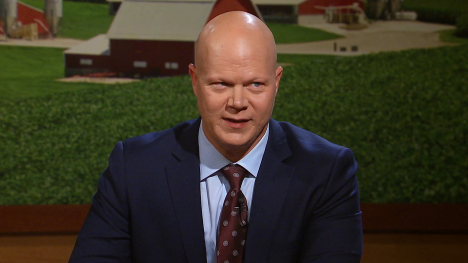
Corn, soybeans and wheat are oversold like never before, says Ted Seifried in our Market Analysis.
Warming waters push lobsters farther north, forcing fishing families to travel farther and spend more to bring in their catch.
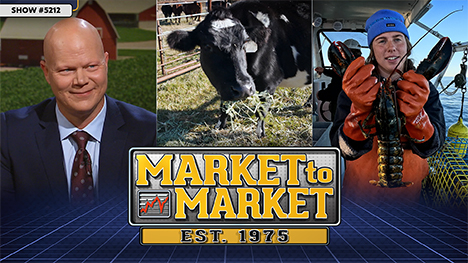
Farm lending, hay shortages and warming waters challenge producers. Ted Seifried analyzes markets.
Twice as many Americans say their finances are getting worse as say they're getting better. Glynn Tonsor of the Meat Demand Monitor explains how that K-shaped split shows up in restaurant visits and what's for dinner.