Naomi Blohm and Ted Seifried discuss the economic and commodity markets of corn, soybeans, wheat, cattle, hogs.
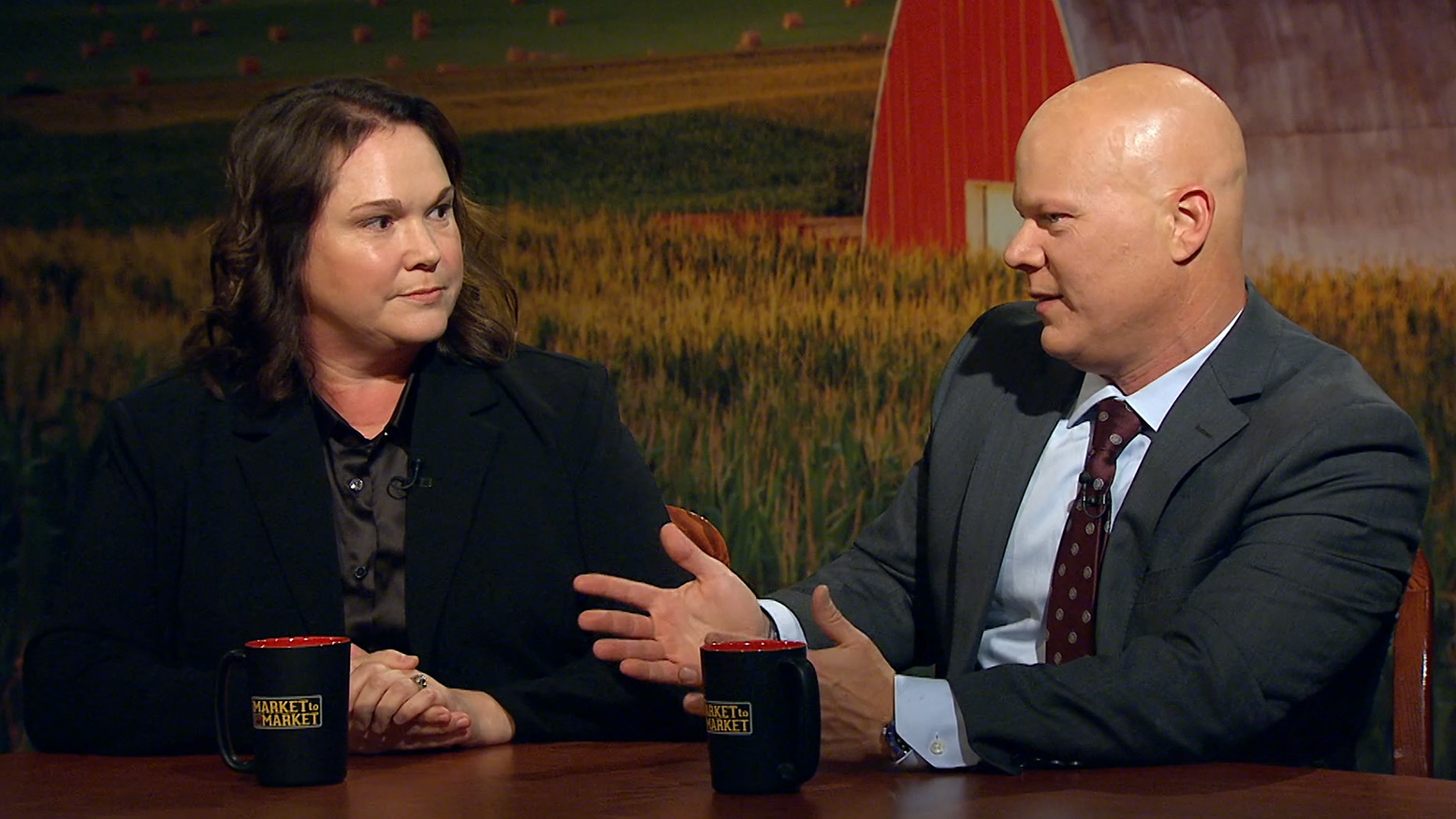
Market Analysis with Naomi Blohm and Ted Seifried
Share


Naomi Blohm and Ted Seifried discuss the economic and commodity markets of corn, soybeans, wheat, cattle, hogs.
Transcript
[Yeager] Hello, I'm Paul Yeager. This week marked a current and shut down pulse of the nation's economy. The consumer price index added 3/10 of a percent in December. A shelter and food prices became added. Expenses in the year over year. Reading. Beef prices are being flagged as the big reason for gains. The wholesale side of the equation was up 2/10 of a percent in November. The producer price index expanded as energy costs in the form of fuel, electricity and jet fuel were higher. Retail sales are still delayed, but November's transactions did show a 6/10 of a percent expansion. With early holiday shoppers focused on gifts over traditional spending habits, new home sales were off a 10th of 1% in October. The annual rate for existing homes advanced 3.1%, or that's 5.1% in December. The National Association of Realtors cited lower mortgage rates were helping move those units. And now let's get to Monday's USDA report, revealing a record corn yield. Production stocks and increases in acres harvested for 2025. This highly anticipated data dump shocked the market. We will make sense of it for now, and what it might mean for the rest of 2026. Naomi Blohm is the senior market advisor for Total Farm Marketing, and Ted Seifried is Chief Market strategist at Zaner Ag Hedger. We'll get to the two of you in a moment. Thank you very much for being here. First, though, we need to get to the numbers for the week ending January 16th. The nearby wheat contract added a penny and the March corn contract lost $0.21. USDA left soybean production alone, but did increase U.S. and global stocks. The March soybean contract declined to nickel, while March meals sold off 1370 per ton. March cotton expanded by $0.18 per hundredweight over in the dairy parlor. February class three milk futures fell by $0.05. The livestock market was mixed. February cattle lost $1.58. March feeders put on one. 75 and the February lean hog contract increased by two. 98. In the currency markets, the U.S. dollar index moved higher by 31 ticks. February. Crude oil gained $0.36 per barrel. Comex gold added 85. 20 per ounce, and the Goldman Sachs Commodity Index was up by more than eight points to settle at five 6485. Let's get back now to our guest, Naomi and Ted. Ted, we'll get to you in a moment. Naomi, you described Monday's report with one word. What did you use?
[Naomi Blohm] I said oof.
[Yeager] Why?
[Blohm] It was a triple whammy of a bearish report that the industry wasn't prepared for the biggest shock, of course, being the increased acres harvested acres in corn, bigger yield on corn, bigger ending stocks on corn, both in the United States and around the world. And so it was just such a negative demise of information. Prices plunged $0.25 lower. And just created such a negativity around the agricultural space. The report, definitely bearish in all facets.
[Yeager] So Ted, when you see a report come like that surprise. Is that a word to use for you?
[Ted Seifried] Yeah I mean look when you have a corn yield that falls outside the range of guesses, that means everybody was surprised. There was nobody guessing that we would see a raise in corn yield. The highest range of guesses was keeping it the same. So yeah, that has to be a surprise. Acreage has continued to be a surprise as it has continued to move higher. And so, production coming in over 450 million bushels higher than expectations. Obviously, that's a surprise as well. Yeah, you had a whole lot of surprises. Come on this report, Paul.
[Yeager] Did you get an explanation? Explanation why?
[Seifried] Look, we're going to spend years trying to figure out what happened to acreage this year, right? Because overall, we had harvested acreage up 4.5 million acres from the June survey. The June survey has never been off final acres by more than 1% before. It's never even been 1% before. This is almost 4%. It is unprecedented. So where did all this? How did we get all this so wrong? How was that survey so off? And how do we keep getting more acres now? The one clarity that I guess we got from stat chat with Lance after the report, was that the harvested acreage number, percentage, the percentage of harvested acreage versus planted acreage increased because there was there's really only so much need for silage, right? And so, when you have such a large acreage number and such a large crop and such a good crop, you don't chop as much of it for silage as high of a percentage. That was the rationale that I understood for harvested acreage going higher.
[Yeager] Same for you.
[Blohm]Yeah. So, building on what Ted said, it was a combination of farmer survey. That's what the USDA had said, that they got all the information from, along with the risk Management Agency data updated. So, building on the on the silage talk, the North Dakota State University professor explained it. I think the best he said that with the yields being so good in the Dakotas, Minnesota, Wisconsin, once those bunkers are filled for silage, and it was record yield for silage, then the bunkers are full. So, what's remaining in the fields then becomes harvested corn acres. And I guess that made a lot of sense to me. But that was such a large, large amount of increase of harvested acres, up over a million than what it had been just from the month prior. That that's just what let it be such a negative surprise to the marketplace.
[Seifried] Well, that's 200 million bushels of added production. You know, the trade wasn't looking for another massive increase in harvested acreage. So, I mean, that's just another 200 million bushel of production on top of a yield actually even going higher as well. So, like I said, production over 17 billion bushels, more than 450 million more than the trade was expecting. We have to absorb that. And that was Monday's price action. Trying to absorb that bigger crop.
[Yeager] Well, you were talking we just had the number we're going to show December here. You'll see the drop off. But if you look at October, November, December, we were in a tight range. Naomi, are we headed back to a tight range for the near future while we sort this out?
[Blohm] For corn prices? Yeah. I feel like we're going to start to see a new sideways trading pattern emerge. We were in that last one for two and a half months. So now I'm thinking March corn is going to have really good support at 410, resistance at 435, just in the short term, until we kind of figure out for sure what's going on out there. Corn, though, I want to draw attention to that because it still is trading near 450. And for the past year and a half December, corn has not been able to get above 480. So, with this notion of big supplies, not only here but right now in the world, and probably we're going to see a lot of additional corn acres or just keeping it the same as what it was this year. We're going to potentially have more corn coming next year. So, think about the value that's there for December. Corn 450. Maybe a good place to be started for some hedge to arrives.
[Yeager] Ted. Good value.
[Seifried] You know we obviously had to price in the shock of the report. And we did that on Monday and Tuesday. And then after that we kind of stabilized. Now, I'm not saying that the dust has completely settled from this report, and I'm not saying that there aren't ramifications of what it means for the rest of the marketing year and into the next marketing year, because 2.2 plus billion bushels is a big cushion and it doesn't. It takes away some upside potential on a weather rally. But the report is more a reflection of what's come. In the past, we were looking at last year's production. We're looking at the last quarterly grain stocks, which, by the way, the 710 million bushel increase in demand from year over year for that quarter is probably the silver lining that you can take away from this report. But now, going forward, what do we have? Well, we've got a South American second season safrinha corn crop that they have to get planted, and that weather has to be really good. We have our planting that we've got to get through. We've got our growing season that we have to get through. So now as we look forward and put the past behind us, we have points of risk and we have very strong demand. So, I would like to think that we will at some point. And again, I'm not sure it's now or I'm not sure we've done it yet, but sometime fairly soon the dust has settled, we will find our footing and I think we have a chance for this seasonal recovery. It can be limited. We have to. We have to manage our expectations because that 2.2 billion bushel plus beginning stocks again offers a very big cushion. So maybe we're not talking five and a quarter, but Naomi said, I mean, look, I think 4.75 to 4.85 is a pretty big target for December corn. I think we could be very optimistic about that.
[Yeager] Do you buy that optimism?
[Blohm] Well, to Ted's point, we do have to get through that. Safrinha growing conditions for second crop corn in Brazil. And the world is going to need that crop, because that 75% of total Brazilian production is what's available to the world to be harvested and exported come August and early September, when our crop isn't quite right. So, we're always one weather issue away from a rally with this market. Demand is great, without a doubt. We've seen that we had record exports right now for U.S. exports. We also have fantastic ethanol demand. So that demand side is a great story, but the weather is always a factor period. And there's some weather forecasters in the United States who are calling for extreme drought at the end of July and August. And that would be detrimental. That would, of course, be something that could give the market reason to run.
[Seifried] We had that same weather forecast set up last year, and it didn't pan out. Right. So, like, I don't know if the market's really going to buy into the early season weather forecasts. The thing about prices though, right, is that demand has been very, very good. The function of lower prices is to stimulate more demand. I think we've kind of maxed out our export and ethanol demand. I mean, they're fantastic. So, do we need lower prices to stimulate more, more demand? I don't think that's really the case, Paul. So, when you look at a market, it always has a function and it has sort of an agenda. I don't think the agenda right now is to grow demand. So, I don't think we really need to see sharply lower prices for corn.
[Yeager] All right. You two are great and popular among our audience. And the reaction that we had to for you for questions this week, it's the biggest I've seen in a while. We had to I apologize to those who did not make the cut, but we have a few here that we're going to do. Let's start with Glenn in Ohio, if we could, because as Ted said before we started rolling, we need to look forward. So, Ted's wanting to know. Ted Glenn's wanting to know. Mitigating risk with marketing, budgeting and crop insurance is more important than ever. What are some of the best risk management strategies you would recommend or implement in 26?
[Seifried] Yeah, and first of all, hey Glenn, how's it going? You know, I think after this big break that we had on Monday, to me, this is a really interesting time to look at ownership strategies. You know, if you haven't sold much in the way of cash leading into this week, this has to feel pretty not great if you have to be selling things right here and right now. Again, I'm looking at ownership strategies. If you really feel like you need some protection, I'm more of a fan of a sell a future, buy a call, creating a synthetic put than I am outright buying puts right here. I think you're paying into bad margins by buying puts. But I mean hopefully you had a pretty decent amount of old crop cash sold before now. And what we're really looking at is going to be what's this new crop? And the good news there is that we've got a lot of time before we get to harvest.
[Yeager] And we have a couple questions like that. We'll get to them. Plus, anything different you would do?
[Blohm] Well, we just need to remind producers of really understanding cost of production and doing pencil to paper and the math behind it. The input costs still, of course, not coming down. Bridge payments are helpful, but that does not solve the problem. So be now strategic about cash target points on the market moving higher, and be thinking about what it costs to store grain in the bin. Because like if you're if you're thinking, okay, I'm going to hold out until June in case there's a weather issue. Well, there's a cost to store that grain all the way to June. To Ted's point, that may be worthwhile to let some of that grain go. Now consider re ownership with a call option, but also on that new crop. If this is something where we're going to struggle to see the market rally substantially, it is important to be thinking about pricing new crop and be protecting the value that's there.
[Yeager] Let's go back in order if we could. We're going to start with wheat because that was kind of pulled along for the ride here, right? I mean, or did it have a different factor, Ted?
[Seifried] I mean, look, the wheat fundamentals, there's over 9-million-bushel carryover in the states, and there is a massive carryover in the world. The USDA has had to raise world production, what, 20 million metric tons in the last few months? Because this is a rare year where we haven't seen a major production issue in any of the big major world exporters. The wheat story is pretty bearish, but we've been in a bear trend for a very long time. Does wheat need to go lower? Probably not. Wheat could go higher. But the catalyst to that would probably have to come from corn or the row crops combined. So, I think we just kind of stuck in a holding pattern waiting to see what happens elsewhere.
[Blohm] Wheat sitting on a 20-year uptrend line. Also, if you're looking at a continuous wheat chart for Chicago wheat. So, $5 support on wheat is just fantastic. What I did like about the report, even though it was bearish, even though I really disagree about the export number, I think that our wheat export number should be stronger than what was represented. But the wheat market was able to shake off the bearish report. So bigger U.S. carryout, bigger global carryout and then wheat still flexing and holding above $5. Above $5 in Chicago and above $5 in Kansas City. We didn't see much of a change of acres from last year, so we're going to have kind of this constant production number with the wheat and with the funds short over 90,000 contracts. You know, we have the negativity priced in. So, if we can get some friendly news to emerge, we might see some short covering. Worst case scenario, it maybe just trades in a little bit of a sideways pattern until we get through some of these other weather issues around the world.
[Seifried] As far as wheat exports, by the way, I get why the USDA didn't raise those with all the other production in the world and the major exporters that have currency advantages over us. The USDA feels like our wheat exports, which have been really good, will really start to slow down. And they actually have in the last couple of weeks. And that kind of gives justification for why the USDA didn't do that. I think it's going to be a hard time finding extra demand for wheat. And now knowing that we have a lot of production in the world, I mean, we've moved past the point where we're going to kill a lot of these crops. It's going to be tough to get wheat to have a rally from in from its own fundamentals.
[Yeager] You say E exports, is that a play at all in the soybean market right now? Is there are we done with exports? I mean is this story China's done. They're buying. We're done with it.
[Seifried] Look Paul crush is great. So, I mean that's a story. But we need that crush to be great to offset the lack of exports. Now what's going to happen with China? That's the thousand-pound gorilla in the room. You know, China said they were going to buy 12 million metric tons on a deal that's never been signed. But they did. They they've hit that 12 million metric ton target. And we've seen a whole lot of flash sales in the last couple of weeks. The question is, is this the grand finale of a fireworks show, or is this suggesting that they're going to continue to buy, if they do continue to buy, that will be a big surprise to the market, because the break that we've had since mid-October has been the realization that 12 million metric tons doesn't get us to the USDA's export target. So, if they continue to buy, then something else is afoot. And if that is the case, this could be 2020 all over again. They could run us out of soybeans very, very quickly. The problem is, I don't really think that's the case. You look at the you look at the math of it. The Brazilian crop is big and their prices after February are much better than ours. From a dollars and cents perspective, there's no reason for China to continue to buy our soybeans. If they are going to continue to buy our soybeans, it's because of a political motive A or B, they're rebuilding stocks because our soybeans tend to store better than Brazilian beans. And if they're storing beans, it goes it goes all back to that 2020 talk of are they getting ready to invade Taiwan? Are they are they building a stockpile to last them 3 or 4 years without USDA, without U.S. exports, which short term bullish and long term bearish?
[Yeager] You should just elbow him if you want to.
[Seifried] You can elbow me. I mean, I'm close enough. You can.
[Blohm] You did a really good job covering exports. I'm going to go back and cover about the crush numbers though please. Yeah. So, the USDA did increase the crush demand on the report which was fantastic. And now the big excitement for the latter part of this week was that they were talking about the biofuels blending credit. So, this administration has said they're going to try to get that figured out by March. So, we're of course hopeful because right now the 2025 number had been 3.3 billion gallons for the biofuels for the like the biodiesel aspect of it, they're trying to get it up to like 5.2 to 5.6. So that would be significant demand for the soybean industry. Here's my fear. The March deadline. I think, personally is based on the tariff information coming from the Supreme Court. If we don't get a decision from the Supreme Court regarding tariffs, if they're illegal or legal, then by March, then I think you're going to see that March decision regarding the blending mandates get pushed down the road. Now, the other part to all of this, I'm really going to take us down a tangent is, is that it's an election year. So, the House of Representatives has 47 seats that are going to be vacant, 21 Democratic, 26 Republican. And so of course, it's going to be a struggle this year from a political standpoint, not only about tariffs, but about the blending credits. And then we have 36 states with governor races. So, this is going to be a state issue. This is going to be a national issue. And I think both sides of the political aisle are going to be talking about high price food. Food out there. They're going to be talking about fuel also that fuel prices have come down. But what does the blending credit can do for that as well. So, it's going to be a moving story. There's a lot of parts. There are important dates coming up. February and March are going to be full of data for us.
[Yeager] I'm not sure it was you or if somebody else wrote today that there was a discussion on what you're saying, is there. For a while we were hearing about America First, and now we're hearing about the affordability debate. Do you think that's alive and well in what it is you're talking about? When we talk about blending.
[Blohm] ABC News called me today asking me that exact same question.
[Yeager] What did you tell him and what was the answer? Well, I'm doing Market to Market. I'm sorry.
[Blohm] Well, I just, you know, I tried to keep it neutral. Right? So, this is my, you know, my best political science professor. Professor in college, he was able to represent both sides of the issue so well to where you were just learning and wanting more data. So that that is the answer is, you know, food prices have come down from the standpoint of raw commodities, except for cattle. There's other input costs, of course, that go into this as well. As far as the price of what aluminum can cost, electricity costs, trying to pay your employees. So, it was a very, very long conversation. But in general, you know, you've got cheap commodity prices. So, in some respects the food prices have come down except for cattle.
Or in dairy. What have they done in dairy lately? And we did have news Thursday. I'm setting her up. I do.
[Yeager] I do what I can. On Thursday the administration talked about now we're going to have milk options, whole milk in schools. What's that going to do?
[Blohm] Well, we can use all the demand we can get. So, with whole milk with any kind of milk it does great things. You know, protein of course calcium it the whole milk in my opinion will fill stomachs longer. So, it's a good thing. And if we can get more schools implementing it, that would really help. Just milk demand for milk itself. So, the problem with milk right now, it's not a demand issue. We have decent demand for cheese. We have decent demand for powder, for butter, for powder. The problem is milk production is high. And so, the most recent milk production report had milk up 4.5%. So, all of 2025 we just have this huge amount of milk production. We've got more cows. They are producing more milk. And we just are. It's kind of like the corn story where the production is just too much. So going forward next Friday, we have the next Milk production report and cold storage report. So, we're going to see if that trend continues or not. If we're seeing another month of higher milk production, you are going to still see milk prices in this $1,415 area. That's the reality. Until we start to find the solution for the issue at hand.
[Yeager] Ted, right before we recorded, you told me there was some news on New World Screwworm what is it and what's the impact here on the cattle market?
[Seifried] Yeah. Not really news. More rumors. It might it might be something that's either confirmed or disproved early next week. But there was talk that there has been cases of New World screwworm found over the United States border. And that makes you really wonder what the impact would be. I do think that you would have a lot of fear on the producer side of, you know, what's the government reaction going to be? Let's not wait to find out. Let's go to market. So, you could see a big, big boom of supply and a lot of pressure on cash, cattle prices early on. But longer term it should be really rather bullish. Feeder cattle because of replacing the herd or whatever, has to go to market right away or whatever. Just knee-jerk reaction goes to market right away. And you know, the big question that I have is, you know, what's going to happen with consumer demand. You know, the first time we had Mad cow in the States, we did see an initial drop off of beef demand. Consumers were worried that I would get mad cow if I ate beef. We saw it in TV shows. And, you know, I feel like we've seen that movie before and we're not really buying into that. I don't think the consumer demand would really get hurt by New World. Screwworm in the United States herd, but who knows? That's the unknown. That's the thing that we're trying to figure out. Either way, we're heading into a softer demand period coming out of the holidays. A lot of times, February is maybe the worst month for demand. So, we do have that seasonality working against us as well.
[Yeager] And do you want to do live cattle or feeders to wrap up?
[Blohm] Well with the feeder cattle market. So, we had a nice push higher this week with lower corn prices. But the market today posting a bearish reversal. And I'm trying to figure out really what kind of spooked things. If it was a Friday profit taking or if it was some of this news of this potential.
[Seifried] That would be spooky. Yes.
[Blohm] That, you know, that's what maybe made the market sell off today would be this rumor that it's across the border. And in Texas, they had announced earlier this week that they were, I think, eight new cases in Mexico, but near the Mexico border and Texas border. And then I read today that with swine, they have found the screwworm in swine in Mexico. So now the issue, though would be like if it's between hogs and cattle coming across the border, you think about the amount of feral pigs in Texas. That's over 2 million. So now you have a really susceptible carrier. So, there's a lot of things out there that could be affecting the protein complex here pretty soon, and we'll absolutely have to keep tabs on it. There's cattle on feed report next week Friday. That might give us some fresh insight as well.
[Yeager] I only have a couple of seconds. Ted hogs did. We did see some buying return on 30 on Thursday.
[Seifried] Yes. Right. And it looked pretty good. Again, the question is what is consumer demand look like for the next couple of months? Hopefully it doesn't throw a wet towel on the hogs market. That has done really well.
[Yeager] All right Ted Seifried good to see you. Naomi Blohm. Thank you so very much for all of your insight. Great to have you there. This just elbow them again next time. If he says, all right, you've been watching the analysis segment and in a moment we will continue our discussion in an online only segment. Search Market Plus with Naomi Blohm and Ted Seifried wherever you get your podcasts to hear that conversation. Or you can go to our website of Markettomarket.org. We've been on Facebook for years providing you links for this program for Market Plus and the MtoM, and that's still true today. And there's behind the scenes pictures that we post there as well. Give us a follow at Market to Market show next week, a look at pressing the pick of the crop into an answer for a profitable bottom line. How's that for a tease? Thank you so much for watching. Have a great week!
Trading in futures and options involves substantial risk. No warranty is given or implied by Iowa PBS or the analysts who appear on Market to Market. Past performance is not necessarily indicative of future results.
Watch More
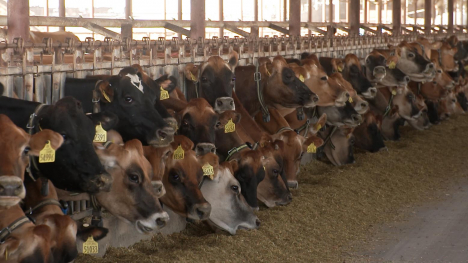
Many California dairy producers have made fighting climate change a high priority. Recent adoption of certain laws has helped them in achieving their goal.

USDA projects best acreage and production guesses for 2026. Wildfires and an avalanche top weather headlines. Turning waste into an investment in your operation. And, commodity market analysis with Shawn Hackett.

President Trump's use of the Emergency Powers Act is disallowed and USDA lowers the number for planted acres of wheat, corn and soybeans.
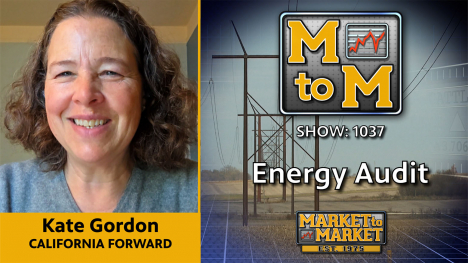
Kate Gordon has watched American energy policy evolve for two decades across multiple presidential administrations. Her frank conversation about rising utility bills, surging demand from data centers, the complicated truth about coal's comeback and whether an all-of-the-above energy strategy still exists in America or whether we're now just picking winners and losers.

Shawn Hackett discusses the economic and commodity markets in this web-only feature with topics of wheat, corn, soybeans and other topics of interest.

Shawn Hackett discusses the economic and commodity markets of wheat, corn, soybeans, live cattle, feeder cattle and lean hogs.